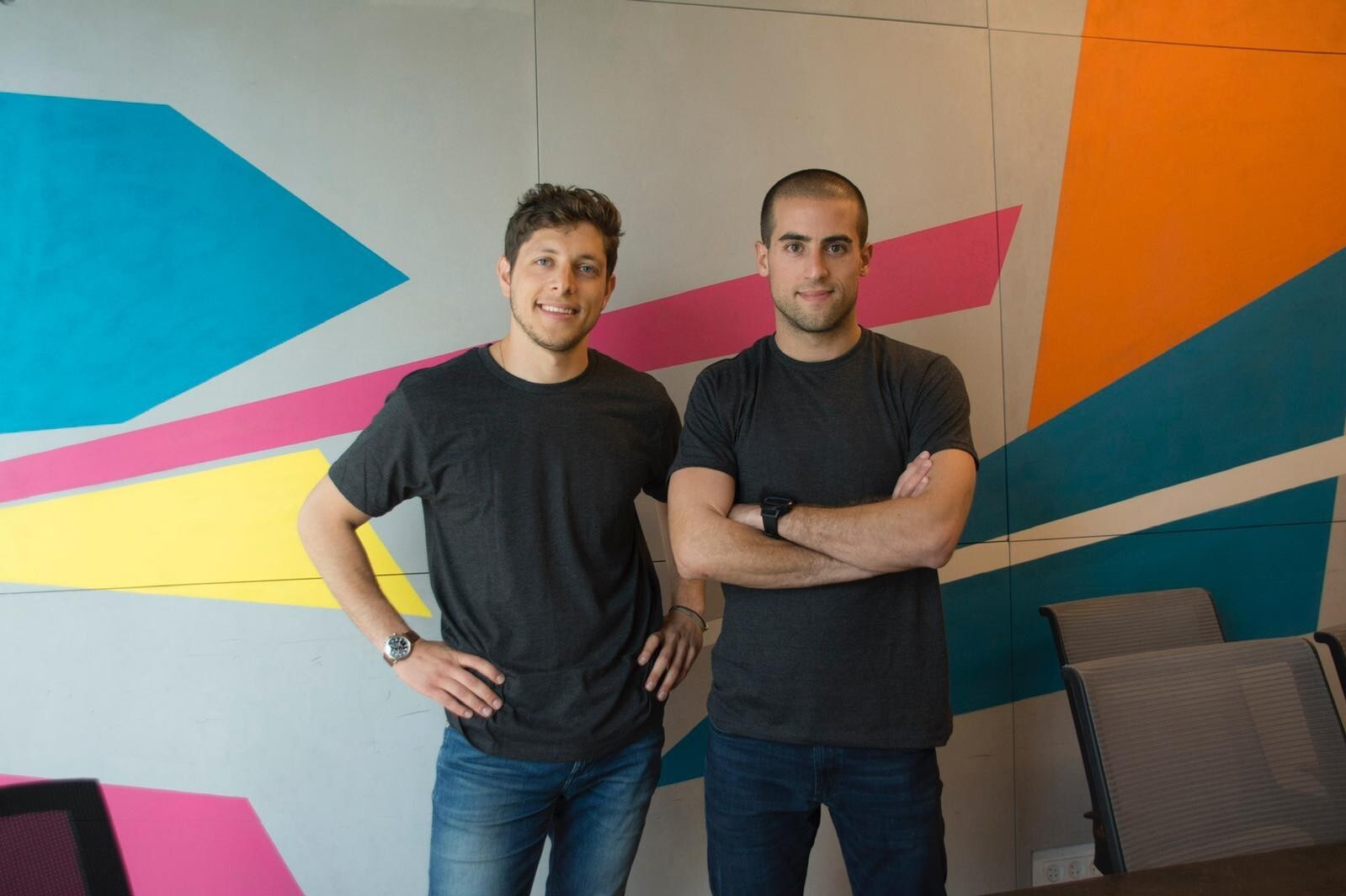
Nadav Shoval went to Ishay Green with a startup idea. Green told him it would not work. In the usual telling of an entrepreneurial life, this is where the future founder storms out and proves the skeptic wrong. Shoval’s version takes a more interesting turn. He decided Green was someone he wanted to work with. He kept calling. The conversations eventually produced a different business.
In Shoval’s telling, a proposal failed and the relationship survived it. The rejection gave him a reason to take Green seriously. Their subsequent discussions gave them something to work on together. The company that emerged, Spot.IM, would become OpenWeb. Its starting proposition was that people visiting the same website might have something to say to each other, if somebody would give them a place to say it.
By October 2022, OpenWeb was valued at $1.5 billion. Two years later, Shoval was fighting its board over whether he remained CEO. Today he leads an AI scheduling venture and has co-founded a nuclear recycling company. The distance between those subjects is considerable. The distance between an argument and a useful working relationship was once only a phone call.
A useful person to disagree with
Green’s rejection fits a principle Shoval later put into writing: a business partner ought to challenge your opinions. Agreement makes a meeting pleasant. It can also let a bad idea enjoy an unnecessarily long life. In his 2014 advice on choosing co-founders, Shoval urged entrepreneurs to assess their own weaknesses, seek complementary skills and decide where they could relinquish control.
He also recommended spending time together before formalizing the arrangement. Work on something small. See how the other person behaves in different settings. Shared values mattered, as did the less glamorous question of whether you could tolerate each other’s habits. A partnership needed to function after the excitement of choosing one had worn off. Even the finest cocktail napkin eventually needs a spreadsheet.
That early account gives his persistence a specific shape. He accepted that his original proposal was wrong while continuing to pursue the person who had pointed it out. It was possible to be attached to building something without remaining attached to the first thing he had proposed. The distinction helped make room for Spot.IM.
The party downstairs
Shoval had spent time in online forums as a child. He remembered finding people and communities there. Later, he saw conversation concentrated on a few social networks. Spot.IM’s opportunity was to uncover gatherings that already existed elsewhere: visitors reading the same publication, following the same sport or caring about the same subject.
Early customers included Time Out, Kerrang and Red Bull. The product let a website embed a space where visitors could post messages, see who was online and communicate publicly or privately. A reader could arrive for a piece of content and discover other readers. The publication could host the exchange rather than send everybody away to have it.
For the website owner, the proposition was practical. People who had reasons to stay might return. For the visitor, it offered company around an existing interest. An article was already doing the work of bringing people together. Spot.IM tried to make their presence visible. A party is easier to enjoy when the guests have been introduced.
The original name carried that idea in miniature. “Spot” referred to a spotlight on particular content; “IM” meant instant messaging. The company officially launched with Time Out after a beta period. A few years later, the little name would struggle to contain the business around it.
The coffee needs milk
In a 2015 interview, Shoval made an unusually domestic observation about company leadership. A CEO had to make sure there was milk in the fridge for the morning coffee. The fridge was the point. Someone had to take responsibility for the ordinary arrangements that let everybody else work.
He distinguished the impulse to create from the obligation to manage. Founding called for identifying a problem, devising a solution and convincing other people to join. Running the company required structure, trust in colleagues and attention to details a product inventor might prefer to ignore. He described the CEO as an editor who knew what to cut from an idea.
He was already warning against treating the founder as an automatic heir to the executive chair. His phrase was “entrepreneurs are not CEOs-in-waiting.” It is an arresting remark from someone who would occupy that chair for years. It also complicates the neat founder myth: the person with the original vision still has another job to learn.
His later discussion of culture remained concrete. “Who do you promote?” was among the questions he used to describe it. Hiring, empowerment and behavior when the leader was absent mattered. A company’s values had to show up in decisions people could recognize.
“entrepreneurs are not CEOs-in-waiting.”
Nadav Shoval, 2015
A pause before pressing send
In June 2020, Spot.IM became OpenWeb. At the time, the company said it served more than 700 publishers and engaged more than 100 million monthly active users. The rebrand accompanied tools intended to reward thoughtful participation, give users feedback and let publications set their own community guidelines.
One experiment took aim at the instant before an argument became public. Working with Jigsaw’s Perspective API, OpenWeb tested prompts that asked commenters to reconsider potentially offensive messages. A warning could give the writer a chance to edit before posting. The software was trying to create a pause in a place designed for speed.
The company’s study examined 400,000 comments and 50,000 users from May through July 2020. It reported that 34 percent of commenters who received a nudge edited their comments. The finding described that experiment and those participants. It suggested a possible intervention, with results narrower than a promise to civilize the internet.
Shoval’s public writing that year also connected conduct online with life outside the screen. He called for the company to do more to support and protect Black voices. For him, a conversation platform carried responsibilities beyond making its software convenient. The quality of the gathering mattered alongside its size.
of commenters who received a nudge edited their comment.
The audience acquires a balance sheet
The financial story accelerated. In November 2021, OpenWeb raised $150 million at a $1.1 billion valuation. The New York Times Company participated. For a business built around publishers’ relationships with readers, a publisher investing in it had a particular resonance. Shoval said courting that investment had helped bring him from Tel Aviv to the United States.
In October 2022, a $170 million Series F led by Georgian took the valuation to $1.5 billion. Cumulative funding stood at a reported $393 million. The company was serving more than 1,000 publishers. Its tools extended across user management, audience data, AI moderation and advertising. The conversation now sat inside a much wider commercial system.
ADYOULIKE brought advertising capabilities through a $100 million acquisition in 2022. OpenWeb’s expansion meant a publisher could look to the company for more of the machinery around an audience. Keeping a reader engaged and making the relationship commercially useful were becoming neighboring tasks.
The larger numbers did not remove the operating choices. Earlier in 2022, OpenWeb had reduced research and development activity in Israel and moved management to the United States. Fourteen development employees were dismissed. Expansion and retrenchment occupied the same year. A funding announcement could make the trajectory look simple; running the organization required decisions that were considerably less tidy.
When the board said goodbye
In September 2024, OpenWeb announced that chairman Tim Harvey would replace Shoval as CEO. Shoval contested the move. The disagreement became public, then legal. The founder who had spent years describing the company’s purpose was now disputing who had the authority to direct it.
The earlier arrangements had been modest. His first CEO contract provided a monthly salary of 8,000 shekels, rising to 20,000 if the startup raised more than half a million dollars. The later company had accumulated capital and influential investors. Those changes also altered the setting in which a founder made decisions.
In February 2025, the dispute ended in a mutually agreed resolution. OpenWeb announced that Shoval would transition out of the CEO position and support the business as a senior advisor to its chief executive. The formal language was brief. A long argument had arrived at a new role.
His 2014 advice about relinquishing control reads differently beside that outcome. It would be easy to turn the pairing into a moral verdict. The more useful observation is that control was part of his story from the beginning. First came the decision to share the work with a co-founder. Later came a disagreement over the institution that work had become.
A calendar, a battery, another beginning
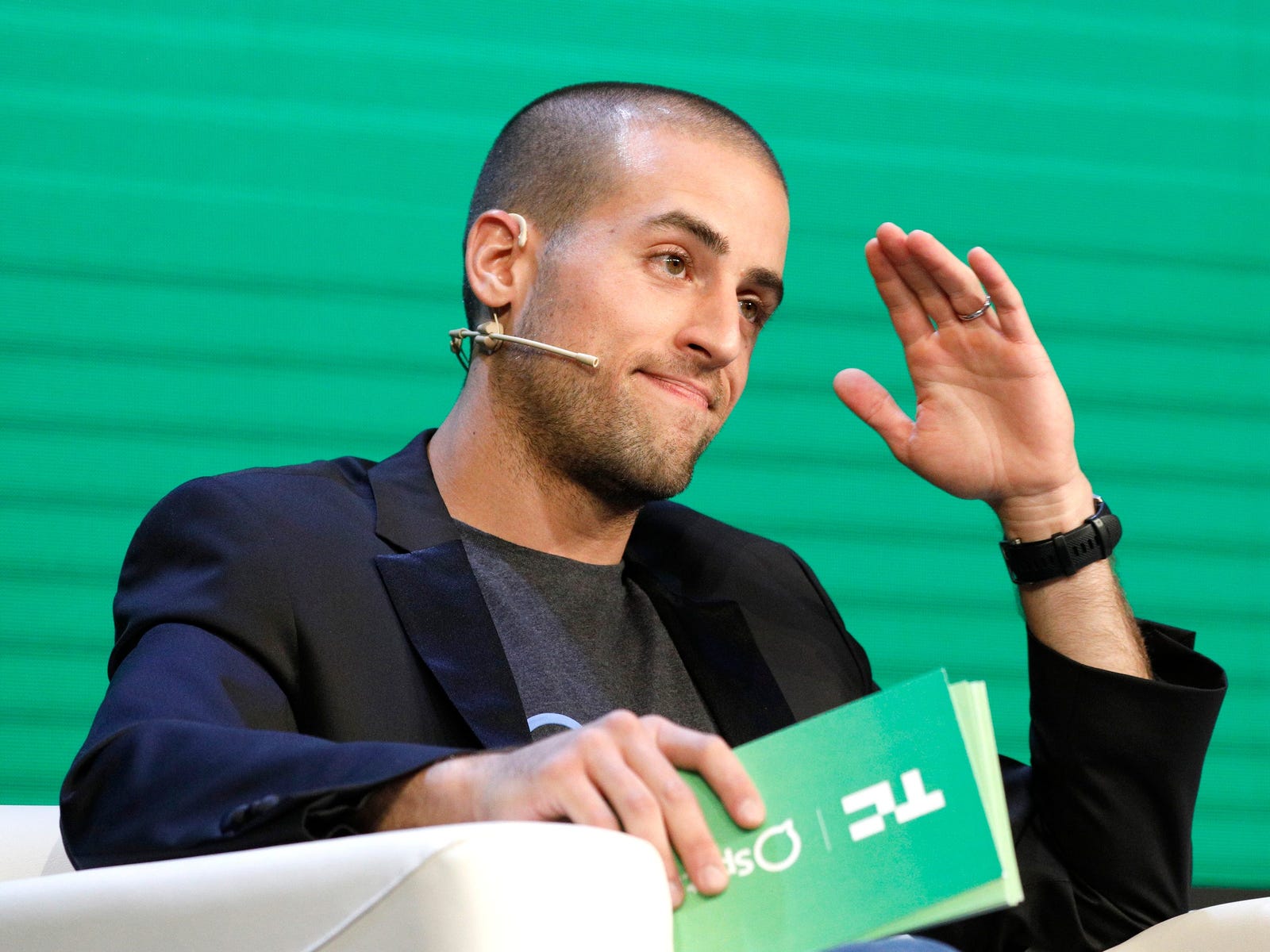
FlowMode now lists Shoval as CEO, responsible for product vision and company strategy. Its proposed intervention is closer to the working day: a calendar that adapts around a person’s priorities. After years building places for people to gather, he is working on software meant to protect the time in which they get things done.
The team includes COO Christine Lu Hong, whose background spans engineering, product and startup operations, and founding engineer Taylor Kolasinski. FlowMode describes an AI system that coordinates actions across calendar, email and communication tools. The familiar scheduling rectangle is being asked to do more than record the next demand on somebody’s attention.
Project Omega introduces a different collaborator and a different technical world. Shoval co-founded it with chemistry entrepreneur Stafford Sheehan. In February 2026, it emerged from stealth with $12 million in seed funding and plans to recycle spent nuclear fuel. Its first product included a prototype battery that draws electricity from radioactive decay.
The work has been demonstrated in a laboratory setting. Commercial deployment remains an ambition. Sheehan leads the venture as CEO; Shoval’s co-founder role does not turn him into the inventor of its chemistry. The partnership adds another example to a career that began by recognizing what somebody else could contribute.
Meanwhile, OpenWeb’s history continues. In September 2026, more than two years after its board announced Shoval’s replacement, the company sought insolvency protection. Its filing described falling revenue, a dispute with Microsoft and a lender’s repayment demand. The company rejected Microsoft’s allegations about invalid traffic. The earlier valuation offers little comfort when an obligation needs paying now.
That difficult development belongs beside the growth years. Shoval’s present ventures belong beside both. His career is still being written through products, collaborators and decisions. At the beginning, he found a reason to keep talking to someone who had said no. The next company came from what they discussed afterward.