A chief marketing officer can enter by the grand front door, carrying a book of campaigns and a vocabulary of desire. Leandro Caldeira came in through the engine room. He studied mechanical engineering, spent ten years at Boston Consulting Group, and then ran pieces of a growing business across a sequence of widening maps: Brazil, Latin America, the United States and Canada. By the time Wellhub handed him its global marketing brief in October 2025, he had already spent eight years learning where the machine rattled.
This makes his appointment less a reinvention than a change of lens. Caldeira had been translating strategy into operations for years. Now he would translate the operation into a story - one brand, many countries, and a product that depends on people choosing to participate after their employer has already chosen to pay attention.
His public career is short on theatrical autobiography. The revealing details are practical. He likes feedback. He talks about making errors cheaply and quickly. He believes a person’s connection to a company’s mission improves the work. And when announcing his new global title, he included a number that no communications adviser could have invented with quite the same charm: 1,829 check-ins on his company’s own platform.
The engineer leaves the deck behind
Caldeira’s education did not point obviously toward a marketing suite. He trained as a mechanical engineer at the University of Campinas, then added an MBA in marketing and finance at Northwestern University’s Kellogg School of Management in 2013 and 2014. Between those classrooms sat the long consulting apprenticeship: roughly a decade at BCG, where contemporary accounts place him in a senior role before he left in 2017.
The move to Gympass exchanged advisory distance for operating consequence. The company was five years old and had discovered that its more durable opportunity was not selling passes one person at a time. Employers could make the subscription available across an entire workforce. Caldeira explained the inflection with a line worthy of a cash register: the first corporate customer produced more sales in one day than the consumer business had in a year.
He did not found Gympass. His role was different and, in its way, more legible: he arrived after the original discovery and helped scale what had been discovered. He took charge of Brazil in the second quarter of 2017. By 2019, an interview described roughly 300 people under his leadership, out of about 1,000 employees worldwide. The company already had thousands of partner venues across a large international footprint. Every new market added choice for the user and fresh complexity for the operator.
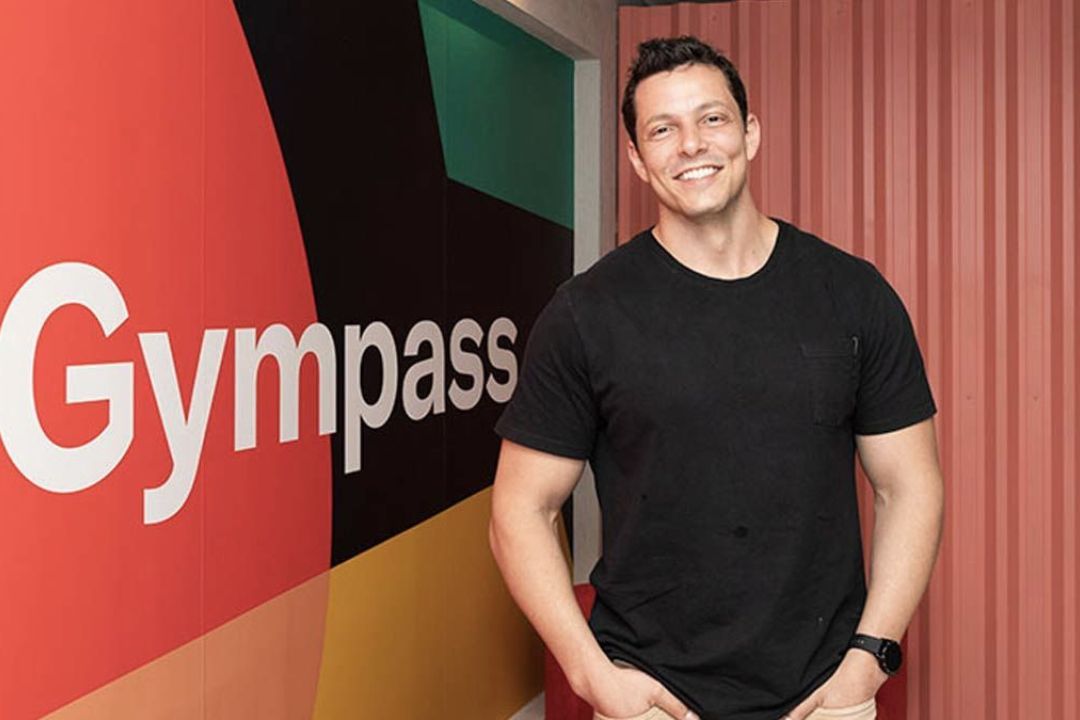
“I take the feedback from what is happening and improve. Error is part of the business. The expectation is that you err cheaply and quickly.”Leandro Caldeira, discussing Gympass in 2020, translated from Portuguese
The phrase sounds casual until you notice its mechanical rhythm: observe, correct, repeat. Caldeira’s engineering training and consulting years meet inside it. A system is not admired from a safe distance. It is tested under load.
A larger map, then a locked door
In 2020, the operating environment supplied a test no slide deck would have volunteered. Fitness venues closed. Gympass had a network built around physical access, and physical access suddenly vanished. Caldeira, then leading in Brazil and moving into the Latin America role, described a rapid build: live classes streamed by partner gyms, designed to work even when a smaller venue had little more than a phone. The company shortened payment timing for partners and used digital sessions to preserve the relationship between instructors and members.
The importance of that episode is not that it produced a tidy corporate fable. It did not. It exposed the awkward truth of platform businesses: the software may sit in the middle, but the value comes from people on both sides continuing to show up. The job was to keep a network from becoming a directory of locked doors.
Caldeira’s remit widened from Brazil to Latin America and later to the United States and Canada. Each move brought the same problem in a new accent. A global company wants consistency because repetition saves time and builds recognition. A local market wants relevance because nobody enjoys being spoken to like a regional footnote.
A decade of strategy work at Boston Consulting Group.
Joined Gympass and took responsibility for Brazil.
Stepped into Latin America leadership during an abrupt digital shift.
Led the business in the United States and Canada.
Became Wellhub’s global chief marketing officer.
That history gives him a useful sympathy for the receiving end of a global plan. As CMO, his stated task is to hold the brand together while letting regional teams make it land. He has occupied those regional chairs. He knows that “local resonance” is not a flourish added after the strategy. It is the moment the strategy either works or becomes expensive wallpaper.
The customer hidden inside the acronym
Wellhub’s business is sold to businesses, but it is experienced by individuals. This is the permanent double act of B2B2C marketing. An employer wants a coherent case for the purchase. A person opening the app wants an appealing reason to use it today. The contract can win the account; it cannot complete the check-in.
Caldeira has an unusually literal relationship with that last mile. At the moment of his promotion, he had checked in 1,829 times. He paired the announcement with thanks to colleagues, chief executive Cesar Carvalho, former colleague Carolee Gearhart, and his wife, Tabata, whose support he singled out after the pair had run a 5K along the Hudson River. Corporate announcements rarely contain a spouse, a riverside run, and a usage counter. This one became more credible for all three.
Nine years into his tenure, the counter reached 2,000. Caldeira wrote that he usually trains early in the morning and that being a heavy user keeps him grounded as a leader. He named Companhia Athletica Kansas as his most-used location. The details rescue “customer obsession” from the conference stage. Here is the customer: a person in a particular place, before work, deciding to go again.
“I have never once walked out of a workout regretting that I showed up.”Caldeira, marking 2,000 check-ins and nine years at Wellhub
A colleague supplied a companion story. During a packed 2019 partner trip in Rio Grande do Sul, the schedule ran close to the flight home. Caldeira asked when they would train. The colleague thought he was joking. They adjusted the schedule and went. Years later, he remembered the question as a lesson in treating the commitment as a real priority instead of the first appointment sacrificed to busyness.
Marketing discovers a sense of humor
By summer 2026, Caldeira’s new remit had a public artifact. Wellhub partnered with actor Terry Crews, then launched its first major campaign for the United States. The central conceit was cheerfully literal: “Terry Crews’ Crews.” Multiple versions of Crews appeared in the same film, moving through yoga, pickleball, running, gym training and jiu-jitsu. Robotic cameras repeated movements precisely enough to let the copies share a frame.
The gag did useful strategic work. Wellhub could have described a broad catalog and left the audience to admire the inventory. Instead, the campaign turned variety into company: find an activity, and find the people who come with it. Caldeira described Crews as someone who had reinvented himself and stayed motivated across chapters. The celebrity choice connected a recognizable personality to the brand’s argument about continuing to participate.
The campaign’s three-part job
At SHRM 2026, Caldeira posted from the floor after a session with Crews, Dilan Gomih and Wellhub North America leader Mike Daoust. He estimated an audience of roughly 2,300 HR leaders, then praised the team working the booth, lounge and trade-show floor. He also mentioned an early F45 check-in before the event began. Once again, the polished company moment arrived with evidence of personal participation attached.
The long way is the useful way
Caldeira’s story resists the fashionable idea that every senior appointment must represent a dramatic pivot. His move into marketing is better understood as accumulated permission. Years in consulting taught him to frame a problem. Years running regions taught him which frames survive contact with a customer, a partner and a local team. Years using the product gave the abstraction a door, a time of day and a small act of will.
Wellhub says his job now spans brand awareness, demand generation, and work at the intersection of marketing, data and artificial intelligence. Those nouns can become bloodless quickly. His more interesting challenge is human and old-fashioned: make a single idea travel without sanding away every local edge. Let data sharpen the invitation without allowing the invitation to sound machine-made. Give the buyer a rationale and the user a reason.
There is also a quiet advantage in having witnessed the company under two names. Gympass described the original mechanism plainly. Wellhub describes the broader territory it wants to occupy. Caldeira worked inside both eras. He can remember the service before the ambition grew larger than the name, and he now has to keep the larger name attached to recognizable behavior.
The engineer in the CMO chair has not abandoned systems. He has simply arrived at an especially temperamental system: what people notice, remember and choose to do. His answer, so far, is consistent. Listen closely. Let local teams translate. Keep the feedback loop short. And, before another day of explaining the product begins, check in.