Asked to pick a song for Prima’s community, Laurel Angelica Myers chose Whitney Houston’s “I’m Every Woman.” It was a cheerful answer to a brand question, and a fair description of the scope of her job. She was the company’s co-founder and chief operating officer. The responsibilities were considerably less compact than the title.
In her account of an ordinary working life at Prima, product samples shared space with packaging decisions, certification assessments and office supplies. She supported colleagues across marketing, development, operations and sales. She could also end up being the person who dealt with the computer. Entrepreneurship has a remarkable ability to put an executive in charge of a cable.
“No two days are the same,” she said in 2020. Her willingness to move between tasks offers a useful starting point for understanding her career. Myers has spent it working on the relationship between what a company promises and what it actually makes. That relationship can produce an attractive product. It can also produce an enormous amount of administration.
At Prima, it eventually led from a small launch collection to national retailers, outside investment and an announced expansion involving a Maine farm. The sequence includes a failed transaction and a change of ownership. It is a founder’s story with the complications left in.
Before the first jar
Myers studied at Princeton University from 2003 to 2007, earning a Bachelor of Arts. Her early professional experience included Participant Media and its TakePart business. Digital media required her to work with content and people, a combination that would remain relevant when the objects under discussion became physical products.
Former colleagues described someone who could hold a larger plan in mind while attending to its details. Nathan McGowan praised her accountability and execution. Elizabeth Osder remembered a thoughtful colleague with both strategic ability and practical rigor. Those assessments describe the sort of person a team wants involved when a promising conversation has to become a finished piece of work.
At The Honest Company, Myers led brand strategy and product development during the organization’s first five years. She subsequently oversaw purpose and sustainability strategy. Her responsibilities put her close to several decisions a customer experiences together: the product, the way it is presented and the company’s account of how it was made.
A customer does not shop according to an organization chart. The package and the contents arrive as one purchase. Myers’s movement between these functions helps explain her later role at Prima, where a new company needed to make those decisions together, with fewer people available to pass them along.
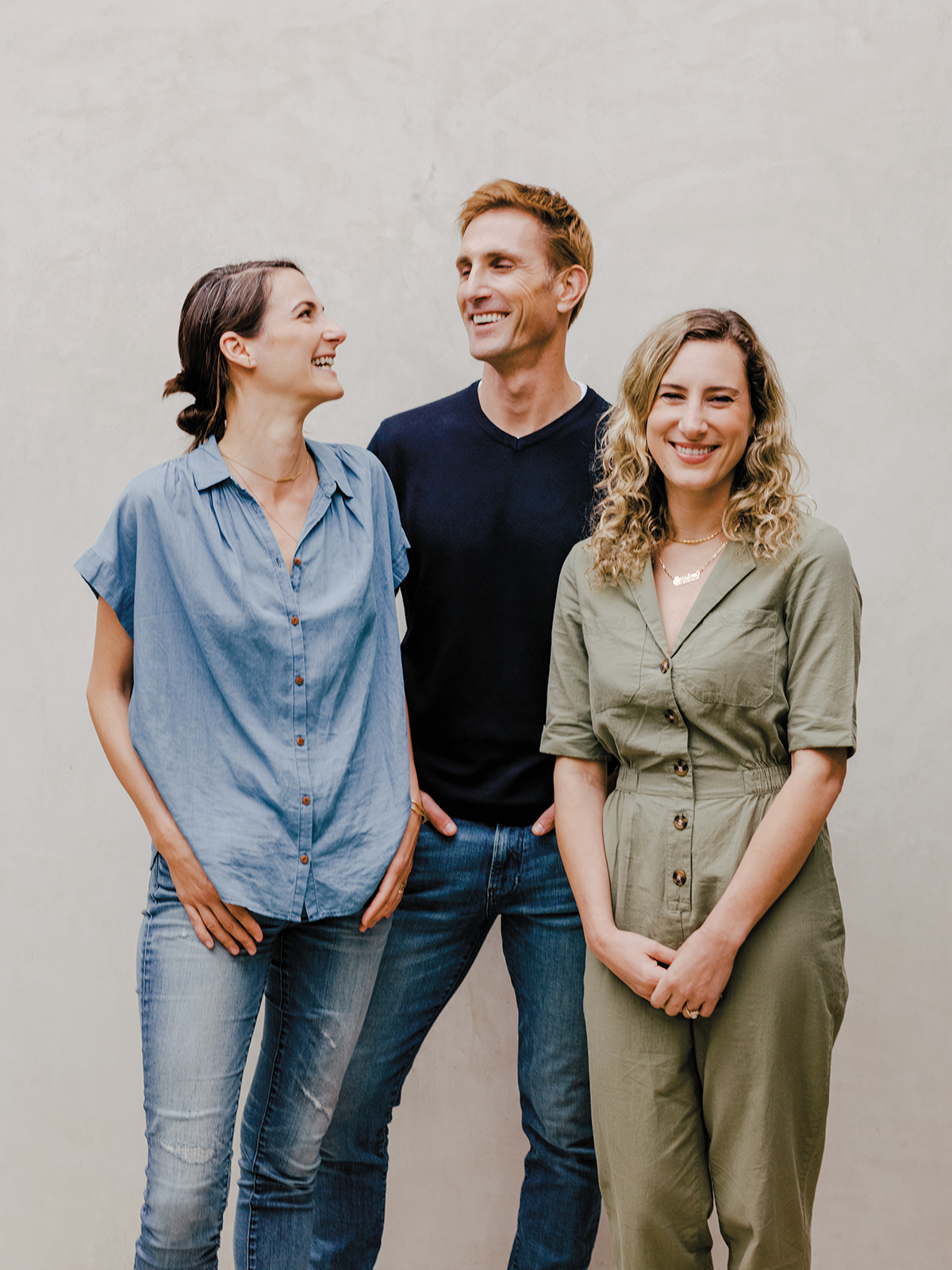
She also developed a lasting working relationship with Christopher Gavigan, an Honest co-founder. When Prima took shape, Gavigan and Jessica Assaf brought her in as their third co-founder. She arrived with product experience the other founders already knew. In a young business, familiarity can save time otherwise spent discovering how a colleague behaves when the work becomes difficult.
Thirty-five ways to begin
Prima’s first public offering was reading material. In March 2019, it launched an educational platform with 35 pieces of original content, including interviews, guides, recipes and a glossary. Its first three products followed in June. A visitor could encounter the company before there was merchandise to put in a basket.
That order made sense in a crowded, confusing category. CBD had attracted entrepreneurs and customers, but familiarity with the initials did not necessarily mean familiarity with the products. Prima’s founders wanted a business people could understand. An explanation gave a prospective buyer somewhere to begin beyond the label on a bottle.
The material included interviews with Nikki Reed, Ricki Lake and entrepreneur Jesse Israel. Assaf led the educational effort. Myers’s media background gave the founding team another connection to publishing, alongside her experience developing the products that would eventually follow it. Prima was building both an audience and an assortment.
The investor Lerer Hippeau’s early account of the company emphasized a trusted brand in a noisy category. It identified Myers as a product specialist who had led development and innovation at Honest. The investment case depended partly on the team’s ability to execute, an argument that becomes more persuasive when the founders have already spent years making things.
For Myers, starting a company also involved a personal decision about timing. In her Female Startup Club interview, she discussed taking the step after welcoming her second child. Family responsibilities and a new business would have to coexist. Her concern about leaving the opportunity unexplored helped her decide to proceed.
A reading room before a shop: interviews, guides and a glossary.
The first collection followed the education platform.
The supplier behind the sentence
When Prima introduced its products, Myers spoke about the responsibility of establishing standards in a young industry. She also described relationships with farmers and suppliers who shared the company’s approach to quality and sustainability. The language pointed toward an operating task: choosing the businesses on which Prima’s own promises would depend.
The founding team used its existing networks to assemble that supply chain. Those relationships mattered because a company selling a finished product relies on work carried out elsewhere. A founder can approve a design at a desk. Manufacturing requires other people, other facilities and an agreement about what the finished thing should be.
Prima’s early approach included familiar product formats and a direct relationship with customers through its own website. It also kept publishing as the collection arrived. The company added another 30 pieces of original content around the product launch. Explaining and selling remained connected activities rather than consecutive boxes ticked on a launch schedule.
There was room for play inside that work. The team described getting together for naming exercises when a product idea emerged. Names were a collective creative task. The friendly language on the outside of the package still needed an assortment, a supplier and a delivery behind it. Even a small object can conceal an impressive number of meetings.
“Every little bit matters.”
Laurel Angelica Myers, on Prima’s environmental work
The cost of making words mean something
Myers paid particular attention to outside validation. In discussing the vocabulary used by consumer brands, she questioned how much confidence shoppers could place in broad claims made by the brands themselves. Independent organizations gave Prima another way to support its positioning. The work required documentation as well as conviction.
Prima became a Certified B Corporation and pursued environmental certifications, including carbon and plastic neutrality. These were part of how the company described its infrastructure by 2021. In 2022, Myers publicly welcomed a partnership with Carbon Neutral Club to offset employees’ personal footprints as well as the business’s work-related impact.
Her environmental responsibilities also connect back to the sustainability work she had done at Honest. At Prima, those commitments were being established inside a younger business. The choices would affect the company’s relationships and expenses while it was still trying to grow. Principles become more interesting when there is a purchasing decision attached.
Retail introduced another audience for the company’s work. Prima reached Sephora and helped develop the retailer’s CBD standard. By 2021, its distribution also included Nordstrom, Thrive Market, Erewhon and Pharmaca. A brand that had begun by inviting people to read now had to work in stores alongside other companies’ products.
Capital followed the expansion. A roughly $3.3 million seed round was followed by $9.2 million in seed-plus financing, announced in May 2021. Greycroft, H Ventures, Lerer Hippeau and Defy Partners led the later round. The company described plans for retail expansion, education and operational investment. Its range had grown to 15 products.
Two rounds, approximately $12.5 million in total. These are company financing figures.
A bigger map, an unfinished combination
In December 2022, Prima announced the acquisition of Prospect Farms and the creation of Uplifter Brands. Myers was named Co-CEO alongside Brad Tipper. Gavigan would serve as executive chairman. The proposed organization brought consumer brands together with a farming and manufacturing operation in Prospect, Maine.
The announcement described more than 250 acres, a greenhouse, formulation facilities and fulfillment. Its logic was vertical integration: connect the ingredient and the finished product through a larger share of the production chain. For an operator concerned with sourcing, it was a considerable expansion of the territory under discussion.
It also brought new relationships. Brooke Shields was involved in plans for a future brand. Tipper publicly welcomed the partnership, and Gavigan celebrated continuing his long collaboration with Myers. The announcement conveyed a team preparing for a bigger business. It remains a record of what they intended to build at that moment.
The transaction ultimately fell apart. Prospect Farms later closed, and Prima passed to turnaround specialist The Hedgehog Co. before Sky Marketing Corporation acquired it in February 2025. That later history changes how the earlier announcement should be read. The proposed integration belongs to the company’s ambitions; it cannot stand in for the eventual outcome.
For Myers’s story, both belong on the page. She helped build Prima’s original operation and was named to lead its planned expansion. The company she co-founded subsequently entered another ownership chapter. A consumer brand can continue while the organization and people responsible for its next decisions change.
The through line in her career remains practical: media, products, brand strategy, sustainability and the work of getting people to deliver something together. Her experience makes the interval between a promise and a purchase visible. It is full of decisions that rarely fit on the label. Myers spent years taking responsibility for them.
Keep reading, keep listening
- Prima: founder biography
- Laurel Angelica Myers on LinkedIn
- The 2020 conversation about building Prima
- Listen: Female Startup Club interview
- The 2019 education platform launch
- The 2021 financing and retail expansion
- The December 2022 Uplifter announcement
- The 2025 acquisition and what happened to the earlier deal
- Founders photograph: C Magazine