A bank can have two clocks. One belongs to the customer, who expects an answer now. The other belongs to the machinery behind the screen, which may still collect information in batches and deliver it hours later. Somewhere between those clocks sits an engineer, trying to make the institution behave at the speed its app appears to promise.
- Kunai builds financial software, cloud infrastructure and data systems.
- Its engagement model makes room for clients to hire the people and operate the technology.
- PwC completed its acquisition in August 2025.
Kunai works in that gap. In one published project, an unnamed top-ten US financial institution wanted to replace batch processing with a real-time pipeline. Kunai describes joint planning, architecture validation, beta development and training. The reported payoff was faster information for marketing, risk and compliance teams. The revealing detail is the training. The bank was supposed to acquire an ability, alongside a functioning pipeline.
That makes Kunai interesting to anyone buying technical help. A supplier can deliver code and still leave a customer dependent. Kunai has made technical independence part of its sales proposition. In a market where an engagement can become an enduring fixture, the promise deserves a closer look.
The handoff is part of the job
The San Ramon consultancy sells product development, AI and automation, cloud engineering and data engineering. Its customers are financial institutions, payment networks and fintech businesses. The work spans the visible product, such as a mobile application, and the less photogenic systems that keep it useful: databases, deployment pipelines, security controls and infrastructure.
Its website describes team members as contract-to-hire by default. Clients can engage a whole team or add people gradually. Nearshore arrangements aim to put collaborators in compatible time zones. These are practical choices about how work gets done, and about who might eventually employ the people doing it.
“We don’t want to be around forever.”Sandeep Sood, speaking to CFO Dive in 2025
The business earns its living through engineering and consulting engagements. Its competitive argument rests on financial-domain experience, flexible staffing and a planned transfer of capability. For a buyer comparing it with a large systems integrator, a specialist engineering firm or internal hiring, the useful question is whether those arrangements shorten the route to a system the bank can maintain.
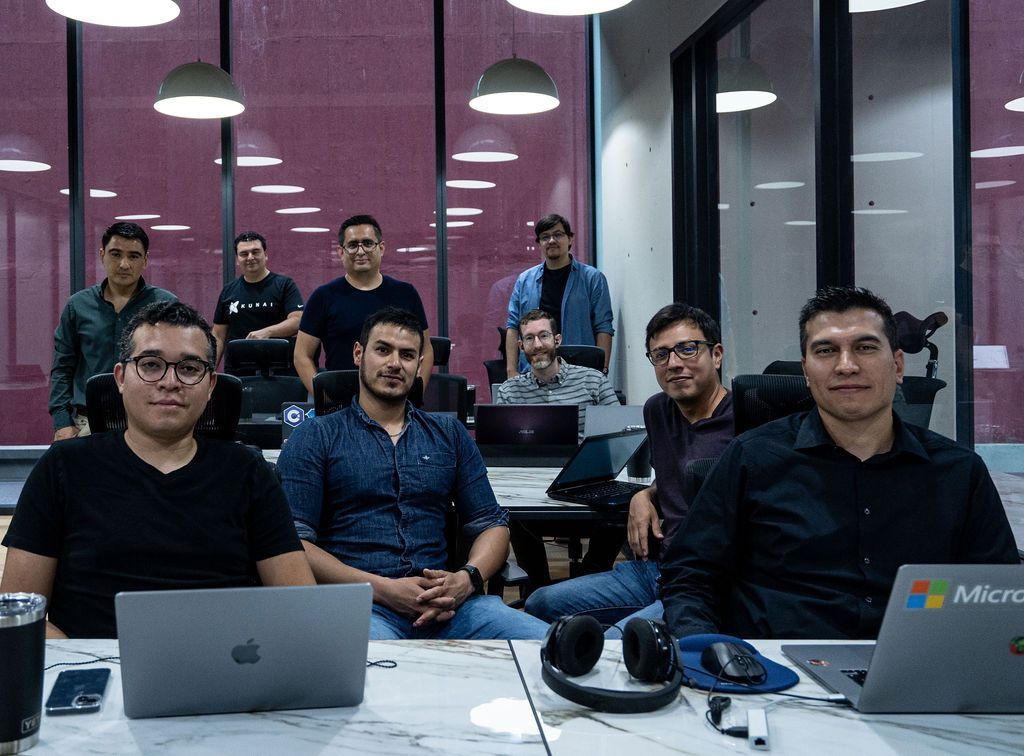
The experiments before the deal
PwC dates Kunai’s founding to 2015. Sandeep Sood’s experience reaches back further. He built the software agency Monsoon, sold it to Capital One in 2015 and spent three years inside the bank. In a 2023 interview, he discussed what working within the acquirer taught him about building financial products at corporate scale.
The later consulting model took experimentation. In a retrospective account, Sood described tests beginning in late 2020, repeated failures and unsuccessful attempts to attract venture funding. Customer adoption eventually supplied evidence that the approach could work. This was an uneven path to a services business, financed, he said, without external investment.
On August 6, 2025, PwC announced an agreement to buy substantially all Kunai’s assets. Kunai announced completion on August 15. The strategic fit was specific: PwC wanted more engineering capability for financial-services clients, including core banking, cloud and AI work. The financial terms were undisclosed.

A wallet needs plumbing
Consider Kunai’s card digitization project for a large payments company. The customer-facing ambition was straightforward: let people add cards to mobile wallets securely. The assignment underneath involved connecting complex systems, managing compliance and monitoring performance. A tap at checkout sits at the end of a considerable chain of engineering decisions.
Or consider the bank that acquired a business running on Google Cloud while the parent used AWS. Kunai’s account lists architecture analysis, database migration, application refactoring, testing, cutover and monitoring. Thousands of employees depended on the application. Moving it meant keeping a live service useful while changing the infrastructure below it.
A conceptual reading of the planning and knowledge-transfer steps in Kunai’s case studies.
These examples explain where Kunai fits. It works where existing financial operations meet new software. The problems are entangled: a faster application still needs trustworthy data; a migrated system still needs people who understand its controls. Buying one technical component does not settle the operational question.
The AI offering follows the same pattern. Kunai Labs describes a loan-payoff workflow that retrieves documents, extracts information and prepares a calculation for employee review. Approval comes before the client email. The appealing detail is the review point: the workflow gives a person a place to inspect inputs and calculations before information leaves the institution.
There is also an organizational choice hiding in these technical stories. Knowledge transfer appears in both the cloud migration and real-time data accounts. That repetition suggests a useful buying criterion: examine the transition work as closely as the architecture. Who writes the operating instructions? Who rehearses the cutover? Who can explain the monitoring dashboard after launch? Those questions turn an attractive demonstration into a more demanding conversation about daily responsibility.
What the buyer gets
For a financial-services leader, the practical use is access to people who can design, build and integrate systems alongside an existing team. A lender might need less manual document handling. A bank might need a cloud migration. A payments company might need a secure route into mobile wallets. Each calls for a concrete delivery assignment.
The transferable lesson is to define the receiving team early. Ask who will operate the system, what they must learn and how ownership will move. Start with a slice that can be demonstrated. Treat documentation and training as deliverables. These are ordinary disciplines; their value grows when a project crosses departmental boundaries.
There are conditions. A handoff needs people with time and authority to receive it. A prototype cannot resolve every dependency in a banking estate. Security, data access and organizational decisions still constrain delivery. Kunai’s own culture offers a compact reminder: “Sweat the Decimals.” In banking, small details have a way of reaching the customer.