A road can go wrong before anyone builds it. A drawing changes. A contractor prices an earlier version. A schedule moves, but the spreadsheet does not. By the time machinery arrives, several organizations may be working from several different futures. Technoidentity has built a business around this sort of gap: the distance between a system appearing to work and people being able to depend on it.
- Enterprise software engineering, with reliability built into the work.
- Banking platforms, AI workflows, and digital twins for infrastructure.
- A certified Temporal partner and a Certified B Corporation.
Founded in 2011 and led by founder and CEO Venkat Chitturi, the company now describes its approach as Durable Product Engineering. The phrase sounds technical. Its underlying question is wonderfully ordinary: when something interrupts the process, will the work still get done correctly?
01 A bank connection is never just a connection
Consider Deposit Solutions, the European savings-platform business featured in a Technoidentity case study. Its old monolithic core had become difficult to scale. Reconciliation required manual oversight. Connecting another bank meant another piece of custom engineering. Growth was multiplying the exceptions that people had to manage.
Technoidentity describes rebuilding the backbone with independently deployable services on Kubernetes, an event-driven transaction layer, and standardized, versioned interfaces. Transaction histories could be traced; partner connections could follow common rules. The important change was where reliability lived: inside the architecture, rather than in the vigilance of whoever happened to be watching.
The case study reports more than €35 billion in deposits processed and over 200 partner banks. Those are company-reported platform figures, not Technoidentity revenue. The useful lesson is smaller than the numbers: when each new customer requires another exception, the connection itself may be the wrong unit of design.
02 Put the argument inside the model
The road-building problem has a different vocabulary and a similar shape. In Technoidentity’s account of work for an unnamed U.S. tolling authority, static drawings, spreadsheets, and fragmented reviews left agencies and contractors struggling to see how changes affected one another.
Its digital twin brought geometry, schedule, and cost into a common environment. Teams could test construction sequences and lane closures before committing them to the field. The company reports up to 15% faster planning cycles and up to 10% cost savings in that engagement. These are reported results from one case, rather than a forecast for every road.
Today, TollVerse packages that proposition as a 5D pre-construction environment. TwinReview tackles the meeting around the model: walkthroughs, comments attached to particular assets, assigned issue owners, and recorded approvals. A useful way to understand the pair is that one makes the consequences visible; the other helps people agree on what happens next.
There is a catch, and it is organizational. A shared model needs shared participation. If a contractor keeps the real schedule elsewhere, the attractive picture can become another disconnected document. Buyers should treat ownership, input quality, and approval habits as part of implementation.
03 The business of an uneventful Wednesday
Technoidentity sits in the product-engineering and technology-services market. Enterprises hire it to assess, design, build, modernize, and operate software. Its customer testimonials name GOGOX, Surbana Jurong, and Reitz India, alongside Deposit Solutions. The work spans mobile delivery, user experience, and industrial analytical software as well as financial infrastructure.
Its alternatives include an internal engineering team, a general software consultancy, or a specialist cloud and workflow partner. The company’s positioning is most relevant when a failed process has consequences beyond an annoyed user: money moves, an audit must be answered, or multiple institutions must agree.
That positioning also shapes how it sells continued service. Its Managed Reliability Operations offering proposes agreements measured against business-process completion and correctness. The distinction matters. A server can be available while an invoice remains unsent. Watching the business outcome gives a customer a more demanding definition of success.
Its workflow-migration method offers something readers can copy: map the actual process, including manual exceptions; design recovery and duplicate handling; run old and new paths in parallel; compare outputs; retire the old path after proving completeness. The tradeoff is extra migration work and overlapping operations. For a small, disposable application, that discipline may cost more effort than the problem warrants.
A practical buying conversation follows from that method. Pick one consequential workflow and ask the team to show its failure path. Where is progress recorded? What prevents the same payment or notification from happening twice? Who can approve an exception, and what evidence survives afterward? Ask for a baseline before accepting an improvement claim. Those questions turn a broad modernization proposal into something a customer can inspect. They also make the operating responsibilities clearer before a new platform becomes somebody else’s difficult inheritance.
“Most organizations think they have an AI problem when they actually have a systems problem.”
Venkat Chitturi · May 2026 book announcement
04 The demo has finished. Now what?
That question carries into Technoidentity’s AI work. Its agent engineering offering emphasizes recoverable execution, human approval checkpoints, bounded permissions, and records of actions. These are practical concerns when software can do something consequential, such as change a bill, rather than merely produce a paragraph.
One training project illustrates the range. The company describes an on-premise generative AI assistant for customer-service representatives at a U.S. tolling authority. It retrieves answers from enterprise documentation and adapts learning to trainees. Here the problem was an overstretched training system, including a reported ratio of one trainer to 200 representatives. Better access to guidance was the immediate job.
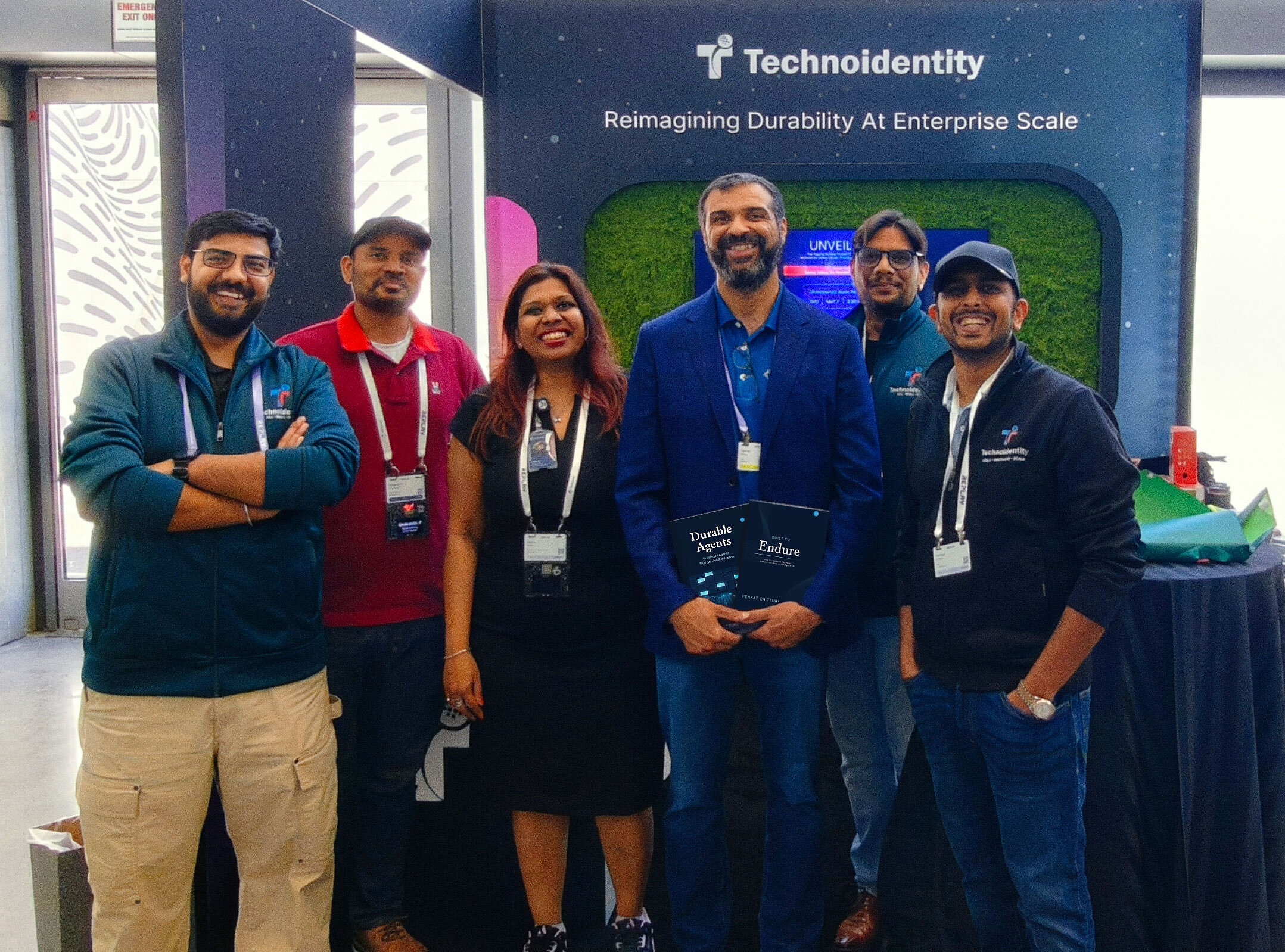
In May 2026, Chitturi announced Durable Agents and Built to Endure, published by BlueRose Publishers and launched at Replay 2026. The books extend the same thesis: intelligence needs an operating system of coordination, recovery, and oversight around it.
05 Give the engineers room to practice
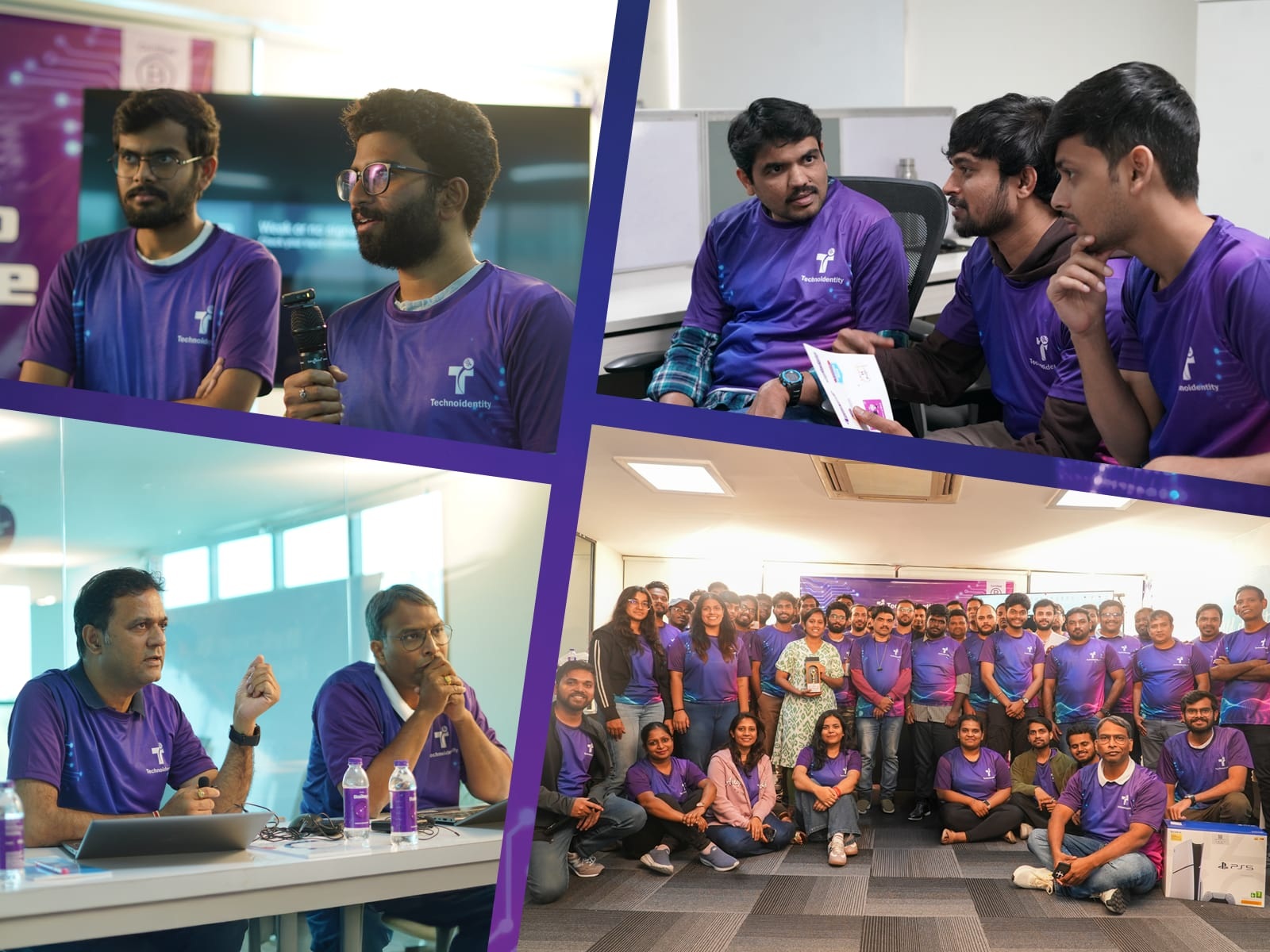
There is a human version of that thesis, too. HackTIvate 2025 brought cross-functional teams together for a 48-hour Temporal-themed hackathon in Hyderabad on November 22-23. Engineers built prototypes, demonstrated them, and faced evaluation on business value and technical feasibility. A team called Workflow Wizards won. Even reliable systems deserve slightly theatrical team names.
The company also carries an independently checkable commitment: B Lab lists it as certified since October 2023, with an impact score of 88.9 against the certification threshold of 80. That assessment concerns business practices, not software uptime. Together, the two concerns make an interesting proposition: a company asking clients to trust its systems also accepts outside scrutiny of how it operates.