A bicycle wheel is an unlikely place to put a television advertisement. It has no patience for a rectangular screen, spends its working life revolving and tends to leave just when a potential customer arrives. Kiryl Chykeyuk and his childhood friend Art Stavenka saw an opportunity anyway. Put LEDs on the wheel, coordinate their light with its movement, and the passing bicycle could carry moving pictures. Oxford had plenty of bicycles. The two friends had an appetite for a business.
The wheel belongs near the beginning of Chykeyuk’s story because it contains the question that has followed him ever since: what makes somebody look? Today, as founder and CEO of HYPERVSN, he works with displays that make digital objects appear to hang in the air. They have reached shops, exhibitions and the atrium at Sphere in Las Vegas. Yet the underlying encounter remains intimate. One person is walking past. Something catches their eye. For a moment, their plans change.
A friendship before a company
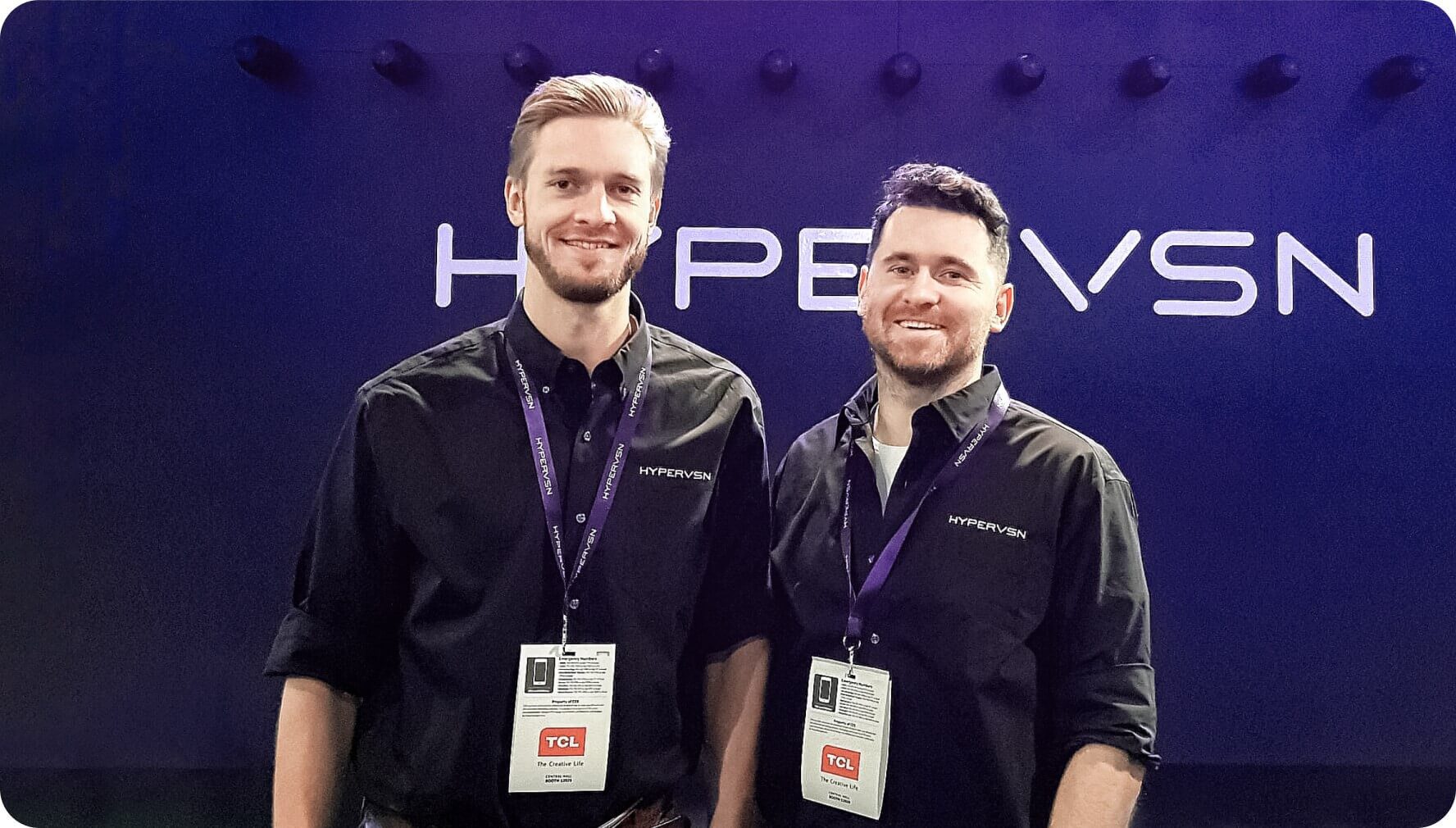
Chykeyuk grew up in Brest, Belarus, on the same street as Stavenka. Their friendship survived a move to Britain, where Chykeyuk studied at Oxford and Stavenka was in London. They visited each other and exchanged ideas. Before there were investors to persuade, there was a familiar person with whom an unfinished thought could be tried out.
The bicycle idea emerged over a beer beside the Thames. It is a pleasingly unceremonious setting for the beginning of a display business. No launch stage, no countdown, just two friends noticing the traffic around them. They would later take their wheel display onto the BBC’s Dragons’ Den, where a product designed for passing strangers had to hold the attention of people paid to be sceptical.
Chykeyuk’s Oxford years supplied a different kind of preparation. He earned a doctorate in Engineering Science, studying three-dimensional image analysis. His later work would bring questions about how images are formed into a public, commercial setting. A shop window is a demanding examination room: the audience can leave without raising a hand.
Leaving the wheel behind
Their 2012 television appearance produced investment offers. They chose to proceed without accepting them. For a young business, that is a consequential distinction: a successful pitch can end with the founders keeping their existing ownership arrangements. Applause and an agreement are separate things.
The more lasting change came with the next display. The team developed a device that could make an image appear to float, carrying the visual effect beyond a moving bicycle. Chykeyuk described recognising its potential and concentrating the company’s efforts on it. The bicycle product could wait. An early invention had opened a door into a different market.
In 2015, Kino-mo won the startup category of Pitch to Rich, the competition associated with Richard Branson. Backing from Branson and Mark Cuban became part of the company’s history. Those names made the venture easier to introduce, but the product still had to earn a place somewhere. An investor might enjoy a demonstration once. A retailer would need a reason to keep it switched on.
HYPERVSN’s commercial launch at CES in 2017 put the floating visuals before the electronics industry. By then, the problem had expanded beyond making a convincing illusion. Chykeyuk needed a product that other people could install, manage and use without becoming experts in its construction.
The factory behind the illusion
The display uses rotating LED arms to create its floating-image effect. Software manages the content; multiple displays can be combined into larger installations. Viewers need no headset or special glasses. They can encounter the image together, while standing in an ordinary room. That makes the experience available to the passerby who never intended to take part in a technology demonstration.
Chykeyuk’s interests extend past the mechanism. In his account of the product, the viewer’s response is central. It is an unusually direct thing for an engineer to sell. The components disappear from the viewer’s immediate attention; the image, and whatever feeling it produces, remain.
“In the end what we are offering the world is emotions.”
Kiryl Chykeyuk
There is considerable physical work behind that moment. A meeting with Flex at Founders Forum in London in 2015 began a manufacturing relationship. HYPERVSN selected Cork, Ireland, for production. The collaboration included refining the design for manufacturing, product testing, certification and distribution. These activities have less theatrical appeal than a floating object. They are also the activities that let someone buy one.
Flex completed product introduction and onboarding by June 2017. Almost 2,500 units had been manufactured and shipped by that year’s end. The production story adds an essential chapter to Chykeyuk’s career: he was moving from demonstrating an effect to supplying a repeatable product. Every successful shipment required the illusion to survive a very material chain of events.
- 01 / HardwareRotating LED arms display the image.
- 02 / SoftwareContent is uploaded and managed.
- 03 / ContentThe object or character gives people something to watch.
Conceptual sequence, not a measurement of performance.
At Bank of America’s 2022 “A Transforming World” conference, Chykeyuk had two roles around the same event. His company helped create a holographic presentation featuring one of the bank’s executives, working on content and installation. Chykeyuk also opened the “Visions of a Transforming World” talk. He was selling a technology that could put a person’s image before an audience while continuing to appear before audiences himself. The work required a founder who could explain what the floating person was there to do.
A bigger room, a different question
Sphere supplied a conspicuous setting for the next stage. HYPERVSN’s installation occupies the atrium, where visitors arrive before the main experience. Chykeyuk described a wall comprising 420 units, with displays coordinated to present the content. The installation demanded cooperation among numerous technology suppliers and teams. Even a business built around grabbing attention must spend much of its time arranging things that visitors will never notice.
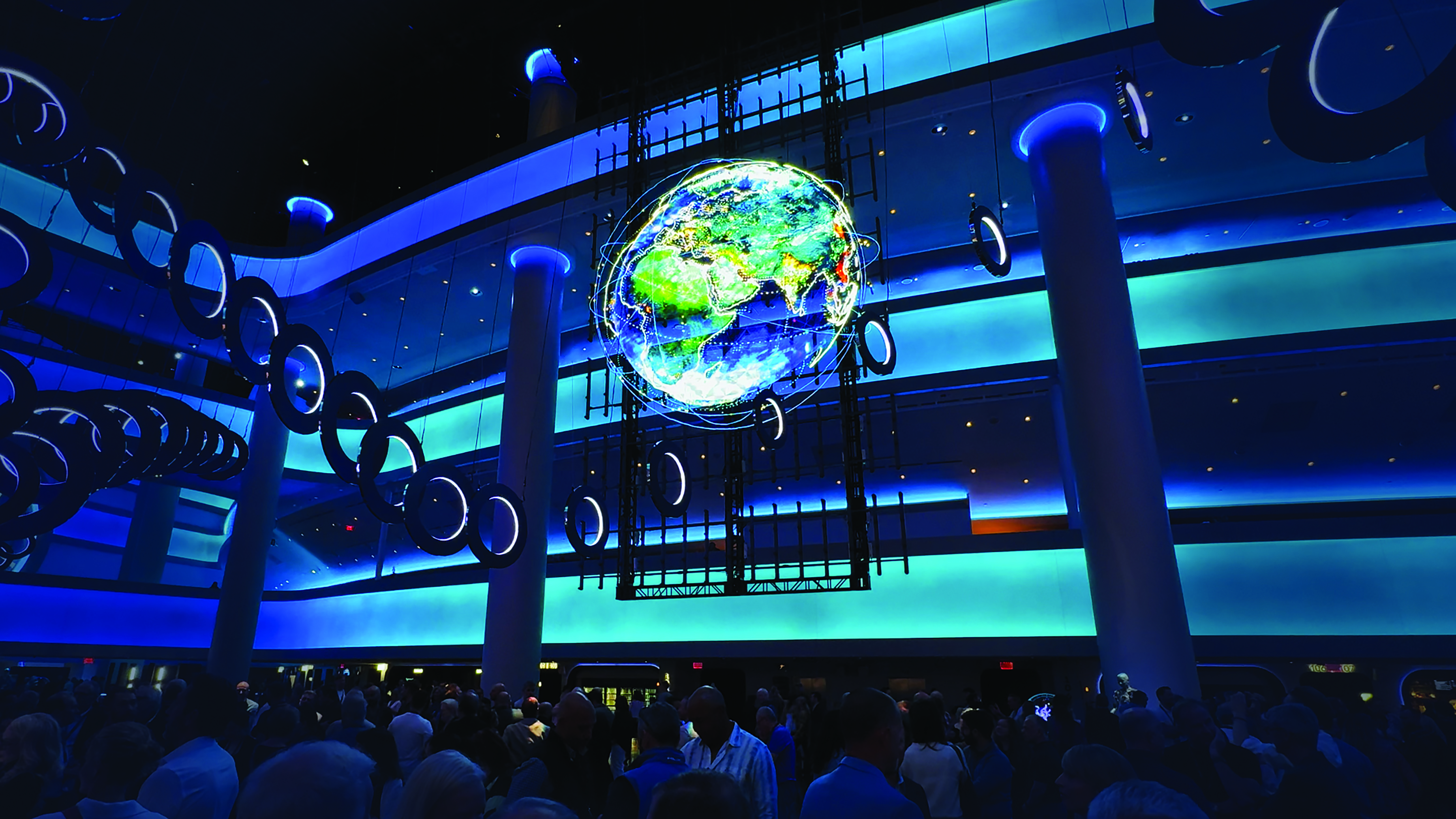
The setting also clarifies his argument about entertainment. A venue’s relationship with its audience starts before the headline performance. Arrival, waiting and finding one’s bearings are opportunities to create an impression. For Chykeyuk, a display can contribute to that surrounding experience. The foyer gets a part in the production.
Scale, however, is only one direction in which a display can develop. In 2022, HYPERVSN introduced its SmartV Digital Avatar, combining a digital human with conversational technology. A visitor could ask for information. The image could respond. Something previously watched from a distance could become the other side of an exchange.
Chykeyuk has described retail uses that include welcoming visitors, explaining products and connecting with corporate chatbots. His 2024 vision allowed for smaller installations as well as larger ones. A shop with limited space could use a single display. The interesting measure becomes whether the encounter belongs in that particular place, for that particular customer.
His writing about the summer of sport in 2024 applied the same thinking to shops selling shirts, boots and other merchandise. The excitement of a match gives retailers an occasion to connect with fans. Chykeyuk’s interest was in carrying some of that atmosphere into the store. It is a more specific brief than asking a display to look futuristic. There is an audience, a reason for being there and a feeling already in circulation. His proposed technology has to find a useful place among those things.
A magenta suit enters the conversation
One of Chykeyuk’s accounts of entering American retail media has a comic supporting character: AI Mike, a holographic assistant wearing a magenta suit. The route to T-Mobile began with research into the American out-of-home advertising community and messages to people in it. A conversation with Mark Boidman led to a demonstration at Solomon Media Summit, where Chykeyuk met DPAA chief executive Barry Frey.
Frey subsequently visited the London studio on a Sunday with his daughter. He met Mike, noticed the T-Mobile colour and called Cherian Thomas at the company. Demonstrations followed, including at Cannes Lions. Chykeyuk credited Ala Dziamidava with driving the partnership through the work that followed. The initial rollout reached 24 locations. A digital character had benefited from the old-fashioned usefulness of an introduction.
In another retail relationship, Tissot’s interest began after a panel at ISE in Barcelona. Chykeyuk recalled the pleasure of hearing conversation and laughter around him again at the event. Tissot visited the booth; a discussion became a partnership. By November 2025, the watch brand was rolling out holograms across 40 stores. For all the attention on digital humans, actual humans remain busy making the arrangements.
Something useful to say
Recent work takes the display into a less leisurely environment. At Miami International Airport, HYPERVSN’s digital humans form part of a virtual-assistant service for passengers. By September 2026, the deployment offered spoken support in 40 languages, alongside information about flights, directions and airport facilities. Here, attracting attention is the beginning of a practical task. A traveller wants to get somewhere.
That application gives Chykeyuk’s ambitions a useful test. A floating character may earn a first glance through novelty. Directions must still help the passenger find the gate. The visual invitation and the underlying service have to work together, especially when the person asking is in a hurry.
Customer requests have already shaped the company’s direction. Customers wanted to interact with HYPERVSN’s visuals, helping drive products that let them participate. Chykeyuk’s stated ambition is to bring these experiences into everyday retail. The display has to become something a customer can use as well as admire.
There is continuity here with the bicycle wheel. Both ideas meet people in motion, without requiring them to prepare for the encounter. Years of engineering, pitches, partnerships and installations sit between the two. At either end, Chykeyuk still needs a stranger to give him a moment. What he puts inside that moment has become more interesting.
Follow the work
For more from Chykeyuk and the projects discussed here: