A warehouse can hold two versions of the same box. One sits on a shelf. The other exists in the inventory system, complete with an address and an identity. When the two disagree, someone has to go looking. Software may be quite satisfied with its answer. The person waiting for a delivery tends to be less philosophical.
SK “KG” Ganapathi built Vimaan around that disagreement. But he arrived at it by a more airborne route. When he founded the company in 2017, the idea was to send drones through warehouses to help count stored inventory. Tall shelves and changing stock made an appealing assignment for an aerial robot. A flying machine could reach places where counting otherwise required considerable effort.
The drones worked. Vimaan put its drone-based cycle-counting product into use. Then customers began describing problems that extended beyond the shelves. Ganapathi and his team listened, and the business grew to cover more of the warehouse. A camera could help answer questions at receiving, during storage, at packing and on the way out.
That change is the hinge of his story. An inventor with a long record in physical technology had to let the customer revise the assignment. The machine that attracted attention became one part of a broader system. There is a certain pleasure in this: a startup devoted to looking more closely also learned to listen more closely.
Before the boxes, the disk drives
Ganapathi’s education began in metallurgy. He graduated from IIT Madras in 1985, then earned a master’s degree in metallurgical engineering at Ohio State in 1988 and a doctorate in 1990. The route from those degrees to warehouse inventory passes through several businesses concerned with how machines sense and represent the physical world.
B.Tech · Metallurgy
MS · Metallurgical engineering
PhD · Metallurgical engineering
He founded Fidelica Microsystems, which was acquired by Lenovo, and Verreon, which was acquired by Qualcomm. He also held technology leadership roles at DAS Devices and Qualcomm. These earlier ventures give Vimaan a longer prehistory than its founding date suggests. By the time he started working on warehouse vision, he had already lived through the process of turning technical inventions into companies.
His own account of selling disk-drive components supplies a useful detail. In that business, the customers and their requirements were relatively well understood. A salesperson with industry knowledge could work with a limited group of equipment manufacturers. The job was to improve something buyers already knew they needed.
Fingerprint sensors presented a different experience. A familiar sales approach initially suited computers and laptops. Expanding into enterprise, government and point-of-sale applications brought different buying habits. The company had to reconsider its hiring. Ganapathi tells this as a lesson in matching people to the market they actually face. Experience, it turns out, comes with a warning against photocopying experience.
A customer can edit an invention
Vimaan emerged publicly in January 2022 with $25 million in combined seed and Series A financing from NEA, Wing Venture Capital and Neotribe Ventures. That figure describes the financing announced at launch. It is a company milestone, attached to a specific moment, rather than a measure of Ganapathi’s personal wealth.
Combined seed + Series A financing announced at Vimaan’s January 2022 launch.
The quiet development years did not mean the company had withdrawn from customers. Ganapathi sought out established operators in several sectors. At MODEX in 2022, after the public launch, he was testing whether the problems those early customers had identified also mattered to a wider audience. That is a rather practical question for a founder to take to a trade show.
The warehouse work expanded the original proposition in three directions: the hardware became part of a system with vision algorithms and software; counting became a broader inventory service; and the business moved toward a data subscription. Each change altered what Vimaan was asking its customers to buy. The useful output was increasingly the information produced by the equipment.
The distinction becomes easier to understand at a receiving dock. Reading a label identifies the label. A visual inspection can also examine the carton and its condition. In his discussions of inventory control, Ganapathi has emphasized dimensions and damaged cartons or labels as useful information to capture while goods arrive. Finding a problem there gives the operator a chance to deal with it before the shipment moves further.
Follow the box.
For a founder, that makes the warehouse a demanding editor. A product can be clever, yet leave the customer with another unresolved step. The remaining step has a habit of becoming the customer’s principal subject of conversation. Ganapathi’s work follows those conversations into the places where the original product description was too small.
The founder still has to sell
Ganapathi writes about sales with the specificity of someone who has had to do it. He advises founders to make the early sales themselves and establish a process that another person can repeat. A handful of wins resting on the founder’s contacts or persuasive presence is a fragile basis for building a department.
He also distinguishes an established market from a new category. In a familiar market, an early sales hire may make sense. When buyers are still learning what the product is for, the founder has more work to do. Enthusiastic feedback can arrive well before dependable demand. Hiring at the wrong moment can make that gap expensive.
His preferred first sales leader is willing to sell personally before assembling a team. The candidate should understand the product and the customer’s purchasing process, then turn those lessons into working practices. He looks for technical understanding and startup experience, and is receptive to someone whose previous startup did not end in a celebrated exit.
The hiring conversation itself matters. Ganapathi wants candidates to meet people across engineering, operations and the wider organization. He pays attention to whether their thinking develops as they learn. Someone who asks useful questions can reveal more than someone who arrives with a polished answer to everything. A spotless résumé cannot do the listening on its owner’s behalf.
Once the person joins, he assigns the founder a substantial role in teaching them the business. He describes shadowing sales conversations, handing over responsibility gradually and allowing the new leader to improve the process. Delegation, in this account, takes preparation. The founder cannot simply buy a replacement for the difficult parts of the job.
“Customers want to see you solve their whole problem.”
KG Ganapathi · Speaking to entrepreneurship students
Recognition, and the responsibilities beside it
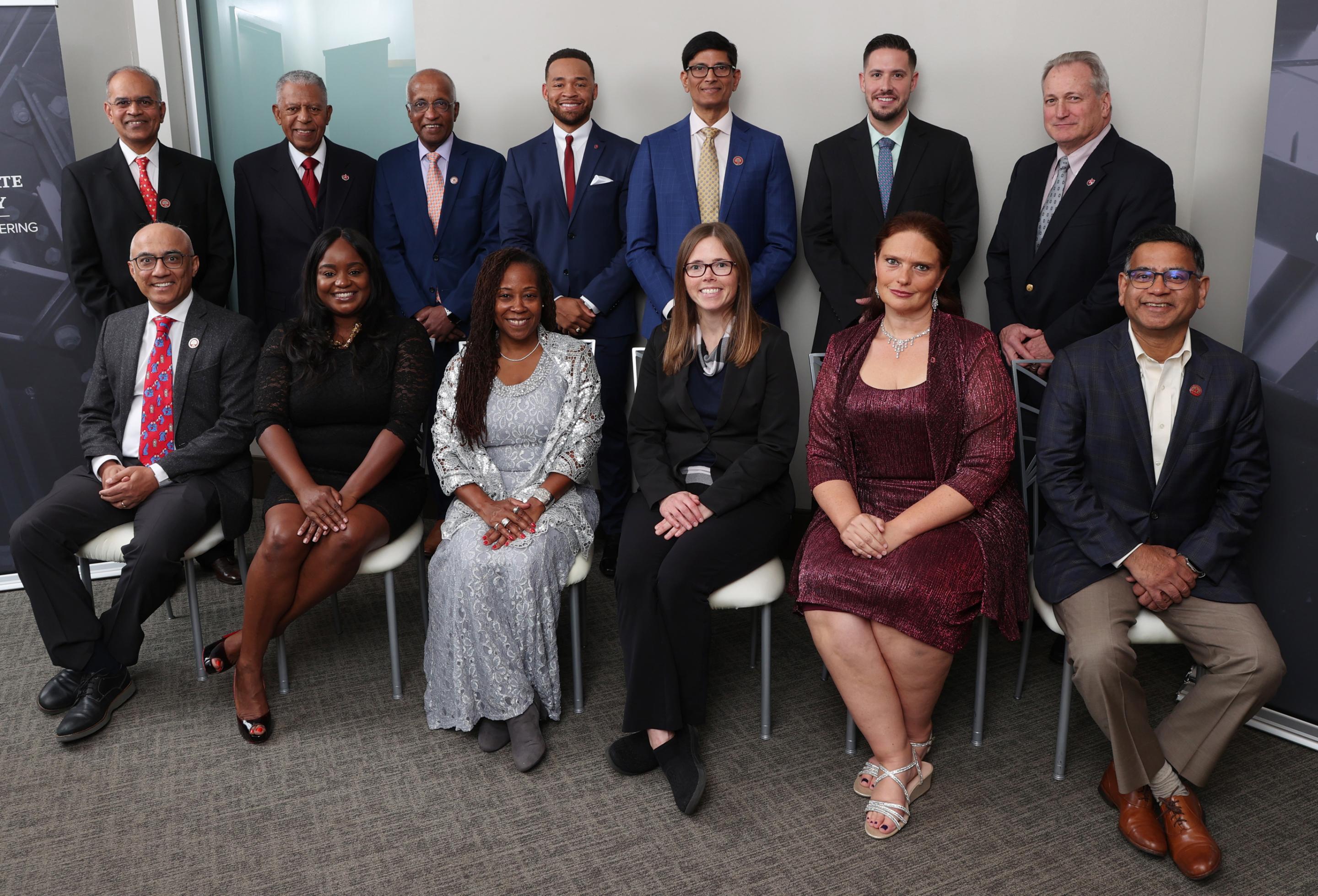
In 2021, IIT Madras named Ganapathi a Distinguished Alumnus. In October 2023, Ohio State recognized him with its Distinguished Alumni Award for Entrepreneurship and Innovation. The university described him as a co-inventor on more than 40 issued and applied patents. Those dates and descriptions place the honors within a career that connects research, invention and business.
His connection to universities includes more than award ceremonies. He serves on the Founding Advisory Board of UC Berkeley’s Management, Entrepreneurship, & Technology undergraduate program. At IIT Madras, he and his wife Nita supported an institute chair, whose first occupant was civil engineering professor Ligy Philip. The chair was inaugurated in September 2021.
The institutional ties have a practical counterpart in visits and talks. Ohio State’s Integrated Business and Engineering Honors Program has described students visiting Vimaan to hear about his startup journey. In June 2025, BIT Sindri hosted his webinar on converging AI technologies in robots and drones for emerging markets. These are settings where the business becomes material for the next group of engineers.
The company’s record also includes a difficult financial matter. In May 2025, Vimaan agreed to pay $1.5 million to resolve federal allegations concerning its eligibility for a National Science Foundation research grant after becoming majority-owned by venture capital operating companies. The settlement involved the company, included no admission of liability and resolved allegations without a determination of liability. Ganapathi signed for Vimaan as CEO.
That episode belongs alongside the funding announcements and awards. Leading a technology company means carrying obligations that extend beyond whether the technology performs. A portrait built entirely out of launch days would leave out part of the work, and part of the responsibility.
Still looking beyond the label
By October 2026, Ganapathi’s public work was still concerned with what a warehouse vision system should understand. Vimaan scheduled him to lead an October 14 webinar about parcel scan tunnels, with a demonstration of ParcelSCAN and questions from operators. The advertised problems were concrete: torn labels, dented boxes and awkward barcode placement.
The proposed session also covered damage detection, dimensions and reading text when barcode scanning fails. These are small details with an operational life. A parcel has a shape, a condition and a destination, as well as a code. Ganapathi’s current argument asks the scanning system to account for more of that parcel.
There is continuity here with the earlier sales lessons. Both ask him to resist treating a familiar description as the whole situation. A warehouse buyer may need something broader than counting. A sales hire may need a different kind of experience. An inventor may need to let a promising piece of equipment change its place in the business.
His career gives that idea a physical setting. Materials engineering, sensors, disk-drive components and warehouse cameras all involve getting useful information from things. Entrepreneurship adds another kind of observation: what people do with a product once it leaves the inventor’s hands. The evidence can be inconvenient. It can also supply the next assignment.
Ganapathi’s story remains open at the loading dock. The practical ambition is clear enough: help inventory systems reflect what is actually present and moving. The box on the shelf and the box in the database ought to agree. When they finally do, very few people will stop to admire the achievement. They will get on with their day. For this particular business, that is a satisfying result.