A pen has a modest job description. It makes a mark. Put it in a supermarket aisle, however, and another task appears: persuade someone to choose it from a wall of objects that can also make a mark. Kevin Justice has spent part of his career working on that second problem. One answer involved a zebra, a smartphone and a door that opened out of the physical shelf.
The zebra was Zen, the mascot of Zebra Pen. The door was an augmented reality experience developed by Ignite2X, the Allentown agency Justice founded and now leads as co-chief executive officer. Scan a QR code, meet the character, explore the products, perhaps take a selfie. A shopping decision had acquired a small detour.
It is a useful introduction to Justice because it puts his interests in the same place. There is design in the character, technology in the experience and a commercial question underneath both. The shopper still has to want the pen. The zebra has work to do.
Before the zebra, an interactive career
Justice’s route to that aisle reaches back well before the current conversation about artificial intelligence. He attended Kutztown University of Pennsylvania, where he belongs to the Class of 1986. By the summer of 2004, he was co-founder and president of Imirage Inc., an Allentown company working in the interactive agency business.
That earlier chapter matters. Interactive work was already part of his professional life years before Ignite2X’s establishment in 2007. His career began with a creative foundation and expanded into digital media. The movement from designing something people look at to designing something people can use is a thread that continues through the work.
His creative and interactive project history includes Zebra Pen, Mack Trucks, Hershey Foods and Just Born. These are different businesses with different products. The combination gives his background a practical range: a truck and a candy brand place rather different demands on the person trying to explain them.
A lunch break with a purpose
At Ignite2X, Justice’s interest in technology has a recurring appointment: regular training and creative lunch sessions on bringing technical possibilities into marketing. It is a small detail with a clear function. An agency can acquire a tool quickly. Giving colleagues the understanding to use it together takes a place in the calendar.
Lunch is an agreeable setting for that work. The people who develop an experience and the people who explain it to a client need a shared vocabulary. A new technique has to survive the journey from an interesting demonstration to something a team can actually produce.
Justice shares the chief executive role with Andy Morfopoulos. Paul Pastrick oversees finance and operations. The team also includes strategy, creative, account, content and development roles. These connections give the technology somewhere to land: alongside the people responsible for the idea, the client relationship and the finished experience.
The aisle acquires another dimension
The Zebra Pen project began with a familiar retail constraint. Packaging and shelf signage have finite space. Customers have finite patience. A product may have more to explain than the aisle can comfortably accommodate. Justice described the ambition as helping the customer get more from the retail experience.
“Our goal is to help them maximize the customer retail journey.”
Kevin Justice, on the Zebra Pen experience
Ignite2X used QR codes to connect packaging and in-store signage with an augmented reality experience. The phone provided room for product discovery and a meeting with Zen. A consumer could learn about creative products or enter a Serengeti setting for a selfie with the mascot. The character became a guide through material that a package could only introduce.
The experience joined things that are often handled separately: the retail fixture, the product, the character and the customer’s device. Justice later described retailers, including Walmart, giving Zebra Pen premium placement and additional in-store opportunities. It was a practical consequence of offering an experience a retailer could use.
The names behind the prizes
In 2023, the Meet Zen augmented reality work received MUSE Gold recognition for in-store experiences. Justice appears in the credits as co-CEO, alongside creative director Virginia Porcino, interactive project manager Raymond Stivala and account director Joseph Petrosino. The names describe the collaboration more accurately than a founder’s portrait ever could.
Another Zebra Pen project, The Official Zen Office, received MUSE Platinum in social video. Its premise placed the products inside playful office vignettes. Actors and product placement supplied the comedy. The assignment allowed an everyday writing instrument to acquire a role in an office scene, with more personality than an inventory cupboard usually permits.
The brand’s 40th-anniversary campaign took a broader route. Running for 40 days, it combined social activity, videos, influencers, public relations, print and packaging that led into augmented reality. The integrated campaign received MUSE Silver. Justice is credited with colleagues across creative, account, project and development work.
The duration of Zebra Pen’s 40th-anniversary campaign. A social takeover, sweepstakes and QR-linked experience shared the occasion.
A separate Silver-winning partnership put Zebra Pen together with Just Born’s PEEPS brand for a spring promotion. Color connected the writing instruments and the Easter basket. In April 2023, Justice celebrated nine agency MUSE awards across work for Zebra Pen and the California Milk Advisory Board. He framed the celebration around the clients.
The PEEPS promotion ran in April 2022, with weekly prizes combining candies, merchandise and writing instruments. The campaign attracted more than 21,000 unique entries. Justice’s place in the credits connects him with a piece of work whose mechanism is easy to grasp: give two brands a shared seasonal occasion and a prize people can imagine using. The promotion also had designers and account leadership behind it.
A pen walks into a ballpark
In July 2024, Justice described another connection: Zebra Pen becoming the Official Signature Pen of Ripken Baseball. Ignite2X coordinated the sponsorship and developed its Signature Moments theme, tying writing instruments to the milestones of young athletes moving toward college. A signature gave the product a reason to belong.
The partnership carried the idea into the environment. Bullpens became the Zebra Zen Pen. A giveaway offered Cal Ripken Jr. memorabilia signed with Zebra Pen products. Digital activity and branding extended the association beyond the physical complex. The pun was doing useful work; baseball had supplied the first half of the name.
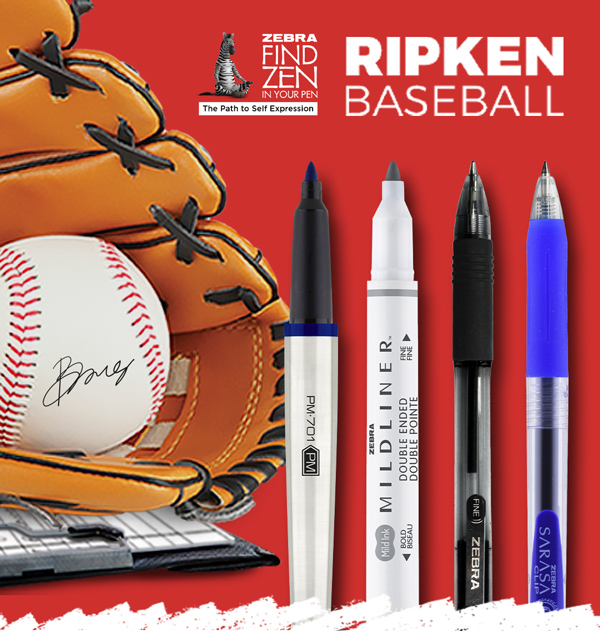
The example sits comfortably beside the augmented reality work. One project opened a digital environment; the other entered an existing sporting one. Both gave a pen a setting in which people might care about it. Justice’s account followed the relationship between product, audience and occasion, rather than treating sponsorship as a logo with seats.
Coffee, customers and a little sarcasm
Justice’s public writing has room for everyday comedy. His September 2025 article about personalization starts with a hypothetical barista who knows the customer’s order before being asked. It is an accessible way into a subject usually accompanied by a considerable amount of software terminology. Most readers can understand being remembered at a coffee shop.
He then turns to practical difficulties: departments keeping data apart, excessive automation and marketing without a measurement plan. The human example provides the test for the technical system. A communication that recognizes the customer’s circumstances has a better claim to being personal than one that merely inserts a name.
In November 2025, he considered how consumer brands could expand direct sales while maintaining their relationships with retailers. His recommendations included keeping partners informed, giving online and retail assortments distinct purposes, sharing customer insights and coordinating promotional calendars. The website and the store shelf were parts of the same customer relationship.
The argument brings his career back to the aisle. A digital channel can tell a longer story, test an offer or learn something about an audience. Those activities can support the business taking place at a retailer. For the customer, the logo on the product stays the same while the setting changes.
Another tool, another question
Artificial intelligence has become a subject in Justice’s writing, too. In June 2025, he explored how brands might respond as search expands into generated answers. In December, an Ignite2X article under his name considered AI applications in food marketing. His professional attention had moved toward another set of tools affecting how people find and encounter products.
The search article separated traditional search visibility from the challenge of appearing in an AI-generated response. He considered the value of clear answers and material that systems can interpret. In the food-marketing article, his examples ranged across product development and campaigns. The subjects extend the same working brief into new settings: understand how a consumer discovers a brand, then consider what the technology makes possible at that point.
In July 2026, he joined AITV for a conversation covering experimentation, personalized outbound sales, creative production and strategy. The discussion returned to trying things, learning and adapting. These are recognizable concerns for someone whose earlier work already involved bringing new technical possibilities into a creative business.
 ▶ WATCH THE CONVERSATION
That gives Justice’s career a continuity beneath the changes in vocabulary. There was interactive work at Imirage, then an agency where creative colleagues learn about technology over lunch. There are campaigns with shared credits, a zebra that meets shoppers through a phone and a baseball partnership built around the usefulness of a signature.
The tools give him new ways to approach an old assignment: help a person find a reason to pay attention, understand a product and do something next. Somewhere in that sequence, a perfectly ordinary pen gets to have a rather more interesting day.
Read on. Watch a little.
- Ignite2X and its team
- Kevin Justice on LinkedIn
- His articles at Ignite2X
- Meet Zen: campaign award entry
- The Official Zen Office: campaign video
- Zebra Pen meets Ripken Baseball
- His argument for DTC and retail working together
- The personalization article
- Kutztown’s 2004 alumni magazine · page 28
- Watch the AITV conversation