Before Howard Friedman ran Utz, he ate it. As a student at Dickinson College in Carlisle, Pennsylvania, he encountered the chips, pretzels and cheese balls during study sessions and gatherings with friends. The company was close by in Hanover. The chief executive’s office was considerably further away, measured in the decades of work still ahead of him. A college snack can be many things. A preliminary meeting with your future employer is rarely one of them.
When the call about the Utz job came in 2022, the familiarity mattered. So did the prospect of building something larger. Friedman arrived with experience at Kraft Heinz and Post, companies whose products occupied an impressive amount of the American kitchen. Here was another familiar name, carrying a different obligation: a family business that had grown beyond its original territory, inviting an outside executive to help decide what came next.
A captain before a corner office
Friedman graduated from Dickinson in 1992 with a degree in economics. He had also participated in ROTC. His next classroom was the Army, where he served as a logistics officer in Seoul and at Fort Bragg, North Carolina, finishing his military career as a captain. Moving things, coordinating people and understanding how one decision affects the next were practical responsibilities before they became entries in a corporate biography.
He later credited his liberal arts education with teaching him to process information and connect ideas. When he interviewed at Kraft, he did so without the MBA that he recalled most candidates having. He subsequently earned one in marketing and finance at New York University’s Stern School of Business. His route joined an economics degree, military service and business training, rather than proceeding straight from business school into brand management.
“I’m paid mostly to be a facilitator of people and making sure goals are achieved.”
Howard Friedman, on leadership
That description gives his job a useful human scale. A facilitator has to understand what other people are trying to accomplish. Goals require someone to make choices and take responsibility for results. In his account of leadership, both belong in the same sentence. It is a modest description for an occupation that can produce rather grand business cards.
An education across the grocery store
At Kraft and Kraft Heinz, Friedman’s work crossed general management, sales and marketing. He led the Walmart sales team and eventually the refrigerated meat and dairy business. His career encompassed brands including Philadelphia, Oscar Mayer and Lunchables. These were products with established habits attached to them: things people knew how to buy without giving the matter a great deal of conscious thought.
His experience also included the organizational work surrounding Kraft’s separation from Mondelez and its later combination with Heinz. That history matters to the kind of executive Utz hired. A company assembled through acquisitions needs people who can make its separate parts function together. Packaging may display a friendly, familiar name; behind it sit purchasing decisions, production schedules, sales relationships and systems that have to agree with one another.
In July 2018, Friedman became president and chief executive of Post Consumer Brands, succeeding Chris Neugent. The cereal business had itself been formed through the combination of Post Foods and MOM Brands. The appointment put him in charge of another collection of familiar grocery names. It also made the relationship between a brand and the organization supporting it a daily management question.
Post then created a chief operations officer position for him, announced in July 2021 and effective that September. Reporting to chief executive Robert Vitale, he was assigned to help businesses collaborate, reduce costs, find revenue opportunities and improve processes. Acquisition targeting and evaluating potential savings were part of the brief. The work required looking across businesses while paying attention to their individual needs. By December 2022, he was leaving Post to lead Utz.
- 1992Dickinson economics graduate
- ArmyLogistics officer; completed service as captain
- KraftBrands, Walmart sales, refrigerated foods
- 2018President & CEO, Post Consumer Brands
- 2021Chief Operations Officer, Post Holdings
- 2022Chief Executive Officer, Utz
The family business gets another pair of hands
Utz announced Friedman’s appointment in October 2022, with a December 15 start date. He would also join the board. Dylan Lissette, chief executive since 2013, would move into the executive chair role as part of the succession plan. The handover linked a new operator to a leadership group with a long history inside the company.
The assignment came with a national distribution footprint and a portfolio extending beyond the original Utz name. It also came with Hanover, a place that remained central to the business. For Friedman, the opportunity was to apply experience gained inside larger organizations to a company that was still small enough for him to feel connected to its workings. Scale was useful. So was the ability to understand the whole enterprise.
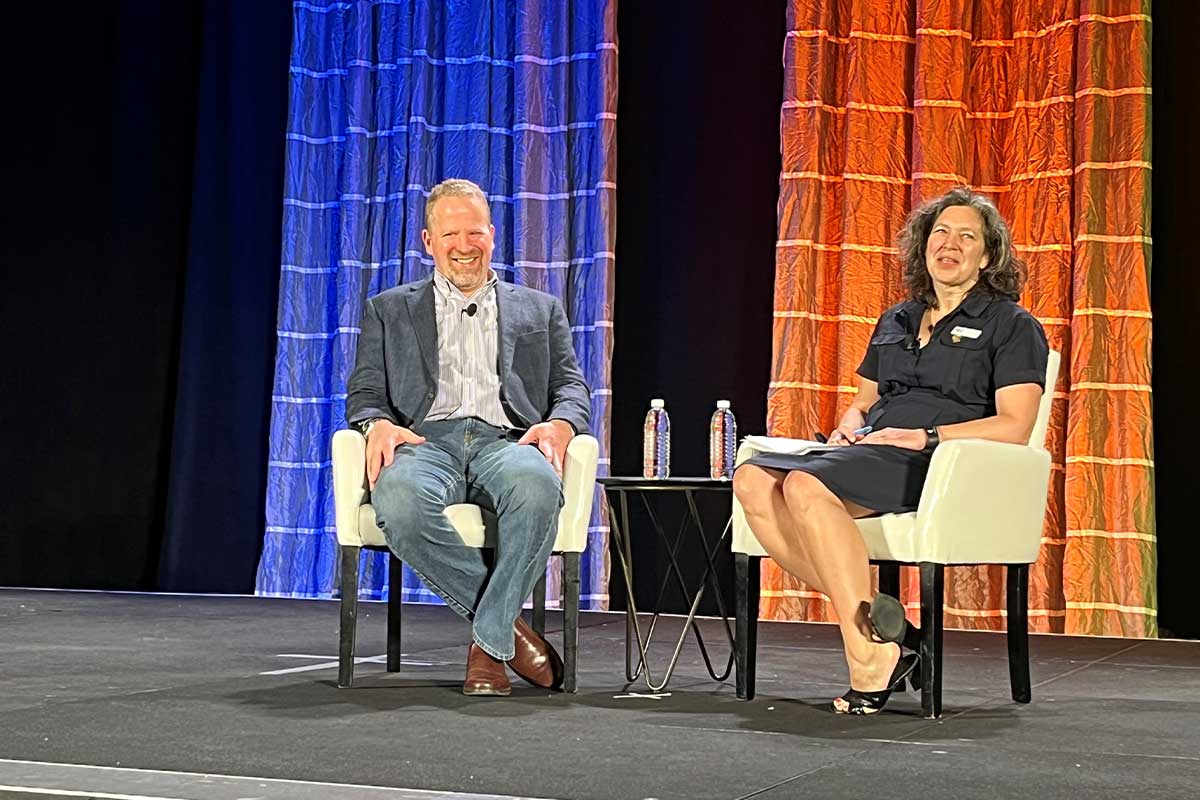
At SNAXPO in March 2023, he discussed the difficulty of combining acquired businesses. His approach began with understanding the acquiring company’s principles, then identifying what made the other business worth buying. Respect for the people involved belonged alongside clarity about the goals. An acquisition could bring something valuable into the organization only if the organization understood what it had acquired.
He also addressed the less ceremonial question of price. Inflation had pushed snack companies past familiar price points. Once cost pressures eased, he asked, how would the industry offer value and win back people who had drifted away? It was a revealing concern for a brand executive: the relationship with the customer continues after the price increase has gone through.
Four names, and the work behind them
By 2024, Friedman was describing a strategy built around four brands: Utz, Zapp’s, On The Border and Boulder Canyon. Expansion meant introducing more of that portfolio to places where the company already had a presence, as well as entering new geographies. The task involved deciding which products belonged where, then making the manufacturing and distribution work behind those decisions.
His own description was direct: “I’m a builder by nature so growing brands is what I love.” He spoke about curiosity, new ways of working and the impact the business could have in its communities. That ambition had a practical setting. Utz was investing in manufacturing and brand identity while working to reduce debt. An appealing bag on a shelf still has to earn its place there.
Marketing became a more deliberate part of the plan. Early in his tenure, Friedman discussed increasing spending over time from roughly 1% of sales toward the 3% to 4% range of peers. Jennifer Bentz joined the leadership team to help strengthen the company’s work in insights, innovation and marketing. Making a product available and giving a shopper a reason to choose it require different kinds of effort. The company was putting resources behind both.
A field trip with the chief executive
In October 2024, 40 Dickinson students visited Utz in Hanover through the college’s Burgess Institute for the Global Economy. Friedman led the visit. The route followed potatoes from harvest through the factory to a bag available at a store. Students saw technology, met people working in the business and encountered careers behind an object they already understood perfectly well as consumers.
There is an agreeable circularity to that visit. The former economics student who once ate the company’s snacks was now explaining how they reached a shelf. It brought his college connection into the workplace without reducing the visit to a reunion. The subject was work: what the business does, how its parts fit together and where a student might find a place in it. The bag of chips was doing rather a lot of teaching.
The figures that keep the story honest
Friedman’s job also comes with numbers that resist a tidy narrative. For the second quarter of 2026, Utz reported net sales of $371.8 million, up 1.4% from a year earlier. Branded salty snacks organic net sales rose 3.3%. Adjusted EBITDA increased 14.4% to $55.7 million, while the company recorded a net loss of $16 million.
These measures describe different aspects of the same quarter. Higher sales and improved adjusted earnings can sit beside a reported loss. Keeping those distinctions visible helps make sense of the assignment: investing in a business, improving its operations and producing financial results do not always move together in a neat procession. A chief executive has to answer for the entire set.
A new partnership, the same address
On July 21, 2026, Utz and Germany’s Intersnack Group announced an agreement to take Utz private. The terms provided $14.25 in cash for each outstanding Class A share and an enterprise value of about $2.9 billion. After closing, the Rice and Lissette family entities and Intersnack would each own half of the business. The announcement included a continuing commitment to Hanover.
The agreement was expected to close in the fourth quarter of 2026, subject to approvals and other conditions. In his July communication to employees, Friedman emphasized that the company would continue operating independently until closing. He thanked people across plants, warehouses, customer teams and corporate functions, and directed attention back to making products and serving customers. The transaction gave the company a prospective new ownership structure. The day’s work still needed doing.
Friedman has described Utz as a business with more capabilities to build and more investment ahead. His path offers a useful way to understand that outlook: economics, logistics, sales, brands, operations, then responsibility for a company with a family’s name on the bag. Each stage has added another set of people whose work needs to connect. The student knew where the snacks ended up. The chief executive is responsible for helping them get there.
Keep reading, keep watching
- Utz · company website
- Howard Friedman · LinkedIn
- Dickinson · leadership interview & video
- Dickinson · plant visit & video
- Dickinson · college and Army years
- SNAXPO · conversation with Christine Cochran
- Post · the operations appointment
- Post · the 2018 CEO appointment
- Utz · CEO succession announcement
- Brand strategy · four names
- Brand investment · Jennifer Bentz
- Food Dive · the national expansion
- Utz · second-quarter 2026 results
- Utz · proposed Intersnack transaction
- Employee communication · July 2026