The day before Thanksgiving in 2015, Mason Dixie put its frozen biscuits into a Whole Foods store in Northern Virginia. The supply was supposed to last five weeks. It disappeared in three hours. For a business built around serving people across a counter, this was a rather pointed suggestion: perhaps the next customer did not need to visit the restaurant at all.
- A Washington biscuit business became a Baltimore frozen-food company.
- The pitch: familiar comfort food, real butter, less work at home.
- The hard part: getting from a popular recipe to a paid grocery order.
A freezer changes the brief
Ayeshah Abuelhiga started Mason Dixie in 2014. The daughter of Korean and Palestinian immigrants, she had grown up around her parents’ Baltimore carry-out business. Comfort food was familiar territory. Corporate work, including a career at Audi, had come before the biscuit counter. Her original ambition was a restaurant business.
The Kickstarter campaign collected $28,035 from 333 backers against a $27,500 goal. That bought a beginning, rather than an entire national food company. Early pop-ups sold out. Customers wanted something they could take home, and Abuelhiga tried freezing dough, vacuum-sealing it and selling it from an ice chest.
There was resistance inside the kitchen. Her pastry chef worried that freezing would damage the product. Abuelhiga tested it anyway. In her account, the biscuits baked up beautifully. A customer who worked for Whole Foods helped open the retail door. An experiment attached to the restaurant was becoming a business with its own demands.
November 2015 · First Whole Foods trial
Butter has a business model
Mason Dixie occupies an interesting corner of the freezer aisle. Its food is indulgent: biscuits, eggs, sausage, cheese. Its argument concerns the ingredients and the convenience. A shopper can buy the breakfast they crave without making dough, assembling a sandwich or joining a drive-thru queue.
The range now stretches across biscuits, croissants, English muffins, pancakes, waffles, burritos and chicken sandwiches. Households buy it through grocery and club stores. Hotels, cafés and institutional dining operators buy through foodservice. Wholesale distribution puts the same brand into several kinds of breakfast routine; online sales provide another route to consumers.
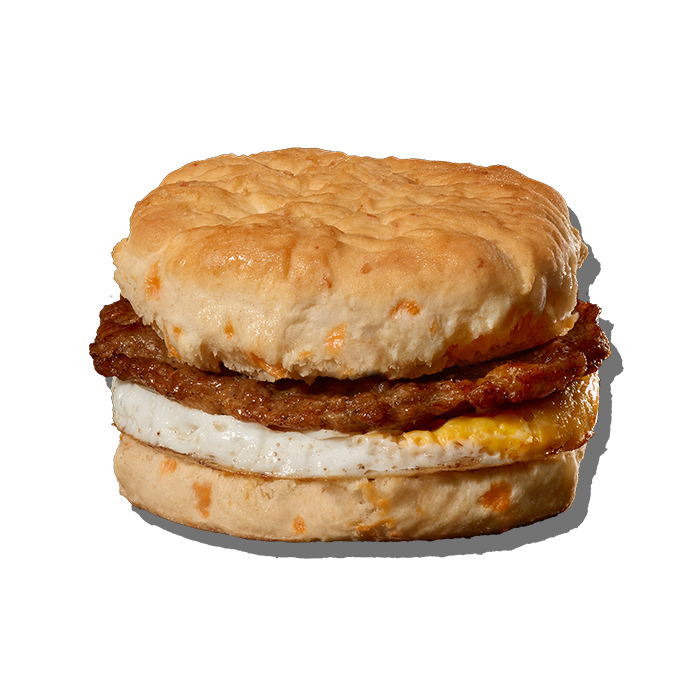
The alternatives are formidable. Pillsbury occupies the biscuit category; Jimmy Dean and Tennessee Pride are familiar frozen-breakfast competitors. Mason Dixie’s positioning emphasizes butter, dairy and recognizable ingredients. That gives shoppers something specific to compare beyond the picture on the carton.
Ingredient standards do not make a sausage biscuit diet food. A Whole Foods listing for the brand’s croissant sandwich records 400 calories and 10 grams of saturated fat. The useful distinction is about formulation and eating experience. A shopper still has to decide whether the product fits their budget and breakfast.
Financing had to follow that promise. In a 2021 interview, Abuelhiga described raising $6.3 million during the previous year, primarily from private investors, with women providing much of the capital. She stressed finding backers who believed in the product. That is useful context for the origin story: an inexpensive experiment can reveal demand, while supplying that demand at scale still requires serious money.
Eleven pallets. One penny.
The freezer solved one problem and introduced a collection of others. In an interview about the early business, Abuelhiga recalled team members loading car-share vehicles with cases and delivering them to stores. The first distributor order was 24 cases. Eventually, an order reached 11 pallets. It felt like progress.
Then came a deduction. According to her account, the distributor said the shipment had never arrived, and the payment was reduced to a penny. She pushed a senior executive to search the freezer for the disputed pallets. A growing purchase order had concealed a much less cheerful question: would the company actually collect?
“It’s not a get-rich-quick scheme.”
Ayeshah Abuelhiga · Express Checkout interview, 2025
Shipping created another limit. Mason Dixie discontinued its online store at the end of 2019 because delivery was too expensive. By August 2020, pandemic demand had prompted plans to reopen it. The product had not changed its addressable audience overnight. The economics of reaching that audience had changed.
The restaurant closes. Breakfast travels.
In 2020, the Washington restaurant closed permanently. Abuelhiga moved the business to Baltimore. Retail had already supplied a second way forward; frozen breakfast handhelds followed in 2021. The kitchen that customers once visited had become the starting point for food they could eat elsewhere.
By September 2025, the company described a network of more than 20 manufacturers, primarily in the Midwest. Proximity to ingredients and central distribution mattered. Foodservice also extended the brand into roughly 3,000 Marriott hotels, according to that account. Expansion could happen through other people’s buildings.
Abuelhiga’s comparison was blunt: another restaurant could cost about $1 million and, if successful, produce $1.5 million to $2 million in annual revenue. Those were her illustrative economics. Packaged food offered a different relationship between a new sales location and the capital required to reach it.
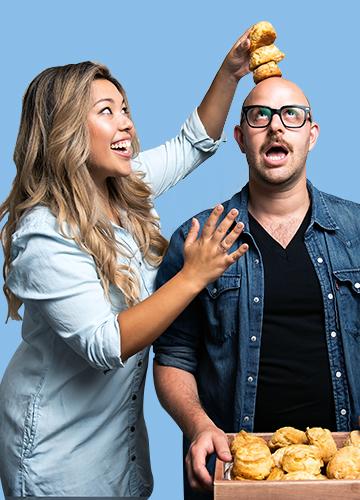
The company’s public culture makes room for people with different backgrounds. Its team page calls inclusion a guarantee. Abuelhiga and co-owner Ross Perkins even describe becoming partners while breakdancing. Their promotional photographs suggest that a biscuit business can tolerate a little silliness alongside its production schedules.
A $2 biscuit, and a useful lesson
In July 2026, Mason Dixie announced a chicken biscuit sandwich for selected Costco regions: the Northeast, Bay Area and San Diego. The eight-count box carried a suggested price of $15.99. Each sandwich offered 11 grams of protein and preparation in under three minutes.
The menu is moving beyond the morning rush, too. Pull-apart Parker rolls, reported in 2026 with honey butter or garlic parmesan butter, give the brand a reason to appear at dinner. Familiar bread remains the connecting idea.
Volume can help with the premium-price problem. So can restraint. In 2024, the company cut back its assortment and concentrated on natural-food retailers before pushing further into conventional grocery. Growth required choosing which products and accounts deserved resources.
The transferable lesson is practical: test the thing customers request, then measure whether you can deliver it profitably. Mason Dixie’s route depends on a product that survives freezing, buyers willing to pay for its differences, reliable manufacturing and disciplined distribution. Without those conditions, a queue outside a restaurant proves remarkably little about a national grocery business. The freezer opens a door. Someone still has to pay the freight.