The oat bar had found its customers. Now it needed somewhere to be baked. By 2019, Bobo’s was confronting a peculiar reward for success: orders that its production setup could barely accommodate. A jam-filled toaster pastry, meanwhile, was taking longer to make than expected. There is something wonderfully inconvenient about a food business. However persuasive the packaging, the oven still gets a vote.
- Baked oat snacks, built around familiar flavors and portable breakfasts.
- Growth exposed a production bottleneck and brought more outside capital.
- A bigger bakery let Bobo’s keep manufacturing under its own roof.
01 A kitchen with a distribution problem
Rewind to Boulder, Colorado, in 2003. Beryl Stafford and her daughter Alex baked oat bars on a rainy afternoon. Alex’s nickname was Bobo. The bars reached a local coffee shop, and a kitchen activity acquired the beginnings of a business. The name was already there. So was the emotional territory: something a parent might make, wrapped for somebody who lacked the time.
That territory still explains the assortment. There are oatmeal bars, small oat bites, nut-butter-filled bars, fig bars and PB&J oat snacks. Whole-grain oats provide the recurring ingredient. Chocolate, fruit and peanut butter provide the invitation. A shopper does not need to learn a new eating ritual. Breakfast, a bag for the commute, an afternoon snack: Bobo’s sells into moments people already have.

The business occupies the packaged-bar aisle alongside alternatives such as Clif Bar and Nature’s Bakery. Its particular pitch pairs a baked texture with recognizable pantry ingredients and gluten-free certification. Those features give shoppers several reasons to pick it up. Taste has to give them a reason to buy it again. A charming origin story cannot do the chewing.
For a retailer, that repeat purchase is the important part of the story. Winning a place on the shelf creates an opportunity; selling through earns another order. Bobo’s has to satisfy two customers at once: the person eating the bar and the buyer deciding how much shelf space it deserves. A dependable supply matters to the second customer as much as a dependable texture matters to the first.
02 The pastry that slowed the line
The first outside check arrived in 2017: an $8 million Series A led by BIGR, with Range Light participating. It supported marketing and a national sales team. That is the attractive part of expansion, the part that puts a product in front of more people. Manufacturing capacity has to follow those introductions into the supermarket.
By July 2019, Bobo’s had raised another $5.5 million after a $3.5 million round the previous September. CEO TJ McIntyre said the company had “unexpectedly ran out of capacity.” Toast’r pastries had complicated the calculation. Bobo’s bought a former Canyon Bakehouse facility in Loveland and kept production in-house because it doubted an outside manufacturer could maintain its standards.
Every new flavor makes a promise the production line has to keep.The operational lesson
This was an operating constraint, rather than evidence that customers disliked the idea. The distinction matters. More promotion would have deepened the problem. The company needed more room to bake, and money to make that room useful. A product’s commercial appeal and its manufacturing difficulty belong on the same spreadsheet.
03 Ten million dollars to keep the crumb
In November 2021, Bobo’s announced plans to invest $10 million in a consolidated Loveland facility. It opened the following November, bringing production, packaging and warehousing together. At 123,000 square feet, the new operation was a considerable distance from a home kitchen. Its announced capacity was one million bars, bites or toaster pastries a day. Capacity, of course, is what a facility can make, not what customers have bought.
+ warehousing, together.
The company worked with Victory Packaging and Smurfit Westrock on equipment, financing and operating processes. Their account describes automation introduced in phases and employee training alongside the machinery. That pairing is easy to overlook. A faster machine does little good if the surrounding work cannot keep pace. The challenge was preserving the product’s familiar character while changing the system that delivered it.
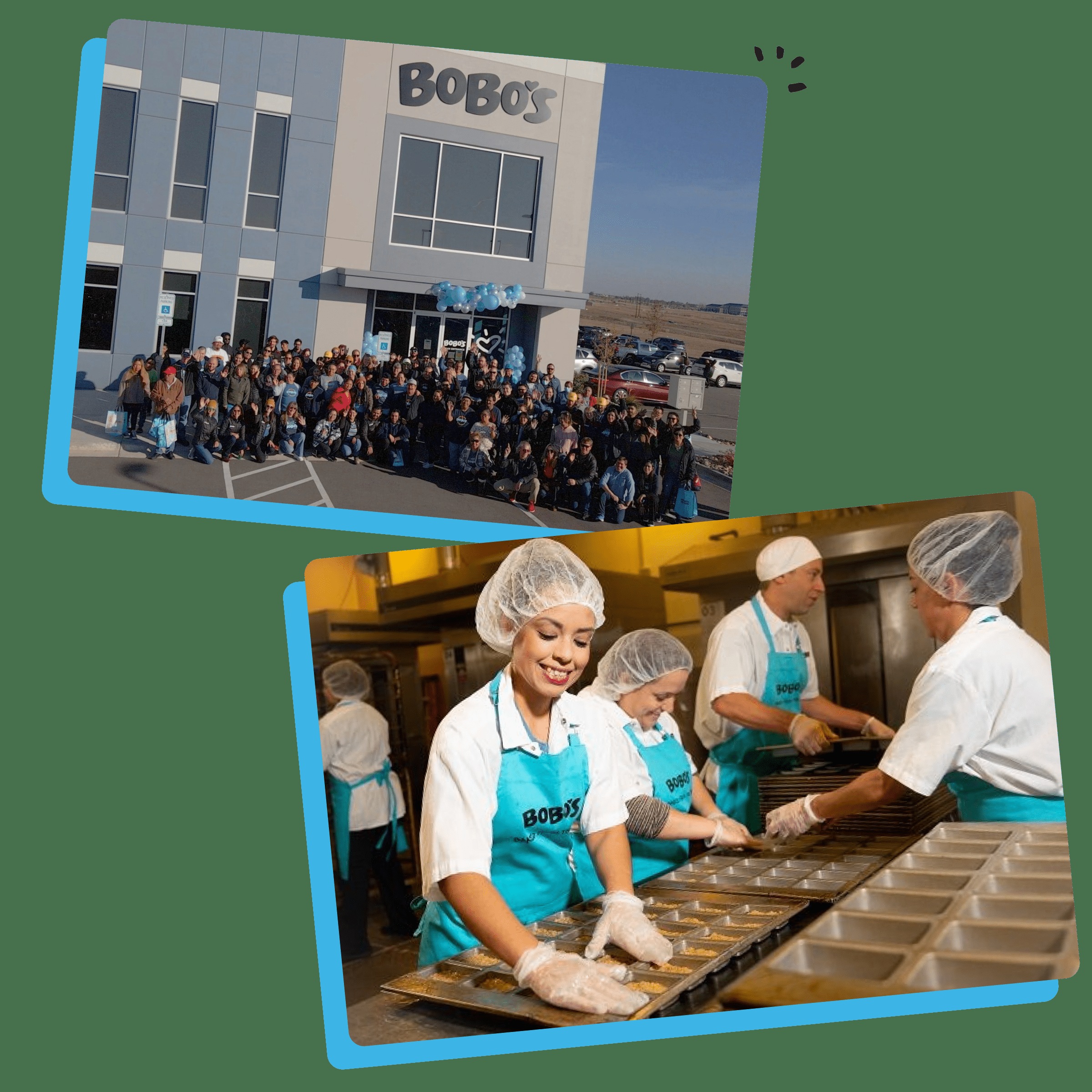
Keeping that work inside the company also means accepting responsibility for it. Bobo’s describes a gluten-free bakery with daily testing of every batch of oat products. This is a less photogenic kind of expertise than inventing a flavor, but it helps turn a dietary claim into a repeatable process. The purchase begins with a promise printed on plastic. Behind it sit sourcing decisions, production routines and checks.
04 A sandwich without the sandwich chore
In April 2023, Bobo’s launched PB&Js in strawberry and grape. The familiar sandwich became a shelf-stable oat snack. That format makes the practical benefit obvious: something ready to put in a work bag, carry while traveling or keep in the pantry. Convenience is often a matter of removing one small task at exactly the right moment.
For buyers, the details deserve as much attention as the nostalgia. Bobo’s says its products are GFCO-certified gluten-free, and its oat bars, bites and PB&Js are made without animal ingredients. Its protein bars contain honey. Several products contain peanuts or tree nuts. A family-friendly brand does not make every flavor suitable for every family; the particular wrapper still matters.
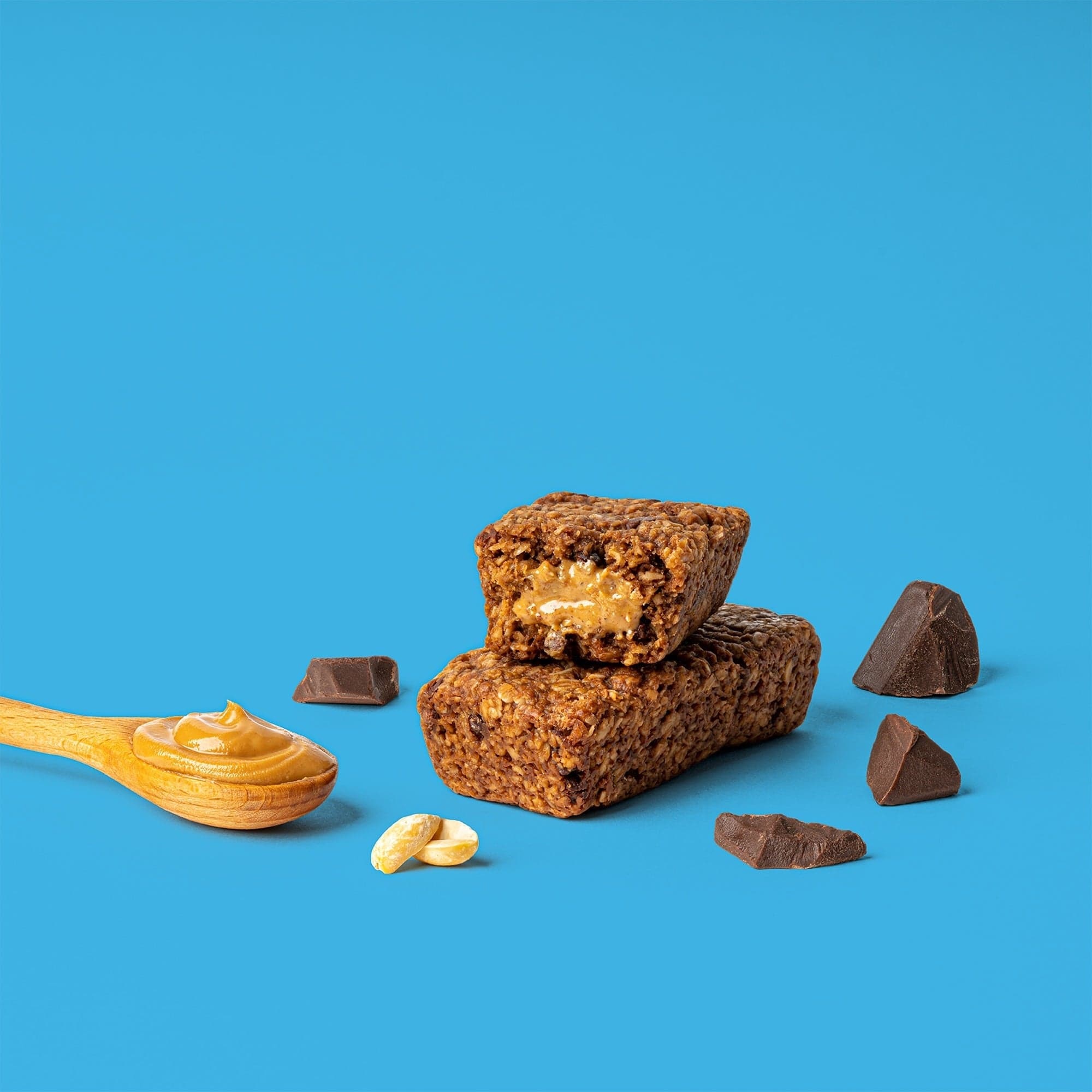
The commercial model combines retail distribution with direct online sales, including subscriptions. Grocery shelves offer the chance encounter; an online pack serves the shopper who already knows the flavor. The family language also extends into community programs. Bobo’s describes seasonal profit donations to There With Care and PFLAG, alongside employee volunteering with Colorado organizations.
05 The wrapper learns a new word
In March 2025, the flagship oat bars became Oatmeal Bars. The company wanted the packaging to communicate the filling breakfast role customers were already giving the product. In March 2026, it announced another refresh: brighter packs, five PB&Js instead of four, six oat bites instead of five, plus Raspberry PB&J and Cherry Pie Oat Bite. The rollout was set to begin in April.
The changes suggest a company paying attention to how often its snacks leave the cupboard. A bigger multipack is a practical adjustment to the shopping list. It also gives the bakery another volume calculation to get right.
The useful lesson for another founder is fairly specific. Find the familiar occasion, prove people want your version, and measure what it takes to deliver repeat orders. Owning a bakery makes sense only with enough demand, capital and operating skill to support it. Without those conditions, extra capacity becomes an expensive room. Bobo’s story makes the humble oven a central character. It has earned the billing.