Consider the five-cent chocolate bar. In 1900, Milton Hershey began selling a milk chocolate bar at a price that made a small indulgence available to ordinary buyers. The interesting part was what had to happen before anyone unwrapped it: a workable recipe, repeatable production, and a way of getting chocolate into people’s hands. The wrapper advertised a sweet. The business underneath it was an exercise in making something difficult feel routine.
- Hershey sells familiar treats to consumers and dependable shelf traffic to retailers.
- Its advantage joins brands, manufacturing, and a retail team serving more than 75,000 stores.
- Pretzels and popcorn widen the business; expensive cocoa still tests its economics.
01First, sell the caramel company
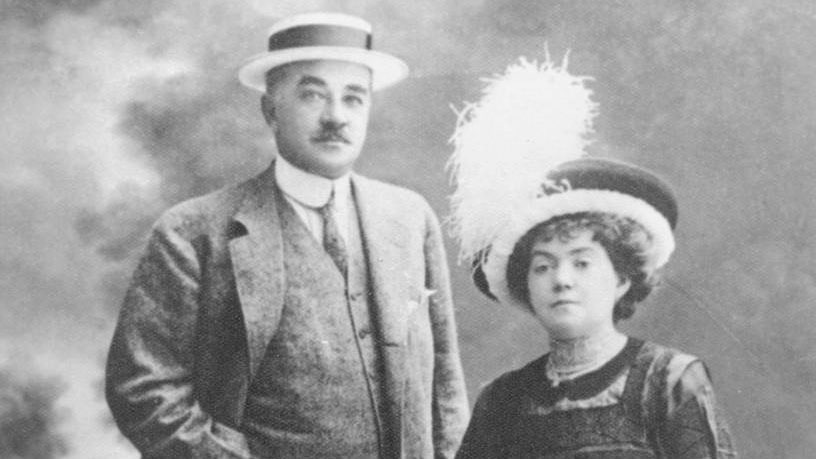
Milton’s first two candy ventures failed. A later success, Lancaster Caramel Company, gave him something more useful than a tidy entrepreneurial legend: a business he could sell. In 1900 he sold it for $1 million, keeping the chocolate operation he had established in 1894. Chocolate was a deliberate change of direction, financed by giving up a successful enterprise.
The factory that opened in 1905 came with a geographic argument. Central Pennsylvania offered milk, water, workers, and rail access. Building in farmland also meant providing somewhere for workers to live. The town grew around the production problem. It is hard to imagine a clearer illustration of how an apparently simple consumer product can require an entire supporting world.
02The customer behind the shopper
Today, The Hershey Company makes chocolate, candy, mints, gum, and salty snacks. Hershey’s bars and Kisses sit alongside Reese’s, Jolly Rancher, Twizzlers, Ice Breakers, SkinnyPop, Pirate’s Booty, Dot’s, and LesserEvil. For shoppers, these products solve modest, recurring problems: a lunchbox addition, a movie snack, a baking ingredient, something to put in a Halloween bowl.
For a supermarket or convenience store, the calculation is different. A retailer needs stock that sells, displays that fit, and deliveries that arrive before the occasion passes. Hershey earns money by making and selling packaged products through retailers and distributors, with additional direct retail and online channels. The consumer eats the product; the commercial customer has to earn its shelf space back.
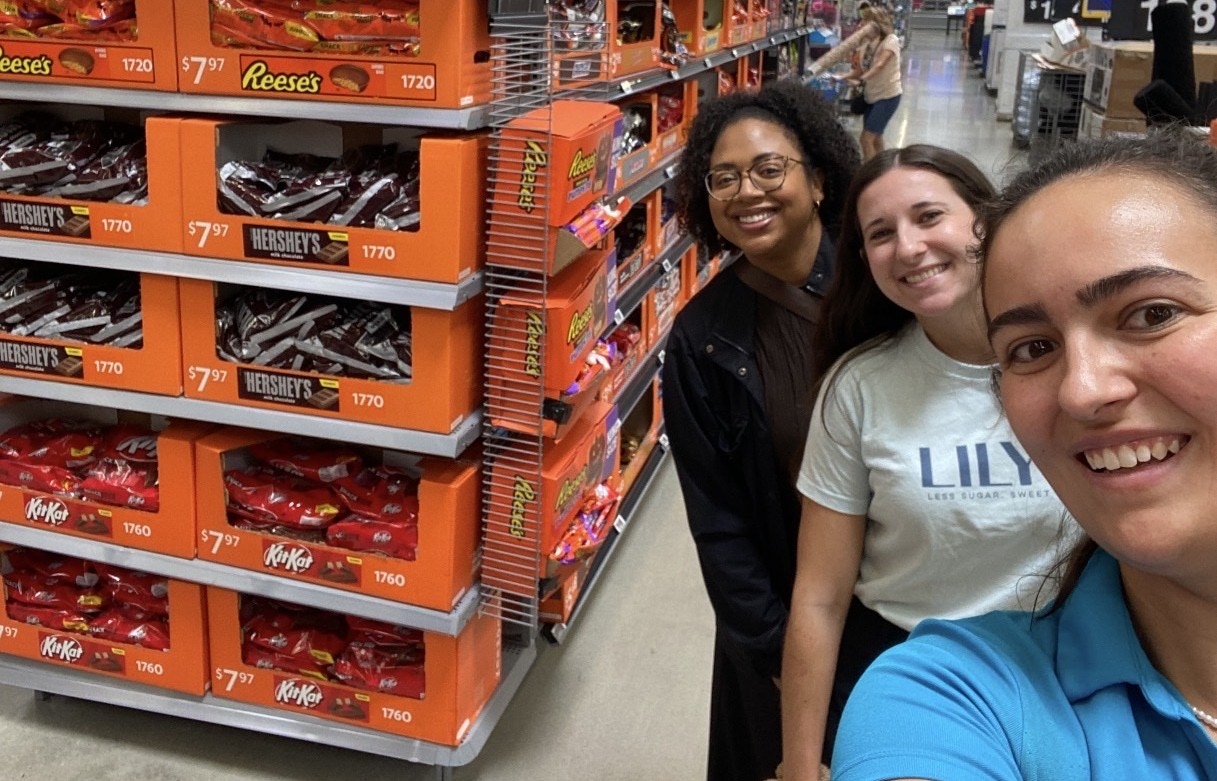
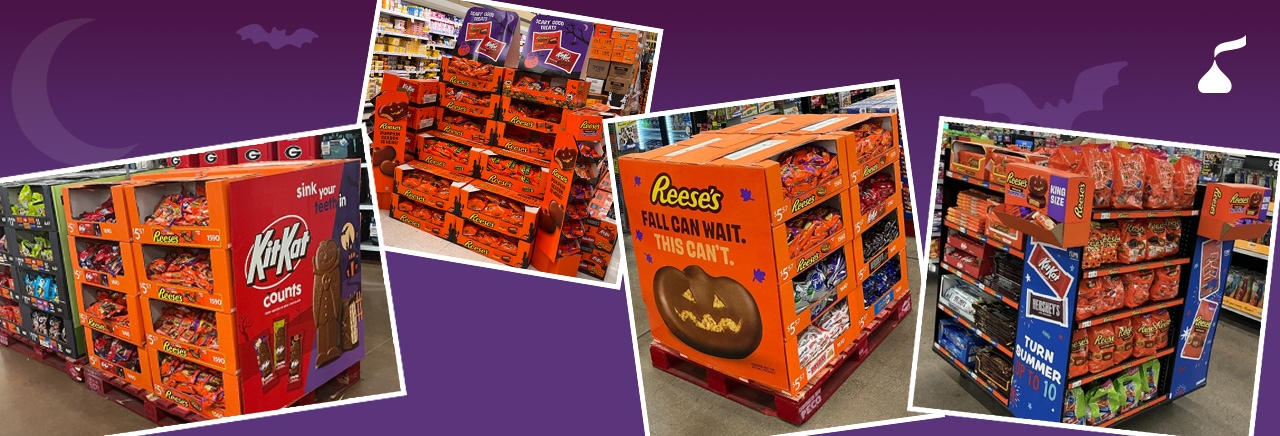
Here is the revealing number: Hershey says its 1,100-person retail field team serves more than 75,000 stores nationwide. Its seasonal work combines local store knowledge, sales information, and physical display building. Even employees from elsewhere in the company join store teams through its Helping Hands program. Halloween involves people assembling cardboard as well as people inventing candy.
Against Mars, Mondelēz, Ferrero, and snack companies such as PepsiCo, that combination matters. A new brand can have a terrific flavor and still struggle to reach shoppers. Hershey can connect a product to established retail relationships and manufacturing capacity. Its advantage is partly the accumulated ability to get ordinary details right, repeatedly, across many stores.
03A billion-dollar appetite for salt
The move beyond chocolate is easy to understand from a shopping basket. A person who wants popcorn tonight has not necessarily stopped liking peanut butter cups. Hershey can pursue another occasion without asking its oldest brands to become something else. SkinnyPop, Pirate’s Booty, and Dot’s give it different reasons to appear on the same shopping trip.
This expansion costs real money. The announced price for Dot’s and manufacturer Pretzels Inc. together was approximately $1.2 billion in 2021. LesserEvil, acquired in November 2025, required about $769 million in initial cash consideration, with up to $200 million more contingent on earnings targets. These are purchases of brands and operating capabilities, rather than inexpensive experiments in new packaging.
The distinction between owning and licensing is useful, too. Hershey makes and distributes Kit Kat in the United States under license; it does not own the brand worldwide. Its U.S. Cadbury rights are also licensed. Reese’s Oreo Cups add another arrangement: Oreo trademarks used under license from Mondelēz. Even competitors can find a profitable reason to share a wrapper.
A person who wants popcorn tonight has not necessarily stopped liking peanut butter cups.
04The bean does not care about the brand
Then comes cocoa. Hershey’s 2025 net sales rose 4.4% to $11.69 billion, while reported net income fell 60.3% to $883 million. Adjusted earnings per share declined 32.7%. Those measures are not interchangeable, and cocoa was not the only influence on reported results. But the contrast exposes the problem: higher sales do not guarantee healthier economics.
Hershey describes crop disease, difficult weather, and structural problems in cocoa supply. Its response includes sourcing work, productivity improvements, and pricing. Each has limits. A manufacturer cannot manufacture a healthy cocoa harvest on demand, and a higher shelf price asks a budget-conscious shopper to reconsider a purchase that once required almost no thought.
The company’s Cocoa For Good program carries a 12-year, $500 million investment commitment supporting farming communities, children’s well-being, and the environments where cocoa grows. The commitment is substantial; it is not proof that poverty or child labor has been eliminated. The supply problem reaches beyond the factory gate and beyond any single buyer’s control.
By the second quarter of 2026, the financial picture had improved: net sales reached $2.79 billion, up 6.6%, and adjusted earnings per share rose 57% against the prior-year quarter. That is evidence of recovery over a particular comparison period. It does not make commodity exposure disappear.
05Keep the occasion. Change the machinery.
Kirk Tanner, CEO since August 2025, is bringing U.S. confectionery, salty snacks, and protein products into an integrated commercial business under ONE Hershey. The company’s 2026 investor presentation emphasized investment in brands, operations, and technology. The logic is to let more of the portfolio benefit from capabilities already built around candy.
There is another unusual piece of machinery: ownership. Milton and Catherine founded their school in 1909; Milton transferred his fortune and company interest to its supporting trust in 1918. Hershey Trust Company, as trustee for the school trust, still maintains voting control. The stated purpose, “making more moments of goodness,” sits beside a concrete institutional connection to education.
The useful lesson for another business is to identify the occasion, then build the delivery system around it. Copy the discipline: reliable production, retailer economics, and adjacent products people already have a reason to buy. That approach needs repeat demand, sufficient margins, and distribution that earns its cost. It becomes much less attractive when shoppers reject the price or inventory misses the moment. A Halloween sweet arriving in November is an unusually efficient way to learn the difference.