The troublesome part was the bread. A peanut butter and jelly sandwich sounds like an easy thing to industrialize: two slices, two fillings, one familiar lunch. But Smucker needed bread that could stretch around the filling without tearing. Mark Smucker told the Associated Press that Uncrustables lost money for more than a decade after the company acquired the business in 1998. Making that familiar lunch at industrial scale took years of work.
By fiscal 2026, Uncrustables had reached $1 billion in annual net sales. The sandwich reveals a company that has moved far beyond jam. Smucker sells familiarity, then spends heavily on making familiarity convenient. Sometimes the investment compounds. Sometimes it produces a rather uncomfortable accounting entry.
- Everyday brands, sold through powerful retail channels.
- Uncrustables passed $1 billion in annual sales in fiscal 2026.
- Hostess shows the cost of growth that fails to arrive.
01The apple butter was only the beginning
Jerome Monroe Smucker opened a cider mill in Orrville, Ohio, in 1897. Surplus cider became apple butter. Wooden vats and steam-powered copper coils helped him cook it faster; his signature on each crock helped customers recognize it. Production and trust arrived together. Those remain useful coordinates for understanding the business.
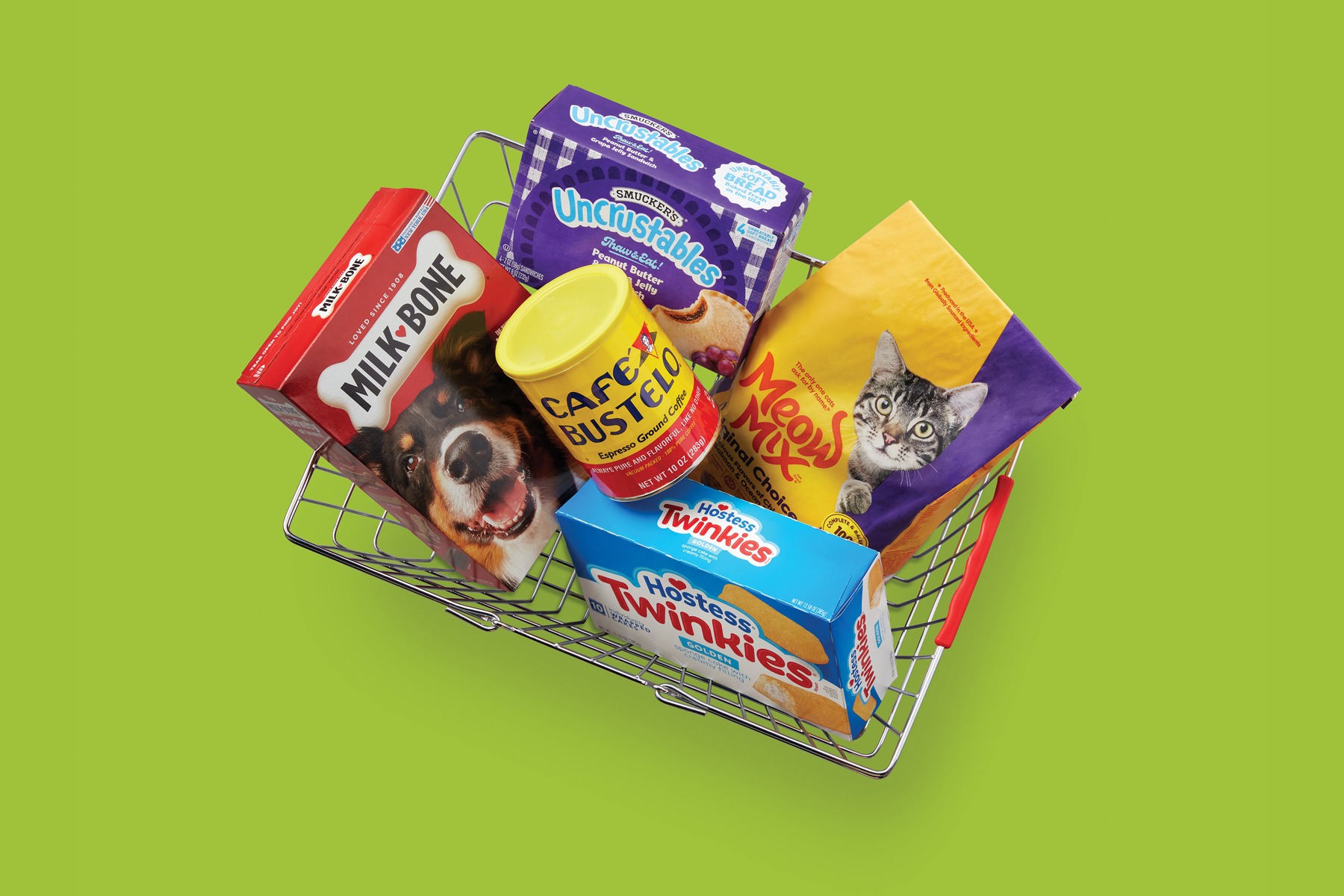
Today, the portfolio stretches from Folgers and Café Bustelo coffee to Jif peanut butter, Smucker’s spreads, Hostess cakes, Milk-Bone dog snacks and Meow Mix cat food. Dunkin’ packaged coffee adds another familiar name under license. These products occupy different aisles but share an advantage: shoppers usually understand what they are buying before reading the package.
The customer has two meanings here. Consumers want breakfast, a packed lunch, a treat or something for the cat. Retailers and distributors buy the inventory. Schools and other foodservice operators provide additional routes to consumption. Smucker earns money selling products through these channels, with manufacturing, packaging, advertising and distribution supporting repeat purchases.
02A sandwich with a factory problem
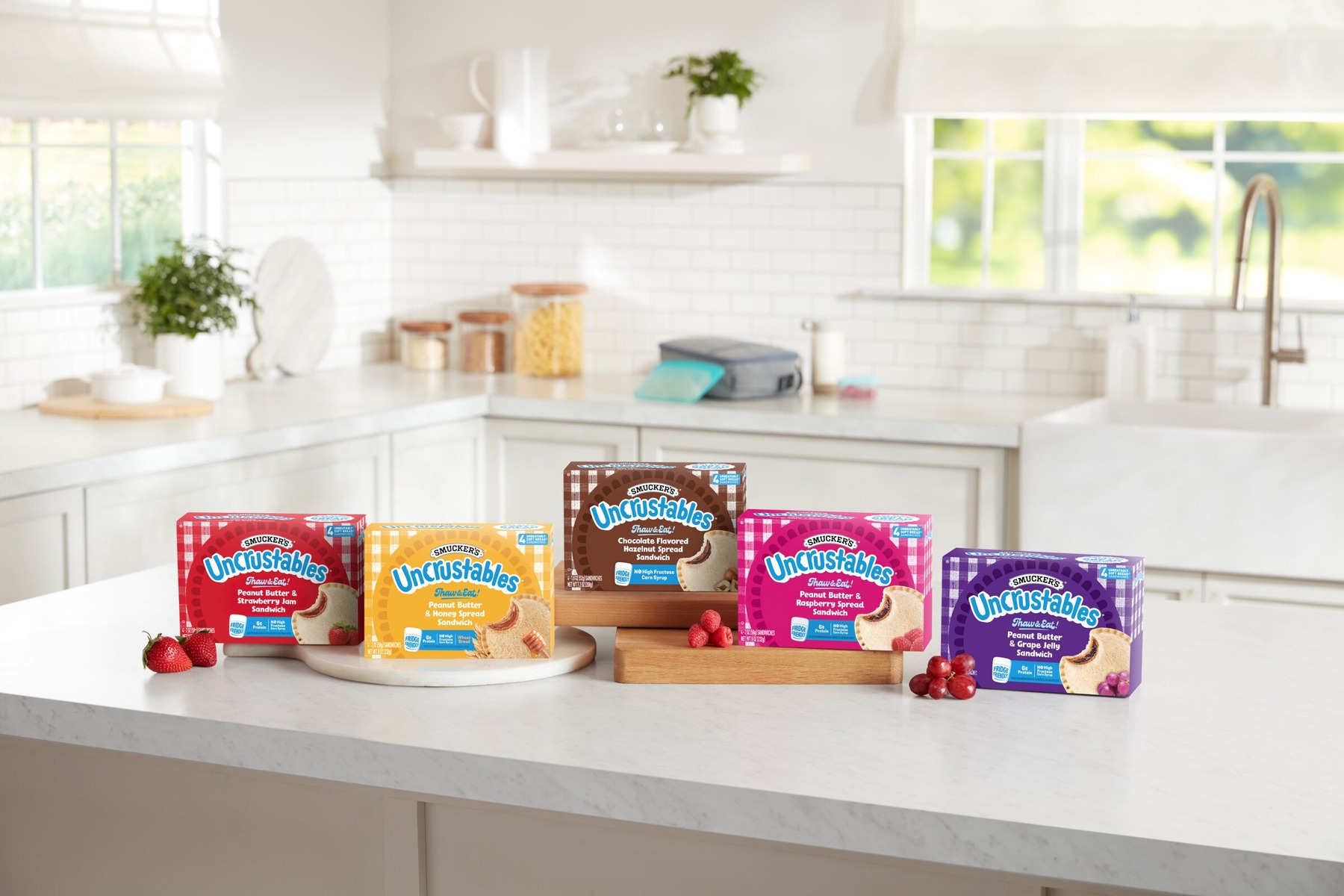
Uncrustables removes small jobs: spreading, assembling, cutting, wrapping. For a household trying to get out the door, those jobs can matter more than culinary novelty. The product asks people to buy a prepared version of something they already eat. My reading of the business is that the saved effort carries much of the proposition.
The engineering behind that saved effort is harder to copy. The Institute of Food Technologists reported that demand had kept Uncrustables on allocation, constraining growth. Smucker preferred making the sandwiches itself to protect quality and proprietary methods. Selling more required actual production capacity, rather than simply another advertising campaign.
The answer included a roughly $1.1 billion investment in McCalla, Alabama. The 900,000-square-foot facility opened in November 2024. Consider the asymmetry: a consumer sees an inexpensive sandwich; the manufacturer sees bread equipment, freezing, distribution and years of capital commitments. That gap helps explain why a familiar recipe can still support a substantial branded business.
The demand continued. In its August 2026 earnings discussion, management reported 12% Uncrustables net sales growth for the first quarter of fiscal 2027 and household penetration of 27%. It also planned to accelerate the second phase at McCalla toward that fiscal year’s end. Those are expansion plans, with execution still ahead.
Sales are a yearly flow. A factory is a long-term investment.
03The $5.6 billion snack next door
Hostess offered another route into convenient eating. Smucker’s September 2023 acquisition announcement put enterprise value at approximately $5.6 billion, including about $900 million of net debt. The company expected roughly $100 million in annual cost synergies within two years. Twinkies and Donettes came with recognition that a new snack would have to spend years earning.
Recognition did not protect the forecast. In February 2026, Smucker recorded approximately $962 million in additional impairment charges for Sweet Baked Snacks goodwill and the Hostess trademark. The quarter’s segment sales fell 19%, or 11% excluding divestitures. Management cited operational and execution problems, higher costs and a weak sweet baked goods category.
An impairment is a reduction in accounting value, rather than a new cash payment of the same amount. It still records a consequential change of mind. Management reduced the unit’s projected long-term growth rate to 2%. Its response included cutting about a quarter of the product assortment and closing the Indianapolis plant. The growth purchase had become a simplification project.
The growth purchase had become a simplification project.
04The shelf has a vote
Smucker competes across categories, rather than against one neat rival. Its annual report lists alternatives including Maxwell House in coffee, Skippy in peanut butter and private labels across the business. Its advantages include established brands, retailer relationships and manufacturing knowledge. Price remains a live contest every time a shopper reaches for a substitute. Coffee illustrates the pressure: higher selling prices can increase reported revenue while customers buy fewer units. That distinction matters when judging whether a brand is gaining popularity or merely passing through costs. A larger sales number alone cannot settle the question.
The retailer has considerable power too. Walmart and its subsidiaries, including Sam’s Club, accounted for 34% of fiscal 2026 net sales; the top ten customers represented approximately 60%. A brand can be familiar to millions of households and still depend on a small group of buying desks. Distribution is both an advantage and a concentration risk.
The company describes its culture through five beliefs, including “Be Bold” and “Be Kind.” An older statement from Paul Smucker asks employees to listen attentively and keep a sense of humor. These are the company’s stated expectations. The practical test is how decisions about factories, colleagues and difficult investments live up to them.
Top ten combined: approximately 60% of consolidated net sales.
05Copy the saved minute
The transferable idea is specific: find a repeated chore attached to an established habit, remove it, and make the result dependable. Then identify the constraint. If customers already want more than you can supply, manufacturing investment may help. If demand itself is weakening, extra capacity and a famous label offer much less protection.
For shoppers, the benefit is straightforward: familiar coffee at home, a lunch that needs less preparation, a snack or a pet-food routine. For operators studying the company, the interesting question is where convenience ends and expensive complexity begins. Uncrustables and Hostess supply two very different answers from inside the same portfolio.
The latest reported quarter offers perspective rather than a verdict. Smucker’s fiscal 2027 first-quarter sales rose 5% to $2.22 billion, and it raised its annual outlook. Adjusted earnings included an $0.84-per-share tariff-refund benefit. The sandwich is still growing; the rest of the business still has to earn its place beside it.
Keep exploring
Mark Smucker on the soul of a brand ↗