In Argentina, Mark Smucker enjoyed a small luxury: people struggled to pronounce his surname. Back in Ohio, the name sat on jars in supermarkets. Abroad, he could introduce himself without bringing a food company into the room. He was working at the advertising agency Leo Burnett, learning a language and building a life beyond the place that had raised him. Anonymity had its attractions. A famous label is rather less useful when you want to find out what you can do yourself.
He eventually returned to the family business. In May 2016, he became its chief executive, the fifth generation of Smuckers to lead it. The route between those two facts is more revealing than a straight line of succession. He had studied geology, taught science and worked outside the company. The family name had been waiting all along. He had other things to try first.
Today, his responsibilities stretch from coffee and peanut butter to frozen sandwiches, cat food and snack cakes. He also makes house music under the name Mind.E. There is enough material here for several business cards, although handing them all over at once might complicate an introduction. His career has kept bringing those interests together: curiosity about how things work, attention to how people respond, and a wish to remain recognizable as a person inside an unusually recognizable business.
A little distance from the jam
Orrville was both hometown and company town. As a youngster, Smucker worked summer jobs in the business alongside siblings and cousins. He cleaned, helped with quality control and encountered the office work behind the products. The company was already part of daily life before it became a possible career. Going to college out of state offered some distance.
At William & Mary, he majored in geology and minored in English, graduating in 1992. His roommate, Christopher Almond, once found a particularly effective bargaining chip after getting locked out: he threatened to go shopping for Welch’s jelly. Even away from Ohio, a rival preserve could apparently be used as diplomatic pressure.
Science teaching in Alabama followed, then a Master of International Management at Thunderbird, completed in 1996. Advertising work took him to Argentina. His father later offered an assignment studying a possible South American partnership. The partnership never happened. His career at Smucker did, beginning in 1997. A project that failed to become a deal became an opening.
There is a temptation to arrange those years as an inevitable apprenticeship. His own account is less convenient. He wanted independence. The eventual return matters because it followed an attempt to make a different life. The surname explains the invitation; the intervening work gives us something else to consider when judging the person who accepted it.
“I wanted to prove to myself that I could do things on my own.”
Mark Smucker, 2018
Learning the business, one division at a time
His operating career crossed borders before it reached the top office. He managed the Brazilian business, took on international responsibilities and ran the Canadian division. In 2008 he became president of Special Markets; in 2009 he joined the board. Coffee followed in 2011, then Consumer and Natural Foods in 2015. These were different businesses with different products to understand and different customers to satisfy.
By the time he succeeded his uncle Richard as CEO, he had spent nearly nineteen years inside the company. His father, Tim, and Richard had overseen a transformation that stretched far beyond fruit spreads. Mark inherited a collection of brands and a responsibility to decide which of them could keep earning a place in shoppers’ routines.
He added the chair’s role in August 2022. Family continuity is visible in those transitions. So is the practical burden of succession: a familiar name does not supply the answer to a new purchasing habit. A person can inherit a connection to a company. Each operating decision still needs its own explanation.
- 1992Geology graduate
- 1997South America business development
- 2011U.S. Retail Coffee president
- 2016Chief executive
- 2022Board chair
The sandwich has a factory behind it
Uncrustables makes an appealingly small promise: a peanut butter and jelly sandwich without the crust, ready after thawing. The industrial version of that promise was considerably less small. Smucker bought the business in 1998. Scaling production took years, including work on the bread and the air pockets that could interfere with a properly made sandwich.
The challenge gives the product’s success some texture. A sandwich has to survive manufacturing and distribution before it reaches a lunchbox. Customers can judge the result in a bite. The company has to reproduce it over and over. Much of the work disappears precisely when it succeeds.
In fiscal 2024, Uncrustables delivered about $800 million in net sales. By fiscal 2026, annual net sales had reached $1 billion. The company’s investment in a third manufacturing site in McCalla, Alabama, gave that ambition a physical address. The project was announced as a planned $1.1 billion investment, spread across phases as capacity and demand developed.
That history should make anyone cautious about assigning the result to one executive. The acquisition preceded Mark’s CEO tenure by eighteen years. His part sits within a longer sequence of investment, manufacturing work and commercial decisions. For a family leader, that is a useful kind of achievement: continuing work begun by others, while accepting responsibility for what comes next.
A familiar brand still needs a new conversation
Smucker’s present portfolio includes Folgers, Café Bustelo, Jif, Milk-Bone and Meow Mix. The common thread is the relationship between a product and an ordinary occasion: the first coffee, a packed lunch, a pet waiting near a cupboard. Familiarity is an advantage, but a shopping habit can change without consulting the people who manufacture its contents.
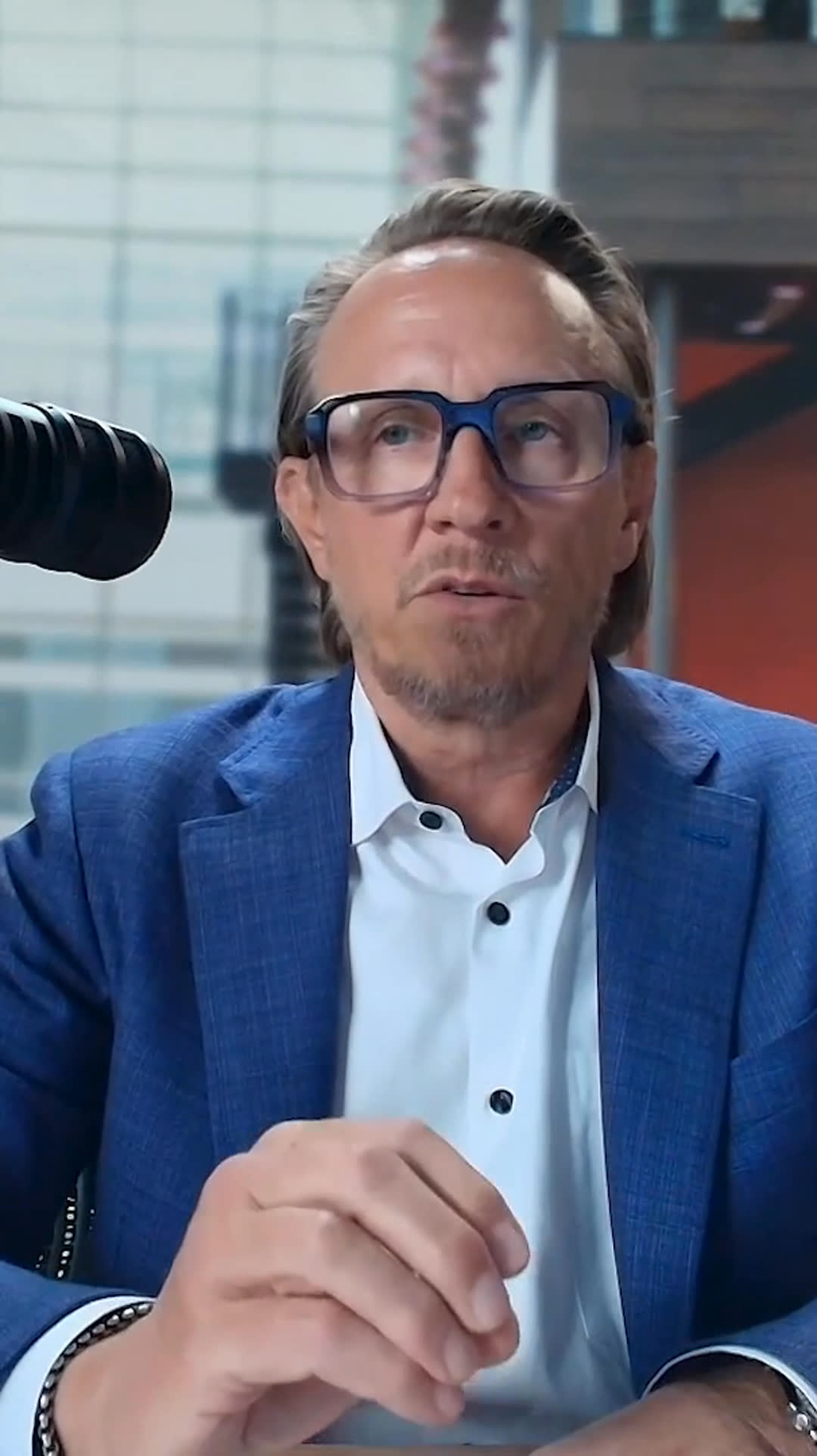
Mark has emphasized marketing that places these brands in contemporary culture. In a conversation with David Novak, he discussed understanding a brand’s identity before deciding how to update its presentation. The examples included putting Ludacris in a Jif campaign. A jar of peanut butter has a longer working life when its advertising can travel beyond the kitchen it first remembers.
Communication reaches inward, too. When employees are spread across offices, plants and shifts, a strategy has to make sense far from the meeting where it was approved. He has described explaining why a company is changing as a central leadership responsibility. The phrase “The why is very important” is short enough to remember on a noisy day. Making the explanation convincing takes more work.
The price of another chance
Hostess is the more uncomfortable part of this account. The company completed its roughly $5.6 billion acquisition in November 2023, adding Twinkies, Donettes and other familiar snacks. The proposed fit was specific: Hostess brought convenience-store distribution, manufacturing and product development; Smucker offered grocery relationships and marketing capabilities.
The subsequent results complicate that rationale. In fiscal 2026, the company recorded $507.5 million in goodwill impairment charges and $454.2 million in other intangible-asset impairment charges. Its Sweet Baked Snacks business continued to face weaker demand. In the fourth quarter, sales in that segment fell 5 percent from a year earlier.
Write-downs reduce an asset’s recorded value. They are noncash charges, but their meaning is hardly decorative: expectations have changed. A family history cannot make those numbers disappear. Neither can a successful sandwich elsewhere in the portfolio. The acquisition has to be assessed through the performance of the business it brought into the company.
The first quarter of fiscal 2027 offered a better company-wide picture. Net sales rose 5 percent to $2.2193 billion, and management raised its full-year outlook. Adjusted earnings per share included an $0.84 benefit from tariff refunds. Those details matter together. They distinguish an improving quarter from a claim that every underlying problem has been solved.
There is room for Mind.E
Away from these decisions, Smucker’s musical life has its own continuity. He grew up playing keyboards and saxophone, then gravitated toward electronic music. His public Mind.E biography traces the influence of house, rave and breakbeat scenes in the early 1990s. Mixcloud holds the evidence of an interest that has outlasted several job titles.
In an earlier podcast conversation, he discussed testing a new subwoofer with the Beastie Boys’ Paul’s Boutique. The choice is a pleasing interruption to the vocabulary of portfolio management. A subwoofer is allowed to have a more straightforward performance review: put on the record and listen.
He has also explained why sharing the hobby matters at work. “Our colleagues should know who we are as people and what makes us tick,” he said. A formal position can make someone difficult to approach before they have said a word. A shared interest offers another starting point. Music is something a colleague can ask about without first constructing a business case.
In January 2026, the manufacturers’ association announced him as vice chair alongside its new chair, Rockwell Automation chief Blake Moret. The pairing places a food executive beside a leader in industrial automation. For Smucker, it extends the conversation beyond what goes into a shopping basket to the conditions under which companies build, hire and produce. His company has already committed substantial money to manufacturing capacity. The association role gives him another setting in which to discuss the work behind familiar products, with peers whose factories make very different things.
His public responsibilities widened again in 2026, with leadership roles at the Consumer Brands Association and the National Association of Manufacturers. Yet the personal thread remains close to the beginning of the story. He once wanted to work somewhere his name meant little. He now leads somewhere it means a great deal. Between those settings, he has kept trying to make enough room for the person who answers to it.