The strange thing about an elaborate eggs Benedict is where the attention stops. The bacon may be cured in-house. The eggs may be poached in champagne vinegar. Then the entire performance lands on an English muffin that nobody thought much about. For Kyle Meekins, selling bread to Boston chefs, that neglected foundation became an opening.
- A Boston bakery makes griddled English muffins for shoppers and chefs.
- The appeal is substantial bread with browned surfaces and a soft interior.
- Its growth lessons concern production, shelf placement and listening to buyers.
Stone & Skillet occupies an interesting corner of packaged food: an ordinary purchase offered with enough care to make people reconsider it. The company sells English muffins, but the proposition is broader. Your breakfast sandwich deserves a foundation that contributes something. Bread need not accept the role of edible scaffolding.
A complaint with a recipe attached
The official story starts with an apartment recipe in 2013. Early reporting identifies Meekins and chef Dan Crothers as the pair behind the launch; newer accounts place brothers Cam, Kyle and Nick Meekins at the center of the family business. The kitchen details are unusually literal. Granite supplied the stone. Cast iron supplied the skillet.
The problem had arrived through customers. Chefs kept asking Meekins for an English muffin his employer did not make. Crothers had the kitchen experience to develop one. Here was a useful division of labor: somebody knew the buyers, somebody knew the dough, and the buyers had already described what was missing.
In Cam’s later account, the initial investment was $1,000 for a mixer and flour. That bought an experiment. It did not buy a national bakery. Making muffins in an apartment and delivering them by hand gave the founders a way to learn before paying for a much larger operation.
The skillet gives the sales pitch
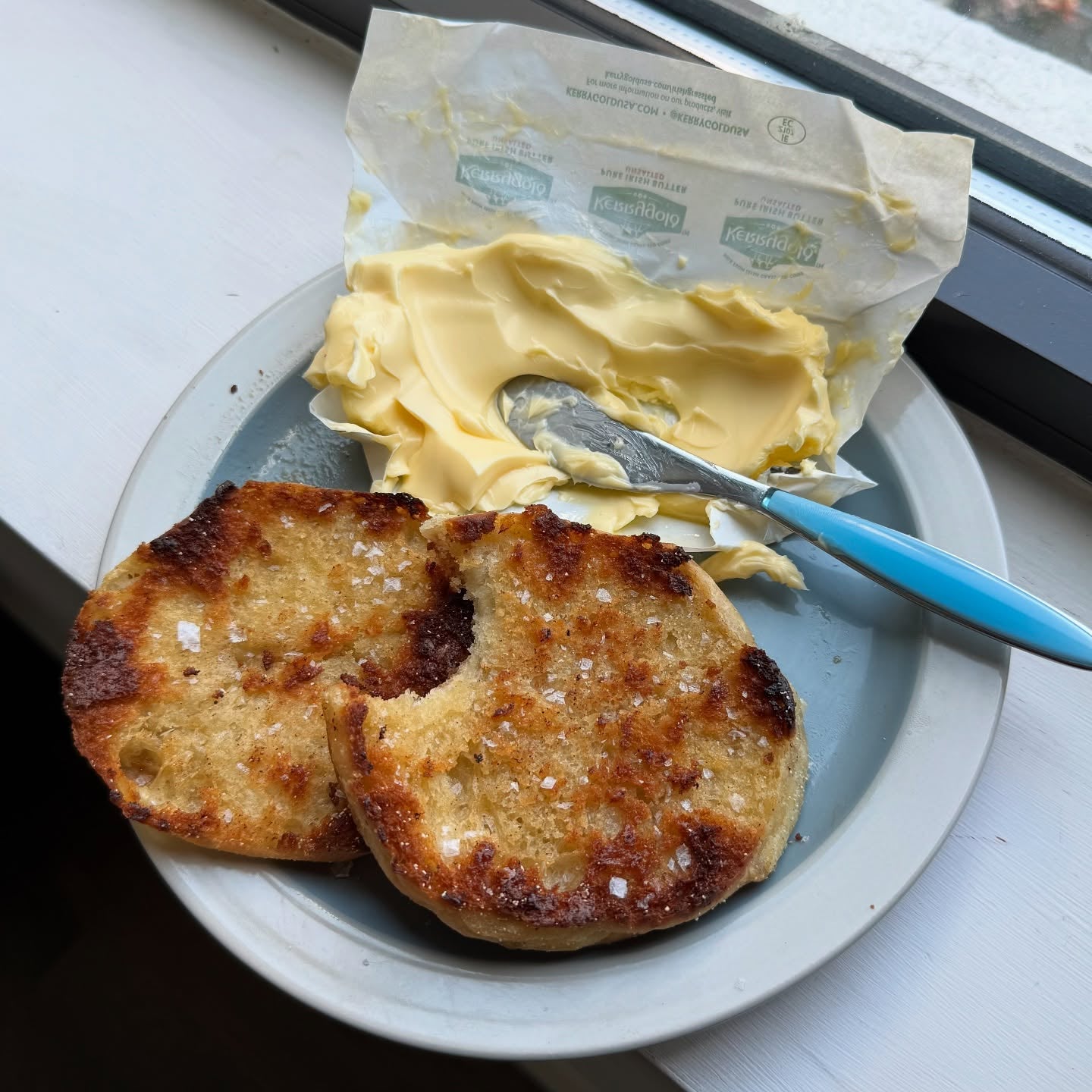
Crothers described the result as “almost like a savory doughnut.” Flat-top cooking browned the surfaces and crisped the cornmeal while leaving the middle soft. This was a texture argument, available for inspection with one bite. It also made the product useful for applications beyond the usual morning toast.
Thomas’ is the familiar alternative in this story, alongside supermarket labels and other sandwich breads. Stone & Skillet’s position is the premium end of that everyday category. It asks shoppers to care about the bread itself, rather than treating every round muffin as an interchangeable vehicle for butter.
That is a sensible distinction for restaurant chefs and home cooks who enjoy assembling a meal. It offers less to someone choosing entirely on price. A more elaborate muffin must earn the extra attention through eating. The name and package can invite a trial; neither can complete the breakfast sandwich.
When orders outrun the kitchen
In 2015, the Medford bakery was producing approximately 30,000 muffins weekly. Kyle recalled an initial order for 100 muffins, when output was only one or two an hour. The small kitchen had become a production problem. A desirable product creates its own peculiar punishment: people begin asking for more of it.
The first serious mistake concerned timing. “We grew too rapidly,” Kyle told WBUR in 2017. The company staffed up for projected sales that arrived late. It cut back, and then demand materialized. An English muffin has a cooking time. A grocery rollout, apparently, declines to be so considerate.
The implication is useful beyond baking. Hiring against a forecast commits money before the forecast becomes cash. Cutting capacity can then make the eventual orders harder to fulfill. Growth depends on coordinating people, equipment and actual purchases; a promising conversation with a buyer does not synchronize them automatically.
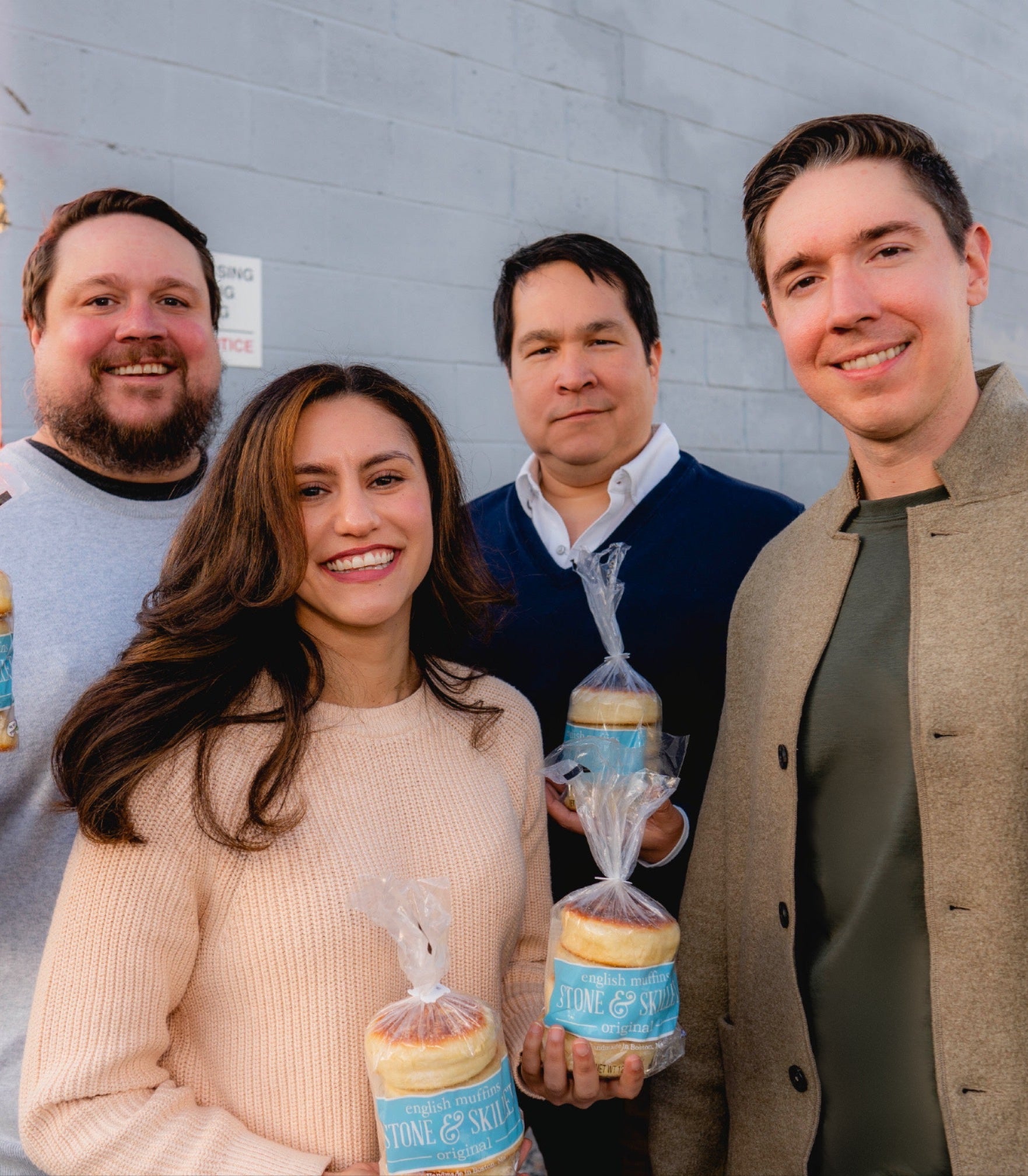
“We grew too rapidly.”Kyle Meekins, recalling the early staffing mistake
The grocery aisle gets a vote
A Whole Foods encounter helped move the business beyond restaurants. The crucial change was seeing retail as another destination for the same product. A public tasting offered something a business plan could not: a buyer experiencing the muffin, and an opening to discuss where it might sell.
By November 2025, Cam was discussing national expansion through retailers including Publix and Whole Foods. He had become CEO in 2020, bringing experience as a recording artist. His account emphasizes relationships with colleagues who understand packaged food, a useful admission in a business where making something tasty is one specialty among several.
His Grow to Market interview supplies two revealing retail observations. A change in display increased sales by 50% at one retailer. At another, reducing the assortment from three products to two improved sales velocity. These were particular experiences, rather than promises every brand can reproduce.
Reported sales lift at one retailer
Fewer products; better velocity elsewhere
Still, the lesson travels. Before assuming a slow seller needs a new recipe, examine how customers encounter it. Placement and choice can affect purchasing. That observation works best when a retailer will cooperate and the brand can measure the result. It cannot rescue bread that people try and decline to buy again.
A muffin with another ingredient’s past
Product development supplied another angle in 2023. With Upcycled Foods, Stone & Skillet launched Super Grains using ReGrained SuperGrain+, made from grain left after brewing beer. The launch specified six grams each of protein and fiber per serving and a suggested $5.99 price for four muffins.
That experiment connected the bakery’s recipe expertise to an ingredient supplier’s expertise. It also gave sustainability a concrete object: brewing grain incorporated into breakfast bread. The customer still received an English muffin. For a familiar food, changing an ingredient can be a more approachable proposition than asking people to adopt an unfamiliar eating ritual.
The next morning is already here
A reported $5 million Series A in May 2026, led by BFG Partners, adds capital to the distribution effort. Wider availability brings the old production question back at a larger scale. Each new shelf must be supplied, and each package must persuade someone to purchase it.
For the reader, the immediate experiment is smaller. Find a pack through the company’s locator, split a muffin with a fork, and cook it with butter. Put something delicious on it. Stone & Skillet’s origin offers a useful habit: when everyone admires the toppings, look underneath.