The first rolling pin was a wine bottle. In his Detroit kitchen in 2013, Brian Rudolph was trying to turn chickpea flour into pasta, and the bottle was what he had. A knife supplied the cutting technology. This was an appropriately humble beginning for a company that would eventually ask Americans to reconsider one of their least reconsidered purchases: a box of noodles.
- Banza makes familiar comfort foods with chickpeas, alongside newer rice and wheat pasta lines.
- Its early obstacle was texture: a kitchen success did not automatically become a factory success.
- Retail distribution, distinctive packaging and outside capital helped it reach a national audience.
- In 2026, wheat pasta and a Campbell’s soup partnership widened the invitation.
The wine bottle was the easy part
Rudolph wanted pasta he could eat after cutting gluten from his diet. The available alternatives did not offer the nutrition he wanted. Chickpeas suggested another route. But an ingredient with an attractive nutritional profile still has to behave like dinner. Nobody orders a second helping of a promising spreadsheet.
The first attempts were poor. Brian bought more equipment, adjusted ratios and experimented with gluten-free baking ingredients. The company’s origin account makes precision the turning point. His older brother Scott joined him in 2014, bringing a finance background to a project that now needed customers, production and somewhere to put all those orange boxes.
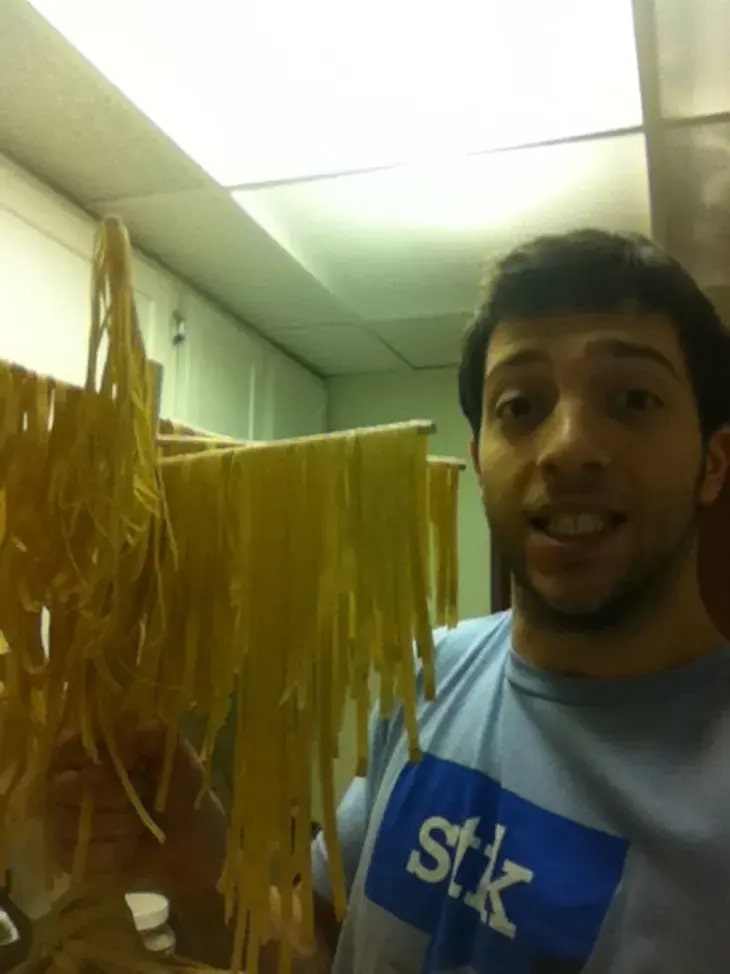
Their first problem was culinary. Their next was industrial: early factory pasta turned to mush when cooked. In a 2019 interview, Brian described the difficulty of making chickpea pasta at scale. Scott said keeping up with demand had become a challenge, because empty shelves could damage customer relationships. They were building their own manufacturing facility. A supermarket order had turned a recipe into an obligation.
Even the family partnership needed some adjustment. The brothers are eight years apart; they told The Kitchn they had learned to define their responsibilities. Brian described a weekly team call that included a customer note. That is a revealing choice: make the person eating the product part of the conversation about making it.
“To this day, when we disagree, it’s never personal.”Brian Rudolph, on working with his brother, 2019
An orange box needs a place to stand
Banza’s commercial proposition was larger than a gluten-free substitute. It wanted a place beside ordinary pasta. The customer could keep the sauce, the saucepan and the familiar shape, while choosing a different base ingredient. That made the ordinary pasta aisle an important part of the argument.
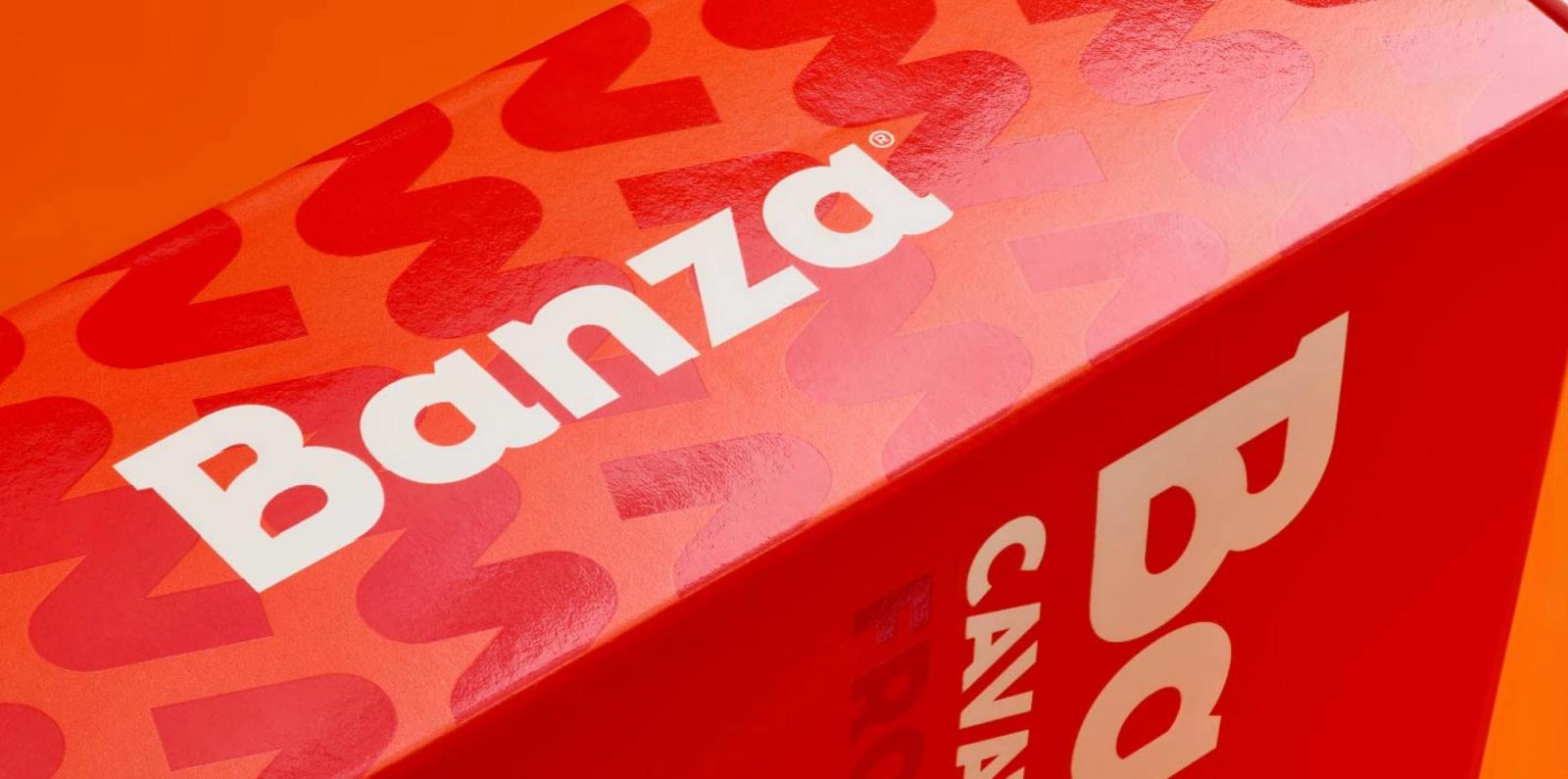
Gander, the design agency that began working with Banza in 2015, describes creating a brand that could communicate from a distance. The orange packaging gives a small object a conspicuous presence. Its job is to interrupt a habitual purchase long enough for someone to consider chickpeas.
Getting onto shelves required persistence. In a 2018 Taste Radio interview, Brian explained that early retail relationships often began with cold outreach and repeated follow-ups. But more doors were not always better. In 2017, he told FoodNavigator that investing in existing retail relationships could matter more than expanding distribution. Being stocked and being chosen are different achievements.
Capital paid for the move from experiment to infrastructure. A crowdfunding campaign with a $10,000 target raised about $27,000, according to ABC News. Banza later raised a $7.5 million Series A in 2017 and announced $20 million in growth financing in November 2019. The latter was earmarked for hiring, marketing and commercializing new products. Those figures are financing rounds, not the cost of inventing a noodle.
Dinner gets a wider cast
The customer is not one person with one dietary rule. Banza serves shoppers avoiding gluten, people seeking more protein or fiber, and families looking for convenient meals. Its competition includes conventional brands such as Barilla and De Cecco, other legume pastas, and rice or corn alternatives. The deciding factors can be texture, price, nutrition or an ingredient someone must avoid.
The range followed recognizable eating occasions: mac and cheese in 2016, a rice alternative in 2019, frozen pizza in 2020 and protein waffles in 2023. Today’s catalog also includes brown rice pasta. A vegan shopper can choose designated vegan products; the presence of chickpeas does not make a cheese pizza dairy-free.
The business sells packaged food through retailers, online multipacks and wholesale channels. At the time of research, its website listed six boxes of chickpea penne for $29.99, about $5 a box before shipping. That is a useful reality check alongside the nutrition story. Frozen deliveries add insulation, dry ice and expedited shipping costs; a local shelf may make more sense than a doorstep shipment.
A food-safety scare complicated that promise. In a September 2026 interview with Guy Raz, Brian described a 2024 pesticide controversy and a sharp sales decline. Banza now publishes pesticide test results through packaging QR codes and describes third-party CleanScan certification. The distinction matters: a non-detectable laboratory result means below the test’s detection limit, rather than an absolute promise of zero.
Wheat returns through the front door
In April 2026, Banza introduced Wheat Protein Pasta and Wheat Protein Mac & Cheese. Semolina and chickpeas now share the recipe. The company’s explanation is straightforward: reach people who want more nutrition but prefer wheat pasta’s taste and texture. The original dietary problem had opened the business; it did not have to define every future customer.
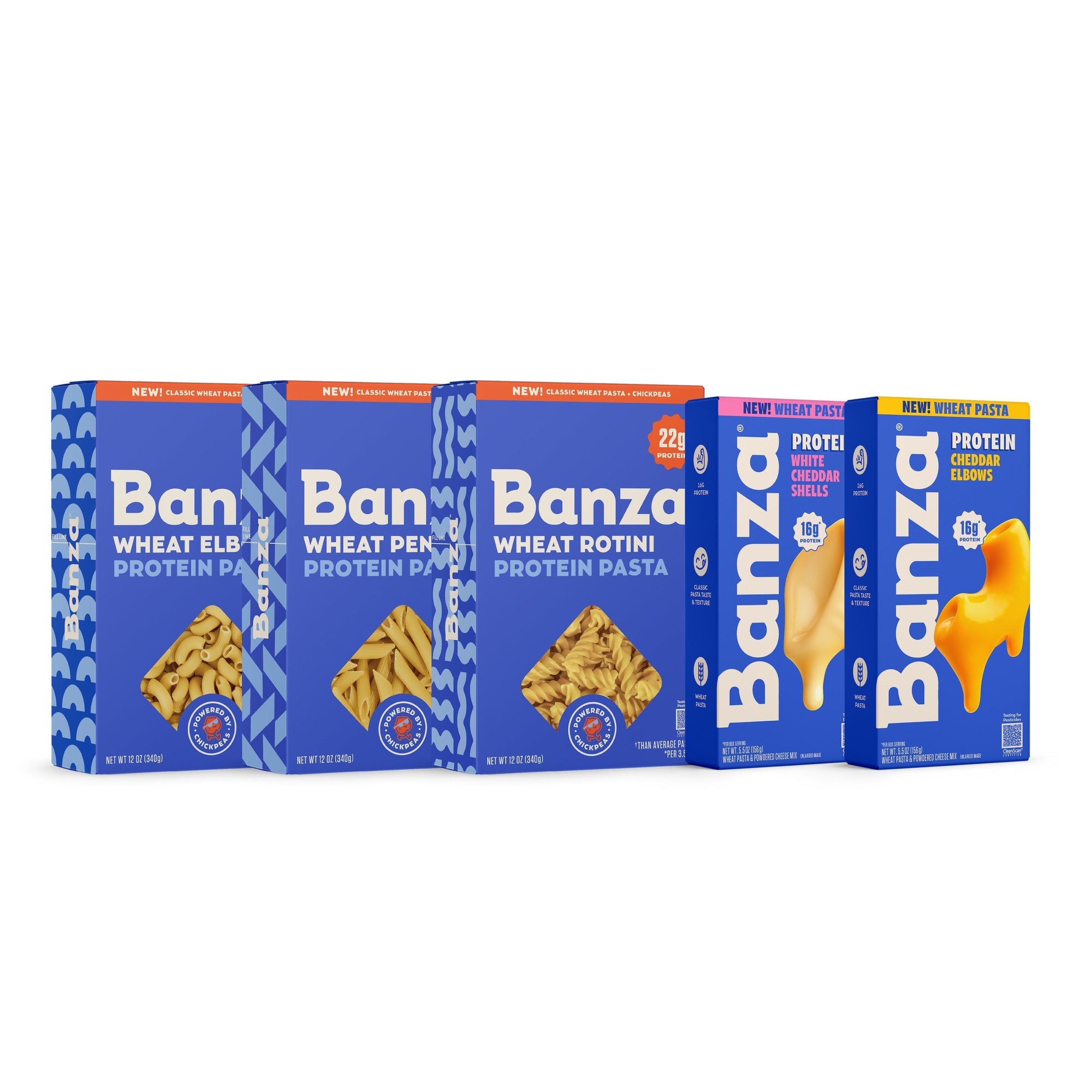
That expansion creates a practical distinction. The chickpea and brown rice lines are certified gluten-free; the wheat line is not. Banza says the wheat products are produced in a separate facility. Shoppers need to choose the specific product, rather than treat the company name as an ingredient guarantee.
June brought another form of familiarity: Campbell’s condensed chickpea pasta and chicken soup. The partners developed pasta specifically to hold its texture in broth. The suggested price was $1.99 per can. Here, Banza’s expertise becomes an ingredient in another company’s product, carried by an established red-and-white can.
Borrow the habit, earn the repeat purchase
The useful lesson is to preserve something customers already know how to do. Banza lets people keep cooking pasta while changing what it contains. A founder can copy the demand test, the attention to manufacturing and the discipline of supporting existing stores. None requires pretending that a retail listing guarantees a repeat purchase.
The approach depends on the replacement surviving the comparison. If texture disappoints, the price exceeds the household budget or the ingredients conflict with a dietary requirement, familiarity cannot rescue it. For the home cook, the experiment is smaller: choose a suitable box, follow its cooking directions and use a sauce you already like. The revolution can wait until after dinner.