A freezer is a surprisingly effective business consultant. It has limited space, refuses to negotiate, and will not be impressed by your brand story. Spot & Tango learned this from customers who liked its fresh dog food but disliked accommodating it. Better dinner for the dog had become a storage problem for the human. The company’s answer, UnKibble, moved the meal into the pantry. In COO Dylan Munro’s account, an opening supply intended to last three or four months sold out in four days.
- The offer: frozen Fresh meals or shelf-stable UnKibble, delivered on a personalized subscription.
- The useful difference: UnKibble keeps the whole-food proposition and drops the freezer requirement.
- The business consequence: demand outgrew outsourced production; Spot & Tango built its own factory.
That is an excellent problem until your customer’s dog needs breakfast. A subscription promises continuity. An empty warehouse supplies a rather different message. The interesting part of Spot & Tango is how a company selling convenience discovered that it needed to become a manufacturer to keep selling it.
First, the dog ate what the family cooked
The origin is appealingly domestic. Russell Breuer’s wife, Molly, cooked for their dog Jack, following a habit inherited from her mother. The company dates these home-kitchen beginnings to 2017; public launch accounts put the business in 2018. People who knew the couple asked for recipes or offered to buy the food. Russell Breuer and co-founder Dylan Munro turned that interest into a business.
There was an early retail experiment. In Breuer’s Gildre interview account, the food reached as many as 14 New York pet specialty stores, complete with branded freezers. But distributors took a share, changes moved slowly, and expanding meant securing more doors. Direct sales offered a shorter conversation with the buyer. The company could hear complaints, change the offer, and recommend portions without waiting for a shelf reset.
The audience was dog owners prepared to spend more for recognizable ingredients and less guesswork. The opportunity lay in a familiar contradiction: people wanted a thoughtfully prepared meal, served with the ease of opening a bag.
The customer’s brief: please evict the ice
Frozen Fresh meals remain part of the business. Ingredients are gently cooked, mixed, and flash-frozen. But customer feedback pointed to two obstacles: price and freezer space. Those objections concerned the daily arrangement around the food. Improving a recipe would leave both intact.
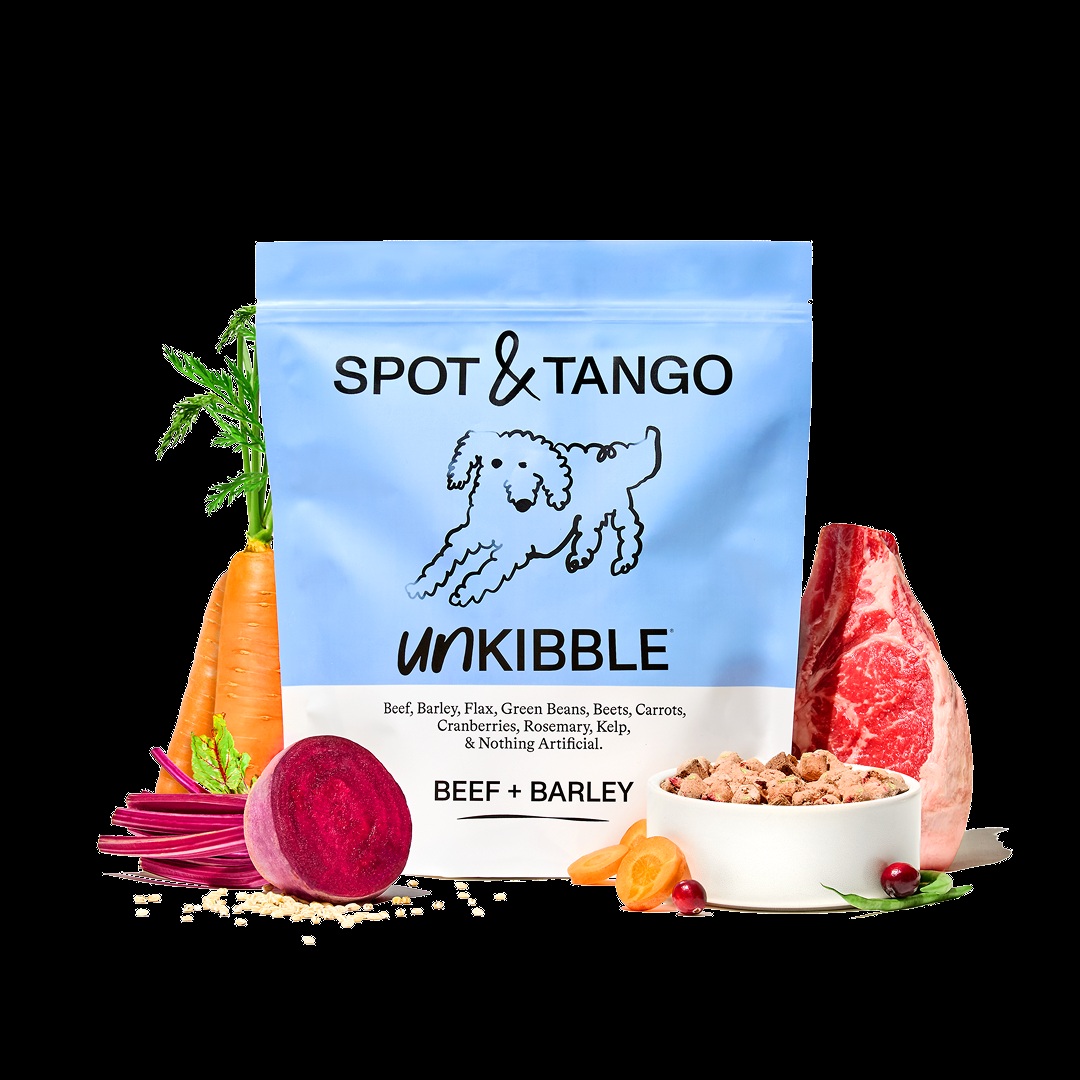
UnKibble, launched in April 2020, uses the company’s FreshDry process to produce shelf-stable pieces from whole-food ingredients. Owners store it in a cool, dry place, scoop, and serve. Current choices include Beef + Barley, Turkey + Sweet Potato, and Cod + Salmon. The company says its nutritionist-formulated recipes meet AAFCO nutrient profiles. Those are nutritional standards, rather than an endorsement of a brand.
Spot & Tango advertises UnKibble plans starting at about $1 a day and describes them as roughly 40% cheaper than frozen alternatives. Both require context: a dog’s size, calorie needs, and recipe change the bill, and the percentage is the company’s comparison. A Great Dane does not get a Chihuahua’s grocery budget merely by completing the same quiz.
Cooked → frozen → portioned
FreshDry → bag → scoop
A scoop makes the recommendation usable
The online quiz gathers information such as age, weight, and activity level to recommend a plan. Fresh comes portioned; UnKibble includes a customized scoop and feeding guide. The personalization principally concerns recommendations and serving amounts from existing recipes. Each dog is not commissioning a private menu.
The scoop deserves attention because it carries advice into the kitchen. A feeding calculation is useful only if someone follows it. Turning that calculation into a familiar utensil reduces the daily measuring chore. Owners still need to watch weight and adjust when necessary, particularly as puppies grow.
The two-week trial also begins a recurring subscription. Delivery timing can be adjusted, and plans paused or canceled. Free shipping covers the contiguous United States. For customers, the practical decision is the ongoing price and routine, beyond any introductory discount. For the business, repeated meals offer repeated opportunities to remain useful.
The advertisement ends. The factory begins.
What gave way first was supply. The opening UnKibble stock disappeared, and contract production subsequently struggled to meet demand. Owning manufacturing meant taking on buildings, equipment, staffing, and quality control. Spot & Tango opened a 66,700-square-foot facility in Upper Macungie Township, near Allentown, in October 2022.
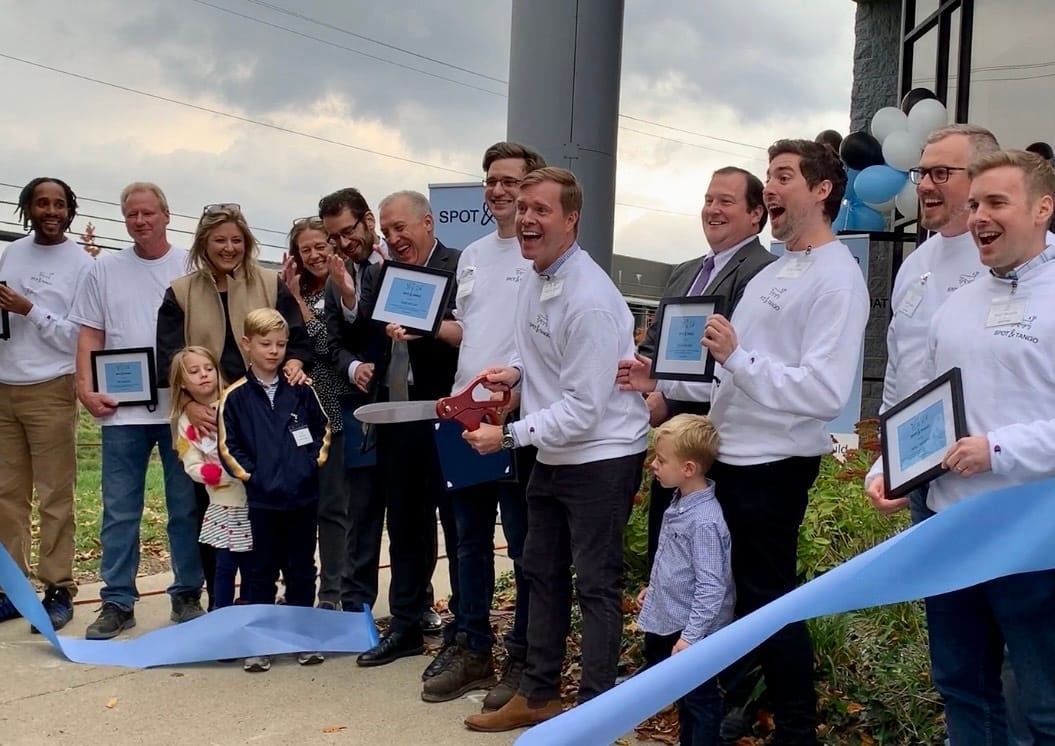
Capital helped finance the wider ambition. In March 2022, the company announced a $38.5 million Series B and a $13.25 million Series A, led by Valor Equity Partners. In 2026 it announced a further $20 million factory expansion, intended to double capacity. The distinction matters: the expansion is a plan with a cost, not proof that the added output has already arrived.
“We just listen to the customer.”Russell Breuer, in the Chew on This interview
There is an awkward chapter, too. On September 6, 2022, Spot & Tango recalled four UnKibble batches after samples tested positive for Salmonella. Its customer notice was reproduced publicly. Whole-food language cannot substitute for safe production. The factory decision should not be presented as a response to that recall; the public accounts do not establish that connection.
A bigger basket, a smaller daily chore
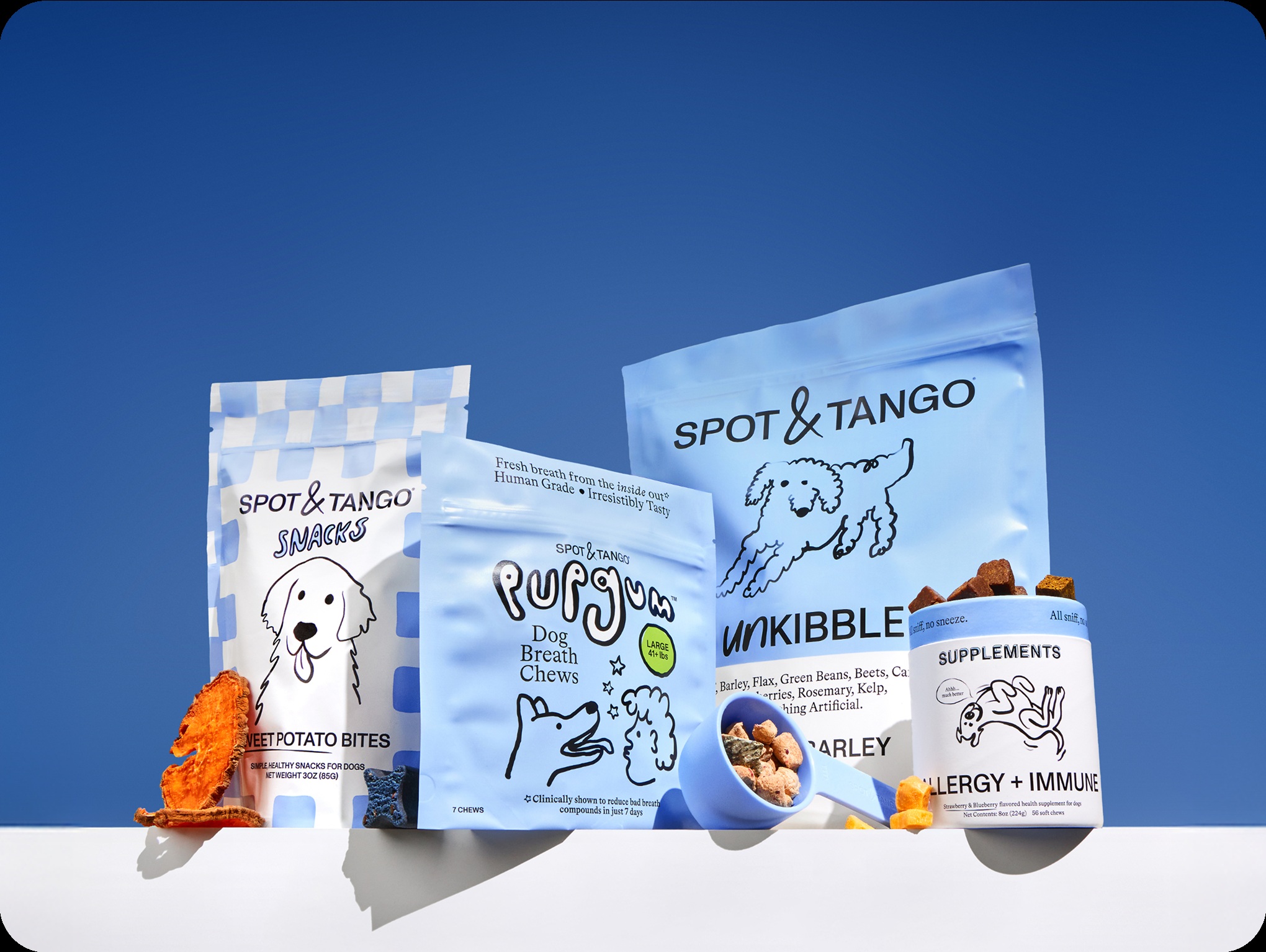
Today the range includes snacks, supplements, and PupGum dental chews, launched in June 2025. PupGum can be bought without a food subscription, with member pricing for meal-plan customers. That gives the company another entry point for households that want a chew before committing to dinner.
In a market of frozen subscriptions such as The Farmer’s Dog, Ollie, and Nom Nom, UnKibble offers a different storage and serving arrangement. Premium dry food remains the broader alternative. Buyers have to decide whether the ingredients, portion guidance, and delivery justify their actual quoted price. Dogs, inconveniently, retain veto power over taste.
Other businesses can borrow the question behind UnKibble: what does a customer tolerate in order to use your product? The answer may concern storage, packaging, or a repeated chore. Removing that friction can widen demand. Building a factory is a more conditional lesson: it requires capital, operating expertise, and enough recurring volume to justify the equipment. The pantry idea is easy to admire. Keeping every pantry supplied is the expensive part.