Before Arnulfo Ventura put an enormous chip on a bag, he had a bottle problem. The drink inside was an aguas fresca. The outside, apparently, had not received the memo. His company, Bonadea, had spent money asking customers what they thought. They wanted packaging that felt closer to the drink’s Mexican history. Ventura and his co-founder, Jose Domene, had to reconsider the name, the lettering and the shape of the bottle. A business built around a familiar taste needed to look familiar, too.
By the time they arrived at Natural Products Expo West in 2011, Bonadea had become Cobá. The white label was gone. In came sky blue, tropical lettering and a bottle shaped with the traditional aguas frescas barrel in mind. Organic agave nectar replaced sugar. It was a fairly comprehensive wardrobe change for something that fits in your hand. The founders had listened, and the answer required more than a new slogan.
That episode offers a useful way into Ventura’s working life. He has moved from founding a beverage company to corporate strategy, online grocery, snack turnarounds and growth equity. Across those jobs, he keeps encountering the space between what a company makes and what another person understands. Sometimes that space is a label. Sometimes it is a delivery system. Sometimes it is the distance between a promising employee and somebody willing to open a door.
Grocery runs across the border
Ventura grew up in San Diego. Family shopping trips took him across the border to Tijuana, where routine grocery hauls helped shape his taste for rich, bold flavors. At home, dishes carried the traditions of his family’s hometown, Guadalajara. This was food encountered through ordinary repetition: shopping, cooking, eating, going back for more. Long before he worked in packaged goods, those flavors belonged to the household.
He later spoke publicly about the influence of his immigrant parents, crediting the drive and determination they passed on to him. In 2013, while running Cobá in Los Angeles, he supported immigration reform as a small-business owner. His argument connected opportunity with the ability to build a company or contribute to a workforce. The subject had a personal history behind it, as well as an economic one.
His professional route was less direct than his familiarity with Mexican food. He studied architecture at the University of California, Berkeley, then worked in architectural design and private wealth advisory before pursuing an MBA at Stanford. Ventura calls himself a “reformed banker.” It is a pleasingly economical introduction: enough financial experience to read the numbers, enough distance from the old job to make a joke about it.
A founder enters the large-company kitchen
Stanford’s MBA class of 2008 was part of that change of direction. Ventura formed the business that became Cobá during his business-school years. Entrepreneurship gave him a product of his own to explain, a partner to work with and customers whose preferences could upset a carefully prepared plan. The 2011 redesign made the last of those obligations visible. Consumer research had consequences for the physical object on the shelf.
In 2012, the conversation moved to Washington. Ventura was among 15 business leaders invited to meet President Barack Obama and Vice President Joe Biden during the fiscal-cliff debate. The founder of a bottled-drinks company was participating in a discussion about the national economy. It was a striking change of scale, though small-business owners had plenty at stake in the decisions being discussed.
Another change followed in August 2013. Ventura left Cobá to join PepsiCo’s Naked Emerging Brands group as a natural-product channel strategist. Domene took over leadership of the beverage business. Ventura described the move as an opportunity to pass the baton as his partner sought a more active role. He was bringing a founder’s experience into a corporation that worked with emerging brands - a useful vantage point on both sides of the negotiating table.
- 2008Stanford MBA
Bonadea beginnings - 2013PepsiCo
Emerging brands - 2018Beanfields
CEO - 2024Siddhi Capital
Strategy
The refrigerator has to travel
At Califia Farms, Ventura worked with founder Greg Steltenpohl on business development and new markets. In November 2016, the company launched a direct-to-consumer shopping platform offering more than 47 products, including almondmilks, ready-to-drink cold brew coffees and juices. The ambition was simple to describe: let people buy the products they wanted even when their local stores could not supply them.
The practical problem was rather less poetic. A refrigerated beverage has to remain refrigerated on its way to somebody’s door. Califia’s launch included a refrigeration component, along with customer reviews and user-generated content. Online shopping had to accommodate the actual product. A lovely website cannot persuade warm almondmilk to become cold again.
Ventura’s work in this period joined commercial strategy to the mechanics of access. A product might have broad retail distribution and still be difficult for a particular customer to find. E-commerce offered another route. He had also served on PepsiCo’s Global eCommerce Steering Committee. The person who once needed a bottle to communicate more clearly was now helping businesses make buying less dependent on a shopper’s location.
The chip gets a speaking part
When Ventura became Beanfields’ CEO in July 2018, he inherited a brand needing a turnaround. His early account of the job described reorganizing the company, improving communication and giving the sales team more responsibility. The business moved from the founding family’s home into a dedicated office and fulfillment space in Culver City. A change in leadership was accompanied by changes in how the work happened.
Packaging received attention again. Focus groups repeatedly supplied the word “bold,” and the redesign gave a large triangular chip most of the bag’s real estate. Ventura’s description was considerably less corporate: “We’re the brand with the big ass chip on the bag.” A chip company had found an explanation that could survive outside a marketing presentation.
“We’re the brand with the big ass chip on the bag.”
Arnulfo Ventura, 2019
By January 2019, Beanfields was reporting triple-digit year-over-year growth for that month. Five new flavors were headed to Expo West. That monthly result belongs to a specific moment, rather than serving as a permanent growth rate. It nevertheless captures the change Ventura was describing: a relatively flat brand had started moving again, with new packaging, new flavors and a reorganized team behind it.
The next year, he was talking about a broader future for Beanfields. The words “bean chips” had been removed from the logo, leaving room for other kinds of snacks. Vegan cracklins brought a different shape and texture to the range. His description lingered on the crunch and the noise of eating them. The interview sounded like someone discussing a snack people might actually enjoy, rather than reciting the back of its packaging.
A chocolate chapter, with a careful handoff
Ventura moved to Alter Eco as CEO in January 2022. Chocolate and sweet snacks replaced the salty-snack brief, while regenerative agriculture became part of the company’s commercial ambition. He spoke about making Alter Eco a regenerative snack company for the future. The appointment connected his experience in brand growth with a business concerned about how ingredients were produced.
Alter Eco’s owner, NextWorld Evergreen, emphasized his collaborative approach when announcing the appointment. During his tenure, the company continued developing its product range. Alter Eco recorded three innovation awards in 2023 and a number-three chocolate ranking in the natural channel. Those are specific company achievements, within a specific trade channel, rather than a claim about every chocolate buyer.
The ending requires care. Ventura left the CEO role in September 2023. Keith Bearden succeeded him before the sale to Trek One Capital closed that December. Ventura subsequently celebrated the transaction and thanked the team and its financial partners. He also pointed to Bearden, whom he had brought onto the board, as the next operator to lead the business. The handoff belongs in the story alongside the growth.
Everybody brings something
Alongside these operating roles, Ventura helped create Project Potluck in 2020 with A Dozen Cousins founder Ibraheem Basir and Mason Dixie Foods founder Ayeshah Abuelhiga. Its purpose was to help people of color build companies and careers in consumer packaged goods. Networking, mentorship and access to industry experience became work the founders could undertake together.
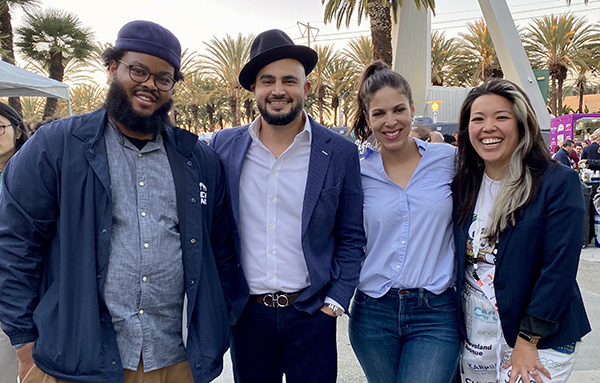
The name describes the arrangement neatly. At a potluck, guests contribute something and share in what everybody else has brought. The organization applies that idea to professional knowledge and relationships. Its stated values include reciprocity and the freedom to arrive without pretense. That matters in a field where meeting the right colleague, mentor or buyer can alter the choices available to a young business.
By April 2026, Project Potluck was described as representing more than 1,400 people and having made more than 300 mentorship connections. These figures belong to a community effort, led with founding executive director Kathleen Casanova. Ventura remains listed as a founding board member. The enterprise extends his attention to access beyond individual products and into the people trying to build the next ones.
Reported April 2026 · Organization-wide figures
Back to the work behind the shelf
Ventura joined Siddhi Capital in February 2024 and is listed as its Senior Vice President of Strategy. The firm’s business-diligence work examines growth plans, channels, competition, products and company structure. It is a setting where experience operating a brand can inform questions about another brand’s prospects. A sales forecast looks different when you have had to make the sales happen.
His operating work has continued to intersect with that investing environment. A February 2025 UNBUN announcement identified him as CEO while introducing a new brand identity, bread and naan products, and a majority-deal partnership with Siddhi. Again, the ingredients of the assignment were recognizable: product development, packaging, retail distribution and the financial foundation for growth.
Reflecting on leadership in 2019, Ventura’s focus was people: listening to customers and helping employees grow. Read alongside the bottle, the chip bag, the delivery platform and Project Potluck, that answer gives his career a practical continuity. Each involves paying attention to somebody on the other side of the business. The grocery aisle supplies the objects. The work starts with the people.