Long before Cupertino became a metonym for the future, Dave Ritterbush had to explain where it was. He moved there from Denver when he was about eighteen months old, grew up in the same house through high school and kept the same core friends. Stability left an impression. So did business. His father ran sales and marketing for a technology company that made the back-end systems used to print newspapers and magazines. Because Dave was much younger than his two brothers, he often came along to dinners, conferences and the office. The adult world did not arrive as an abstraction. It had name tags, schedules and people trying to persuade one another.
By high school, he had settled on marketing. At San Diego State University he studied business administration with that focus, graduating in 1990. The path ahead looked unusually straight. It would lead, however, through a wonderfully crooked collection of groceries: ice cream, energy drinks, nutrition shakes, popped chips, protein bars and plant milk.
There was a practical confidence in choosing early. He had watched his father work a room and had seen business travel from the child's chair at dinner. He also loved athletics and the outdoors, interests that stayed with him through later assignments in active nutrition. Another inheritance was social: a long attachment to one community, two older brothers and friendships that did not require constant reinvention. His later career would involve repeated arrivals at companies in transition. His rule for those arrivals is explicit: first understand the decisions that shaped the place, then decide what scale now requires.
The unifying subject was never food alone. It was the choreography required to turn an object in a package into a habit. The label must invite. The product must please. The truck must arrive. The shelf must be won again tomorrow.
Sixteen years in the freezer
Ritterbush joined Dreyer's Grand Ice Cream in 1991 as a regional marketing manager. He stayed for sixteen years, rising to senior vice president of marketing for packaged products. The tenure is the key to understanding the executive he became. Dreyer's was an education in growth conducted at retail temperature. During his time there, the business went from roughly $300 million to $2 billion.
He worked on Dreamery, a super-premium brand introduced nationally in 1999, managed a portfolio that included Godiva and Whole Fruit, and helped integrate Häagen-Dazs into the Dreyer's portfolio. He sat on the operating committee, joined the graphics development team and served on the board of the Starbucks Ice Cream partnership. There were products to invent and products to absorb, partners to accommodate and routes to stores that could make the difference between a good strategy and warm inventory.
Dreyer's: from regional marketing to senior vice president.
Red Bull, then operating and CEO roles at Premier Nutrition.
CEO of Popchips, then Quest Nutrition and its $1 billion sale.
CEO of Califia Farms and steward of its post-founder chapter.
Dreyer's also supplied the sort of detail that does not fit a résumé. At company rallies he acquired the nickname “Bitterbush.” He met and married Kristin Gain there. Colleagues remembered enough office romances to treat Dreyer's marriages almost as a subcategory of company culture. For all the talk of distribution systems, this was an institution made of people, rituals and jokes that survived the quarterly plan.
The experience taught him to regard a company as both machinery and memory. He carried that dual vision into a faster series of assignments: running the western business for Red Bull North America; reorganizing operations, sales and supply chains at Premier Nutrition; and leading Popchips through a brand refresh, product work and restructuring.
The billion-dollar bridge
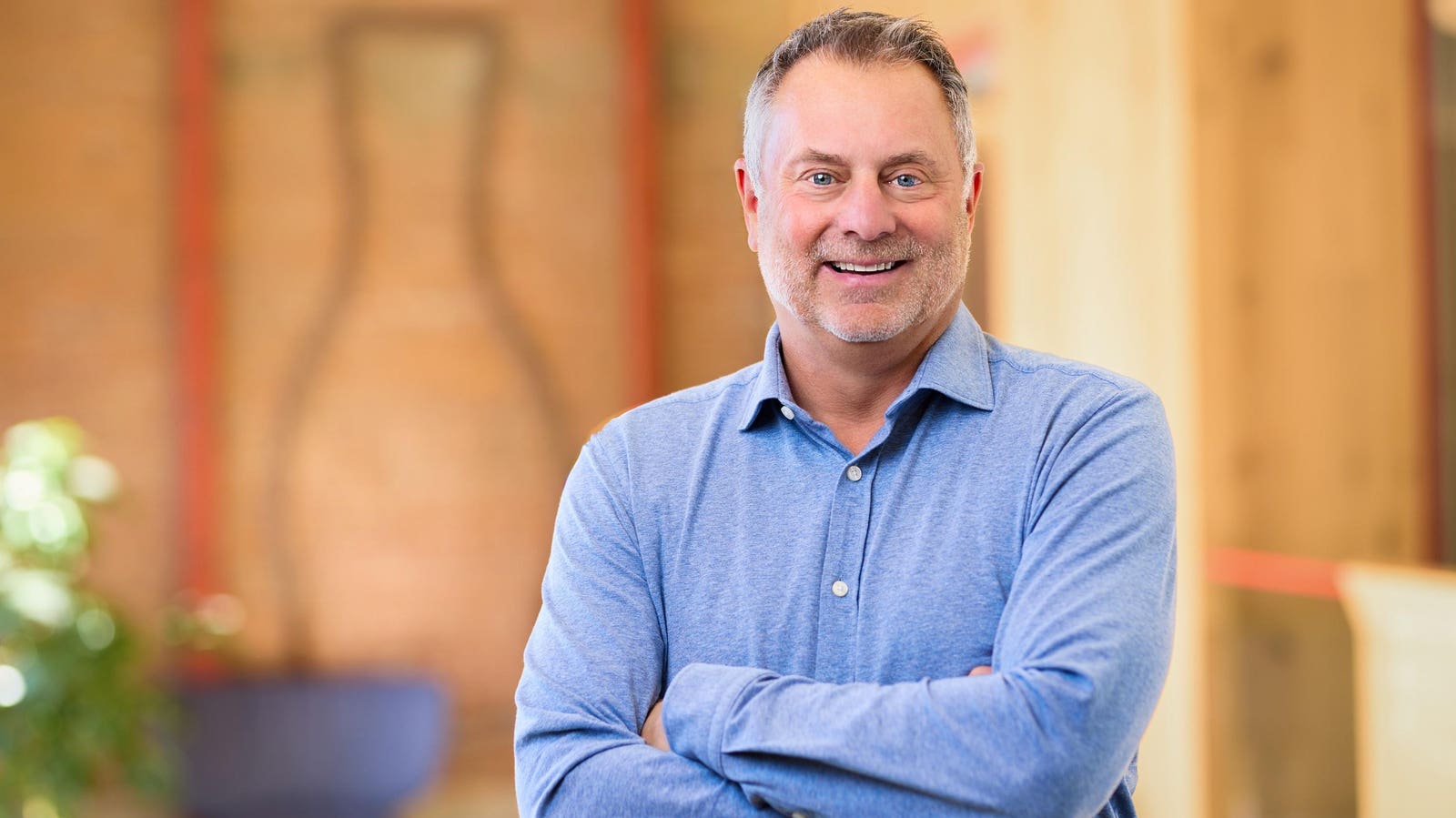
At Quest Nutrition, where he became chief executive in 2017, Ritterbush inherited another founder-built business. The brief covered organizational structure, supply-chain strategy and product innovation. Two years later, The Simply Good Foods Company bought Quest for $1 billion. Ritterbush remained president of the subsidiary after the sale and kept a seat on the parent company's board when he left the operating role in 2020.
The sale is the obvious punctuation mark in his career. The more revealing lesson came from everything around it: growth can turn a company's own systems into its principal obstacle. Infrastructure, processes and organizational habits must be designed for the business that is coming, not merely the business visible today. Success has an impish habit of arriving before the plumbing is ready.
A founder's story, with a new custodian
Califia Farms appointed Ritterbush in September 2020. Founder Greg Steltenpohl moved from chief executive to the board. The company came with unusually vivid lore. It began as a juice offshoot tied to imperfect Cuties tangerines, then pivoted when fruit supply made that plan unworkable. Almond milk became the opening. The name honored Queen Calafia, the mythical figure associated with California's name. The sculpted bottle, first imagined as a juice carafe for the breakfast table, became a beacon in an aisle of cartons and jugs.
Consumers sometimes mime that bottle's curves with their hands. Few balance sheets contain a line for gestural recognition, but perhaps they should.
“When you come into a company, you own the future, but you also own the past.”Dave Ritterbush
His maxim for a founder transition is not sentimental. Owning the past means understanding why old choices were right for their moment. Scale and complexity may now demand a different answer, but contempt for history is a poor substitute for judgment. Every employee, whether present for a decade or a week, inherits the full story.
Respect has not meant stasis. Califia once made every one of its carafes at its Bakersfield facility. Under Ritterbush it added manufacturing partners in the eastern United States, shortening shipping journeys and improving efficiency. In 2024, the company converted every bottle sold in the United States and Canada to 100 percent recycled plastic. The familiar silhouette remained; the material changed. Legacy, meet life-cycle analysis.
The useful danger of eating your own lunch
Ritterbush does not regard plant milk as one product with several flavors. Dairy households use different products for different occasions, and plants can do the same with more variety: lean almond milk for cereal or smoothies, creamy oat milk for coffee, rich coconut for indulgence. Creamers, cold brews, teas and refreshers extend the map from breakfast into the afternoon.
That logic supported one of Califia's larger recent bets, the Simple & Organic range. Its almond milk became the company's number-one SKU in roughly three years. It also risked taking sales from products already wearing the Califia name. Ritterbush's answer is brisk: “If you don't eat your own lunch, somebody else will.” Corporate cannibalism sounds alarming until one remembers what happens to lunch when left unattended.
Illustrative index based on the approximately 21% five-year CAGR Ritterbush reported in 2024. It is not a revenue disclosure.
In 2024, half of American households were buying plant milk. Califia itself had been growing at roughly 21 percent a year over the preceding five years, enough to double about every three and a half years. Ritterbush therefore objects to “alternative” as the category's permanent prefix. A product present in kitchens across all fifty states has ceased asking permission to belong.
The next terrain is as much café as supermarket. Califia's Barista Blends target coffee shops where texture, performance and consistency are judged one pour at a time. Foodservice is a complicated transaction, involving distributors, operators and the opinionated person behind the espresso machine. Califia accelerated that route in 2024 by buying Uproot, whose dispensers were already serving plant milks at more than 150 colleges, schools and hospitals.
Building the next refrigerator
Ritterbush's public manner is optimistic without being ethereal. Early exposure to his father's work made sales and marketing familiar. Dreyer's supplied the long apprenticeship. A sequence of chief executive roles supplied the pressure tests. He advises aspiring plant-based founders to surround themselves with experience, ask many questions, find partners with shared values and create genuine differentiation. Flexibility matters because tastes move quickly; so does the supply chain beneath them.
His ambitions for Califia are visible in the portfolio: organic products, more nutrient-focused formulations, refreshers for occasions beyond coffee and a foodservice network built around baristas and dispensers. The company can still grow substantially inside its present territory. Expansion need not mean a reckless holiday in unrelated aisles.
There is a neat symmetry to the work. Ritterbush began in a freezer, learning how a national brand travels. He now runs a company whose refrigerated bottles are recognizable by touch. Between those points lie several founders, several reorganizations, a billion-dollar transaction and more than one lunch threatened by its own kitchen.
The connecting idea is stewardship with forward motion. Preserve what makes the brand legible. Replace what prevents it from moving. Keep the story, improve the system, and accept that the future may arrive dressed as a product that competes with yesterday's bestseller. In consumer goods, immortality is an unreasonable target. A place in tomorrow's refrigerator will do.