The road from Manhattan to Kansas City is an unromantic stretch of Interstate 70. For You Zhou, it was also a supply chain. Zhou had arrived from Dalian, China, to study at Kansas State University. The town had wheat, football, and the consolations of a college calendar. What it did not have was easy access to the food he knew. Soy sauce, Chinese instant noodles, and familiar snacks could mean a two-hour drive. Homesickness acquired mileage.
His classmates made similar trips. That detail mattered. A private irritation had company, which is how a complaint begins to resemble a market. Zhou did not immediately christen it an opportunity. He was an engineering student, not a retailer. His parents had preferred Kansas to Los Angeles or New York because they thought big cities were unsafe. Their caution had delivered him, with some comic precision, to the place where the missing grocery aisle was impossible to ignore.
He began at K-State in electrical engineering, then moved to industrial engineering when an adviser noticed his interest in business. It was a useful redirection. Warehouse design and process efficiency sound bloodless in a lecture hall. Later, when Zhou had an actual warehouse and actual parcels to move, they became the grammar of his working life.
The supermarket became his directory
After graduating in 2011, Zhou moved to Los Angeles and encountered abundance. Asian restaurants and supermarkets were ordinary parts of the landscape. The contrast with Kansas furnished the idea: build an online store for people living beyond those shelves. Alibaba was enormous in China; Amazon was enormous in America. Yet neither had arranged the Asian brands and import relationships that Zhou and his classmates needed.
He had no supplier book. So he made one. Zhou walked through Asian supermarkets, watched what customers chose, and wrote down the names printed on packages. Then he called the brands and distributors. Many suppliers hung up on him. A recent graduate with an unknown website and a small warehouse is not the opening every sales department dreams of. He called again.
“I don't think I'm the first one to have this idea, but I am the first to commit to it.”You Zhou
In March 2013, Yamibuy opened with about 200 snacks. Its staff directory was admirably concise: Zhou. He ordered stock, collected it when distributors would not deliver, packed boxes, mailed them, answered customers, and worked from six in the morning until midnight. The first warehouse measured roughly 3,000 square feet. It was less a headquarters than a long practical examination.
The name carried the venture's mixture of appetite and improvisation. Zhou has told two versions. In the playful one, the company sold snacks, “yummy” sounded right, and the domain had already been taken. So he adjusted the spelling. The more official reading joins Asia and America. One is a founder's joke; the other is a mission statement. Both suit a company that moves culture by parcel post.
Customers wrote the catalogue
Yami's early assortment was aimed at Chinese students who wanted shelf-stable food they could prepare in dorm rooms. Then customers asked for cosmetics. Zhou added them. Requests arrived for family products and household goods; those appeared too. He kept a database of feedback and treated it as merchandising intelligence. “Always learn from customers what they want from you,” he has said, “not just what you want to be.”
The acquisition engine was similarly domestic. Someone bought Japanese instant noodles, photographed the package, and posted it to social media. A friend asked where it came from. Word of mouth did the work of an advertisement because the product itself was interesting enough to display. The parcel was delivery vehicle and conversation piece.
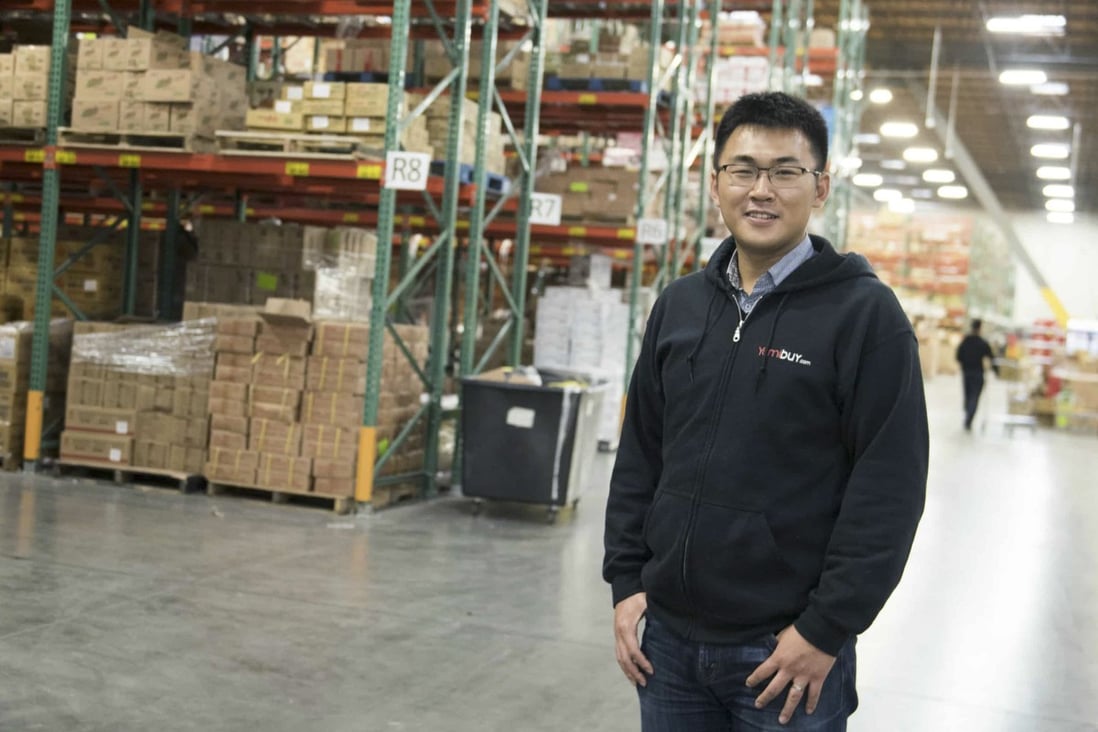
Growth made the simple operation complicated. In 2015, the staff expanded from around 20 people to nearly 100. Zhou needed experienced managers and engineers, including candidates comfortable with Chinese-language supply chains. He recruited carefully, sometimes getting to know prospective executives as friends before asking them to join. Shared values, he believed, mattered as much as a polished résumé.
In 2017, after four years without institutional money, Yamibuy raised a $10 million Series A. The same year, Zhou received the EY Entrepreneur Of The Year award for Greater Los Angeles, and the company appeared at No. 170 on the Inc. 5000 after reported three-year growth of 2,457 percent. The numbers were flattering. They were also demanding. More customers meant more orders, more stock, and a daily question with no glamour at all: can every box leave on time?
The awkward education of scale
Zhou's story contains its season of difficult arithmetic. Around 2018 and 2019, while the business was expanding rapidly, Yami ran into cash-flow pressure. Cost-cutting followed. He later described the lesson as learning to separate himself from the company, making decisions for the institution even when they involved dismissing people. Founders are encouraged to call companies their babies. Babies, fortunately, do not carry inventory or require positive working capital.
The operations kept evolving. Yami built automated logistics, opened facilities on both U.S. coasts, and used data and artificial intelligence to forecast demand and personalize offers. By 2023, Zhou said average delivery took 2.6 days. In Los Angeles, the company's own vehicles could deliver some morning orders on the same day. Ninety-five percent of what it sold was imported from Asia, making supply-chain fluency an advantage and a permanent invitation to headaches.
The pandemic produced a revealing pivot. Fresh groceries had long interested Zhou, but cold storage and delivery would ordinarily require years of investment. In 2020, Yami instead partnered with local Asian supermarkets. They had the products and procurement; Yami had customers, data, and an app. Yami Fresh launched first in Los Angeles and Orange County. A crisis compressed the planning calendar from years to weeks.
“Every single customer wants a world-class experience. Improving the customer shopping experience is on our minds every day.”You Zhou
A niche becomes a bridge
The customer base also changed. Yami began as an answer for Chinese international students and immigrants, then widened toward Asian Americans and shoppers interested in Korean beauty, Japanese snacks, anime, K-pop, and regional cooking. Zhou's original expertise remained useful because mainstream curiosity did not erase the need for trusted sourcing. It increased it.
By 2026, Yami said it had close to four million registered customers. That year brought a partnership with Mitsubishi Shokuhin, a major Japanese food wholesaler. The relationship began unexpectedly through a Mitsubishi-sponsored MBA student who interned at Yami. Zhou said the company had not been actively raising money; it had broken even and was generating positive cash flow. Mitsubishi offered a more strategic prize: deeper access to Japanese supply chains. Japanese products already represented more than 30 percent of Yami's sales. The old supplier problem had returned at continental scale, this time with a willing partner and a mature distribution system.
The arrangement gives Japanese brands a route to American customers without negotiating shelf by shelf with U.S. retailers. It also completes a neat reversal. Zhou once copied supplier names from packages because nobody knew his company. A major wholesaler now sees his company as the package through which its brands can enter a continent.
The first box, again
In July 2026, Yami opened its Canadian warehouse operation. Zhou marked the launch by packing the first order himself. Corporate anniversaries often arrive with plaques, speeches, and cakes engineered to survive photography. Packing a box was more apt. It repeated the gesture with which the business began while quietly acknowledging how far the box would now travel.
His ambition has grown broader than relieving Chinese students' homesickness. Yami's stated mission is to bring the world closer together for everyone to experience and enjoy. The language can sound lofty until it is returned to the scale of a cupboard. Culture is often preserved in modest objects: a noodle packet, a skin-care bottle, a seasoning a parent used without measuring. Delivering them is commerce. Recognizing why they matter is the more durable advantage.
Zhou's advice to would-be founders is blunt: “You never solve the problem if you just think about it.” His own proof began on a highway in Kansas. He observed the hours, the fuel, and the friends making the same journey. Then he committed. Thirteen years later, the road has become a network of warehouses, vendors, software, and millions of accounts. Yet the essential unit of the enterprise remains wonderfully small: somebody opens a box and finds that home is a little nearer.