On the first day of September 2026, Xu Yangtian stood beneath the hard blue light of the Hong Kong Stock Exchange wearing a white SHEIN T-shirt. Around him, executives gathered for the ceremony that turns a private enterprise into a public fact. The clothing was ordinary. His presence was not. For years Xu, known first in English as Chris and later as Sky, had managed an extraordinary corporate trick: he made his company nearly impossible to avoid while making himself almost impossible to see.
SHEIN advertisements colonized screens, its parcels crossed borders, and its haul videos became a genre. Xu gave almost no interviews. Public photographs were so scarce that online searches routinely returned a Cornell engineering professor with the same English name. Employees reportedly passed their chief executive in the office without recognizing him. His picture on the internal company system was said to be a landscape. For a founder of a company built on relentless visibility, he practiced invisibility with impressive discipline.
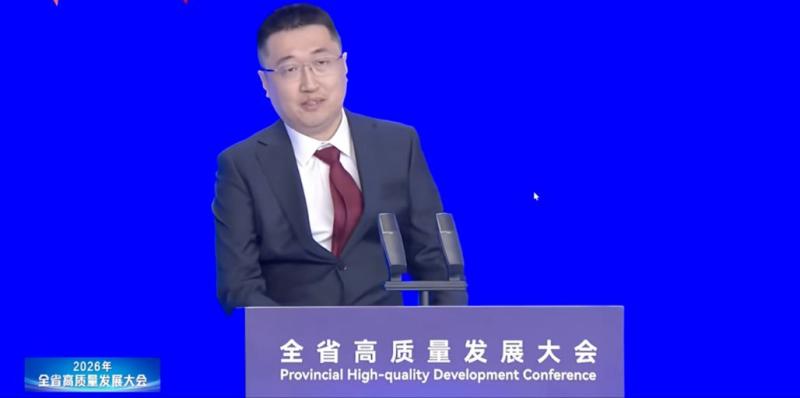
Then came 2026. In February he delivered a rare public address in Guangzhou. Seven months later, he appeared at the exchange as SHEIN raised about US$1.7 billion in its Hong Kong offering. His emergence was not a personality makeover. Xu did not arrive armed with a memoir, a podcast tour or an inspirational anecdote involving a garage. He spoke like an operator: about factories, logistics, software and place.
First, learn what the world is searching for
Xu's verified biography is shorter than many erroneous ones written about him. Born in Shandong, China, he earned a bachelor's degree in international trade from Qingdao University of Technology in 2007. Before founding SHEIN, he and future colleagues worked at a business that provided search-engine marketing to export companies. That early job supplied the useful idea at the heart of his career: a search query could be more than a route to a sale. It could be evidence.
In 2008, Xu formed Nanjing Dianwei Information Technology with Wang Xiaohu and Li Peng. They sold across borders and experimented with goods ranging from teapots to phones before moving toward clothing. The partnership ended in a dispute. Li and Wang have said Xu left with control of important accounts; SHEIN has rejected their version of the relationship and has said they were not partners in SheInside. The disagreement remains part of the company's unsettled origin story, a reminder that even businesses obsessed with clean data can have untidy beginnings.
By 2011 Xu had launched SheInside, initially associated with wedding dresses and then broader womenswear. The name became SHEIN in 2015. Fashion experience was not his obvious advantage. Search was. He understood how to find customers living elsewhere and how to read their interest before old-fashioned retailers finished debating a seasonal forecast.
The small bet that learned to repeat itself
Conventional fashion asks a buyer to guess what shoppers will want months later, order thousands of pieces and hope taste obeys the spreadsheet. Xu's system made a smaller opening wager. Produce a limited test, show it online, measure demand, replenish the winners and retire the rest. The cleverness was not one algorithm. It was the loop connecting software to workshops quickly enough for a click to alter a production decision.
The Xu loop
The loop needed a physical home. SHEIN established its Guangzhou presence in 2014 and built around Guangdong's concentration of apparel workshops, fabric suppliers, couriers and export infrastructure. Panyu factories and Baiyun logistics hubs could answer one another at close range. In Xu's 2026 telling, that network allowed SHEIN to move from design draft to delivery in two to three weeks. An app can be copied in an afternoon. A neighborhood where every missing zipper, cutting table and delivery van is nearby takes decades to assemble.
This machinery made fashion behave more like a feed: abundant, personalized and continuously refreshed. It also created a demanding production tempo. SHEIN has faced sustained examination of conditions within its supplier network, alleged copying of designers' work and the environmental cost of inexpensive, high-volume consumption. In its own reporting, the company identifies stronger supply-chain governance and the management of Scope 3 emissions as critical work. Efficiency is a method, not a moral verdict. Once an operating system reaches global scale, its consequences scale with it.
A leader described mostly in the third person
Xu's public reserve has left others to sketch his character. People who met him have described a hardworking executive with detailed command of operations. One account from the supplier world placed him in meetings at two or three in the morning, learning whatever another business did well. The portrait is consistent with SHEIN itself: curious about signals, impatient with delay and more interested in the mechanism backstage than the show in front.
There are small flashes of humor in the sparse record. Xu reportedly dropped “Chris” because the name was not distinctive enough and chose “Sky,” echoing the final character of Yangtian. Distinctiveness is a curious concern for a person who later became famous for being unrecognizable. In one rare Facebook post from 2013, he celebrated the company growing beyond 50 employees. The message now reads like a postcard from another planet.
Graduates in international trade from Qingdao University of Technology.
Co-founds a Nanjing cross-border commerce venture after working in search marketing.
Builds SheInside, which becomes SHEIN as the business shifts toward a broader global fashion market.
Gives a rare public speech and promises more than RMB 10 billion for Guangdong's supply chain.
Attends SHEIN's Hong Kong listing, a public debut for both company and founder.
The geography behind the cloud
By the time Xu took the Guangzhou stage, SHEIN's formal headquarters had moved to Singapore and the retailer served customers across roughly 160 markets. Yet his speech returned repeatedly to Guangdong. “Guangdong is SHEIN's roots, and the starting point of our journey,” he said. He credited the province's industrial ecosystem and announced more than RMB 10 billion of investment over three years in an intelligent supply-chain system and fashion-industry cluster.
It was a speech about gratitude, but also dependence. Digital businesses enjoy talking about placelessness. Xu described the opposite: a retailer whose speed comes from a very specific map. Workshops in Panyu, logistics in Baiyun, merchants across the province and software passing instructions between them formed the real architecture. The cloud, it turns out, has loading docks.
That admission also framed the next test. SHEIN's Hong Kong shares fell by as much as 10 percent in early trading before closing near the offer price. The company entered the market at roughly a quarter of the US$100 billion valuation attached to a 2022 funding round. Tariff changes had weakened the economics of low-value parcels, and higher logistics costs squeezed a model whose appeal depends heavily on price. Public investors inherited the speed of Xu's feedback loop, along with its exposure to regulation, trade policy and scrutiny.
The listing completed a journey that had wandered through proposed destinations in New York and London before reaching Hong Kong. Each route carried different political questions, and none allowed SHEIN to pretend that corporate paperwork could detach it from its manufacturing base. The final venue put that tension in plain sight. A company legally headquartered in Singapore, operationally rooted in southern China and commercially dependent on shoppers across continents was asking one market to price all three identities at once.
Visibility is now part of the job
Xu spent much of his career making merchandise legible to an algorithm while keeping his own life illegible to the public. A stock-market listing reverses the arrangement. Public companies must explain themselves. Investors expect numbers, regulators expect answers, and customers increasingly ask how a low price became possible. The executive who turned attention into an industrial advantage must now endure attention as an operating condition.
His 2026 appearances offered a first outline of how he may do it. He did not sell a founder myth. He named the system: small batches, rapid response, digital tools, factories and logistics. He acknowledged that the system is rooted somewhere. He attached a large investment promise to its future. It was less charisma than inventory, which may be the most honest language available to a retailer.
There is another reason the appearances mattered. For years, gaps in the record filled themselves with errors. Universities that had no record of Xu were named as his alma mater. The wrong Chris Xu supplied the internet's face. Company materials themselves offered shifting dates and origin stories. A founder's privacy is his right, but corporate opacity has a public cost when a business reaches hundreds of millions of customers. The official investor biography now provides a spare, sturdier account: Qingdao, international trade, search marketing, founder, chairman and chief executive. It is not much of a legend. It is enough to begin with facts.
The central fact of Xu's story is not that a shy billionaire finally appeared in photographs. It is that a student of international trade learned to treat desire as a moving signal, then built an organization quick enough to chase it around the world. The same feedback loop now points inward. What SHEIN does next will be measured in public, and so will the decisions of the founder standing at its center.