Reese had an unusually consequential encounter with a steak. Kenneth Ehrman had brought his dog to demonstrate a prototype for a potential investor. The investor wanted evidence, and supplied a temptation on the other side of the virtual fence. Reese stayed where she was supposed to stay. Ehrman subsequently called her the “$5 million dog.” It was a fundraising presentation with an appetite, and the appetite had declined the offer.
The episode belongs to Ehrman’s second major business, Halo Collar. His first, I.D. Systems, dealt in industrial vehicles, rental cars and the information they could transmit. For years, he had helped businesses understand where valuable equipment was and how it was being used. Halo brought the same broad engineering territory into the family yard, where the thing everyone wanted to keep safe had its own ideas about squirrels.
That shift makes his career interesting. The technology travelled between markets. The reasons for buying it changed considerably. A fleet manager could debate an investment, schedule another meeting and ask for a pilot. A dog owner already worried about an escape understood the desired result before anyone opened a spreadsheet.
A degree, a factory floor, a radio
Ehrman graduated from Stanford University in 1991 with a bachelor’s degree in industrial engineering. Before founding his own company, he worked as a production manager at Echelon Corporation. The sequence matters: an engineering education followed by a job concerned with getting things made, followed by a business that put communications hardware to work in physical environments.
He co-founded I.D. Systems in 1993 and served as its president from the beginning. The company developed wireless systems for tracking and managing assets. Its equipment could give a business information about vehicles that otherwise spent their working lives out of management’s immediate view. The commercial questions were practical: who was using something, where was it, and what was it doing?
I.D. Systems went public on Nasdaq in 1999. The achievement came early in a career that would remain closely tied to engineering. Ehrman’s later record includes co-authorship of more than 40 patents across wireless communications, mobile data and asset management. These are subjects with little celebrity value at a dinner party, but considerable value when several hundred expensive objects need supervision.
His responsibilities accumulated over time. Alongside the presidency, he served as chief operating officer from June 2000 to March 2010. In March 2014 he became interim CEO; that June, the board appointed him chairman and CEO. A founder’s long familiarity with a product had become responsibility for the entire enterprise, including the less entertaining parts that arrive with a public listing.
He resigned as CEO in December 2016. The business subsequently became part of Powerfleet’s holding-company structure in October 2019, alongside the acquisition of Pointer Telocation. His connection to Powerfleet therefore runs through its predecessor. Keeping those dates in order preserves the shape of his contribution: he helped build I.D. Systems, then went on to another venture before the later corporate combination.
The problem was already in the garden
The spark for Halo was Ruby, his young niece’s dog, who escaped an in-ground wired fence and was killed by a car. The family’s loss made a familiar product look different. Ehrman had used a similar fence himself. The equipment could define a perimeter, but the consequences of crossing it were precisely what the family wanted to prevent.
His brother Michael had worked alongside him at I.D. Systems as its technology leader. Together, they had years of experience making wireless devices communicate in demanding settings. Halo, co-founded in 2018, gave them a closely felt reason to apply that knowledge elsewhere. The consumer application had acquired a name and a family connection.
The difference a customer could picture was portability. A buried wire belongs to the property where someone installed it. A boundary configured through an app can be created somewhere else. That changes the purchase from a piece of work done to a yard into a system that accompanies the owner and dog. The fence, at least, would no longer need to be left behind.
The customer with four legs
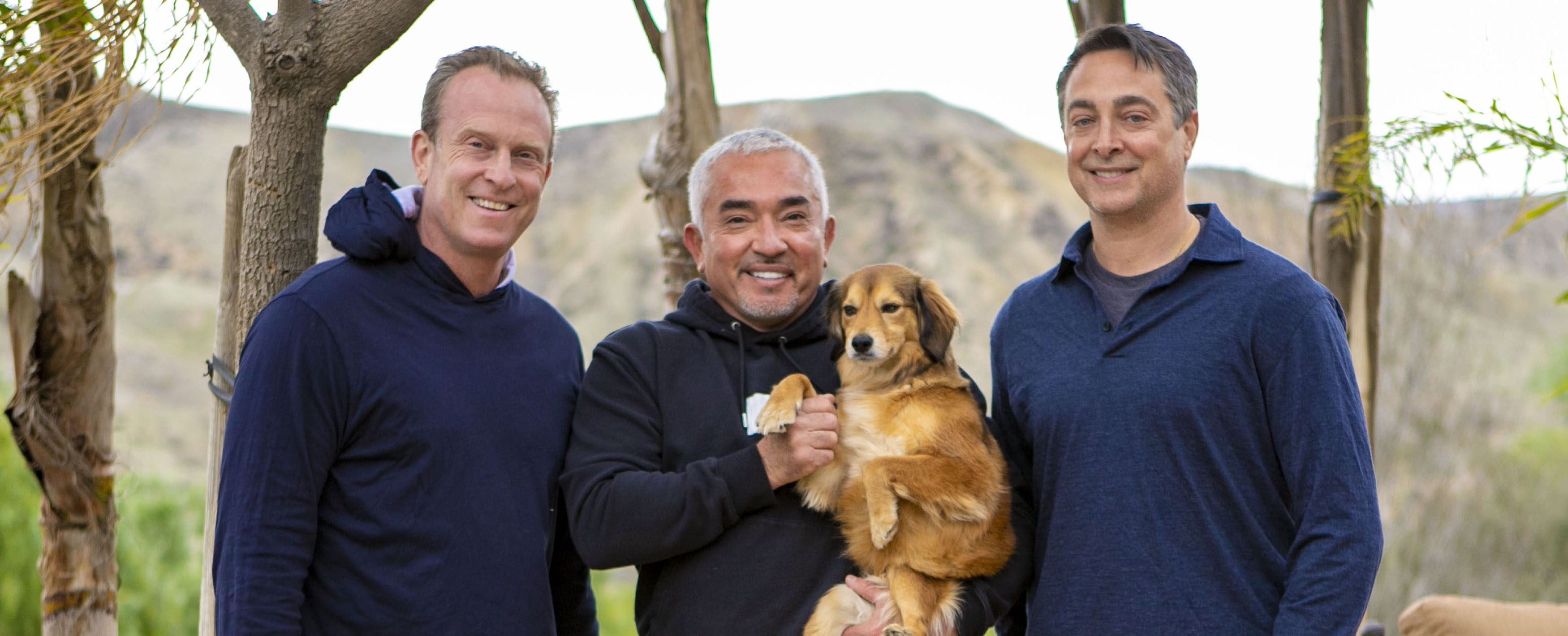
Ehrman brought Cesar Millan into the founding team. Millan’s experience introduced a different kind of expertise into the design conversation: how a dog learns a boundary, and how an owner teaches it. Ken and Michael could work on the communications and location systems. Millan could help make the resulting instructions meaningful to the animal wearing the collar.
That collaboration gave Halo a product shaped by two sets of requirements. Owners needed to configure and understand it. Dogs needed to learn its cues. The system combined virtual fencing and tracking with training, including sounds and vibrations. A precise location on a screen could only do part of the job; the dog’s response had to complete it.
There is a pleasing complication in that arrangement. The person paying for the device can read the instructions. The participant whose behaviour determines whether the boundary works cannot. Training consequently belongs inside the product experience. It follows that bringing a dog expert into the founding team affected much more than the photograph on the packaging.
A conceptual view of the system, rather than a technical wiring diagram.
A product still needs a company
Halo began selling directly to consumers in 2020. Its April 2023 financing announcement reported approximately $3 million in 2020 revenue and approximately $50 million in 2022. Those figures describe a young business finding buyers quickly. They also hint at the work behind the collar: manufacturing, app development, distribution and support all had to grow alongside sales.
The financing came from Decathlon Capital Partners through a revenue-based arrangement. Financial terms were undisclosed. Halo said the money would support expansion, continued product development and wider distribution. For Ehrman, the appealing consumer proposition still required the less photogenic machinery of a company: capital arriving at the right time to pay for the next stage.
His account of developing Halo includes using established industry relationships. The brothers worked with Taiwan-based Quanta on hardware design and manufacturing, and an Eastern European team on the app. They remained involved through frequent meetings and trips. Years spent building an earlier company had left behind something useful besides technical knowledge: people who could help turn a proposal into something customers could hold.
Customer support became another part of the design. In 2022, Halo introduced a virtual Dog Park using Zoom, offering access to help and training. The name promised a gathering place; the practical purpose included getting owners comfortable with a product whose success depended on how they used it. An owner needed more than a delivery confirmation and good wishes.
The virtual gathering also made an otherwise solitary task social. Owners working through setup could meet Halo staff online, ask questions and find training help. It was a practical acknowledgement that the sale continued into the home: a device designed around behaviour needed people available to explain it. The company could ship hardware in a box; confidence in using it took a conversation.
Precision becomes a personal matter
By October 2025, Ehrman was discussing Halo Collar 5 with Nasdaq. In April 2026, Halo announced Precision+, combining dual-frequency GPS hardware with Swift Navigation’s Skylark positioning corrections. The engineering had continued through successive versions of the product. Location accuracy remained central to the idea, since a boundary is useful only if the system can consistently determine where it is.
“Close enough isn’t enough, especially when your dog is near a boundary.”
Ken Ehrman, on the April 2026 Precision+ announcement
That sentence could sit comfortably beside his earlier industrial work. Both businesses put information about a physical object into someone else’s hands, with consequences for what happened next. In Halo’s case the emotional stakes are unusually easy to grasp. The owner looking at the app knows the dog’s name, habits and favourite escape opportunities.
In June 2026, Ehrman was named an EY Entrepreneur Of The Year New Jersey winner. Halo also appeared on Inc.’s Best Workplaces lists in 2025 and 2026. The latter recognition introduces a quieter side of his operating approach: the company’s remote working model, which lets experienced employees participate without relocating. Building a portable fence apparently leaves room for a geographically flexible company.
In an August 2026 interview, Ehrman reported about $100 million in sales the previous year and roughly 600,000 collars sold since Halo began. He also described a 40 percent growth goal for 2026. The target was an ambition, with the year still underway. It placed the business in another familiar founder’s position: a substantial installed base, and a much larger market still ahead.
The award also put a date on the next public milestone. New Jersey’s regional winners were due to be considered for EY’s national awards in November 2026. For Ehrman, that meant recognition for the company he was building now, decades after the Nasdaq listing of his first venture. A long career can produce more than one beginning, with a different team and a different customer each time.
The fence goes along
Ehrman’s stated ambition for Halo is to reduce the number of dogs that run away and are struck by cars. It is a broad goal, rooted in one particular family’s experience. The career connecting that goal to an actual product passed through production management, public-company leadership, patents and years of selling technology to businesses.
Reese’s steak test brings the story back to a scale anyone can understand. A prototype, a potential investor, a dog and something desirable beyond the boundary. After decades spent explaining what wireless systems could do, Ehrman had a demonstration that required very little narration. The dog stayed. The steak remained elsewhere. Sometimes a good product presentation ends with nobody moving.
Keep following the story
- Halo Collar - official website
- Ken Ehrman on LinkedIn
- Watch: conversation with Turner Novak
- Watch: Halo Collar at Nasdaq
- Listen: Travis Makes Money
- Read: the Halo origin and early funding
- Read: building Halo with manufacturing partners
- Read: August 2026 founder interview
- Explore: published patent records
- Powerfleet company profile
- The 2026 EY New Jersey award announcement
- Halo’s April 2026 positioning update
- The 2023 growth financing announcement
- Halo’s workplace recognition