A forklift has several advantages over a dog. It does not chase squirrels. It rarely regards a passing deer as an invitation. And when someone proposes putting tracking technology on it, nobody has to ask whether it will eat the tracker. Ken Ehrman spent much of his career in this comparatively orderly world, helping companies keep track of expensive things. Then his niece lost Ruby.
Ruby was a rescue dog. She escaped an invisible fence and was struck and killed by a car. The family had trusted a boundary they could not see. Ehrman had a similar system for his own dog, Reese’s. Suddenly, a familiar household arrangement seemed inadequate. He knew how to locate a rental car in its parking space. He began thinking about what that knowledge might do for a family dog.
The question joined two parts of his life that had been running in parallel: the engineer who understood wireless tracking and the owner who wanted his dog to come home. Halo Collar would grow out of that meeting. Its eventual sales figures are one way to measure the result. Reese’s, who became a regular product tester, offers a less abstract one.
A chip looking for something to do
Ehrman graduated from Stanford in 1991 with a bachelor’s degree in industrial engineering. He worked as a production manager at Echelon before co-founding I.D. Systems in 1993. Echelon’s ambition was to put intelligence into everyday equipment. Ehrman saw an opening in giving that intelligence a particular job: identifying and managing valuable objects that moved around.
At I.D. Systems, the objects included rental cars, forklifts and trailers. The customers included Avis, Walmart and Ford. Wireless information could remove little rituals that businesses had accepted as unavoidable. A returned car, for instance, could transmit its fuel and odometer readings rather than wait for someone to climb inside and write them down. The appeal was practical: fewer manual steps between an arriving vehicle and an accurate bill.
His patent work covers wireless communications, asset tracking, power management and connected cars. This was a career spent making physical things legible to computers. He took I.D. Systems public in 1999. Years later, he could describe that milestone with some amusement: annual revenue had been about $3 million. Going public, he acknowledged, had come early.
Large customers brought another education. A company could like a technology, recognize its value and still install it very slowly. Ehrman recalled a proposed rollout across 120 distribution centers at three a year. Forty years is an awkward sales forecast. By the time he turned toward dogs, he had learned to distinguish enthusiasm for an invention from urgency about buying it.
He also turned that experience into advisory work. His advisory work included consulting for supply-chain and transportation businesses, mentoring startup executives and helping technology companies think through patents and partnerships. Those subjects would reappear at Halo. A new consumer business still needed manufacturers, intellectual property and people willing to work together before there was much to sell.
The dog expert was part of the design
The Halo idea had an advantage he understood immediately: dog owners were already paying for fences. He could offer another way to solve an existing problem. But the experience that helped him understand a moving trailer could take him only so far with a moving dog. He wanted Cesar Millan involved at the beginning.
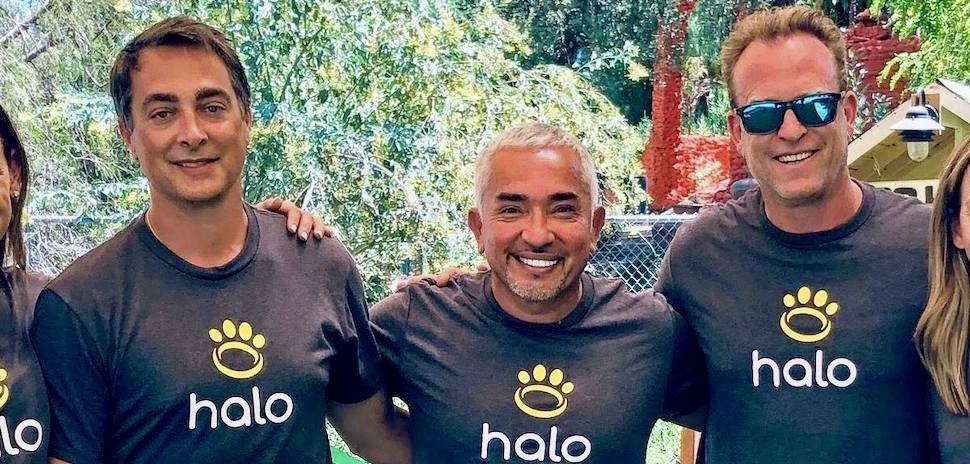
Millan, known for Dog Whisperer, became a co-founder alongside Ken and his brother Michael Ehrman. Getting to him took persistence and networking. Ken’s own account of the division of labor gives the other two generous billing: Michael supplied the technical expertise, Millan the understanding of dogs, and Ken assembled the pieces. It is a useful description of founding a hardware company, an activity with rather more pieces than the finished object suggests.
Halo launched its first product in 2020, after the company’s founding in 2018. The owner uses an app to draw a virtual boundary. The collar uses location technology and feedback to help the dog learn where to stay. Sound, vibration and optional static are among its feedback settings. Training sits inside the proposition; a map alone cannot teach a dog what a boundary means.
For Ehrman, portability made the idea especially useful. A buried wire belongs to one property. An app lets an owner establish a different boundary elsewhere. He has described taking his dog hiking and using a whistle cue to call her back when other hikers approach. There is something pleasantly modest about this ambition for satellites: a better walk with the dog.
He connected the product to how people were living, too. Owners who moved between places wanted to bring their dogs along. In his view, a boundary system ought to accommodate that habit. It gave him a way to discuss the invention through a recognizable family decision: whether the dog could come on the trip.
- 01 / DRAWThe owner sets a virtual boundary in the app.
- 02 / LOCATEThe collar monitors its position.
- 03 / TEACHTraining connects feedback with turning back.
Technology supplies the coordinates. Training gives the dog a cue it can understand.
Reese’s had to approve
Ehrman expected building the product to be easier than it was. Dogs supplied a thorough correction. The device had to work through the ordinary indignities of canine life, including rough play and long stretches indoors. A demonstration in an engineer’s hand could establish only so much.
His dog, Reese’s, tested the successive versions. When a prospective investor wanted a demonstration at his own house, she came along. The collar worked, Reese’s did her part, and the investor committed. Plenty of founders bring a colleague to a pitch. Ehrman brought someone with a more direct interest in the outcome.
That relationship changed his working habits. He had built industrial products that he did not personally use. With Halo, the CEO was also a daily customer. He says he still spends part of his day on engineering. The collar accompanies his own dog, including trips to family homes where a permanent fence would be of little help.
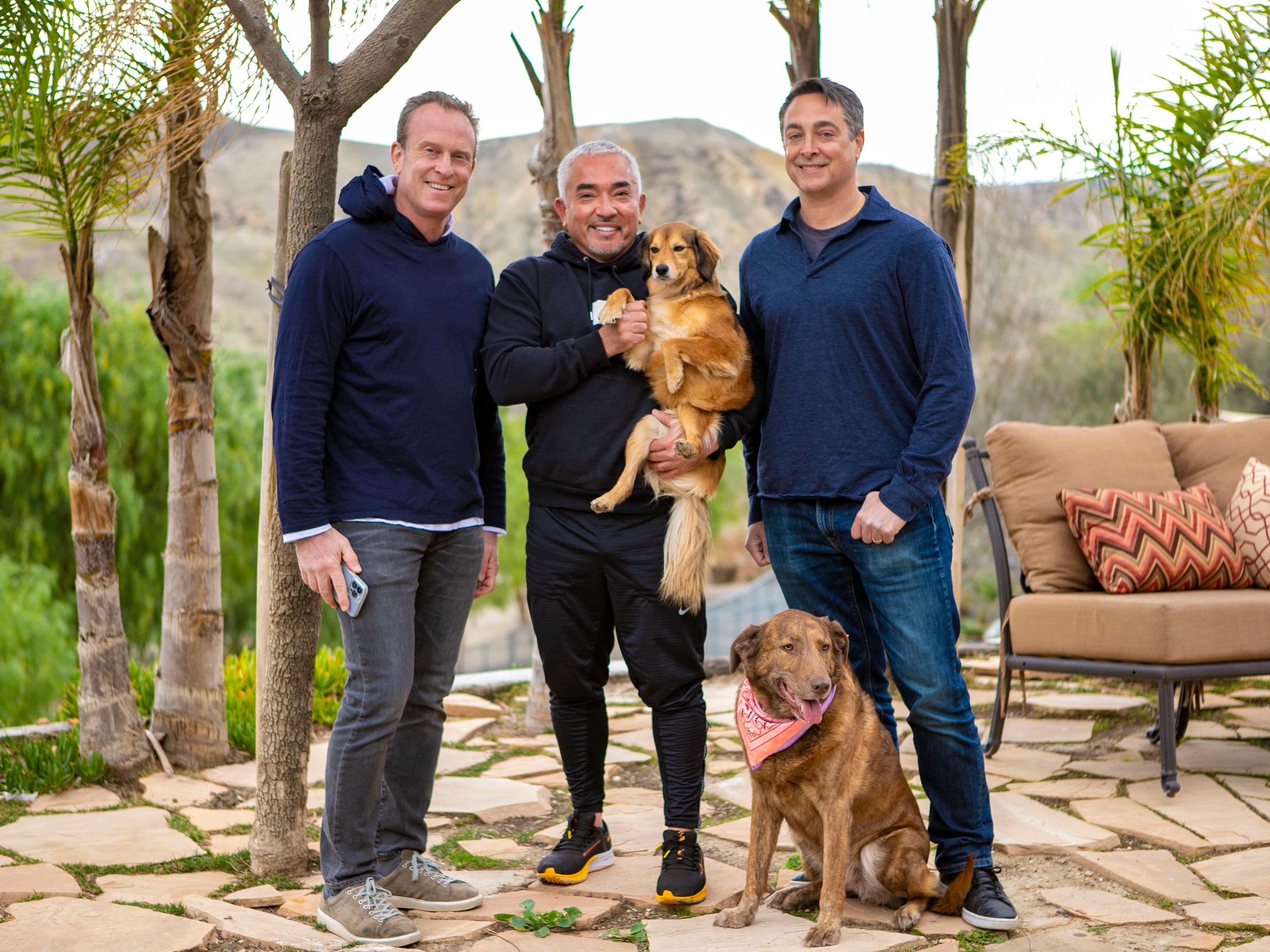
The brothers’ product work also became more exacting. For Halo Collar 3, Michael described testing antenna performance on different dogs, rather than relying on a laboratory or a device held in someone’s hand. How an animal wears a collar changes the engineering problem. An antenna has to earn its place in the product by working on the customer who actually wears it.
A dog park with a Zoom link
A collar is a small object with a surprisingly large support obligation. Owners need to set up an app, understand feedback and teach an animal. Ehrman came to regard access to help as part of what Halo was selling. The company’s Virtual Dog Park, announced in 2022, put customer service, technical help and events into Zoom meetings.
The name suggests tennis balls; the practical work includes connectivity questions and billing. Early customer demonstrations also put Ken and Michael in front of owners to walk through the app and their first fences. The sessions included demonstrations and answers to frequently asked questions. That is useful information for anyone trying to fit a technical system into an ordinary afternoon.
“Customer service is key to success.”
Ken Ehrman, thanking Halo’s support team
He has also discussed the limits of an online retail partnership that adds another checkout without adding hands-on help. Selling through a familiar retailer does not automatically resolve a customer’s question. In his account of Halo’s support approach, the app offers access to people as well as automated assistance. He personally prefers talking to a human, while recognizing that other customers may choose a chatbot.
The business beyond the boundary
Building Halo required money as well as conviction. Early customers helped finance development through advance purchases. The company later raised outside capital and reached a reported $400 million valuation in late 2021. When fundraising became harder, Ehrman had to turn his attention toward profitability. Manufacturing and inventory arrangements became as consequential as the pitch.
One arrangement let Halo receive a customer’s payment before paying the manufacturer, which shipped directly from Taiwan. It reduced the need to raise equity simply to hold inventory. A founder whose public story begins with satellites was also working on the less photogenic question of when an invoice comes due.
There were expensive disputes along the way. Halo faced litigation from OnPoint Systems over patents and from Radio Systems Corporation, the parent of Invisible Fence, over advertising and competition. Both ended in confidential agreements. Ehrman pursued direct discussions with the opposing CEOs to help reach settlements.
Sales reported by Ehrman in September 2026 for the previous calendar year.
By September 2026, Ehrman was reporting more than $99.7 million in sales for the previous year. In June, EY named him a New Jersey Entrepreneur Of The Year award winner. Halo’s next commercial step included physical retail, broadening its reach beyond people already searching online for a dog fence.
A smaller distance from the customer
Ehrman has called his ambition an “iPhone for dogs.” The phrase captures his hope for a device that owners keep using, with improvements arriving over time. It also places an unusually demanding customer at the center of a technology company. A dog cannot submit a feature request. The humans have to pay attention.
His career offers an appealing circle: years spent locating objects for distant corporate customers led to a product he uses at home. He still talks about markets, manufacturing and growth. But he can also judge the work by whether he can take Reese’s along on a family visit. For someone who began by tracking high-value assets, that is a particularly personal definition of value.
Keep company with Ken
Conversations, company updates and his earlier work.