At Boston Children’s Hospital, the supply cabinets were supposed to bring order. Nurses had to follow a sequence of steps to get what they needed. In practice, the hospital’s account describes cabinets used incorrectly, manual orders, and quantities adjusted in the system. The controls existed. Trustworthy inventory data was another matter.
This is an awkward problem for a hospital. Asking a nurse to complete another transaction may improve the spreadsheet while complicating the shift. PAR Excellence has spent decades working on that small collision between clinical urgency and administrative tidiness. Its most interesting answer sits beneath the supplies: a scale.
- Weight changes become inventory data.
- Patient charging still needs a patient-selection workflow.
- Better counts help only when replenishment and item data work.
A cabinet can create its own problem
PAR sells hospitals a combination of sensors, software, and implementation services. Supply chain departments use it to see what remains, decide what to reorder, and study consumption. Clinical teams encounter it where supplies are taken. The company occupies the space between the physical shelf and the hospital’s enterprise systems.
The alternatives include familiar barcode workflows, supply cabinets, and two-bin replenishment systems. BlueBin, for example, uses an empty bin to signal a refill while a second bin supplies the buffer. PAR’s weight-based approach measures stock changes along the way. Which approach earns its keep depends on the supplies and the work required to track them.
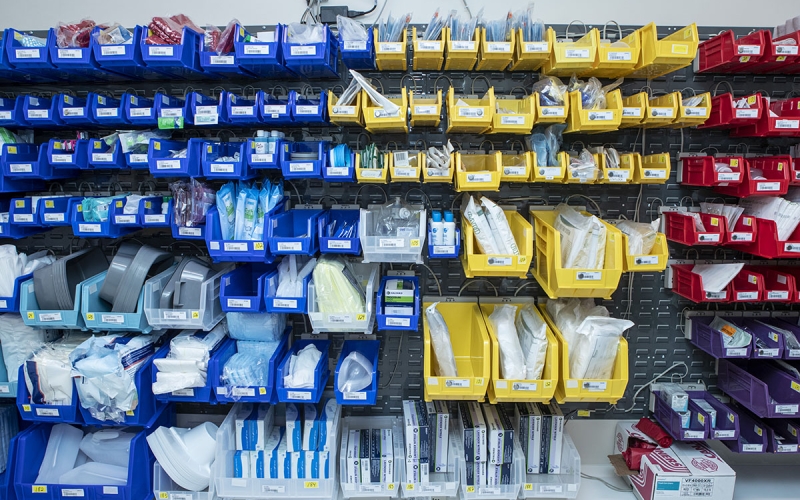
Let gravity do the paperwork
Take an item from a configured bin and the weight changes. PAR translates that change into an updated quantity. The software uses the resulting data for replenishment and analysis. Managers can examine consumption and adjust stock levels without relying entirely on someone’s last walk through the room.
Counting and charging are separate jobs. With PAR Charge, a nurse identifies themselves, selects the patient, takes supplies, and accepts the recorded transaction. The scales supply the quantities; the workflow supplies the patient context. That distinction matters whenever an inventory automation pitch starts to sound like billing happens by magic.
The money has several names
Hunt Regional Medical Center in Texas had already used scales in general supply areas before extending them to its operating-room core. PAR’s June 2025 account describes daily manual counts of more than 1,000 distinct items before the change. Afterward, the hospital reported nearly $1 million in inventory reductions, including $60,000 in sutures.
That is money released from stock. Avita Health System’s story concerns another kind of money: supplies used but inadequately documented for charging. A June 2025 customer account says Avita had captured nearly $7 million in supply charges since implementing PAR Charge in 2019, producing $2.8 million in recovered revenue.
Different measures. The revenue figure is 40% of the rounded charge figure. These are historical customer results reported by PAR.
At Avita, a visit to another hospital helped persuade clinical staff to adopt the system. Seeing the weighted bins in use made the proposal concrete.
An earlier Avita case study reports a 14-month payback for the first phase. That describes one installation’s economics. For a buyer, the useful calculation includes hardware, software, interfaces, installation, training, and the local opportunity to recover charges or reduce stock. A successful hospital’s payback period is a starting question for the next hospital’s budget.

The first surprise was a long pick ticket
At Cincinnati VA Medical Center, turning on the supply closets produced unexpectedly large pick tickets. The published case study identifies conversion factors and units of issue among the data anomalies. Automation had encountered the hospital’s existing definitions of what an item was and how it should be ordered.
The hospital used emerging usage data to adjust replenishment levels. It also trained early adopters to help colleagues. The practical lesson is unglamorous: clean the item data and give people time to learn what the new numbers mean. A sensor cannot settle an argument about whether a quantity describes a box or its contents.
Interfaces require similar attention. During Allina Health’s enterprise-system transition, PAR’s technical team worked with hospital IT to rebuild and test connections. The case study describes continued support after launch and a period when PAR supplied usage data the new enterprise system could not yet deliver. Integration is continuing operational work.
“We wanted to remove clinicians from managing inventories.”
Benjamin Dillon / Cincinnati VA Medical Center
In PAR’s published customer case study
Gauze is not a bone graft
A stock count answers one question. Tracking a surgical implant requires identity, custody, and documentation. PAR expanded that side of its business through NotiSphere’s recall services in January 2025 and its combination with TrackCore in March. In September 2026, it acquired RFID specialist Terso Solutions, a longstanding integration partner.
RFID storage records who accessed a unit and which tagged items entered or left. TrackCore adds the documentation needed to follow tissues and implants through their use. These capabilities address questions a bin’s weight cannot answer on its own. Hospitals can choose different capture methods while bringing the records into a broader inventory view.
The portfolio now includes tissue and implant tracking, RFID storage, bill-only purchasing workflows, and recall management alongside weight-based inventory. The Terso announcement describes approximately 1,700 hospitals served by the combined business. OceanSound Partners, which acquired PAR in September 2024, backs this expansion across more of the hospital supply chain.
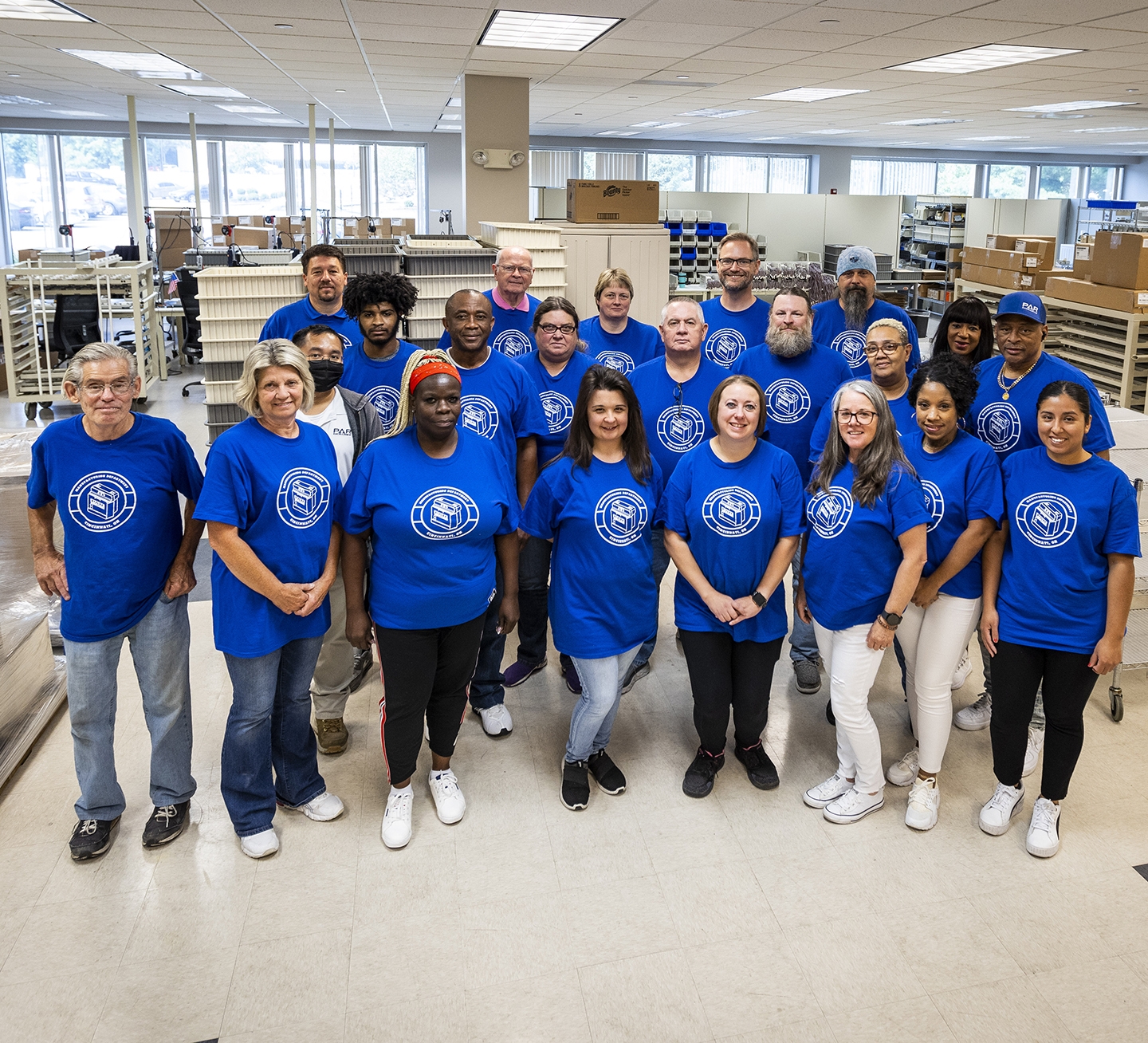
There is a physical business underneath the cloud language. PAR designs hardware as well as software, and its company pages show manufacturing staff alongside the technology. Its stated culture emphasizes teamwork and accountability. For a hospital customer, those values have a practical test: whether installers, support staff, and software teams can solve a supply-room problem together.
Make the next step easier
PAR 360 extends the idea to supply chain work: put-away, deliveries, scanning, and nursing requests. Community Health Network tested it as a beta customer. In a company-published interview, supply chain executive Derrick Williams emphasized that staff needed to see its value; a system perceived as surveillance would lose their support.
That observation reaches beyond healthcare. Watch where people skip steps. Test a change in one troublesome area. Measure the result, then expand. PAR’s case studies suggest that adoption improves when the required action fits the work already happening. The nurse reaches for a supply. The shelf notices. The next delivery has better information.