Consider the peculiar life of a medical claim. The patient has gone home. The examination is finished. Yet the work required to get paid may still be waiting for an insurance check, an authorization, a corrected code, or somebody willing to ask an insurer what happened. Clinical completion and financial completion run on different clocks. Porteck Corporation works in the space between them.
- Porteck sells revenue cycle services supported by its own software.
- Its customers range from physician practices to radiology facilities and hospitals.
- The telling feature: an unpaid claim comes back into somebody’s work queue.
Revenue cycle management is an unlovely phrase for a consequential job. Someone must connect the appointment, the patient’s coverage, the bill, the insurer’s response and the eventual payment. Porteck’s proposition is to keep those pieces together. Its public offering includes both full-service arrangements and individual services, with software that can be customized or integrated into a practice’s existing systems.
01 / BEFORE THE BILLThe trouble starts upstream
A delayed payment can begin before a doctor sees a patient. Coverage information needs checking. A procedure may need prior authorization. A referral has to reach the right facility. Porteck puts products at each of these junctions: MD Eligibility for benefits verification, MD InsuranceAuth for authorization requests, and MD eReferral for sending referrals electronically to participating diagnostic facilities.
The authorization product contains a revealing detail. A provider submits a request online, but an assigned specialist coordinates with the insurer, follows up and sends the result back. The software supplies an orderly entrance; a person handles the journey. For a practice accustomed to moving between telephone calls and insurer websites, that division of labor is the point.
A claim’s working life
That also explains why a billing company cares about referrals. MD eReferral lets providers include insurance information, locations and an electronic signature. The receiving facility can then arrange scheduling. Porteck is reaching toward the beginning of the administrative chain, where a missing detail can become somebody else’s problem several steps later.
02 / THE UNFINISHED PILEA claim with a next move
The central software is PARCS, the Porteck Accounts Receivable & Billing Collections System. Its stated functions include claims processing, reporting and decision support. Around it sit tools for transcription, document scanning, batch management and provider networks. The scanning system, PSCAN, links batches of documents to billing and denial transactions. Paper acquires a place in the claim’s history.
Porteck’s submission page describes a dedicated account manager and reports identifying missing or incomplete information. Its follow-up page gets more interesting: claims that remain unpaid beyond specified timeframes automatically appear in user buckets. Calls are logged. Depending on what staff discover, the next move might be correcting a claim, changing its coding or sending an appeal.
“Our systematic process leaves no medical claim behind.”
Porteck’s published description of its RCM workflow
The useful idea is persistence with a record. A queue makes unfinished work visible; a log makes the previous attempt available to the next person. Denial analysis adds another layer. Porteck says it identifies common reasons for denials and works with clients on corrective measures. One rejected claim can therefore become evidence about a recurring intake or billing problem.
Timings stated on Porteck’s undated service pages. Company-described process targets, rather than audited performance results.
03 / WHO NEEDS THE CHASE?One doctor. Many moving parts.
Porteck names single-physician offices, group practices, radiology facilities, specialty practices, equipment providers and hospitals as customers. Its undated client list includes Stony Brook University Hospital, Hospital for Special Surgery and Lenox Hill Radiology. Those company-listed relationships illustrate the intended breadth of the service, rather than establishing a present-day customer count.
The company also describes workers’ compensation and no-fault claims expertise, including coordination with collection attorneys. These are workflows with their own documentation requirements and deadlines. The offering extends beyond preparing an ordinary insurance bill to managing cases that may need a legal handoff. That distinction matters to a practice whose receivables include accident-related treatment.
In the market, Porteck sits between buying software and delegating administrative work. An internal billing team remains an alternative, as do other billing firms and software-plus-service vendors. Porteck’s stated distinction is the combination of proprietary tools, customization, claim visibility and staff who pursue exceptions. Whether that combination helps a particular practice depends on its existing systems and the work it needs someone else to own.
04 / THE PEOPLE IN THE PROCESSTechnology meets the back office
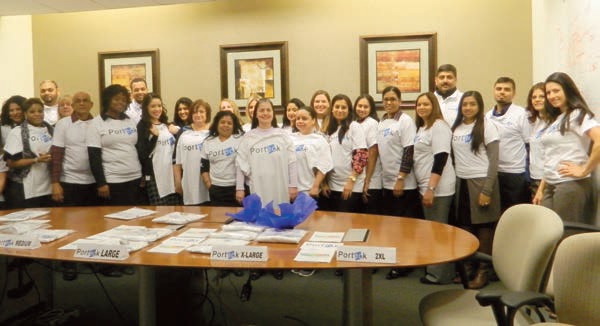
Founder Arvind Walia established Porteck in 2002 after a career in technology and professional services. The company’s historical biography describes work at Goldman Sachs and an earlier business, Visient Technology. Another biography credits operations executive Melodie Kraljev’s medical billing experience with informing PARCS. The pairing helps explain the product: software architecture shaped around the routines of billing staff.
The public record includes an important historical transaction. Later bankruptcy disclosures describe Physicians Practice Plus purchasing Porteck assets in March 2015 for stated consideration of $12.8 million, with additional earn-out provisions. That figure belongs to an asset purchase. It does not describe what a medical practice pays for Porteck’s services.
05 / THE PORTABLE IDEAGive unfinished work an owner
A practice evaluating this approach has concrete things to examine: how missing information is returned, who owns a denial, how follow-up appears in reports, and whether the software fits the records already in use. Outsourcing still depends on accurate documentation and cooperation from the practice. An authorization workflow also remains subject to the insurer’s coverage decision.
The lesson travels beyond healthcare. Record the attempt. Assign the next action. Make stalled work return to view. Use repeated errors to improve the beginning of the process. Porteck’s most instructive detail is that small return trip into the work queue. It acknowledges something every busy office knows: a task can look finished long before the money arrives.