Twenty-five years is an awkward length of time for a charitable project. It outlasts a strategic plan, a board appointment, and several opportunities to cut a ribbon. For Kenneth E. deLaski, it was a perfectly reasonable answer to the question of how long a foundation might stay in one community.
He had already spent more than two decades building Deltek, the software company he co-founded with his father in 1983. By the time he turned to philanthropy, he had considerable practice with work that kept generating more work. A useful system has customers. Customers have questions. The next version is never quite the last.
In an interview about his foundation, deLaski described the prospect of a quarter-century commitment to a village. Schools, water, and small businesses belonged in the same conversation. His proposition required patience, and probably a larger calendar than most offices keep on the wall.
“We want to be in a community for, say, 25 years”
Ken deLaski, on the horizon for community investment
A family business with an unusually demanding customer
DeLaski grew up in Northern Virginia, graduated from Duke University, and began his working life in public accounting. That background put him close to the practical problem at the center of Deltek: businesses working for the federal government needed accounting that could handle the government's particular demands.
His father, Donald, brought the accounting knowledge. The early development team included Peter Novick and Eric Brown. In their later recollections, the humble equipment matters almost as much as the ambition: an IBM XT bought at Sears, software installed from floppy disks, and a first sale to one of Don's accounting clients.
When Ken revisited the company's beginnings with Brown on the Mosaic podcast, his explanation of the initial spark was refreshingly economical: “Honestly, I needed to make some money.” A founding story can become rather overdressed after forty years. This one still had room for an unpaid bill.
The underlying opportunity was specific. Government contractors had to allocate costs across projects, deal with different contract structures, and produce the right billings and reports. A general accounting package could require substantial adaptation. Deltek began with the difficult requirements already in view.
That distinction helps explain the business without turning accounting into a spectator sport. A contractor can be running several projects at once, each with its own requirements. Recording a payment is only part of the job. Working out which project should bear which cost is where the paperwork starts to develop a personality.
Inside Deltek, listening to customers was part of the leadership routine. DeLaski expected top executives to spend a few hours each week answering calls in the technical support center. He put in up to half a day himself. A customer with a software problem could, in other words, find the founder at the other end of the line. The job title did not excuse him from the telephone.
Learning when to hand over the keys
Ken became Deltek's president in May 1990, serving as chief operating officer before succeeding his father as chief executive in February 1996. He added the chairmanship in June 2000. The dates describe a gradual transfer of responsibility within a company he had helped start.
The products were growing more elaborate, too. Costpoint arrived in 1995 for larger or more complex organizations. By the time Ken became CEO, Deltek had more than 300 employees and annual revenue above $30 million. The original accounting problem had become a substantial organization of its own.
In April 2005, New Mountain Capital announced an investment to acquire 75 percent of Deltek, with the family and management shareholders retaining 25 percent. Deltek had reported $123 million in revenue for 2004. Ken initially continued as chairman and CEO.
Two months later, Kevin Parker was named chief executive. Ken stayed on as chairman and talked about the importance of customer service and employee teamwork in the transition. He retired from the board in April 2006. Leaving the operating role and leaving the board were separate steps, almost a year apart.
There is a useful restraint in that sequence. The familiar shorthand for a founder's departure can conceal the actual handover: new ownership, a successor, continuing involvement, and then a final departure from the board. DeLaski's next organization would take him into a different field altogether.
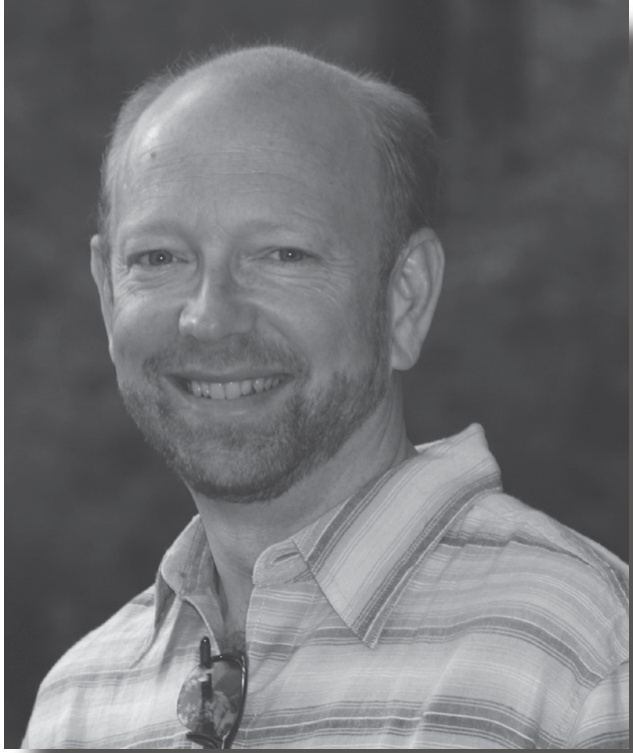
A second beginning, with a longer clock
After stepping down as CEO in 2005, deLaski traveled to developing countries to examine approaches to poverty. Visits to Haiti helped shape the undertaking that became Vibrant Village Foundation in 2010. He wanted support to begin with communities and continue over time.
The early letters carry the sound of an organization learning in public. In March 2014, he reported that the foundation was managing programs in 20 villages after adding work in eight countries the previous year. Program expenditures had risen 37 percent to $2.1 million.
He also allowed himself a joke about the learning curve: the foundation was “starting to actually get good at this!” It is a pleasingly modest line from someone who had already spent years running a software company. Experience in one profession apparently did not exempt the next one from practice.
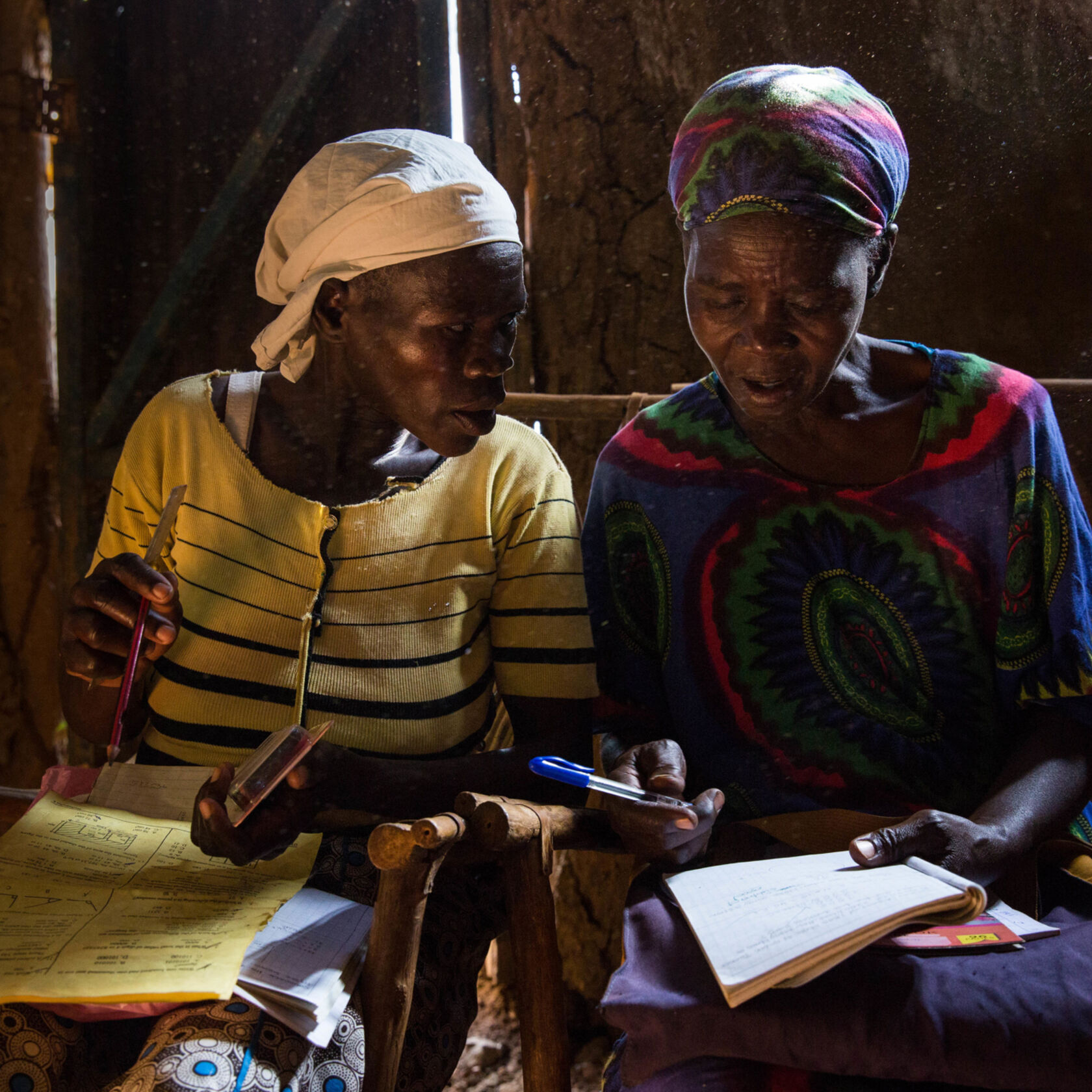
By April 2016, the emphasis had shifted toward consolidating. DeLaski described new monitoring and evaluation tools and a plan to level off investment in new countries and programs. Existing partnerships needed attention, implementation, and assessment. More territory could wait.
His June 2017 letter continued that argument. The portfolio might shrink slightly while the foundation invested more deeply in fewer partnerships. It had supported 34 programs in 23 countries during 2016. The proposed next step was concentration. For a donor, declining to collect another pin on the map can be a consequential decision.
Three months of listening
One episode in Ghana gives that approach a human scale. Vibrant Village had questioned whether to continue its work in the Upper West region. It chose a fresh start and hired Osman Mohammed, who joined in January 2018 after working in Sierra Leone.
Mohammed began with three months of conversations with community stakeholders. He produced a 40-page needs assessment before a three-year strategy took shape. The resulting plan connected livelihoods, agriculture, education, and the position of women and girls. DeLaski spoke about attempting a scale the foundation had not tried there before.
The revealing figure is the three months. Money was available, but the plan still had to be built with people who lived there. Mohammed's work supplies a concrete example of the listening that a donor's mission statement can promise rather more easily than an organization can practice.
Making room for somebody else's organization
In Ecuador, the foundation's direction changed again. A decision made in August 2020 would close its country office by the end of 2021. The seven-person team was given a role in designing how to wind down the operation. Four members had been there from the beginning.
They consulted local leaders and advisers, then chose to establish an independent Ecuadorian nonprofit, Fundación Tierra Viva. The work included bylaws, a board, local registration, a budget, and a strategic plan. Danny Cabrera, a longtime team member, helped lead the transition.
Vibrant Village committed to supporting the new organization as a funder. The distinction matters: the programs could continue under local ownership, with the former country office becoming a separate institution. For a founder's story, it is an interesting passage to linger over. Another group was doing the founding.
What the numbers now measure
The foundation's 2025 annual report records $4.51 million distributed to 46 grant partners and its own programs in Ghana and Kenya. All 46 grant partners were locally led. Eighty-seven percent received unrestricted funding, and the median annual unrestricted grant was $75,000.
Unrestricted funding gives an organization discretion over spending. The current grant criteria also favor independent local nonprofits founded and led by people from the regions where they work, operating with annual revenue below $1 million. The foundation usually awards funding around the recipient's fiscal year.
These are choices about authority as well as money. The institution that writes the check can decide how much control to keep. In this model, a local organization's judgment has room to operate. Long relationships and support beyond the grant remain part of the arrangement.
A grant also has a calendar. Aligning it with a recipient’s fiscal year is a small administrative detail with practical meaning: the relationship has to fit the organization receiving the money. The foundation’s arrangements turn an abstract preference for local leadership into decisions about budgets, timing, and discretion. Those decisions are less photogenic than a new building, but they help define how the work is conducted.
Back in Bend, things are growing
DeLaski's life also has a smaller radius. He and his wife, Sarah, moved from Portland to Bend in 2018 to enroll their two children at Cascades Academy. He serves as a trustee there. His listed interests include playing music, cooking, riding a bike, and growing vegetables on his farm.
The garden is a welcome detail after all the corporate transactions and grant portfolios. There are things to grow at home, too. It brings the story back to a person with ordinary pleasures, alongside the institutions and responsibilities that occupy his public biography.
Deltek began by making specialized knowledge usable for customers. Vibrant Village has spent years asking how resources can help local organizations carry out their own work. The people and circumstances differ considerably. DeLaski's quarter-century horizon leaves space for those differences, and for the work still ahead.
Read, listen, follow
Continue the conversation
- Vibrant Village Foundation
- The 2025 annual report
- Ken and Eric on the Mosaic podcast
- Mosaic on YouTube Music
- The philanthropy interview
- The customer support habit
- River Watch: the 2008 board introduction
- The 2014 letter
- The 2016 letter
- The 2017 letter
- The Ecuador transition
- Cascades Academy trustees
- Foundation Instagram
- Foundation Facebook