In December 1994, John Moores bought into a business whose employees were on strike. Major League Baseball had canceled its World Series. The San Diego Padres needed to rebuild their relationship with their city. A software fortune had given Moores choices; he selected a baseball club with a substantial collection of problems. There were easier ways to spend an afternoon, and certainly easier ways to spend the proceeds of BMC Software.
He brought Larry Lucchino into the venture, putting a baseball executive beside a programmer turned investor. At their public introduction in January 1995, Moores said he intended to keep the team in San Diego. Lucchino would handle daily operations. Their agenda included reaching more fans in Mexico and making the stadium friendlier to Spanish-speaking visitors. Before the new owners could build anything, they had to persuade people to come back.
This would become the public chapter of a career that began with work most spectators would never see: making large computers run more efficiently. The distance between a mainframe and a ballpark looks enormous. In Moores’s life, both became places where he could put money and attention behind something he thought could work better. Baseball added a complication. Every customer had an opinion about the management, and several were prepared to shout it.
Before the fortune, a useful program
Moores was born in San Antonio in 1944 and grew up in Texas, including Corpus Christi and Houston. He left Texas A&M before graduating and found his way into programming. Later came two University of Houston degrees: economics in 1970 and law in 1975. He worked with computers while completing his education. The eventual software entrepreneur had spent time learning both what a machine could do and what a contract might permit.
At Shell, he worked on improving the performance of IBM mainframes. A friend, Bill Wise, encouraged him to consider commercial software. Moores later remembered the possibility becoming clear while he drove a borrowed pickup on a Houston freeway. Wise remembered a more gradual conversation about the best work Moores had already done. Their recollections differ in the particulars, but meet at the useful question: could a program built for one employer become a product for many?
The early selling was practical. Potential customers could try the software on their own systems. Technical people spoke to other technical people. A program that saved time on an expensive computer had an advantage over a grand sales presentation: its usefulness could be tested. The proposition depended on performance. Moores had found customers who could measure whether he was helping them.
A phone call with an unexpected job offer
BMC took shape in Houston in 1980. Its initials came from Scott Boulette, Moores and Dan Cloer. Moores became its first chief executive. The name carries the history of an early partnership; the company’s early work carries the imprint of a programmer interested in getting more out of machines that businesses already owned.
One encounter captures that small software world. Programmer Tom Harper had written a utility called a 3270 optimizer. When he saw a Computerworld advertisement for BMC’s similarly named product, he called the company, wondering whether his work had been copied. He reached Moores. After talking, Harper realized the BMC program had been developed independently and judged it better than his own. An indignant inquiry had taken an unexpected turn.
Moores went on to interview and hire Harper and his wife, Carol. They developed further optimization products. Harper later recalled that those products accounted for 59 percent of BMC’s revenue when the company went public in 1988. It is a pleasingly untidy recruitment story: a suspicious programmer picks up the phone and eventually helps build the business he was calling to challenge.
Moores handed over the chief executive role in 1987 and remained chairman until 1992. With Harry Gruner and Charles Noell, he also helped establish JMI Equity in 1992, extending his involvement in software through investment. Leaving the chief executive’s office did not require leaving the field. He now had the experience of building a product business to bring to other founders’ decisions.
- 1980BMC Software
A product for businesses - 1991Houston gift
Support across a campus - 2004Petco Park opens
A new downtown home
The customers get a vote
In San Diego, the new ownership inherited baseball talent as well as trouble. General manager Randy Smith had arranged the trade that brought Ken Caminiti and Steve Finley from Houston, requiring Moores’s approval. Trevor Hoffman was already there. A championship team would depend on players, scouts, coaches and executives; the owner’s contribution included deciding what the organization could afford to attempt.
The Padres won their division in 1996. Two years later, they beat Houston and Atlanta in the playoffs before losing the World Series to the Yankees. For a club trying to persuade San Diego to support a downtown ballpark, the timing mattered. A proposal for a new home arrived before voters while the memory of a pennant was still fresh.
On November 3, 1998, Proposition C passed with 59.64 percent of the vote. It covered considerably more than a place to play baseball. The agreement connected the ballpark to parking, public improvements and surrounding development, including hotels, housing, shops and offices. The team would be responsible for building the ballpark, while public bodies took on other parts of the project.
Moores and Lucchino had moved from selling tickets to making a civic argument. That brought a different kind of scrutiny. Residents were being asked to support a project involving public money, private development and a new use for a downtown neighborhood. The result could be welcomed, questioned or both. Winning a baseball game could help the campaign; it could not settle every question about the deal.
The longest installation
Voter approval did not produce an instant opening day. Lawsuits delayed construction. Petco Park eventually opened in April 2004, years after the ballot victory. The final land and construction bill was $456.8 million. Municipal bonds accounted for $225 million, redevelopment funds for $57.8 million, the Port of San Diego for $21 million and the Padres for $153 million, alongside the team’s separate commitments to nearby development.
Those numbers explain why the park belongs in a story about negotiation as much as architecture. Several institutions had responsibilities. Public financing had to be secured. The ballpark and the neighborhood around it were connected financially and physically. A software product can be revised by its developers. A project involving land, government, voters and litigation requires a rather larger meeting invitation.
Years later, Moores was candid about the process. “I thought that after the public vote we were golden. I was wrong,” he said. The admission has more interest than a smooth retrospective victory speech. He had money, experience and electoral approval, yet had underestimated what remained. His advice about building ballparks came down to patience, learned at considerable expense.
The finished park gave the Padres a downtown home and became part of East Village’s redevelopment. Lucchino had moved to Boston before it opened. Moores stayed with the project through its delays. The result is visible at street level: a baseball destination woven into a district of buildings and businesses, with all the competing interests that accompany that sort of urban change.
- Municipal bonds
- $225m
- Redevelopment funds
- $57.8m
- Port of San Diego
- $21m
- Padres
- $153m
The details between innings
The owner’s life also had smaller scenes. During the 1998 World Series, pitcher Kevin Brown described gatherings Moores arranged for players and their families, with activities for children and time for adults to mingle. Brown emphasized the ordinary attention: checking whether people needed something. Teammate Jim Leyritz said Moores took the idea of a team family seriously. The accounts give an owner’s role a scale smaller than a stadium.
One of his baseball companions was Jimmy Carter. Their friendship began after a meeting in Houston at an event involving Nelson Mandela, and included fishing as well as games. Carter supported Atlanta, which made the 1998 National League Championship Series an awkward fixture for two friends. He was with Moores when San Diego clinched the pennant at Turner Field. Friendship, on that occasion, required accommodating the other person’s score.
Moores’s software investments also carried a difficult chapter. He chaired Peregrine Systems, which collapsed into bankruptcy after accounting fraud came to light. A 2009 securities settlement included six former outside directors, Moores among them, agreeing collectively to pay $55.95 million. He was not criminally charged. The episode belongs alongside his successful ventures: board service carries consequences, and a founder’s earlier success offers no guarantee about another company’s accounts.
“I thought that after the public vote we were golden. I was wrong.”John Moores · 2018
What keeps playing
Houston remained part of the story. In 1991, John and Rebecca Moores gave $51.4 million to the University of Houston. The gift reached across the campus: music, superconductivity research, libraries, debate, athletics and the Cullen Family Fountain. A large donation can become an abstraction quickly. Here, its destinations were unusually concrete, from places to rehearse and study to facilities where students competed.
In August 2026, the university announced a music season recognizing the thirtieth anniversary of the gift associated with the Moores School of Music. Its program included orchestral, choral, opera and jazz performances. The software that generated the money and the music it helped support occupy different worlds. Students preparing for a concert need not know much about mainframes to use what that earlier career made possible.
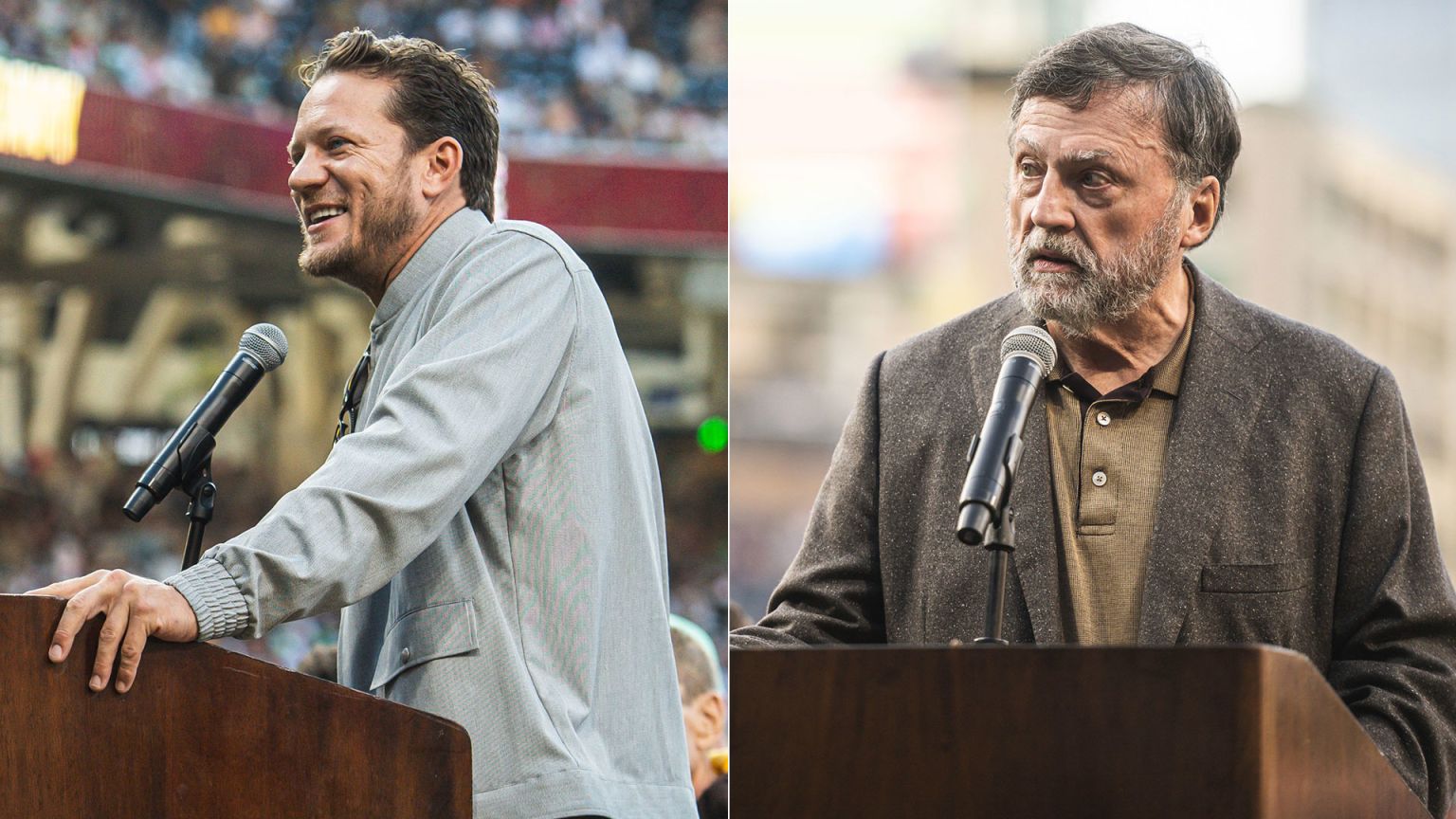
His Padres ownership ended in 2012. Eleven years later, he entered the club’s Hall of Fame alongside Jake Peavy. The pairing brought an owner and a pitcher back to the ballpark, each attached to a different part of its history. For Moores, it was a return to a project that had demanded more than a purchase agreement.
The varied record resists a tidy victory lap: a useful program, a public company, investment successes and litigation, a university gift, a city vote, years of construction. Moores kept moving into situations that demanded different skills from the ones that first made him money. At the end of that journey sits a particularly tangible outcome. In downtown San Diego, people still arrive to watch a game. Getting them a place to sit took rather more debugging than he expected.
Keep following the story
Explore the people, places and conversations behind this profile.
BMC Software company profile ↗BMC Software website ↗JMI Equity website ↗Tom Harper recalls BMC’s early years ↗Moores on the patience of building a ballpark ↗Watch: the Hall of Fame speech · 2:31 ▶The Moores School of Music’s 2026-27 season ↗University of San Diego biography ↗