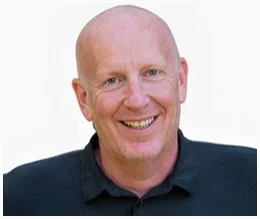
Catching Up Mid-Stride
In 2010, most healthcare executives were still debating whether cloud computing was safe for patient data. Ken Kaufman co-founded PureWellness and built a cloud-native population health platform that landed enterprise contracts with Microsoft, LinkedIn, and BlackRock. Three years later, Cerner bought it.
The thing about Kaufman is the pattern. In the early 2000s, he oversaw the creation of LifeCode at A-Life Medical - an NLP-powered system that automatically translated radiology reports into medical codes. This was 2001 or 2002. GPT was twenty years away. The product worked anyway.
At McKesson, he grew their PACS business from modest beginnings into one of the largest install bases in the United States. Then he coordinated what became the single largest PACS deployment in Ireland - an entire country on a single instance. Healthcare IT at that scale requires thinking in systems, not features.
"I couldn't be more excited to partner with Cameron and the Sirona team to deliver radiology's first fully AI and cloud-native platform, empowering radiologists to practice everywhere."
- Ken Kaufman, on joining Sirona Medical as CEO, January 2025On January 28, 2025, Sirona Medical announced Kaufman as its new CEO. The timing was deliberate. Sirona had just closed a $42 million Series C in November 2024. The company had product-market fit - 30+ contracted customers, 110+ integrated sites, over a million monthly imaging runs. What it needed next was someone who had scaled healthcare IT before, who knew how hospitals buy software, who understood the politics and patience involved in replacing legacy PACS systems.
Cameron Andrews, who founded Sirona in 2018 after three years evaluating AI and medicine companies at Lux Capital, stays on as Founder and President. It is a deliberate division: the original architectural vision paired with the operational horsepower to take it to scale.
Rearchitecting Radiology From Scratch
Legacy radiology software is not merely old. It is architecture from a different era of computing - installed hardware, thick clients, on-premise servers, and a PACS (Picture Archiving and Communication System) philosophy built for a world before cloud infrastructure existed. Most radiologists today use software that works like software from 2005.
Sirona's approach is to replace all of it. RadOS - the company's cloud-native radiology operating system - runs entirely in a browser. No installation, no hardware, no VPN tunnel to a hospital server. It processes diagnostic images, runs AI algorithms, and generates reports from anywhere.
What SironaLex Does
At the core of the platform is SironaLex, Sirona's radiology-specific large language model. It reads imaging data and drafts report text. Not a chatbot built on top of a general LLM - a purpose-built system trained on radiology. The Auto Impressions feature takes that a step further: agentic AI that generates the summary impression section of a radiology report without the radiologist having to dictate it.
Pixel-to-report is the phrase Sirona uses for the full pipeline: raw imaging pixel data enters at one end, a structured diagnostic report comes out the other. With AI labeling, classification, and automated report generation at each stage.
Sirona Medical - Funding History
The Series C, led by Avidity Partners with participation from existing investors, closed just before Kaufman's appointment. The timing is not coincidental. Series C companies in healthcare SaaS need a CEO who has managed national-scale deployments, navigated hospital procurement, and lived through an enterprise acquisition. Kaufman has done all three.
Thirty Years of Building at the Frontier
The Pattern Under the Resume
Most healthcare IT executives have been on one side of the equation - either the enterprise software side or the clinical side. Kaufman's career consistently lands at the intersection: software that has to work inside clinical workflows, where the stakes for getting it wrong are not a frustrated user but a misread scan.
At A-Life Medical, LifeCode was not a productivity tool - it was a system that automated how radiology reports became billing codes. Accuracy mattered at a level most SaaS products do not encounter. The NLP had to be right, consistently, at volume. This was 20 years before most of today's AI-in-healthcare companies existed.
When McKesson deployed a single PACS instance across Ireland's national health infrastructure, it was one of the largest coordinated healthcare IT operations of its kind. Kaufman led the team. The lesson: healthcare IT at scale is less a technology problem than a coordination problem.
PureWellness demonstrated a different skill - the ability to sell sophisticated healthcare software to non-healthcare buyers. Microsoft and LinkedIn were not hospital systems. They were employers managing employee health data. Reaching those buyers requires translating clinical value into business language, which is a skill many clinician-founders lack and Kaufman demonstrated clearly.
At Sirona, the challenge is the same translation problem at larger scale. Radiology practice administrators, hospital CIOs, and teleradiology group operators all have different buying criteria for the same platform. Kaufman's experience navigating McKesson's enterprise sales and building PureWellness's enterprise customer base maps directly to that challenge.
Sirona's Tech Stack Under the Hood
Sirona runs on AWS with local Point-of-Presence caching for imaging data - required because medical images are enormous files that cannot tolerate latency in a diagnostic workflow. The platform carries HIPAA compliance and SOC2 certification, and commits to 99.99% availability SLA - the kind of uptime clause that hospital procurement requires before signing.
The zero-footprint viewer is the feature most radiologists notice first: open a browser, authenticate, and start reading. No VPN, no installed software, no hardware qualification process. For teleradiologists reading from multiple locations or on call from home, this removes friction that legacy PACS systems impose as a default.
In October 2025, Sirona received FDA 510(k) clearance for its Advanced Imaging Suite - adding PET-CT support, quantitative SUV analysis, image fusion, MIP generation, and multiplanar reconstruction. The clearance moves Sirona from a workflow software company into the medical device category, which opens different procurement channels and signals a more ambitious product roadmap.
The Team Around Him
Cameron Andrews, Sirona's founder, brings a Stanford Biomedical Computation background and three years evaluating AI and medicine companies at Lux Capital ($4B AUM). He understood radiology's software failure mode as an observer before betting a company on fixing it.
The board includes Dr. William R. Brody - former President of The Salk Institute, Fellow of IEEE, and member of both the National Academy of Medicine and National Academy of Engineering - alongside Dr. Curtis Langlotz, who founded Stanford's AIMI Center and served as immediate past President of the Radiological Society of North America. These are not advisory board names for the website. These are the people who define what the radiology AI field looks like.
Investors include Avidity Partners, GreatPoint Ventures, 8VC, Rose Park Advisors, and Global Founders Capital - a mix of healthcare-focused capital and generalist growth funds. The investor base reflects Sirona's positioning: clinical enough for healthcare specialists, scalable enough for growth investors.