January 2011 was an awkward time to start an Egyptian technology company. Karim Khorshed started one anyway. Years later, recalling CEQUENS’s inauguration, he would describe uncertainty and turmoil, followed by a decision to take the business abroad regardless of the difficulties. A launch date usually sits quietly in a company biography. This one refuses to behave like a footnote.
By January 2026, CEQUENS was celebrating fifteen years in business. The company reported more than 15 billion customer connections since launch, serving more than 2,500 active customers in over 150 countries. Those numbers belong to an enterprise whose work can pass almost unnoticed by the people using it. A message arrives. A customer replies. Nobody applauds the delivery mechanism.
Khorshed has built a career around making that ordinary exchange possible. His story includes an earlier technology business, a long partnership with Ahmed Shabrawy, a move into international markets and a growing interest in what artificial intelligence can do inside a customer conversation. The thread running through it is less exotic than the software: keep the connection working.
January was an awkward month to begin
CEQUENS was a new company, but Khorshed was already an experienced entrepreneur. He dates the beginning of his entrepreneurial career to 1997. Before CEQUENS, he was co-founder and president of EgyptNetwork, a role running from July 1997 to January 2011. Fourteen years separated his first venture from the company with which he is now most closely associated.
That interval gives the familiar startup beginning a different shape. Khorshed brought years in a technology business to the new undertaking. Shabrawy brought his own background in software and communications. Their company's official account compresses the origin into the pair of them and a laptop. It is a pleasingly modest inventory for a business that would spend its time connecting other businesses to the world.
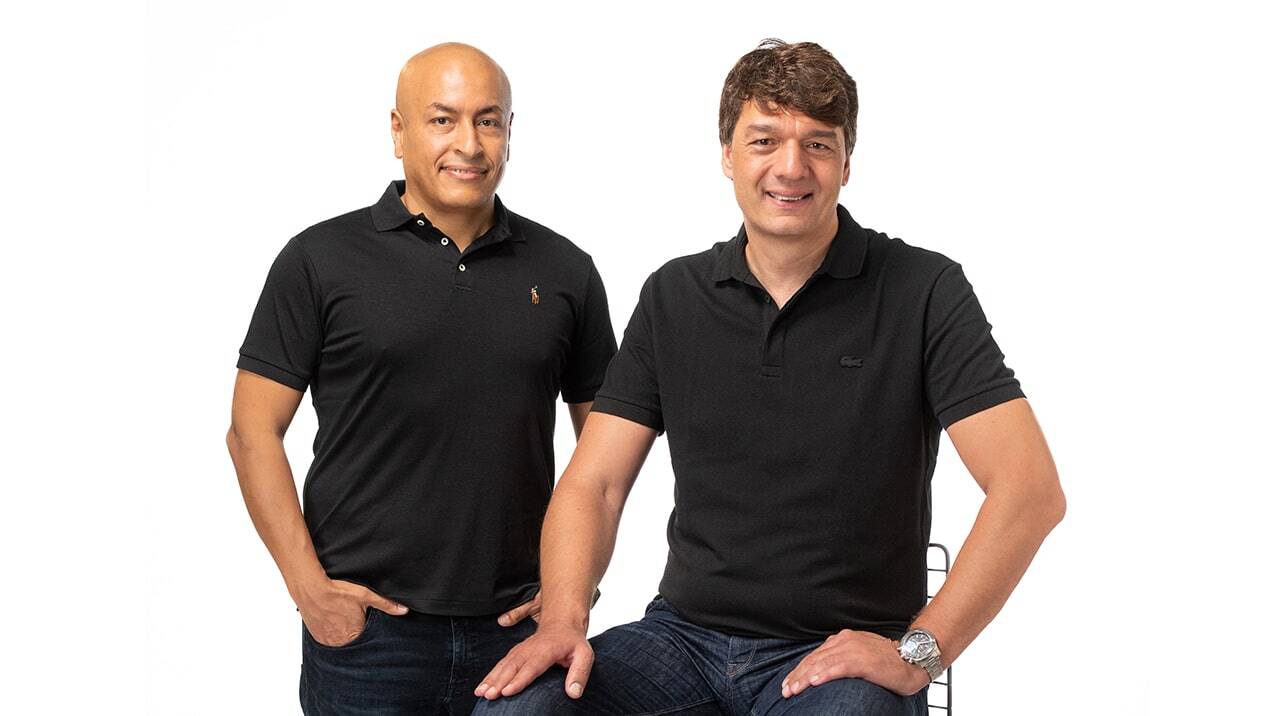
The partnership remains visible in the division of responsibilities. Khorshed is co-founder and chief executive; Shabrawy is co-founder and chief research and innovation officer. One company has to develop its technology, sell it, operate it and decide where to go next. The titles describe different pieces of that undertaking, with both founders still identified on its leadership page.
On CEQUENS’s tenth anniversary, Khorshed credited the team, partners and customers for helping the business expand. His recollection of the launch also made the international ambition explicit. Going beyond Egypt was part of the intention he described, rather than a convenient explanation added after the company had already travelled.
A message has to earn its arrival
To understand his business, consider a familiar interruption: a company needs to tell a customer something. Perhaps an order has changed status. Perhaps an account needs verification. Perhaps a service team needs to answer a question. The customer has little interest in the systems involved and a considerable interest in getting a useful answer.
CEQUENS supplies communication APIs, applications and connectivity for those exchanges. Its services include SMS, WhatsApp Business, voice and authentication. An API lets a business connect communication capabilities to its own software. An application gives staff a place to manage the work. The customer usually encounters the resulting message, with none of the technical vocabulary attached.
That combination explains why Khorshed’s job stretches beyond making software attractive. His company works with the businesses sending messages and with the operators carrying them. The experience at the receiving end depends on arrangements made further back along the route. A friendly sentence still needs somewhere to travel.
In February 2025, CEQUENS announced an agreement with stc Group covering application-to-person SMS monetization and delivery optimization. The work included improving message delivery and reducing spam. These are practical concerns with commercial consequences for both sides: enterprises want to reach customers, while operators want to manage the traffic moving through their networks.
There is a certain comedy in a business devoted to conversation requiring so much machinery before anyone can say hello. Khorshed’s opportunity lies in absorbing enough of that work to make the exchange manageable for a customer company. The greeting can remain short. The organization behind it cannot.
The founder enters another room
In October 2019, Khorshed joined Endeavor’s entrepreneur network. He was selected at its 91st International Selection Panel, held in Istanbul from October 21 to 23. Instabug co-founders Moataz Soliman and Omar Gabr were selected at the same event. The gathering admitted entrepreneurs from multiple companies and markets, placing his business in a wider entrepreneurial conversation.
Selection involved interviews and evaluation by panelists, with unanimous approval required. Membership brought access to mentoring and other support. For a founder running an expanding company, the value of such a network is easy to understand: the next problem may be unfamiliar to you and quite familiar to someone else in the room.
CEQUENS’s ambitions also became more institutional. In January 2023, the company announced its participation in Dubai’s MENA IPO Summit and described preparations for a future listing within a five-year expansion plan. That was a statement of direction and preparation. Its significance in Khorshed’s story is the widening set of responsibilities around the business he leads.
Dubai became the setting for another chapter. In announcing a new headquarters office, Khorshed emphasized support for regional clients and closer working relationships. The company’s Egyptian beginnings and Dubai headquarters sit together in its geography, while its customer reach extends beyond either location. An international business still needs people close enough to understand the customer.
Arabic belongs in the conversation
As CEQUENS expanded, the content of the exchange began to matter alongside its delivery. An alert tells someone that something happened. A conversation needs to respond to what that person says next. Artificial intelligence offered a way to attempt more of that work through the channels businesses already used.
CEQUENS announced its AI Agent in October 2023. Its description included customization with business data, tools to review conversations and deployment across channels including WhatsApp, mobile applications and web widgets. Those details reveal the intended setting: an assistant attached to a particular business, available where its customers might already be asking questions.
A July 2024 announcement introduced the GenAI Platform, supporting more than 50 large language models. It offered ways to build AI applications, connect them with knowledge repositories and publish them through websites or APIs. Khorshed described the purpose as simplifying customer engagement. The product widened the tools available to businesses already dealing with communication across several channels.
“Our mission at CEQUENS is to simplify and enhance customer engagement through innovative solutions.”Karim Khorshed, on the GenAI Platform launch, 2024
His AI work in 2025 put a regional requirement in the foreground: businesses in the Gulf operate in multilingual markets. CEQUENS’s offering included Arabic and English conversations and a GCC Arabic natural language processing engine. Language was part of the operating problem, alongside the need to respond promptly and connect with existing systems.
That is a more specific ambition than adding a conversational interface because one has become fashionable. A business serving Arabic-speaking customers has to account for how those customers communicate. Khorshed’s AI chapter follows a recognizable commercial logic: make the tools fit the market the company is trying to serve.
The laptop acquires colleagues
By May 2025, another set of names helped explain how CEQUENS intended to grow. The company announced promotions for Hania Tolba in sales, Nermeen Sobhy in carrier relations and wholesale, Wael Nabil in operations and Tamer Nassrawin in revenue and customer solutions. Khorshed framed the changes as continued investment in people.
The responsibilities form a useful portrait of the chief executive’s world. Someone has to win enterprise business. Someone has to maintain the operator relationships. Someone has to make the service run, and someone has to connect the proposed solution with what is delivered. The founding laptop has acquired a substantial number of colleagues.
In September 2026, CEQUENS appointed Junaid Ahmed country director for Pakistan while retaining his global carrier relations and partnerships responsibilities. His expanded remit included local operations and regulatory coordination. The announcement put a name and a set of duties beside an international market, the sort of detail that broad statements about expansion tend to hurry past.
Fifteen years, still getting through
The January 2026 anniversary announcement offered a numerical view of the business: six offices, more than 150 countries served and platform traffic up more than 40 percent over the preceding year. These are company-reported measures. They describe different aspects of scale, from physical presence to customer reach to the amount of work moving through the platform.
since launch
CEQUENS figures reported January 15, 2026. Connections are cumulative; they are not a count of unique people.
In October 2026, CEQUENS announced recognition in QKS Group’s CPaaS SPARK Matrix. The company continued to describe investment in its products, carrier relationships and enterprise customers. After fifteen years, the vocabulary had grown to include conversational AI, but the underlying obligations still included software, connections and service.
Khorshed’s own account of daily life is more domestic. In 2023, he described a roughly 7am start, reading the business news, making a task list and writing objectives and key results. There was caffeine. There were leadership meetings. Away from work, he and his spouse enjoyed watching Friends. Apparently even a communications executive appreciates a conversation whose next line is already familiar.
He also wanted to share more experience with other entrepreneurs. His advice was persistence, and he credited his mother with encouraging the belief that determined effort could overcome obstacles. That personal account offers a quieter ending than the company's expanding map. Behind the channels, models and traffic totals is someone returning to the next day's work. Somewhere, another message needs to get through.
Continue the conversation
INTERVIEWS, COMPANY NOTES & PUBLIC PROFILES