Silvio Kutić’s first proper engineering job lasted about four hours. In 2002, he arrived at the state-owned electricity company in Zagreb, reached lunchtime, and decided that was enough. “I left for lunch and never went back,” he recalled. He took a bus to Vodnjan. A promising career had barely begun before he changed its destination.
There is something pleasingly inconvenient about that beginning. The young engineer went home. His subsequent ambition would reach across continents, but its point of departure was a town in Istria. The story resists the usual travel instructions given to aspiring technology founders: pack a bag, find a capital city, introduce yourself to money.
Kutić had a more immediate interest. He wanted to build things, and mobile phones offered a way to reach people. Before Infobip became a company, he worked on projects connecting a local community through messages. A town had information to distribute. People had phones. Between those two facts sat an engineering problem.
Lunch, then a bus to Vodnjan
His early education had pointed toward electrical engineering. He earned a master’s degree at the University of Zagreb’s Faculty of Electrical Engineering and Computing. The eventual business would involve another kind of transmission: the small pieces of information that let people transact, arrange, confirm and keep in touch.
One early collective message was a Christmas greeting sent from Vodnjan’s town hall to its diaspora. The audience was scattered; the sender belonged to one place. It was a modest purpose for technology, which is part of its charm. Nobody needs a grand theory of digital transformation to understand why a town might want to say hello to people who have left it.
The example also contained a harder question. Could the mechanism work beyond that one occasion? A useful local project does not automatically become a service someone elsewhere can buy. The technical arrangements must survive different customers and different demands. Kutić’s early attempts required changes before a company could grow around them.
Early projects and an Infobip version in 2003 preceded the company founded in 2006. The experiment came before the registration.
That distinction matters. A founding date is tidy enough for a certificate. Learning a market usually refuses to fit on one. The years before 2006 gave Kutić opportunities to discover what would fail, what people would use and what needed another design. Persistence had a practical object: a communication service that could work repeatedly.
Three engineers, several beginnings
In 2006, Kutić founded Infobip with Izabel Jelenić. His brother Roberto joined in 2009. Together, they became the three figures associated with the company’s development: Silvio as CEO, Izabel on the technology side and Roberto in operations. A friend and a brother were part of the business, alongside the expanding circle of colleagues who would build it.
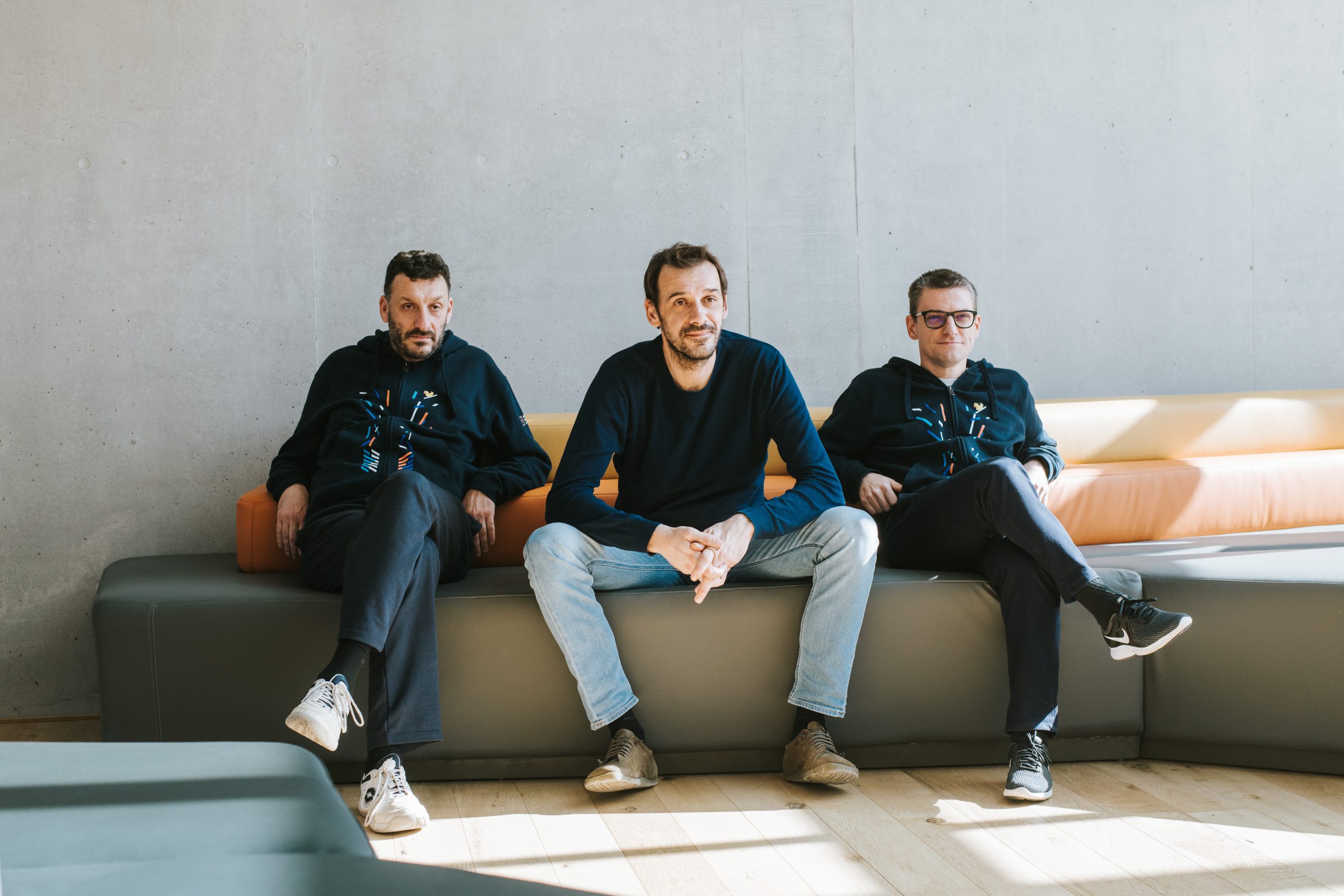
The shared award came later. All three received Croatia’s EY Entrepreneur Of The Year recognition for 2018. An award naturally supplies a neat group photograph and a date to remember. The collaboration underneath it had been accumulating for years, through decisions about products, customers and the organization that could support both.
It is tempting to read the eventual success backward, giving each early attempt the dignity of an inevitable step. Kutić’s own retrospective is less comfortable. He describes versions and restarts. The 2003 Infobip was followed by further iterations before the 2006 company. His twentieth-anniversary reflections return to the need to keep moving through unsuccessful attempts.
There is no requirement to find failure charming. It consumes time and money and can make the next explanation harder. But a project can leave behind usable knowledge even when the venture fails. In Kutić’s account, the team’s work kept changing until the technology and the business had a form they could carry forward.
The unglamorous art of getting through
For the recipient, a business message can be almost insultingly simple: a few words on a screen. Behind it are operators, protocols and systems that do not necessarily share a language. Infobip built a business around helping companies navigate that complexity. The customer could incorporate communications without assembling the whole underlying network.
A good deal of engineering has this peculiar reward structure. If it works, somebody else’s task feels ordinary. The message arrives. The customer moves on. Building the machinery that makes an interaction uneventful can be a substantial undertaking, though uneventfulness is unlikely to earn applause in the moment.
Infobip’s founders financed growth from the business for years. In 2020, the company raised $200 million from One Equity Partners, its first external funding round, and became Croatia’s first unicorn. Fourteen years separated the company’s founding from that investment. The sequence gives the financing milestone a particular meaning: outside capital arrived after a long period of building.
- 2006Infobip founded
- 2018Joint EY award
- 2020First external funding
- 2026Twenty years in business
Selected milestones, not a year-by-year measure of growth.
Expansion required choosing where limited resources could go furthest. Kutić has described entering Nigeria, Indonesia, Brazil and India as large markets with strong mobile use and lower entry costs than the United States or Western Europe. His reasoning was commercial and specific. There were customers willing to try technology, and room to grow.
That is a useful corrective to the map people often carry in their heads. A global company need not begin by winning the most familiar market. The first good destination may be the place where a product solves a problem at a cost the business can afford. Geography becomes a set of decisions, rather than a ladder everyone must climb in the same order.
A company large enough to forget your name
Success made Kutić’s job harder in a different way. A team can begin with shared context simply because everyone is close enough to hear the same conversation. Add offices and colleagues, and that context needs deliberate attention. Decisions travel farther. People acquire narrower assignments. An organization chart can become surprisingly good at concealing the customer.
Kutić has argued for small teams with responsibility for a complete outcome, and for regular customer contact. “You have to speak to customers constantly,” he said in 2023. He also described the problems of departmental silos. People from different disciplines needed to work together to solve a problem; separating them reduced the encounters that made new ideas possible.
“You have to speak to customers constantly.”
Silvio Kutić, 2023
The concern is understandable even outside a technology company. Once a task has been passed between enough departments, everyone can complete an assignment while the original problem remains unsolved. Small teams are Kutić’s proposed way of keeping the purpose visible. The people building a feature should understand who will use it and why it matters.
At Bug Future Show in 2025, he offered a more personal indication of connection. He said he knew around 1,800 Infobip employees by first and last name. It is an arresting number to place beside a CEO. Names do not settle questions of management, but they make the company’s scale feel different. A workforce contains people he can recognize.
Colleagues from around the world continued coming to Vodnjan for education and connection. Learning together gave the town a working role in the global organization. The founding place could remain somewhere employees visited, met one another and acquired a better understanding of the company they had joined.
His public personality also has a quieter history. In 2018, an interview arrangement initially pointed toward Roberto because Silvio generally avoided interviews. He ultimately agreed to speak. The account describes a modest, candid and courteous interviewee. There is a small irony in a communications founder preferring to spend his time making things rather than talking about them.
Outside work, his interests include reading, squash and beach volleyball. The list is agreeably free of executive theatre. Reading also fits a recurring part of his business account: learning as a continuing activity. A company that changes size and technology keeps presenting its founder with work he has not done before.
The town stays on the invitation
In September 2026, Infobip celebrated twenty years with a gathering in Istria. More than 200 guests attended, coming from 39 countries, alongside employees from 22 countries. The company reported more than 70 offices and more than 3,500 professionals. The numbers describe a business that had travelled far, while the gathering brought people back toward its beginning.
Kutić set out three purposes: developing technology for digital interactions, helping people grow through knowledge, and contributing to communities. Those commitments link the business to the place where it operates. A local origin becomes more consequential when it helps determine where people can learn, work and meet, years after the first product has changed.
The next assignment involves AI and agents acting on behalf of users. Kutić is interested in how companies will communicate as software increasingly undertakes tasks and coordinates interactions. Infobip’s AgentOS is part of that direction. His account also stresses trust, oversight and knowing when a human should intervene. The proposed future still has engineering obligations.
He brings a familiar attitude to unfamiliar tools. His father was an engineer; his mother worked in education. The two influences are easy to hear in his emphasis on building and learning with other people. New technology supplies another set of questions. It does not remove the need to understand what a customer wants to accomplish.
Vodnjan remains part of his answer. In his 2025 appearance, Kutić placed Infobip’s future there, whatever technology it might pursue. A founder who once took the bus home has spent the intervening years widening the business around that decision. The town has stayed in the itinerary. After twenty years, the invitation still brings people back.