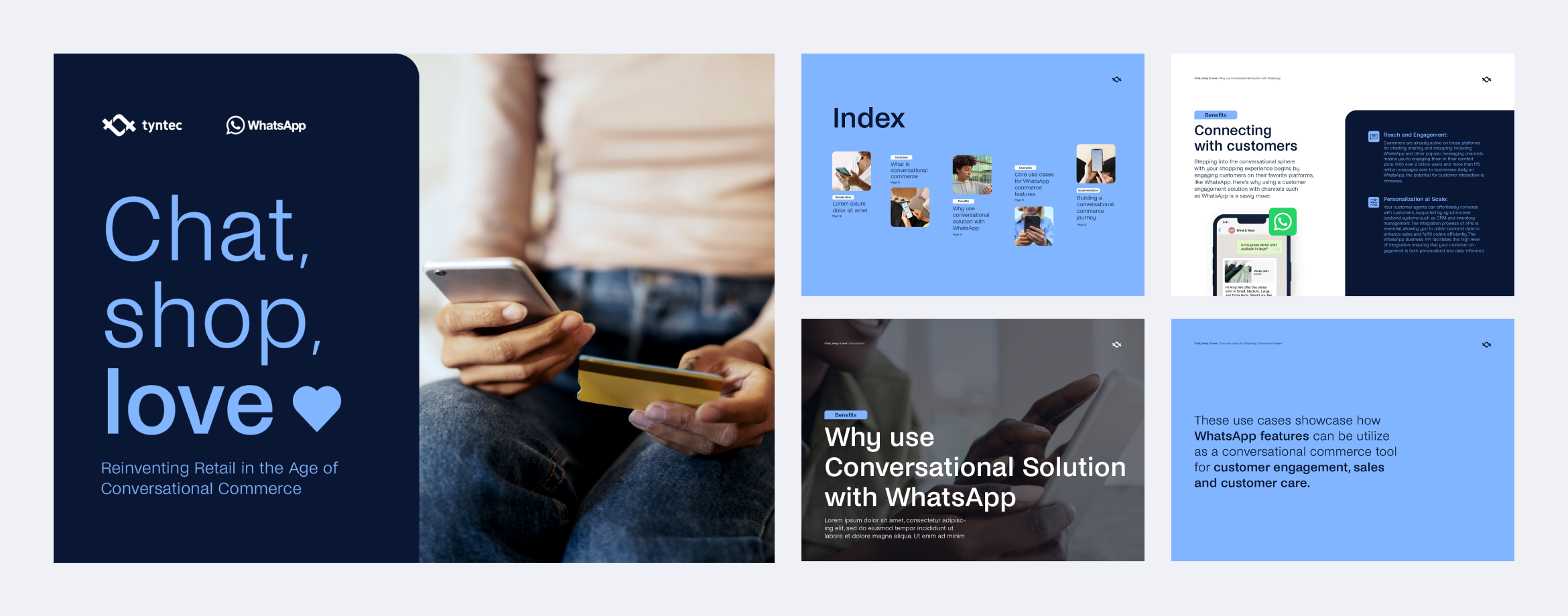
A clothing sale does not have to end when the shopper leaves the store. HUGO BOSS wanted its sales associates to keep the conversation going across the gap between physical shops and online shopping. With tyntec, it put an integrated messaging service into a handful of flagship stores. The experiment grew: within two years, roughly 4,000 additional associates were using it across more than 500 stores in 30 countries.
Tyntec’s published customer account attaches a striking number to that work: €8 million in new sales generated through customer outreach over 12 months. It also reports a 5% conversion rate from message receipt to purchase and one million messages exchanged. These are company-published campaign results, not a forecast for the next retailer. Still, they give a rather dry telecommunications business a wonderfully tangible output: clothes sold.
The company behind the messages occupies two worlds. Businesses buy its tools to check phone numbers, deliver authentication codes and talk to customers. Mobile operators use its technology and services to control enterprise traffic and sell access to network capabilities. Tyntec’s position between those buyers and suppliers explains more about the business than the usual cloud-software shorthand.
First, find a network willing to try it
The origin story begins with a practical irritation. In tyntec’s account, Thorsten Trapp’s earlier startups could not get SMS to meet business reliability requirements. A text was easy enough to send; building a business process around dependable delivery was another matter. Trapp developed technology intended to close that gap and, with early partner Dr. Ralph Eric Kunz, headed to the Isle of Man.
Manx Telecom was willing to test the technology. Tyntec dates its founding to 2002 and says it became profitable after six months. That is the company’s retrospective account, but the choice of starting point is revealing. Its first important collaborator was a network operator. The infrastructure relationship came before the polished enterprise interface.
By 2010, its history describes an API-based cloud communications platform supported by its own carrier-grade infrastructure. In January 2017, investor Cipio Partners announced backing for the business and the regrouping of its regional operations under London-based tyntec Group Limited. The stated purpose was faster product introductions as demand for real-time messaging and voice grew. Its present-day pitch still rests on that combination: software access above, telecom expertise underneath.

Three verbs, three different jobs
Tyntec packages its enterprise offer around Verify, Authenticate and Engage. The names sound interchangeable until a customer mistypes a digit. Verify checks phone-number data, with modules for validity, status and additional number information. A retailer can use it in a signup form or against existing customer records. Catching the error before a message goes out is the whole point.
Authenticate handles the next question: can the person complete a verification step through the chosen channel? The service delivers one-time passcodes through channels including SMS, WhatsApp, Viber and voice, with configurable priorities and fallback options. Its conversion tracking lets a business examine completion rather than merely count outgoing codes. Number validity and a completed authentication flow answer different questions; buying one should not be confused with obtaining the other.
Engage covers the ongoing conversation. Its Conversations API connects business applications to messaging channels, while Inbox gives staff an interface for handling customer interactions. Team organization, quick replies, contact information, chatbot connections and CRM synchronization turn a message into something a business can manage. A shop associate needs context about the customer; a developer needs an interface that fits an existing application.
This puts tyntec in the communications-platform-as-a-service market, alongside alternatives such as Twilio, Sinch, Infobip and Vonage. The distinguishing argument is its operator-level infrastructure and the commercial work it performs for networks. For a buyer, that makes country coverage, routing, operational support and the particular workflow more useful comparison points than a long menu of channels.
- 01 / VERIFYIs the number usable?
- 02 / AUTHENTICATECan the user complete the check?
- 03 / ENGAGEWhat does the customer need next?
The sales associate is still in the picture
The HUGO BOSS deployment is instructive because the human relationship survived the software rollout. The reported expansion was measured in associates and stores, not simply in automated sends. Tyntec describes uses including product recommendations, collection announcements, pickup notifications and appointments. Messaging extends what an associate can do after a customer has walked out.
“tyntec was just as invested in our success as much as we were,” says Larissa Oskierski, identified in the customer story as Senior Manager Customer Experience at HUGO BOSS. The useful detail is the sequence: start in a few stores, see the response, then expand. According to tyntec, the positive early results prompted the larger rollout.
There is a second, less glamorous customer example. In a 2021 account, tyntec said Argentine financial company Tarjeta Plan Platino used WhatsApp media templates to send monthly statements as PDFs and handle inquiries. At that point, 20% of its customer base was being served through WhatsApp. The result was a reduction in paper statements, illustrating that the same delivery machinery can support routine administration as well as selling.
The copyable lesson is to choose a specific moment worth a message. A requested statement, a pickup reminder or a relevant recommendation gives the recipient a reason to care. A pilot should establish who answers replies and what counts as success. For retail outreach, useful measures include completed purchases, staff time and repeat business. Message volume alone leaves the business question unanswered.
Count the cost after the send button
Tyntec’s WhatsApp onboarding documentation describes pricing packages, account credits and monthly invoices. It also describes 1,500 complimentary test messages for a verified live business profile. The commercial shape is a paid communications service, with package selection and usage feeding billing. For a rollout, the meaningful budget also includes connecting systems, preparing customer data and giving staff time to manage replies.
The €8 million HUGO BOSS figure is a sales result, not a profit figure. Evaluating an equivalent campaign means subtracting messaging charges, implementation costs, labor and the cost of fulfilling the resulting orders. An attribution window matters too: a purchase following a message is a useful observation, but a comparison group would make the incremental effect easier to judge.
The operating conditions matter as much as the invoice. Tyntec’s onboarding instructions require approved templates for initiating WhatsApp conversations and stored customer opt-ins. Its SMS reference distinguishes a message accepted for delivery from one actually delivered. A team that treats those states as identical will congratulate itself too early. Stale numbers, an unsuitable channel or an unanswered reply can each undermine an otherwise tidy campaign.
“tyntec was just as invested in our success as much as we were.”
Larissa Oskierski
HUGO BOSS · Customer experience
On the other side, the operator wants its margin
For mobile operators, tyntec sells a different proposition: control over the enterprise traffic crossing their networks. A2P means application-to-person, the category that includes software-generated notifications and authentication messages. Tyntec’s operator offering combines traffic management, security and commercial administration. It promotes a subscriber-based monetization model designed to make revenue more predictable than a business dependent only on message volume.
The company says it can act as a master aggregator under one commercial agreement, integrate an existing firewall or deploy a partner solution, and manage routing and pricing enforcement. Its ENEA partnership contributes protection against messaging abuse. Here the customer problem is operational fragmentation: the firewall, commercial agreement and daily traffic management must work together for the revenue arrangement to hold.
Virtual numbers provide another route to recurring income. Tyntec proposes connecting an operator’s number inventory to enterprise demand and running the commercial layer. Its examples include local support numbers and temporary numbers that mask personal details during delivery communications. The operator supplies an existing asset; tyntec supplies integration, distribution and operating services. It markets these arrangements without new operator capital expenditure, a financing proposition rather than a claim that running the service costs nothing.
Identity checks
Customer support
tyntec
↔
Number inventory
Network signals
The next product is already inside the network
The network-API offer carries that logic into identity and fraud signals. Tyntec lists capabilities such as SIM-change detection, device-change information and silent authentication. Its stated architecture processes subscriber information within the operator’s perimeter and exposes limited outputs such as answers, risk scores and timestamps. The enterprise buys a usable signal rather than building its own connection to each underlying operator system.
In March 2025, tyntec and Shush announced a partnership to combine cloud communications infrastructure with network-authentication platforms, including Shush’s Sherlock. In December, tyntec published its explanation of the WhatsApp Business Calling API: a way to move a conversation from text to voice, with permission for business-initiated calls. Both developments follow the same customer logic: remove an awkward handoff at the moment someone needs help or verification.
Its current AI material also emphasizes work inside carrier networks: classifying traffic, selecting routes and detecting suspicious patterns. Channel optimization and AIOps are explicitly marked beta. Those labels matter. A prospective customer should distinguish a capability that can be deployed for its particular network from a direction of development, and test the actual countries, signals and service conditions the application needs.

A small company with a very large address book
Tyntec says it serves more than 1,000 customers and has over 100 employees drawn from more than 40 nations. Its website describes a founder-led culture built around trust, freedom and responsibility, with Nicola Wolfram as CEO and Thorsten Trapp as CTO. These are the company’s own descriptions of scale and working culture; the more observable habit is the continued involvement of technical leadership across a long product history.
In July 2025, it announced Tier One recognition in ROCCO’s operator and enterprise A2P SMS reports, describing seven consecutive years of recognition. That kind of industry feedback suits a company whose work is often noticed only when delivery goes wrong. A customer-facing brand gets the conversation. An operator gets traffic and revenue. Tyntec sells the means to connect them.
The jacket is the easy part to picture. Behind it sit the number check, the channel, the associate’s inbox, the network connection and the bill. Tyntec’s business depends on making those parts work together well enough that the shopper can concentrate on the jacket.