Karen Brewer began her first week at Monotype in London, traveling with sales colleagues and meeting customers. It was a practical opening for a new chief marketing officer and a small portrait of how she works. Before polishing the message, go to the people living with the product. Before declaring what a market wants, listen to somebody in it. Brewer has crossed much of the modern software map, but her compass has stayed remarkably steady.
Her resume includes Macromedia, Autodesk, ABB, Ellucian, Cisco, fabric and Adobe. Those names span boxed creative software, cloud subscriptions, industrial systems, higher-education technology, networking, headless commerce and generative design tools. In June 2026, she added Monotype, the company behind a catalogue that includes Helvetica, Times New Roman, Avenir and Gotham. The assignment sounds specialized until one remembers how often type appears: in an app, on a dashboard, across a car display, under a film title, around a cereal box. Letters are quiet infrastructure with excellent manners. They arrive before meaning and rarely demand applause.
The first draftA marketer with a graphic designer's minor
Brewer studied marketing at Virginia Tech and minored in graphic design, a pairing that reads now like the opening line knew the ending. Early in her career she joined Macromedia's leadership team and worked through its public offering. Macromedia was the maker of Director and, later, Flash, a company formed in the era when multimedia was still a daring noun. In a 2024 post after a San Francisco reunion, Brewer remembered the group as bright, kind and energetic, a startup crew that kept its relationships long after the org chart disappeared.
There is a temptation to read a career like this as an orderly parade of increasingly grand titles. Brewer's did something more interesting. While her three sons were young, she spent about seven years as a part-time marketing and sales consultant, often helping small companies plan and launch products. Twenty paid hours were fitted around the less schedulable work of family life. She later called it one of her most challenging periods.
Restlessness produced a local project with a surprising amount of executive texture. Brewer became chair of the steering committee to rebuild Boyle Park in Mill Valley, California. Other mothers who had stepped away from full-time work joined her. Together they handled fundraising, design, marketing, public relations and grant writing, often with children in tow. The project sharpened their professional skills while giving the town a renewed public space. It also makes a useful point about a career break: the title may vanish before the work does.
When Brewer prepared to return full time, she was selective. She wanted a company with a positive culture, a difficult leadership brief and room to grow. A former employer offered her a global role. The line between leaving and returning proved less like a locked door than a relationship kept in good repair.
The returnNine thousand customers settle the question
Brewer's route into Ellucian was an unusually sensible courtship. She accepted the CMO job on an interim basis, which let her inspect the company, the market and the culture before either side made a permanent promise. Early on, she attended its annual customer conference with 9,000 people. The scale and energy settled the question. She stayed.
At Ellucian, a provider of software and services to colleges and universities, she led marketing during a period that culminated in the company's $3.5 billion sale to TPG and Leonard Green in 2015. A former sales leader later credited her with customer focus, competitive understanding and a careful communication plan during the acquisition. The commercial story matters, but so does Brewer's own choice of a “success story” when asked about her career. She picked coaching and mentoring colleagues, then watching them advance.
people at Ellucian's customer conference gave an interim CMO enough evidence to make the job permanent.
Her planning habits are delightfully concrete. Set a game plan for the week. Put out clothes and pack bags the night before. Ask the children to do it too. Block family time when early calls with Europe or the East Coast crowd the calendar. If work takes a weekend, consider reclaiming a personal day. The advice lacks the scented fog that often surrounds executive productivity. It is a checklist with shoes by the door.
The customer roomTokyo, 31 designers and a better feedback loop
Brewer moved through strategy work at Cisco and then became executive vice president and CMO at fabric in 2021. The headless-commerce company sat in another technological transition, as retailers tried to separate their storefront ambitions from older systems. Brewer explained her attraction plainly: “Marketing is most rewarding when you believe in the story you're telling.” It was less a slogan than a criterion. She wanted the product and the narrative to agree.
In 2023 she returned to Adobe, the company that had acquired Macromedia eighteen years earlier. There she led global product marketing for professional design and 3D, including Illustrator, InDesign and Substance 3D. The portfolio joined her two academic subjects again: graphic design and marketing, now operating at global scale.
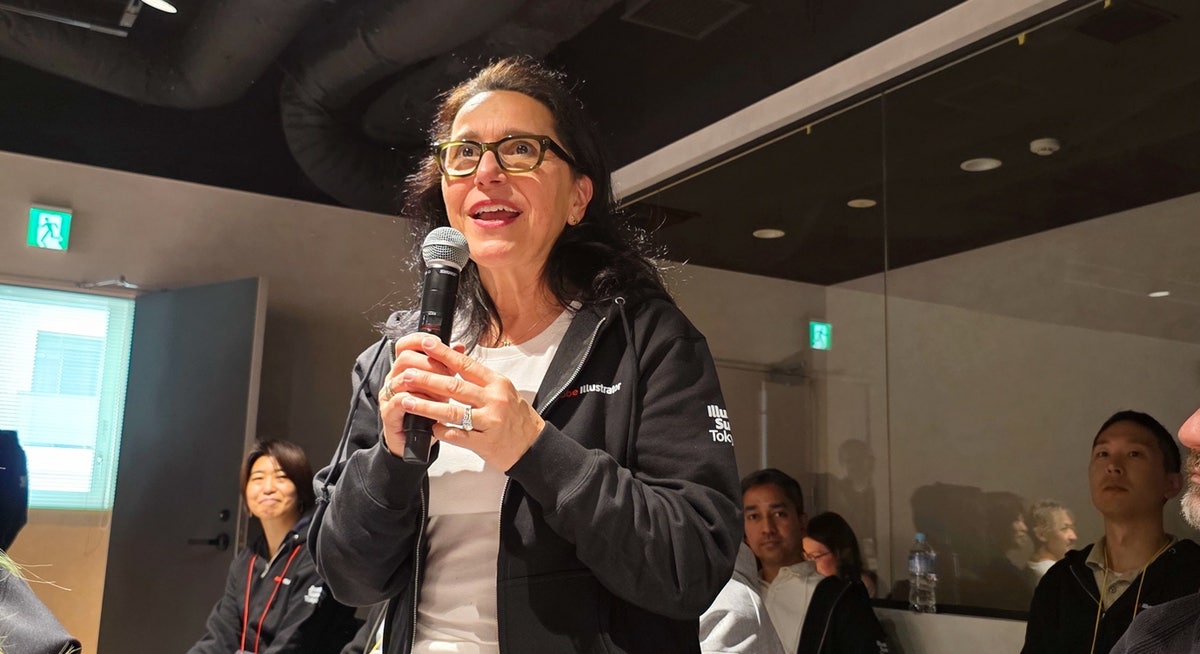
The clearest expression of her method came in February 2025. Brewer strongly advocated for Adobe's first Illustrator Summit in Tokyo, a market where the product has a deep and distinctive following. Thirty-one creators, influencers, students and in-house designers met Adobe product and engineering colleagues who had traveled from the United States and India. Participants discussed what they liked, what irritated them and what they wanted the software to become.
Brewer hoped the gathering would do more than improve a release. She wanted users to meet one another, widen their community and perhaps form friendships that lasted. It is a generous theory of product marketing. A customer event can be research, but it can also leave the customers richer in relationships than when they arrived. The company receives feedback. The room receives a reason to exist.
The new briefMarketing what people feel before they read
Monotype gives Brewer a peculiar and fitting new problem. The company has a creative legacy, a large licensing business and a technological job that grows more complicated as brands spread across platforms, territories and automated systems. Its library exceeds 250,000 fonts and covers more than 300 languages. Consistency at that scale is partly aesthetic, partly operational and partly legal. A font must look right, render correctly and be licensed for the place it appears.
AI raises the stakes. Brand content can now multiply faster than a traditional approval chain can inspect it. Brewer has written that Monotype's commitment to helping brands build trust, consistency and distinction amid that transformation helped draw her to the company. Her remit is to strengthen its market position, brand presence and customer relationships while advancing its role with global brands.
This is where her career's threads tighten. Macromedia supplied the startup velocity. Autodesk supplied design software at the turn toward cloud and subscription. Ellucian showed her the force of a live customer community. Cisco added operating discipline. fabric put her inside a category trying to explain new infrastructure. Adobe returned her to creators, tools and the productive mess of user feedback. Monotype turns the letters themselves into the product.
Away from work, the details available are refreshingly terrestrial: hiking Mount Tamalpais, Saturday coffee with friends, checking in with her sons by FaceTime if they accept the invitation. She has called herself a customer enthusiast, community-minded, an art lover, an adventure traveler and a lifelong learner. The descriptions align with the visible record because they are verbs disguised as labels. Meet. Hike. Ask. Learn. Call again.
Brewer once argued that mothers doing part-time consulting should not be treated as second-class members of the workforce. She wanted more stories about careers that move in and out of full-time employment without turning expertise off like a lamp. Her own career supplies one. The seven-year chapter was neither a vanishing act nor a sentimental prelude. It contained clients, launches, a park, three children and a difficult education in time.
Now, after more than twenty-five years in technology marketing, the plan remains recognizable. Write down the goals. Keep the customer close enough to contradict you. Build the room where useful conversation can happen. Leave some white space for a life that refuses to fit neatly on the slide. For a marketer of typography, Brewer understands something a good typesetter knows instinctively: what surrounds the words can determine whether anyone hears them.