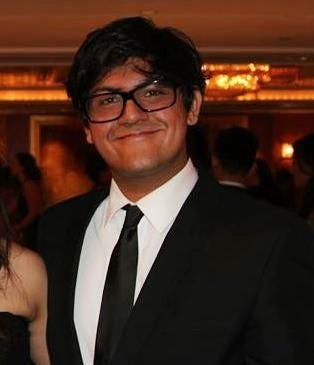
There is a particular kind of ambition that doesn't announce itself. It just builds. Karan Kanwar co-founded Wing Assistant in 2018 out of a UC Irvine dorm room - a managed marketplace that pairs businesses with rigorously vetted, AI-supervised virtual assistants. By 2023, Wing was posting $20 million in annual revenue. By 2024, over one million people had applied to work there. He never took a Series A.
Before Wing, Kanwar ran consulting engagements for Morgan Stanley, Goldman Sachs, and the United Nations while still a student. He speaks five languages - English, Mandarin, and Hindi among them - and was born in Mumbai before his family moved to Hong Kong, where he attended Sha Tin College and picked up the kind of global outlook you can't learn in a lecture hall. He started coding at 8. The gap between "child who writes code for fun" and "CEO managing a thousand-person remote organization" is, in Kanwar's case, mostly just time.
The Managed Marketplace Thesis
Wing is not a freelancer marketplace. That distinction is load-bearing. In the freelance model, the client finds, vets, and manages talent directly. Wing does all three. It sources assistants, puts them through a rigorous vetting process that accepts roughly the top 0.5%, trains them, assigns supervisory oversight, and monitors task completion through its own proprietary workspace software. When something goes wrong, Wing catches it before the client does. That's the thesis: "managed," not "marketplace."
"The future of work marketplaces is managed."
- Karan Kanwar, Wing AssistantThe services Wing provides cover the administrative and operational surface area that kills startups: CRM management, calendar and email management, social media scheduling, data entry, sales calling, research, travel arrangements, financial document preparation. The range isn't accidental - it maps directly to the bottlenecks that slow down founders, executives, and growing teams. Wing's pitch is essentially: the work that doesn't require your judgment should stop requiring your time.
The COVID Pivot That Defined the Company
Wing's first product, launched around 2019-2020, was a consumer concierge app. It hit #1 on Product Hunt. That should have been the win. Then COVID-19 arrived, and consumer spending on personal concierge services collapsed overnight. Most companies in that position fold quietly. Wing pivoted to B2B - and the pivot worked better than the original bet. By 2022, the company had signed more than 1,000 customers and processed 255,000+ tasks. Revenue went from $3 million in 2020 to $10.5 million in 2022 to $20 million in 2023.
Raising Capital Without Surrendering the Company
In October 2021, Wing closed a $2.1 million seed round from Surface Ventures, Brookstone Venture Capital, and - unusually - both UC Berkeley SkyDeck and UC Irvine simultaneously. For a company that started in the UC system, having both flagship campuses write checks is either a scheduling coincidence or a testament to how the company had matured across two campuses. Take your pick.
Wing raised $1.4M in non-dilutive, revenue-based financing from Efficient Capital Labs in 2023 - achieving 210% annualized growth while preserving equity. No Series A. No board seats traded. Just growth.
When Wing needed more capital to scale marketing in 2023, Kanwar chose revenue-based financing over a traditional venture round. Efficient Capital Labs provided $500K initially, then an additional $900K, based on Wing's trajectory. The choice wasn't accidental. Revenue-based financing lets Wing pay back investors as a percentage of revenue, not on a fixed schedule - and it doesn't dilute founders. It's a financial structure that suits a company already generating cash, and it signals something about Kanwar's orientation toward building.
Career Timeline
The Platform Behind the Service
Wing's workspace software is the part of the business that most outsiders miss. The company built a proprietary communication and task-tracking platform that lets clients interact with their assigned assistants in real time, share files, and monitor task completion. AI flags potential issues before they reach clients. This isn't just an operational convenience - it's the infrastructure that lets Wing scale without quality degrading. When you're supervising 1,000 people across eight countries, software isn't optional. It's the product.
In April 2024, Kanwar launched Pie (Post It Everywhere), a social media scheduling tool that grew out of Wing's internal operations. Wing assistants manage social media accounts for hundreds of clients - building the tooling in-house made sense. Launching it as a standalone product makes sense too.
Building in Public, Thinking Out Loud
Kanwar writes on Medium. Not polished thought leadership pieces - operational essays. In 2020 he wrote about how Wing delivers Thai food recommendations at scale, using it as a lens for the operations and AI architecture behind Wing's concierge layer. In 2021 he wrote about rebuilding Wing's chat interface. In 2018 he open-sourced an internal tool called Signer and published an early chatbot framework. These aren't PR moves. They're the artifacts of someone who thinks in public.
As a Forbes Technology Council member, he's contributed to the ongoing conversation about remote work, managed services, and AI-human hybrid workforce models. He sits on the UCI Beall Applied Innovation advisory board and volunteers on the Berkeley SkyDeck selection committee - the same accelerator that backed Wing, now with Kanwar on the other side of the table evaluating the next generation of founders.
"Wing gets you the perfect Thai food every time, at scale."
- Karan Kanwar, on Wing's operational philosophyWhat Makes This Unusual
A lot of founders build companies in dorm rooms. Few build companies that are still standing, much less growing, seven years later. Fewer still do it while managing a thousand people across eight time zones without a Series A. Kanwar's version of Wing sits at a specific intersection: deep technical background (CS from UCI, coding since childhood, open-source contributions, multiple AI projects including a medical diagnosis system and a counter-terrorism AI research tool) combined with operational discipline and a genuine global perspective from growing up multilingual in Hong Kong.
Wing's headcount and revenue are not outcomes of blitzscaling. They're the result of building infrastructure - hiring infrastructure, training infrastructure, software infrastructure - that can expand without collapsing. The one million applicants in a year number isn't just a vanity metric. It reflects both the scale of Wing's talent operation and, implicitly, the global demand for remote work that Wing sits in front of. Kanwar saw that demand early, built the plumbing for it, and has been running it ever since.