In 2013, Joshua Pack made a $55,000 donation to Cal State San Marcos. The money supported a veterans center and a scholarship bearing his father’s name. By then, Pack was a managing director at Fortress Investment Group, accustomed to financing businesses and examining assets. This commitment had a particularly legible purpose: give military-connected students a place to get help, and give veteran students support to continue their education.
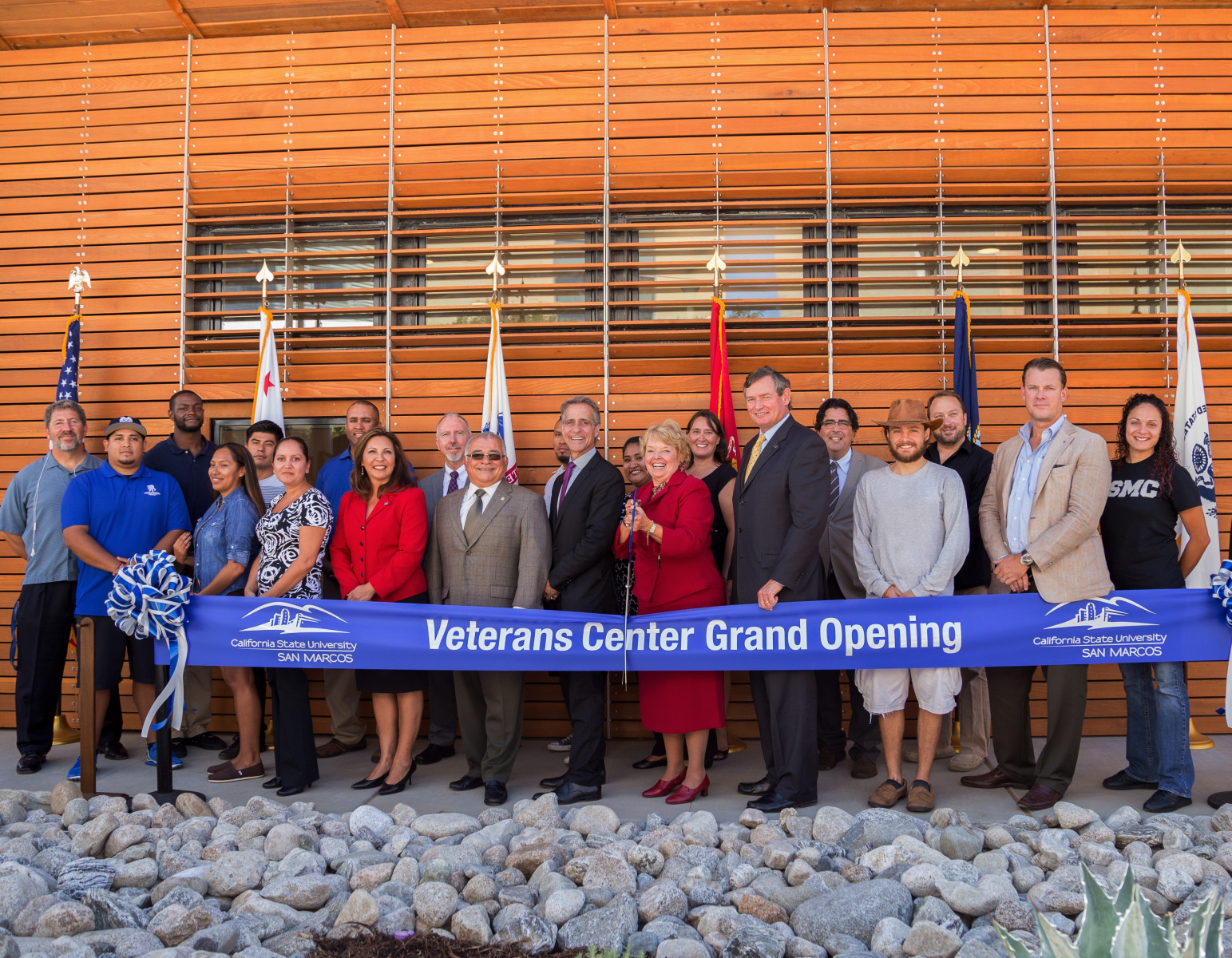
The photograph from the center’s grand opening is pleasantly unfinancial. There are flags, a blue ribbon and an orange building. Pack stands second from right, wearing a light jacket, among people whose next chapter the center was designed to help. A ribbon-cutting has the useful advantage of making an investment visible. You can point to the door.
Pack’s professional life would encompass private credit, real estate, private equity and the co-chief executive’s office at Fortress. His public writing also returned to a simpler question: what useful experience gets overlooked when people rely too heavily on familiar credentials? Across his work with veterans and business operators, the question acquired practical consequences.
A résumé with more than one route
Pack came from a military family. His grandfather served in the Navy; his father, Lt. Col. A.J. Pack, served in the Marine Corps. He attended the United States Air Force Academy before taking a different educational route and earning his economics degree at Cal State San Marcos in 1997. The route matters because his later argument about careers allowed for experience that did not fit a standard corporate sequence.
In November 2021, he published an essay urging financial-services businesses to hire veterans. He described leadership, communication, adaptability and discipline as attributes employers already sought. Military experience, he argued, could supply them, even when the language of a job application obscured the connection. A hiring manager had to do some translating.
He also understood that translating experience could require training. His proposal included mentoring and giving candidates a second look when their direct experience did not exactly match a position. The argument was specific enough to inconvenience a recruiting process: consider what someone has learned to do, then consider what they could learn next.
At San Marcos, Pack maintained his connection long after graduation. He served on the university’s foundation board from 2011 to 2016. A career that took him into global markets still had a point of return on a Southern California campus.
Credit has a memory
Before Fortress, Pack worked as a vice president at American Commercial Capital, a specialty finance business focused on corporate and real estate lending. Wells Fargo acquired that company in 2001, and Pack also held a vice president role at the bank. His background was in the business of lending against particular companies and properties, where the details of a borrower mattered.
He joined Fortress’s credit business at its inception in 2002. That placed him near the beginning of an operation he would help lead for more than two decades. His responsibilities eventually crossed private credit, private equity, real estate debt, net lease and distressed investing. The list describes several ways capital can meet an asset, with different claims, obligations and time horizons.
In a February 2024 appearance on The Credit Edge podcast, Pack described a potential trillion-dollar opportunity in distressed real-estate debt. He expected substantial restructuring and lasting consequences for banks. This was an investor’s forecast at a particular moment, with a large amount of unfinished business attached to it.
The scale was eye-catching. The timing was the harder part. A loan coming due creates a decision for its borrower and lender; resolving that decision can take longer than a market headline’s attention span. Pack’s discussion treated restructuring as a process involving institutions and assets. Anyone hoping for a neat ending by Friday would have needed a different conversation.
Twenty-three years at Fortress, from the credit business’s inception to the co-CEO role.
The investor who went to the stores
Pack’s published conversations with retail executives bring the investment vocabulary down to ground level. In June 2022, he interviewed Joe Juliano, president and CEO of United Pacific. Juliano recalled meeting Pack and other Fortress leaders, then visiting prospective assets together. The relationship involved seeing the places they might buy and learning the business.
Fortress backed the acquisition of United Oil in 2014 and the assets of Pacific Convenience & Fuels in 2015. By the interview, United Pacific operated about 500 stores across five western states. Juliano described a partnership that combined financial support with room to assemble his team and run the company.
The site visits offer a small, useful detail about Pack. A convenience store is an ordinary destination for a customer and a bundle of operating decisions for an investor. The same premises contain both stories. Walking through them makes it harder to forget the customer while discussing the capital.
Another conversation, with Majestic Wine CEO John Colley in January 2022, examined how a retailer worked with its financial backer. Fortress acquired Majestic in 2019. Colley described being persuaded to return because the investors would trust him to operate the business and support him where needed. He said their subsequent behavior matched those assurances.
Colley recalled the team asking, “Tell us what you need.” He also described frequent contact and freedom to make decisions. The appeal was understandable: a manager could act while still having people to call. A wine shop requires rather more daily judgment than choosing whether a bottle should be red or white.
“Tell us what you need.”
John Colley, recalling Fortress’s approach in his 2022 conversation with Joshua Pack
Buying a piece of the place
Pack’s relationship with Fortress entered a different stage when the organization itself changed ownership. In May 2023, Fortress announced that management and Mubadala had agreed to acquire SoftBank’s stake. The announcement named Pack and Drew McKnight as the incoming co-CEOs following the transaction.
The acquisition closed in May 2024. Fortress management held 32% of the equity, while a consortium led by Mubadala Capital held 68%. Management’s class of equity entitled it to appoint a majority of board seats. Ownership percentages and decision-making authority each had a deliberate place in the arrangement.
Pack, McKnight, Jack Neumark and Pete Briger were identified as the largest individual investors in the buyout. Approximately 150 members of the firm joined them. After years of putting capital into other businesses, Pack was participating in a purchase of the institution where he worked. His colleagues were making a similar commitment.
The transaction connected personal investment with an existing professional history. For Pack, that history stretched back to the credit operation’s start. The new ownership structure gave the management group a financial interest and board appointment rights, with a global investment partner alongside it.
Management
32% equity; right to appoint a majority of board seats.
Mubadala-led consortium
68% equity.
Dallas, then a wider map
Dallas was central to Pack’s later professional life. In a July 2024 opinion article co-written with McKnight, he made the case for the city as a financial center and supported the founding of the Texas Stock Exchange. Fortress had co-headquarters in Dallas and New York; the two executives wrote from the experience of building a local presence.
They described more than 130 full-time Fortress professionals in the Dallas-Fort Worth region and a new location at Weir’s Plaza. Those were figures from 2024, attached to a broader argument about where companies and financial talent could work. Pack was speaking as an employer and investor with a stake in the region’s development.
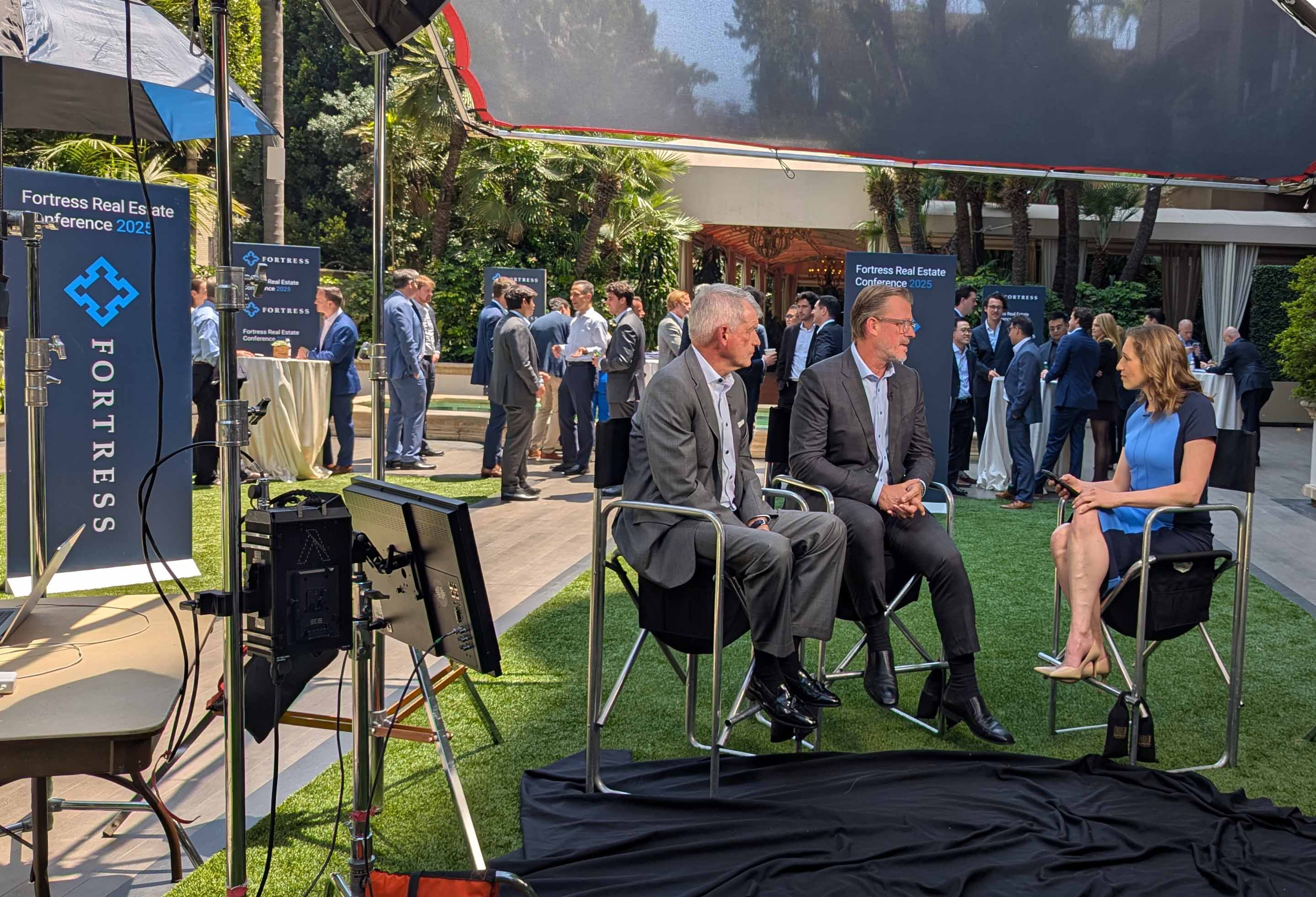
His working map remained international. At Fortress’s 2025 real-estate conference in Los Angeles, he appeared with Tim Sloan in a television conversation with Lisa Abramowicz. Pack discussed private credit taking market share across financing products and referred to opportunities in Europe and continued investment in Japan.
In May 2025, his plans included moving from Dallas to London to lead Fortress’s European expansion. The intended work involved senior hires for institutional and private-wealth sales, and further development of the private-credit team. The expansion brought another set of relationships to build: investors, colleagues and counterparties in a different market. He subsequently relocated to London.
A building with a different return
Back at San Marcos, Pack’s support had taken a concrete form. The veterans center project repurposed Ecohabit, a solar house designed by students at Stevens Institute of Technology. A building made for an energy competition became a campus facility, with space for practical help as students navigated benefits, admissions and courses. Pack helped fund the center and the scholarship.
He named the scholarship for his father. In reflecting on the campus’s veterans community, he spoke of “our commitment to support their dreams.” The wording put an obligation beside gratitude. Education and a next career required more than recognition at a ceremony.
Pack died on September 29, 2025. Fortress appointed Jack Neumark co-CEO alongside McKnight. Its remembrance described Pack’s care for colleagues and recalled his humor and devotion to family. At the university, the scholarship and center preserved another part of his work: support directed toward people preparing for what came next.
The sums involved in that campus work were modest beside the scale of his investment career. Their purpose was easier to see. A student could find a place to ask a question, work through a form or plan a next step. The ribbon in the photograph marked an opening. Pack had helped make what followed possible.