A tenant’s second paycheck is an unusual place to begin a story about private equity. But it is a useful place to meet Abdullah Ahmad’s business. A single parent who had rented from Provision Capital for three years needed a rent schedule that matched when she was paid. The firm let her pay after that second paycheck. When she eventually moved, she said it was the first time she had felt she had a home.
The episode belongs to the company, rather than to a staged encounter with its founder. Its significance is the choice it records: an investment operation adjusting to an ordinary household’s calendar. Ahmad, Provision’s founder and CEO, promotes a culture of “radical integrity.” Here, that large phrase acquired a small, practical job.
Private equity has an extensive vocabulary for money. The vocabulary for belonging is shorter. In this case, a payment date carried both. It gives Ahmad’s story a human starting point before the companies, capital, and property counts arrive.
New York first. Dallas next.
His introduction to property came early, through family and mentors involved in real estate investment. Hands-on work began in 2003 with odd jobs on an employer’s real estate projects. The glamorous version of an investor’s origin story usually starts a little later, when someone gets to wear a better jacket. Ahmad’s begins with work around the projects themselves.
He earned a B.B.A. in accounting at Hofstra University. In 2009, he began working on real estate acquisitions in New York. Three years later, he moved to Dallas, having identified it as an emerging market. Those dates describe a progression from helping on projects to participating in purchases, then choosing a city in which to build.
Provision was established in 2013. The move south preceded the firm, which makes Dallas part of the founding decision rather than a convenient address added afterward. His background also includes KPMG and Goldman Sachs. Accounting, acquisitions, and an operating business became parts of the same career. A house can look perfectly respectable from the pavement while demanding rather less flattering attention in the numbers.
A few homes become an operating business
Ahmad started Provision with a single investment and a few homes. The firm now describes a decade of growth that includes more than 1,000 homes flipped and managed and more than $250 million deployed. These are company figures, and each measures something different. Capital deployed describes money put to work over time; homes flipped and managed describes activity across the business.
The distinction matters because a founder’s story can disappear behind a large number. Ahmad’s contribution is more specific: he built the investment strategy and capital relationships that supported that growth. He continues to lead the company as it develops its real estate platform and explores additional sectors.
The operating company, RentReady Homes, dates to 2016. Provision’s real estate platform lists more than 1,100 doors under management there. A door is industry shorthand for a unit; for a resident, it is simply the entrance to the place they live. The two meanings coexist, sometimes awkwardly. Ahmad’s business has to make the portfolio view and the household view work together.
property work
The roof before the return
One Houston project makes the operating challenge visible. The home had been vacant since Hurricane Harvey. By the time RentReady took it on, it was under a demolition notice, with a collapsed roof, fire damage, and an interior ruined by flooding. This was a team project within Ahmad’s operation, with problems considerably more tangible than a disappointing spreadsheet.
The team obtained an extension from the city and rebuilt down to the studs. It replaced the roof, framing, and mechanical, electrical, and plumbing systems, then regraded the site to address chronic flooding. A new primary suite added 266 square feet, bringing the house from 1,234 to 1,500 square feet.
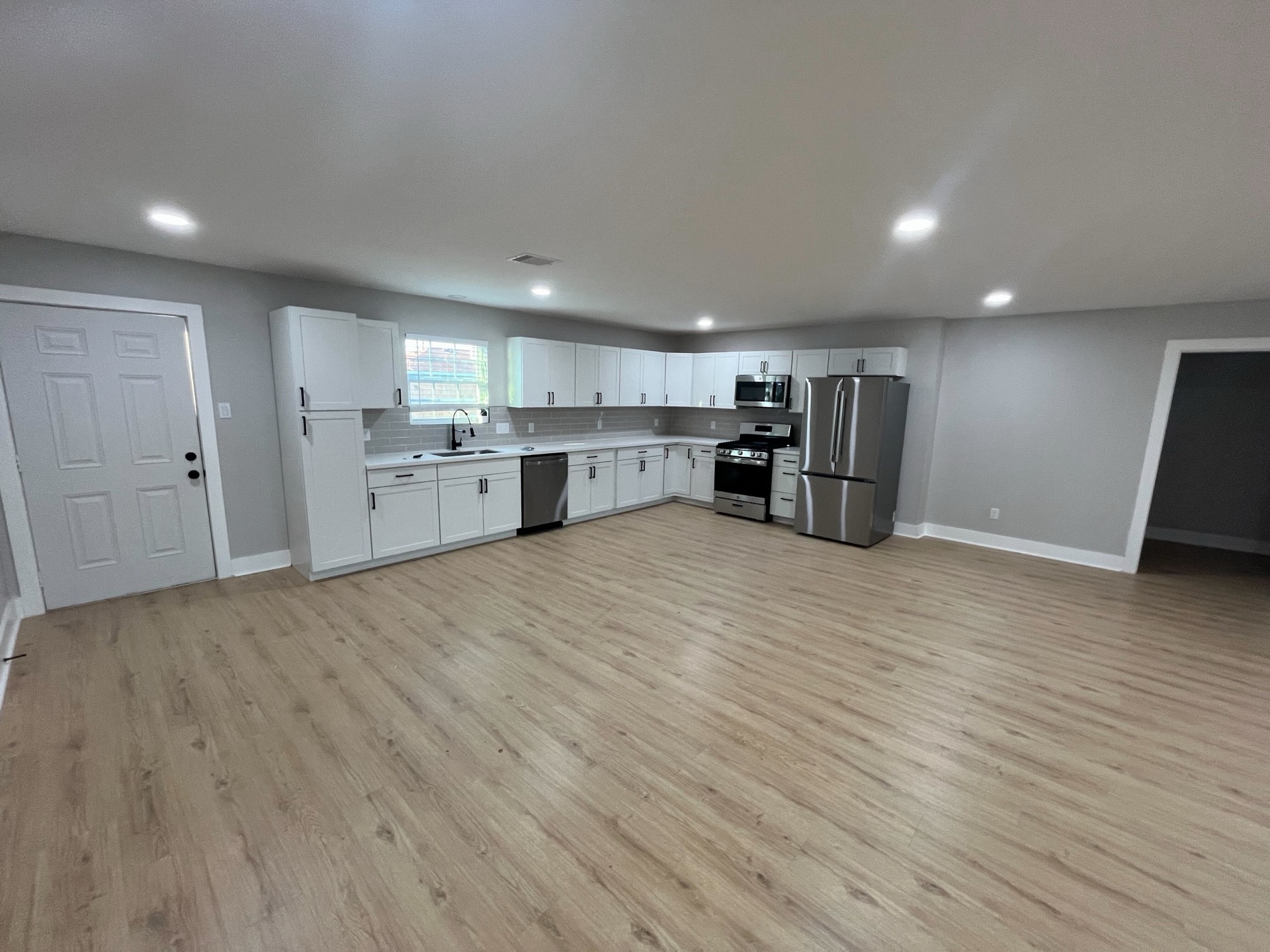
The work took roughly eight months. The home leased within weeks of going on the market, and Public Works issued a certificate of approval and closed the file in good standing. The finished kitchen has the calm look that renovation photographs tend to have. Its earlier history was considerably less composed. Restoring this property required both a construction plan and the patience to carry it through.
Who carries the plan into the field
The company around Ahmad has defined responsibilities. Mahmood Usmani is chief operating officer, leading the systems and teams that take homes through renovation, leasing, and management. Danyal Khan directs technology and leads the technical work that connects underwriting, operations, and reporting. Their roles help explain how an investment strategy becomes repeatable work.
Below that leadership layer are people whose responsibilities have addresses attached. Freddy Robles oversees construction. Jordan Crowe-Ware runs the Dallas-Fort Worth property book. Rodolfo Santini manages leasing, including applications, renewals, and negotiations. Genesis Osorio has led operations since 2019, coordinating across property management and construction.
The company’s team also includes project managers and maintenance technicians in Houston and Dallas-Fort Worth. These jobs are a useful corrective to the notion that an investment company consists entirely of people deciding what to buy. Someone must decide what needs fixing, arrange the work, and answer afterward. Ahmad is described as staying close to both the field and the financials. The structure around him gives those two ends somewhere to meet.
Software with its shoes on
By March 2026, RentReady was describing internally built AI tools designed around construction and operations. Its account gives the field specialists a central role in designing them, with the technology team auditing, securing, and refining the result. The people experiencing the awkward workflow help define the replacement.
One example is an AI walkthrough system. A team member moves through a property with a phone, narrating what they see. The system produces a structured report with photographs, punch lists, and repair descriptions for vendors. A separate internal workspace brings budget tracking, vendor management, scheduling, and field documentation together.
Usmani took the operating argument to an industry forum in Miami in February 2026: technology should justify itself by removing days from a project or dollars from its budget. The logic is pleasantly inhospitable to decorative software. While a home waits to be leased or sold, taxes, insurance, utilities, and other carrying costs continue. Better coordination has a financial purpose before anyone admires the interface.
- 01Acquire
- 02Renovate
- 03Lease
- 04Manage
The work after the keys change hands
RentReady’s model keeps construction, leasing, management, and maintenance in-house across Dallas-Fort Worth and Greater Houston. Its scoping engine turns a property walkthrough into a renovation plan. A contractor platform helps source crews, while dashboards track budgets and timing. The aim is to hold a common standard across separate homes.
Leasing uses AppFolio, self-showings, and applicant screening. The company says it considers the whole application and makes exceptions when warranted. Listing copy is tailored to the market, a practice it says it learned from Houston. A city turns out to be a poor place to use a sentence written for somewhere else.
After move-in, the work becomes rent collection, renewals, resident communication, and maintenance. Technicians work through a coordinated queue, with vans stocked for common failures. None of this lends itself naturally to a triumphant founder photograph. It does explain why the story keeps returning to staying: the operator remains involved after acquisition, after renovation, and after a resident receives the keys.
Another kind of building
Provision’s venture activity sits alongside its housing business. Its stated geographic focus includes the United States, Latin America, and the Middle East and North Africa, with investments from pre-seed through Series A. The firm describes support in strategy, hiring, capital structure, and bringing a product to market.
Provision Launch gives that ambition a program. Its incubation process runs for ten months, moving from idea validation through product design, development, marketing, and launch. It lists cash funding of $50,000 alongside technology credits and practical support. Provision Capital is its investment partner; SynTech is its technical partner.
The platform’s emphasis is on revenue, efficient use of capital, and preserving founder equity. That is a stated approach, rather than a promise about any startup’s outcome. It also supplies a connection between the two sides of Ahmad’s business: financing something is the beginning of a relationship. Houses need operations. Young companies need development, customers, and people who will still answer when the first plan needs revision.
The price of an open door
Ahmad’s aim extends beyond owning property. He previously advised wealthy individuals and wanted to bring his expertise to a wider population. He now describes a financial system for individual investors that is easier to understand, more dependable, less expensive, and transparent. Access is part of the ambition; how the business charges is part of its execution.
For Sprout Properties II, an entity organized through Provision Capital and RentReady, the January 2025 offering disclosure describes a general partner compensated through a share of profits rather than a percentage-of-assets management fee. Ahmad’s compensation comes from that partner’s profit share after its costs. The structure makes the question of fees concrete without answering every question an investor might ask.
His career has moved from odd jobs to acquisitions, from New York to Dallas, and from a few homes to an organization with construction crews and a venture platform. The most revealing test remains smaller than that arc. A resident needs a workable payment date. A damaged house needs a roof. A founder needs help after funding. Those are the places where the business has to keep its word.
“one that is simpler, more reliable, lower cost, and transparent.”Abdullah Ahmad, on his goal for the individual investor’s financial system