Blair Richardson gave a lesson on compounding in August 2026, then supplied the starting balance. Speaking to 80 Isomo scholars in Rwanda, the founder of Denver’s Bow River Capital talked about saving, consistency and education. He gave each student $500. The arithmetic was straightforward: $40,000 in gifts to the scholars. The more interesting calculation concerned time.
A lecture about patience can be a demanding gift. Its benefits arrive inconveniently late. A sum of money makes the proposition more tangible: here is something to begin with; now consider what you might build. Richardson’s visit tied a familiar financial idea to an educational ambition. The students were encouraged to finish their education and pursue their dreams. The money accompanied that challenge.
By then, Richardson had spent decades moving between the world’s financial centers and a business he founded in Colorado. His career offers an unusually long view of the distance between a promising beginning and an established institution. The cities change. The question of how to put capital to work keeps returning.
A Canadian beginning, then several time zones
Richardson was born in Canada and attended Aden Bowman Collegiate in Saskatchewan. His working life began at A.E. Ames and Company, a Canadian securities firm. In 1978, at 30, he became a partner. Before Denver became home, his itinerary included Toronto, Montreal, New York, Tokyo and Hong Kong. That is a collection of places in which to learn that a working day depends on where you happen to be standing.
He joined Goldman Sachs in 1980 and worked in its fixed income department until 1987, with responsibilities in sales and trading. Morgan Stanley followed. Between 1987 and 1995, his senior roles included managing director in New York, president of Morgan Stanley Japan in Tokyo and vice chairman of Morgan Stanley Asia in Hong Kong.
These were jobs inside large financial institutions, dealing with public equity and debt markets. Later, he would build a firm around privately held businesses. The continuity is capital; the change is proximity. A security can be bought and sold. A business partnership brings questions about management, operations and what happens after the transaction closes.
The years before the firm had a name
Before Bow River, there was B.E. Richardson Investments, where Richardson served as managing partner. It invested across industries and real estate in North America. Between 1996 and 2002, the company completed more than 20 private equity transactions. Bow River’s founding in 2003 therefore came after years of investing outside the banks that had shaped his earlier career.
There is something useful about that interval. Founding dates make tidy milestones, but they can conceal the work that precedes them. In Richardson’s case, the chronology contains a substantial stretch of private investing before the Denver firm appeared. The later business had a predecessor, and its founder had already moved beyond the institutional roles that still headline his biography.
His interests also extended to property. In 2001, he held the president and chief executive roles at TGS Properties, alongside his investment work. Real estate, land development and corporate investments occupied the same professional landscape. Bow River would eventually bring private equity, private credit and real estate under one organizational roof.
A region with a memorable name
Richardson founded Bow River in Denver and directed much of its investment activity toward the Rocky Mountain West and Southwest. The firm calls its fourteen-state focus the Rodeo Region. It is a designation Bow River created, rather than an official boundary on a government map. The name supplies a little Western color to a business that otherwise conducts itself in the language of capital structures and investment committees.
The thesis is geographic: Bow River sees opportunities in places attracting people and businesses, with regional networks and a shared emphasis on business relationships. Denver, Dallas, Phoenix, Boise, Salt Lake City and Kansas City feature in its description of the region. Its claims about the area’s appeal are an investment view, with all the judgment that implies.
Richardson’s earlier career makes the choice interesting. After roles in Tokyo and Hong Kong, he built an organization with a particular American region at its center. International experience and a regional focus can coexist. A wide field of experience may sharpen the decision to concentrate, though the success of each investment still depends on the business in front of it.
What happens after the handshake
Bow River’s private equity approach includes a customized 100-day strategic plan for each partnership. Its stated priorities include organizational development, information systems, automation, resource planning, expanding service lines and additional acquisitions. Those are practical subjects. They bring investing down to the level of how a company actually works.
For a founder, the discussion can involve a familiar tension: how to grow a business while preserving the culture that helped it survive in the first place. Bow River says it works alongside owners and management teams, contributing operational and financial experience. Its private equity criteria include companies with annual revenue between $25 million and $200 million. This is a part of the economy where a change in systems or leadership can reach deeply into everyday operations.
The credit business addresses another set of needs. It provides financing for growth, recapitalizations and acquisitions, working with management teams, sponsors and lenders. Richardson’s background in debt markets has a clear connection to a firm that offers both ownership capital and lending strategies. The tools differ, even when the underlying business is the same.
The Colorado economy, outside the office
Richardson’s interest in the region has also taken him into civic organizations. He chaired Colorado Concern, an alliance of business executives, and spoke publicly about Colorado’s economic prospects. In 2015, he pointed to young people moving to the state and starting companies. His enthusiasm came with a concern about the supply of workers trained in science, technology, engineering and mathematics.
“Colorado doesn’t educate enough people who have STEM backgrounds,” he said. The concern gives his educational philanthropy an economic context. A region can attract employers and still struggle to prepare enough people for the jobs they bring. Buildings and financing are visible; the skills needed to make them productive take longer to develop.
“Colorado doesn’t educate enough people who have STEM backgrounds.”
Blair Richardson, 2015
His civic work also included the CLIMBER small-business loan fund. In June 2020, he testified in support of the legislation establishing a recovery loan program funded by the state and private investors. The subsequent fund worked through participating lenders and gave special consideration to rural and underserved communities. Richardson called it “a true public-private partnership.” Here, capital reached beyond a private fund’s portfolio and into a statewide effort to support smaller businesses.
When the community disagrees
Regional investing can also place an investor in direct conflict with a community. Richardson has been a co-owner of the Three Sisters Mountain Village project in Canmore, Alberta, with Don and David Taylor. They repurchased the project in 2013. The proposed developments generated years of opposition over wildlife corridors, the scale of growth and the town’s future.
In November 2023, Richardson published an open letter criticizing protesters and referring to the project’s $161 million lawsuit against the town. Three Sisters subsequently said the letter did not represent the company’s view. The episode complicates a biography rich in civic honors: participating in a place’s economic life does not guarantee agreement about its direction.
It also exposes a difficult question inside the language of regional growth. An investor, a resident and a conservation advocate may look at the same land and see quite different futures. Relationships are tested when those futures cannot all fit on the same site.
Education has its own investment horizon
Richardson and his wife, Kristin, established the Kristin and Blair Richardson Foundation in 2002. Its support includes education-focused charities and nonprofits. Their charitable commitments have included the Denver Public Schools Foundation, Colorado UpLift and ACE Scholarships. He has also served on the industry advisory board of ActivateWork, which connects people with training and employment opportunities.
That combination links schooling with the next stage of working life. A scholarship, a training program and an employer’s hiring decision sit at different points along the same route. Richardson’s public work has touched each of those areas. The connection to his investment career is tangible: companies need people prepared to do the work, and people need a route into those companies.
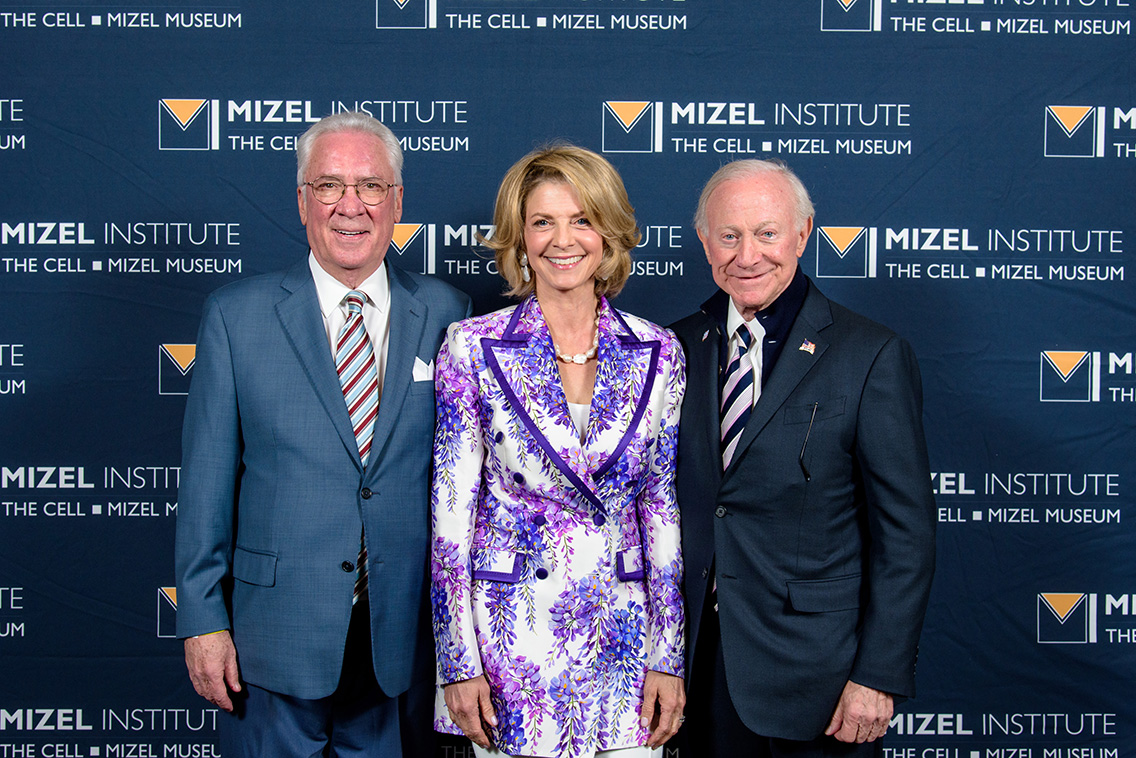
The Mizel Institute honored him with its 2022 Community Enrichment Award at an event at Empower Field at Mile High. In February 2026, he was inducted into the Colorado Business Hall of Fame. Away from his professional roles, his interests include travel, ranching and history. He and Kristin live in Denver and have four adult children.
A long career, still in motion
The firm Richardson leads continues to change. In 2025, Bow River announced investment banker Mark Hantho’s appointment as executive chairman, with a role in strategy, business development and fundraising. Richardson emphasized Hantho’s capital-markets experience and international connections. Building a regional institution evidently leaves room for people with a much wider professional map.
Bow River’s website now lists seven investment platforms and $7.3 billion in managed capital, calculated using regulatory assets as of June 30, 2026 and ownership-adjusted debt. The figure includes affiliates and managed debt; it should be read with that definition. A large number becomes more useful when its contents are visible.
In September 2026, Richardson also joined Marc Holtzman and other business leaders in a meeting with Rwanda’s president, Paul Kagame, concerning the development of capital markets. It was another international stop in a career whose home base remains Colorado.
The Isomo lesson offers a smaller, more personal measure of that career. Eighty students. Five hundred dollars apiece. A conversation about education and time. No one can calculate their future from those figures. They do show Richardson taking an idea familiar from decades in finance and putting a beginning in someone else’s hands.