Drew McKnight first fell for lacrosse as a spectator. He went to the Final Four, watched the passing and the pace, and later received a gift-wrapped stick. The backyard became a place to try the game for himself. By eighth grade, he was starting for Norfolk Academy’s varsity team. By 1996, he had been selected for the U.S. under-19 team and had committed to Virginia.
“Nobody ever gets into lacrosse for fame,” he said that spring. It was a sensible observation from a teenager already getting quite a lot of attention. College recruiters were calling. McKnight noticed a distinction among them: Virginia coach Dom Starsia had been interested before his name appeared on the national team list. He appreciated being watched before being wanted.
Three decades later, McKnight is a Dallas-based co-chief executive officer and managing partner of Fortress Investment Group. The work involves credit, real estate and complicated claims on businesses rather than a stick and a goal. His career provides an unusually concrete way into that world. It begins with a player who could score and pass, runs through the trading desks of Goldman Sachs, and arrives at a firm in which he invested alongside colleagues.
A scorer who also knew the pass
Virginia named McKnight one of its captains for 1999. The selection followed a season in which he shared the team’s offensive MVP award with Jay Jalbert. McKnight had recorded 19 goals and 24 assists in 1998. Even on the simplest score sheet, his contribution had two parts: finishing a move and helping somebody else finish one.
The Cavaliers won the 1999 national championship, beating Syracuse 12-10. McKnight scored twice. It was Virginia’s first NCAA men’s lacrosse title since 1972, and the closing minutes were anything but comfortable. Syracuse had cut the lead to a single goal before Conor Gill and Henry Oakey scored in quick succession. A championship photograph can make an afternoon look inevitable. The final quarter rarely cooperates.
In March 2000, McKnight supplied three goals and four assists in a 17-8 win over Rutgers. The following month, he earned ACC player of the week honors after producing five goals and three assists across two victories. Against North Carolina, he had a hand in six of Virginia’s first nine goals. These are the useful details behind the phrase former college athlete: a captain, an attackman, a player involved in other people’s scoring as well as his own.
The desk before the corner office
McKnight earned a bachelor’s degree in economics at Virginia. At Goldman Sachs, he worked in leveraged finance and distressed bank debt trading. At Fir Tree Partners, his responsibilities ranged across high-yield and convertible bonds, bank debt, derivatives and equities. It was an education in the different ways a business can be financed, and in what happens to those claims when the business encounters trouble.
Distressed debt asks an awkward question: what is a promise worth when circumstances have changed? A bond’s original terms can be perfectly clear while its eventual repayment becomes deeply uncertain. Buying such a claim requires attention to price, assets and competing creditors. The glamorous part, if there is one, comes after a great deal of reading.
McKnight joined Fortress in February 2005. By 2012, he was a senior member of its investment staff, with responsibility for corporate distressed loans and bonds. He had moved with his young family to San Francisco in 2011 as the credit group relocated from New York. His professional map was already being redrawn by the team he had chosen to join.
That choice had a particular person behind it. On Goldman’s distressed-debt desk, McKnight had become aware of Peter Briger’s investing ability and wanted to work for him. At Fortress, his transactions included a negotiated purchase of $205 million in Harbinger Group preferred shares. The figure described a deal, not a personal fortune. It also placed him well beyond the comfortable abstraction of discussing markets: somebody had to negotiate the actual investment.
Buying into the place you work
In May 2023, Fortress announced a planned acquisition by its management and Mubadala, with McKnight and Joshua Pack designated to become co-CEOs. The transaction completed in May 2024. McKnight, Pack, Jack Neumark and Briger were the largest individual investors in the buyout, joined by approximately 150 members of the firm.
The resulting ownership arrangement gave management a 32 percent equity interest and the right to appoint a majority of the board. A Mubadala Capital-led consortium owned 68 percent. Those percentages describe different kinds of power: economic ownership on one side, board appointment rights on the other. A minority stake could still carry a consequential role in governing the company.
For McKnight, the move added personal investment to executive responsibility. For the firm, it brought an external capital partner together with a substantial group of internal owners. The announcement preserved Fortress’s independence over investment decisions, personnel and operations. Corporate ownership diagrams are often treated as the dull pages at the back. This one belongs near the front of his story.
Dallas becomes part of the investment case
In July 2024, McKnight and Pack made a public argument for Dallas as a financial center. Fortress had established its first Dallas-Fort Worth office 22 years earlier. By the time of their essay, the region housed more than 130 full-time Fortress professionals, and Dallas and New York served as co-headquarters. The new Dallas office was in Weir’s Plaza on Knox Street.
Their argument connected careers, business conditions and the proposed Texas Stock Exchange, in which Fortress was a founding investor. A city could attract people who wanted to build their professional lives there; an exchange could add another piece of financial infrastructure. McKnight’s place of work had become something he was prepared to advocate for publicly.
The local commitment also showed up in transactions. That same month, Fortress announced it was anchoring an equity investment of more than $225 million in First Foundation. McKnight pointed to the banking franchise’s positions in Texas, California and Florida and said the investment followed months of due diligence. His enthusiasm for Texas was accompanied by the less photogenic business of examining a bank.
In April 2025, he appeared with MP Materials chief executive Jim Litinsky at a live discussion in Old Parkland’s Debate Chamber in Dallas. The conversation addressed North Texas growth, the exchange and leadership. It was a fitting setting for the subject: a debate chamber, rather than a victory lap, for a city’s ambitions.
Where the banks leave room
McKnight’s public discussions of private credit become more interesting when he gets specific. In January 2025, he described a competitive market for financing private-equity-sponsored deals, constrained by limited merger and acquisition activity. Fortress had been cautious in that area. His attention was turning toward asset-based finance and forward-flow arrangements, where banks’ retreat from financing had created openings.
The language can sound forbidding. Asset-based finance begins with identifiable assets and the cash they can generate. A forward-flow arrangement generally provides for buying newly generated assets over time, rather than taking a single portfolio in one transaction. Both require judgments about the underlying assets and the terms of the financing. A fashionable name does little of that work.
On CNBC in June 2025, McKnight described private credit as “a $6 trillion opportunity set.” That was his estimate of the market opportunity, rather than the amount Fortress managed or a promise of returns. His case centered on capital moving from small and regional banks to private lenders. The scale was large; the explanation was rooted in a change in who could supply financing.
Fortress’s investments also demonstrate how lending and ownership can meet. In August 2024, a vehicle backed by Fortress-affiliated funds, TCW Private Credit and Blue Torch was seeking approval to acquire Red Lobster from bankruptcy. Damola Adamolekun was appointed to lead that vehicle and was set to lead the reorganized restaurant company after approval. The transaction needed an operating executive as well as money. A balance sheet cannot greet a diner.
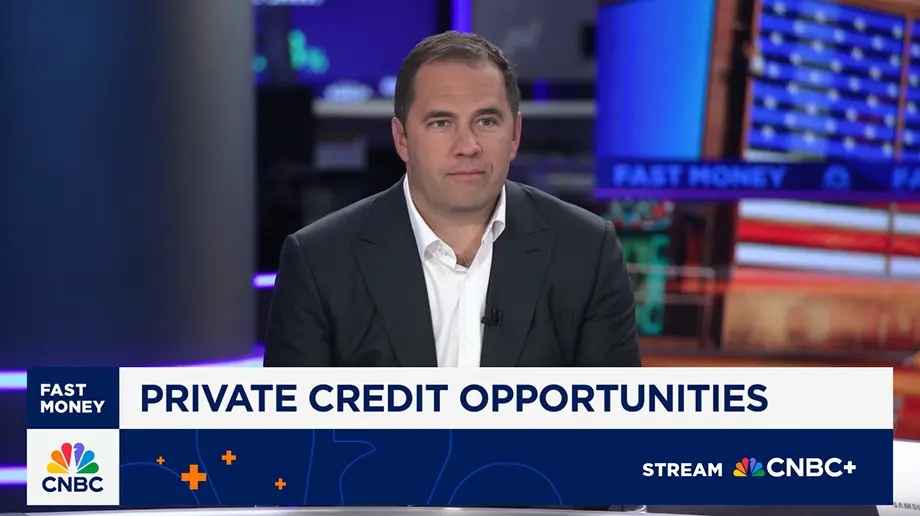
“A $6 trillion opportunity set.”Drew McKnight on private credit, June 2025
A second working life for a Boeing 777
The aviation business supplies a more physical example. Fortress backed Mammoth Freighters, which develops passenger-to-cargo conversions for Boeing 777 aircraft. The proposition involves giving an existing aircraft a different commercial job. Seats give way to freight capacity; engineering and certification stand between an investment thesis and a plane that can enter service.
On April 8, 2026, Mammoth announced FAA certification for its 777-200LRMF. McKnight’s response emphasized the years spent building the company and the capital invested alongside engineering work. The conversion incorporates a cargo door, reinforced floor and cargo handling system. The business depends on the things that a spreadsheet has to wait for: design, production and regulatory approval.
On August 21, Mammoth announced delivery of its first converted 777-200LRMF to Jetran, following the aircraft’s Farnborough Airshow debut. It was the first of more than two dozen ordered by Jetran, with 13 intended for the DHL network. Certification had become a delivery. An aircraft with another working life is a particularly legible illustration of the kinds of opportunities McKnight’s firm pursues.
His ambitions extend to the institution itself. In 2024, Fortress outlined a goal of reaching $100 billion in managed assets within five years, with private wealth and insurance among its avenues for growth. McKnight argued that scale mattered as investors sought fewer manager relationships. Fortress reported $55 billion in managed assets as of June 30, 2026. The target remains a target; the dated figure provides a marker along the way.
There is a temptation to turn a former athlete’s business career into a tidy coaching speech. McKnight’s record is more useful in its particulars: the recruiter who watched early, the investing colleague he wanted to follow, the employees who bought into their firm, the aircraft rebuilt for another purpose. The connection is an editorial reading of those choices. Again and again, the interesting question is what can be done with what is already there. In Dallas, that question now occupies a much larger field.