Haresh Patel lost his solar sales job in 2008, during the financial crisis. He had spent decades in semiconductors and wanted to try energy. The new job lasted less than six months. In a 2020 interview, he described that firing as the accident behind Mercatus. The first version of the company helped solar developers find investors. It was an investment bank, paid when a deal succeeded, and its clients did not always pay when they owed him. For a young business with payroll due, the failure was intimate: a completed deal could still leave an empty bank account.
- Mercatus moved from solar dealmaking into software after seeing how badly investment data traveled between teams.
- Its current platform connects deal, asset, valuation and reporting workflows for institutional private markets.
- State Street announced its acquisition in 2021; the product now sits inside Charles River and State Street Alpha.
- Charles River reports more than $2.2 trillion in private assets and 25,000 private investments on the platform.
The firm’s next problem was equally mundane. A solar investment is a long argument among developers, financiers, engineers and operators, with documents and models changing hands throughout. Every handoff creates another version of the truth. Patel began building software to keep the information together. A company founded to make transactions found a larger business in keeping track of them.
A useful accident
Mercatus began as a US solar investment platform. The first software reflected that world: projects, counterparties, milestones and the financial assumptions that make an asset investable. Then a large renewable energy customer wanted the platform extended across eight asset classes and 35 countries. Patel said he promised a four-month delivery, only to learn from his engineering chief that the work looked closer to two years. The team changed the architecture, using external components, and moved nearly half the company to rented places in Rome for six weeks of requirements work. Patel says they delivered ahead of schedule.
That tale has the tidy finish founders like. The less tidy lesson is better: a customer had spotted something the company had not yet fully sold. The durable product was a flexible data and workflow system for assets that resist standardization. Solar farms supplied the first test; private equity, infrastructure, real estate and private debt gave the idea a much wider market. Mercatus had to make a record that could bend with each asset without dissolving into a new spreadsheet for every asset.

“Becoming a software company - with no software experience or legacy - was also an accident.”Haresh Patel, in a 2020 interview
The expensive part of asking “what if?”
Consider an infrastructure fund with fifty assets. A limited partner wants to know what lower power prices would do to its returns. The answer is scattered across individual operating reports, forecasts and valuation models. Somebody must update each model, collect the outputs and check that the assumptions match. Charles River published an illustrative comparison in 2022: a manual exercise could absorb roughly ten people and three weeks. With assets onboarded to a common platform and their models connected, the same kind of scenario could be run by one person in one to two hours. These were example estimates, not a customer guarantee, but they explain the sale more clearly than a list of features.
Mercatus chose an interesting compromise. Its ModelSync technology connects to bespoke Excel valuation models instead of pretending every firm will discard them. Analysts can preserve the formulas they trust while the platform manages inputs, scenarios, outputs and audit trails across many assets. Deal management carries a prospective investment through underwriting and approval. Portfolio monitoring tracks transactions, exposures, performance and exceptions. Asset management brings in operational measures; data services ingest and validate records from other systems. Investor reporting then has a cleaner route from underlying asset to fund-level answer.
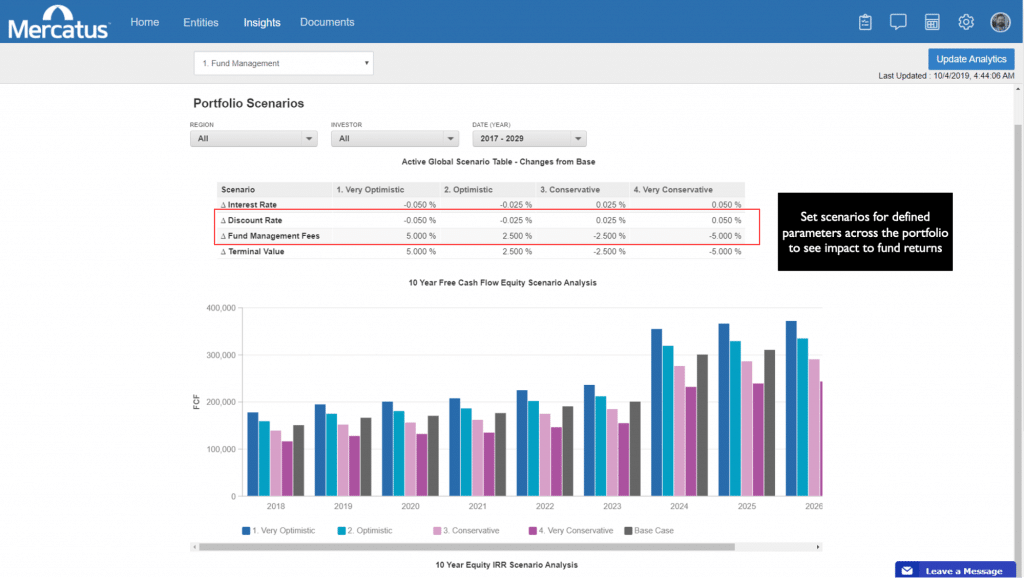
The customers are institutions, not retail investors: fund managers, investment teams and asset owners that hold private credit, equity, real estate, infrastructure or funds. The buying argument is operational. One more fund should not require a proportional increase in analysts simply to reconstruct what the firm owns. Nor should a request from an investor set off a scavenger hunt through email, accounting systems and spreadsheet folders. Where the data is already clean and a portfolio is small, the gain may be modest. Where valuations are bespoke and holdings cross jurisdictions, the plumbing starts to matter.
The buyer was buying a missing half
State Street announced an agreement to acquire Mercatus in July 2021. The purchase price was not disclosed. At the time, Mercatus said its global client base represented more than $1 trillion of invested capital. Charles River had been strong in public-market investment workflows; Mercatus brought private-asset data and front-office work. The planned State Street Alpha for Private Markets combined those capabilities with State Street’s services. That is the strategic distinction from an isolated deal CRM or a collection of reporting tools: the pitch is a portfolio view that can cross public and private holdings.
The path had been funded in stages. A reported $3.7 million Series A in 2014 helped the energy software business develop. A Series B reached $16.8 million after a $5.1 million extension led by TPG Alternative & Renewable Technologies Research in 2017. The money went toward asset management software, the product roadmap and international expansion. It was capital for a company that had already learned the cost of waiting for success fees.
Today’s Charles River product page reports more than $2.2 trillion in private assets, over 25,000 private investments and more than 2,100 active users managing private assets. Those figures belong to the current Charles River platform, not a free-standing Mercatus startup. The company’s rebranded LinkedIn page is blunt about why the name changed: prospective clients increasingly want a view across public and private portfolios. A legacy name that meant little to a new buyer made that conversation harder.
Where the edge really sits
The rival most often in the room is still the internal patchwork: Excel models, email approvals, a CRM for deals, accounting exports and a reporting process held together by patient employees. Enterprise alternatives include BlackRock eFront, Allvue and Dynamo, each with its own strengths. Charles River’s claim is most persuasive for institutions that already need public and private investment information in one operating picture, or that want State Street’s data and service stack around it. Its weakness follows from the same scale. A platform cannot create accurate asset data out of thin air; onboarding, mapping and governance are real work, and public list pricing is unavailable. Clients are directed to request a demo.
The practical lesson is smaller than buying the whole system. Start with the question investors repeatedly ask, trace the inputs back to their owners, and define one authoritative record for each value. Keep the bespoke model if it is useful; connect it to a controlled process. Mercatus learned this while selling solar projects, where the payoff depended on knowing which version of a project was real. The spreadsheet did not disappear. It acquired colleagues, a memory and a place in the portfolio.