A lawsuit is a peculiar thing to put in a portfolio. It has characters, a grievance, a contested version of events and an ending that nobody can promise. Jack Neumark’s career at Fortress Investment Group has involved giving that uncertainty a financial structure. The question is less cinematic than the subject: how do you invest when a persuasive story can still produce an unwelcome result?
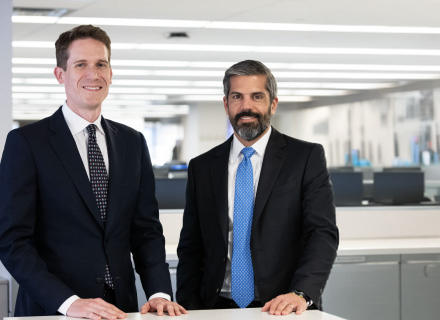
By October 2026, Neumark is Fortress’s co-chief executive officer alongside Drew McKnight. He also co-heads Asset-Based Finance. The responsibilities are broad, but an earlier chapter offers a useful way into the person behind the title. He practiced law before becoming an investor. Bankruptcy, restructuring and litigation were part of his working vocabulary long before legal assets became a business he helped build.
That sequence matters. It puts the awkward questions near the beginning of the story. Who has a claim? What can be recovered? Which rights survive when a company’s plans unravel? Finance supplies the numbers; law helps determine what those numbers mean when everyone starts disagreeing.
A history degree, then the fine print
Neumark studied European History at Vanderbilt University, graduating with summa cum laude and Phi Beta Kappa honors. He then earned a law degree at UCLA. History is an appealing detail in a financial biography, though it supplies no license to invent a childhood destiny. The documented route runs through universities, legal practice and investment work.
His law-firm experience included Simpson Thacher & Bartlett’s corporate group and Wachtell, Lipton, Rosen & Katz’s restructuring and finance group. He later became a senior vice president at Plainfield Asset Management in Greenwich, Connecticut. There, his focus included bankruptcy, restructuring and litigation situations within the portfolio.
Consider the difference between reading a company’s ambitions and working through its obligations. Ambitions can be described in a presentation. Obligations tend to arrive with signatures. Neumark’s early experience placed him around the latter: the contractual and legal arrangements that become especially consequential when a business is under pressure.
He joined Fortress in May 2010. He started its Legal Assets business in 2013. The development was gradual, with earlier investment activity and incubation inside the credit business. A launch date is useful for a timeline; a working method usually takes longer to acquire.
Putting a price on the argument
In a May 2024 discussion, Neumark described legal-assets investing as a development of work Fortress was already doing. Legal risk appeared inside distressed-credit opportunities. Over time, understanding that risk became a reason to invest in its own right. What had been one part of an investment assessment became the center of a dedicated strategy.
The team’s preference was for exposure spread across portfolios of legal claims, including corporate litigation books and law firms’ contingent-fee receivables. Neumark explained that such arrangements could trade some extraordinary upside for protections across a diversified pool. The point was to construct investments that did not depend entirely on one dispute ending well.
It is a revealing choice of emphasis. A courtroom story invites attention to the verdict. A credit investor also wants to inspect the arrangement surrounding it. One has a dramatic final scene. The other has several schedules attached.
The work grew beyond its initial team. In October 2021, Fortress announced that Vannin Capital’s operations would be integrated into the Legal Assets business, following its funds’ acquisition of Vannin in 2019. A number of employees would transfer to Fortress. Existing investments would retain Vannin as their contractual counterparty.
Neumark described the combination as a way to broaden sourcing capabilities and bring the employees’ expertise and relationships into an integrated team. It was a practical expansion: people who knew the market, counterparties they knew, and a larger organization in which to put that experience to work.
The claim is only the beginning
Legal assets require judgments about both the dispute and the people expected to pay. In his conversation with lawyer John Quinn, published in March 2025, Neumark discussed a process combining legal analysis with financial underwriting. The relevant questions included the strength of claims, the defendants’ creditworthiness, the damage theories and the progress of the proceedings.
Quinn’s episode described more than $6.5 billion deployed in legal assets and a current portfolio of approximately $3 billion. Those are dated figures for the strategy, rather than a measure of Neumark’s personal wealth or today’s entire Fortress business. They show that the experiment had become a substantial investing operation.
Cumulative capital deployed in the strategy, as described in the episode with John Quinn.
The careful distinction between a claim and a collectible outcome is central to understanding this chapter. A strong argument, a solvent counterparty and a workable financing arrangement are separate questions. Treating them as separate questions makes the account of his career more interesting than a list of transactions would be.
The business also sits inside a contested industry. Litigation finance has drawn criticism from opponents who argue that outside funding can encourage lawsuits. Disclosure is another recurring point of contention. Investors bring capital into a dispute, and the presence of that capital raises questions about who benefits and how the arrangement should be understood.
Neumark has been plain about monitoring counterparties. In a 2024 interview, he said: “We see where funds go.” It is a short sentence with very little room for decorative interpretation. Money has an intended use. Someone is expected to keep track.
“We see where funds go.”
Jack Neumark, 2024
From a specialist business to the whole firm
Fortress announced Neumark’s appointment as a managing partner in May 2023, alongside the proposed acquisition of the firm by Fortress management and Mubadala. His responsibilities included continuing to lead Legal Assets and co-head Specialty Finance. By then, he had also launched Insurance Solutions, in 2021.
These milestones widen the picture. The lawyer who worked on difficult situations became a builder of investment businesses, then a partner with responsibility across them. In September 2025, Fortress announced that he would step into the co-CEO role alongside McKnight.
Running the firm means dealing with the capital that comes in as well as the investments that go out. In a December 2024 joint statement with McKnight and Josh Pack, Neumark supported broader product offerings, greater geographic diversification and growth in private wealth and insurance solutions. The leaders also described diversifying the cost, duration and type of capital raised.
That is the other half of the financing problem. An investment’s characteristics have to fit the money supporting it. A business that finances complicated assets needs to think carefully about the commitments made to its own investors. The logic runs in both directions.
In March 2026, Fortress appointed Elizabeth Burton as chief strategist, reporting to Neumark and McKnight. Her remit included research, analysis and investor communication across the franchise. The appointment gave the co-CEOs another way to connect investment work with the explanations investors need.
The AI enthusiasm test
Neumark’s recent public appearances put the same financing questions into a different setting. In September 2026, he warned lenders against rushing into AI infrastructure deals out of fear of missing out. The technological theme might be compelling. The terms of a particular loan still needed their own examination.
His concern was the asymmetry. A lender receives a largely fixed return while remaining exposed to declining asset values. An equity investor can participate in the upside. Neumark urged attention to shorter duration, residual asset value and exit options.
There is something almost comically sober about bringing a repayment schedule to an AI conversation. Yet it is the relevant document for a lender. A successful technology does not automatically make every financing of that technology a sensible investment.
Elsewhere, in a Bloomberg Television conversation from SuperReturn, he described opportunities in real estate credit while expressing concern about parts of the software-lending market. He discussed lending against property with a cushion, and the effect that higher rates, inflation and consumer pressure could have on borrowers.
These are investment views, expressed in a particular market environment. They are useful here because they show the questions he is asking. Different assets bring different risks. The label “private credit” covers considerable variation in collateral, contractual arrangements and what can be recovered.
How quickly does bad news travel?
In the inaugural episode of iCapital’s The Bridge, published in May 2026, Neumark joined Sonali Basak to discuss private credit, underwriting and downside protection. His comments appeared again in a September compilation examining the differences between credit strategies. The public conversation had widened well beyond legal assets.
A recent ALTSSF appearance offered a particularly useful leadership observation. “You can make mistakes in credit,” Neumark said. What mattered, in his account, was building a culture where problems reached leadership quickly. Over time, that could help improve recoveries.
“You can make mistakes in credit.”
Jack Neumark, ALTSSF 2026
It is a modest sentence for someone running an investment firm, and an instructive one. Mistakes are included in the operating picture. The response to them becomes part of the work, alongside selecting an asset and deciding what to pay for it.
That gives his career a coherent ending for now. Neumark has moved from examining legal and restructuring problems to building investment businesses and sharing responsibility for Fortress. The scale of the job has changed. The question underneath it remains recognizable: when events depart from the preferred script, what can you still do?
Continue the conversation
- Jack Neumark at Fortress
- Jack Neumark on LinkedIn
- The legal-assets conversation with his team
- Listen: Law, disrupted with John Quinn
- Watch: The Bridge with Sonali Basak on YouTube
- Watch: Bloomberg Television from SuperReturn
- Watch: the ALTSSF Sidelines conversation
- Read: the September 2026 AI lending discussion
- Fortress appoints Elizabeth Burton as chief strategist