Kane Brenan had a sensible plan for his new job. Spend the first week getting to know the people at TIFF. Then spend a month visiting its nonprofit clients around the country. After more than twenty years at Goldman Sachs, he would arrive with plenty of experience. He intended to start by listening.
There is something appealing about a senior investment executive treating the opening weeks of a job as an education. Finance supplies an ample wardrobe of certainty. Brenan proposed wearing something less imposing. “You can go and listen and learn,” he said of those early client conversations. The important part of the plan was the attention he wanted to give the organizations whose money TIFF managed.
By then, he had already made another choice. He left Goldman Sachs in the fall of 2019 to return to the Philadelphia area, where his family lived. TIFF was conducting a search for a president. A personal return and an institutional succession plan met in Pennsylvania. Brenan joined as president on April 13, 2020, and became chief executive that July.
A return with a purpose
TIFF gave Brenan familiar work in a different setting. He had worked with large endowments and pensions at Goldman. His new employer had been established to make institutional investment resources available to nonprofits that could not assemble those resources themselves. Its clients had investment objectives, certainly. They also had organizational purposes that gave the numbers a destination.
That origin reaches back to 1991, when a foundation collaborative headed by the MacArthur and Rockefeller foundations created The Investment Fund for Foundations. Smaller foundations could pool endowment money and gain access to techniques used by larger institutions. The cooperative idea addressed a practical inequality: having a worthy mission did not automatically give an organization a substantial investment staff.
Brenan inherited that project rather than inventing it. The distinction matters to his story. Taking over an established institution means working with accumulated relationships, expectations and habits. Some deserve protection. Others need revision. The CEO has to decide which is which, preferably before the revision committee has commissioned a tasteful new slogan.
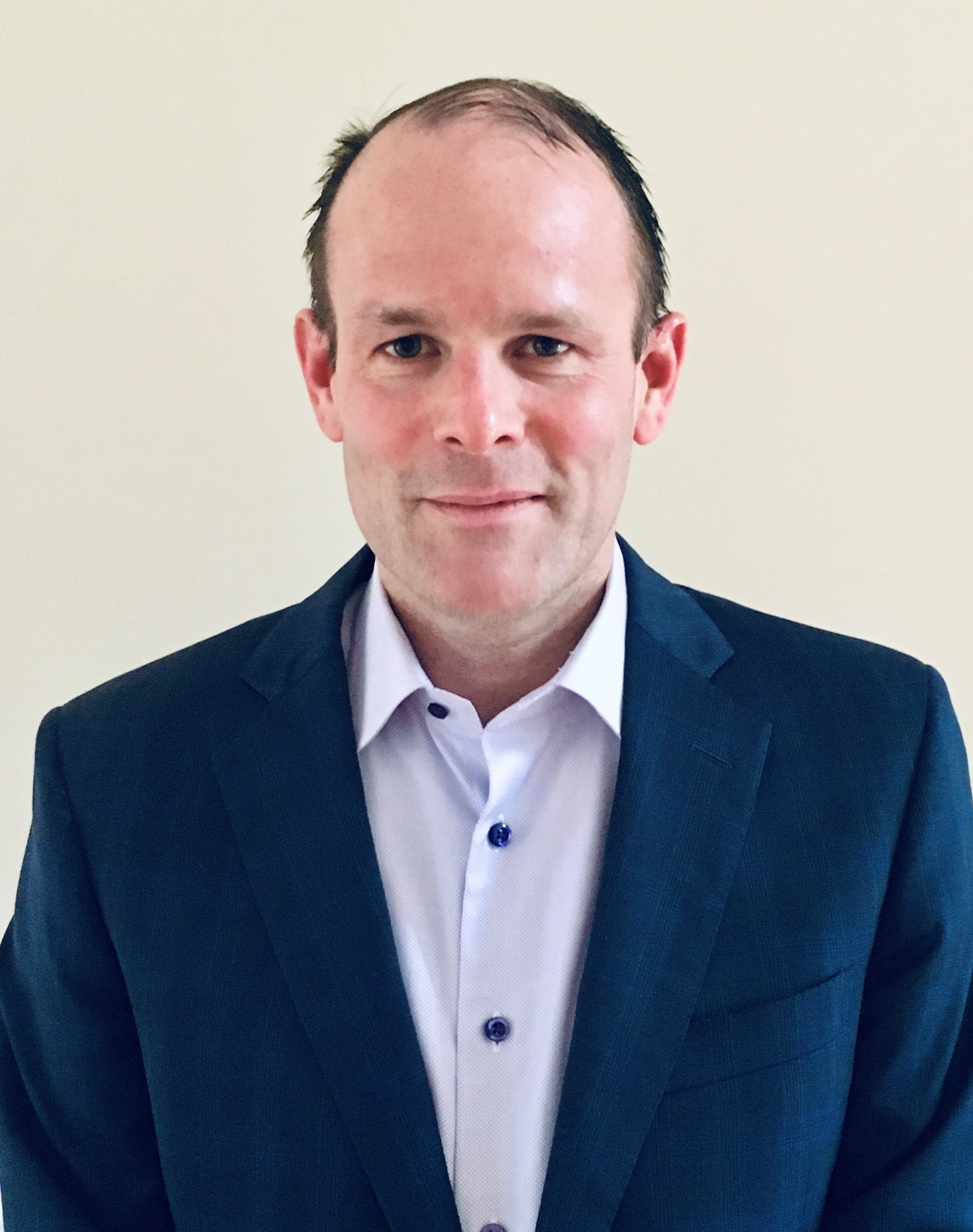
Learning the machinery of capital
His route into investing began in corporate law. Before Goldman Sachs, Brenan worked on mergers and acquisitions at Cravath, Swaine & Moore. His education included a BA from Boston College and a combined JD/MBA from Georgetown. Law and business thus appear together in his preparation, well before they meet again in the structure of the company he would eventually lead.
At Goldman, he helped manage the secondary private equity investment platform as a managing director. Later, as a partner, he became global head and co-chief investment officer of Global Portfolio Solutions. The role involved working with major institutional clients in an outsourced chief investment officer capacity. The abbreviation, OCIO, is mercifully shorter than the responsibility it describes.
His career connects two different kinds of work with other people’s capital: the transactions through which investments change hands, and the continuing decisions through which institutions build portfolios. Moving to TIFF kept that institutional thread intact. It also placed him in a business where explaining an investment decision to a nonprofit committee is part of carrying it out.
The committee’s clock
For Brenan, the phrase “long term” has a behavioral complication. In March 2023, he described how difficult it becomes for clients to keep their attention on distant objectives when immediate events demand a response. His team was coaching endowments and foundations through market turbulence while pursuing an active approach that considered trends extending several years ahead.
“It’s just harder. Everyone does this wrong,” he said. That is a remarkably unceremonious sentence from someone whose profession often prefers the padded language of confidence. It includes the people doing the advising in a general human difficulty. A long horizon can be written into a policy. Keeping it in view during an uncomfortable meeting takes more work.
There had already been periods when active management helped TIFF. In December 2020, Brenan discussed a year in which its Comprehensive Endowment Strategy Composite had outperformed its benchmark through the end of November. He was defending a particular experience in particular portfolios. The time period matters; an encouraging result belongs to the period measured.
His later letters also acknowledge less comfortable comparisons. Reviewing 2024, he noted that private markets and active equity managers without concentrated exposure to the largest technology names had weighed on performance. He continued to argue for judging private equity over longer periods. The CEO’s correspondence contains both satisfaction and friction, which makes it more useful than an uninterrupted parade of agreeable numbers.
The conversation with clients was changing too. His 2023 year-end review described committees asking for more than a performance report. They wanted the rationale for decisions, a view of how the team interpreted market events, and a clearer account of what had driven results. TIFF responded with additional analytics and greater visibility into new portfolio investments.
Those requests are revealing. Delegating investment work does not remove an institution’s need to understand it. A committee still has to connect a portfolio to its own obligations. Brenan’s account places explanation alongside implementation. The people responsible for the nonprofit need enough understanding to remain responsible for it after they have hired investment help.
“You can go and listen and learn.”Kane Brenan, on meeting TIFF clients in 2020
A company employees can own
In September 2023, TIFF changed its legal structure. It converted from a non-stock corporation into an employee-owned public benefit limited liability company. The change gave employees an opportunity to invest in equity in the firm, with the stated aim of improving its ability to recruit, retain and motivate people. Purpose, in this arrangement, had to share the room with compensation.
Brenan linked employee participation to clients’ long investment horizons. The reorganization also established mechanisms for charitable giving, educational opportunities and fee breaks for active clients. These details make the change more concrete than the phrase “mission aligned” can do on its own. They describe where some of the benefits were intended to go.
Governance changed with ownership. The existing board, drawn from institutional investment leaders, transitioned to an advisory role focused on investment strategy and nonprofit practices. Senior TIFF leaders formed the governing board. Brenan’s task included preserving access to outside investment experience while making management responsible within the new structure.
Three commitments in one structure
Opportunity to invest in the firm’s equity.
Mechanisms for fee breaks and education.
A mechanism for improved charitable giving.
Lunch, questions and the people in the room
A different view of Brenan appears in a 2023 internship account. The student described TIFF as having a flat structure and recalled lunch with the CEO on the first day. Interns were encouraged to speak with other teams and had mentors and summer projects. The meal is a small detail, but it gives the executive a place in an ordinary working day.
One lunch cannot carry an entire theory of leadership. It can establish that newcomers had an opportunity to meet the person running the firm. In a business built partly around relationships, that is an instructive beginning. There are less daunting ways to enter institutional investing than trying to decode the hierarchy along with the acronyms.
Brenan’s public conversations also extend beyond market forecasts. In a November 2023 discussion with Rosemont’s Chas Burkhart, his leadership role was considered across strategy, team development, mentoring, client engagement and investment activity. The range helps explain why a CEO profile needs more than an account of investment returns. Much of the job concerns the conditions in which other people do their work.
His nonprofit involvement continues outside TIFF. Holy Child School at Rosemont lists him as vice chair of its board of trustees. In January 2026, Artisan Partners appointed him to its board and compensation committee. The latter adds a public-company governance responsibility to a career already spanning legal work, investment management and nonprofit stewardship.
Read the terms before the promise
By June 2026, Brenan and TIFF colleague Anne Duggan were addressing a particularly awkward investment promise: private credit offered with periodic liquidity. Their essay examined the mismatch between investors’ withdrawal expectations and loans that can be difficult to sell. A convenient redemption schedule does not by itself change the nature of the assets underneath it.
They argued that withdrawal limits can protect remaining investors from forced asset sales, and that private credit needs scrutiny at the level of the loan, the manager and the vehicle. They also distinguished its capped contractual upside from equity ownership. The emphasis falls on understanding the bargain before deciding how it fits a portfolio.
This is a fitting subject for an executive whose earlier experience includes both legal transactions and private equity secondaries. Across those roles, the terms governing capital matter alongside the opportunity to invest it. A promise becomes more intelligible when someone asks how it works under pressure.
TIFF’s 35th anniversary arrived in 2026. In his January letter, Brenan described continued portfolio customization and the use of AI for tasks such as summaries, initial investment memos and analysis, intended to free more time for judgment. Modernization sits beside a much older institutional purpose: helping clients of different sizes access investment resources.
The planned client visits at the start of his TIFF career offer a useful closing image. Brenan wanted to hear from the people responsible for the organizations behind the portfolios. Six years later, his public work still returns to that relationship: the terms of an investment, the questions of a committee, and the purposes of the people whose capital has been entrusted to him.
Read, watch & listen
- Kane Brenan at TIFF ↗
- LinkedIn ↗
- TIFF’s history ↗
- 2020 appointment ↗
- 2020 client-listening interview ↗
- 2023 employee-ownership announcement ↗
- The intern’s first-day lunch ↗
- Global Investment Leaders conversation ↗
- 2023/2024 CEO letter ↗
- 2024/2025 CEO letter ↗
- 2025/2026 CEO letter ↗
- Private-credit essay with Anne Duggan ↗
- Artisan Partners board appointment ↗
- Brenan on maintaining a long horizon ↗
- TIFF’s 2020 active-management results ↗
- Educational Alpha with Bill Kelly and Anne Duggan ↗
- Watch: Dakota Live! ↗
- Holy Child’s strategic plan ↗