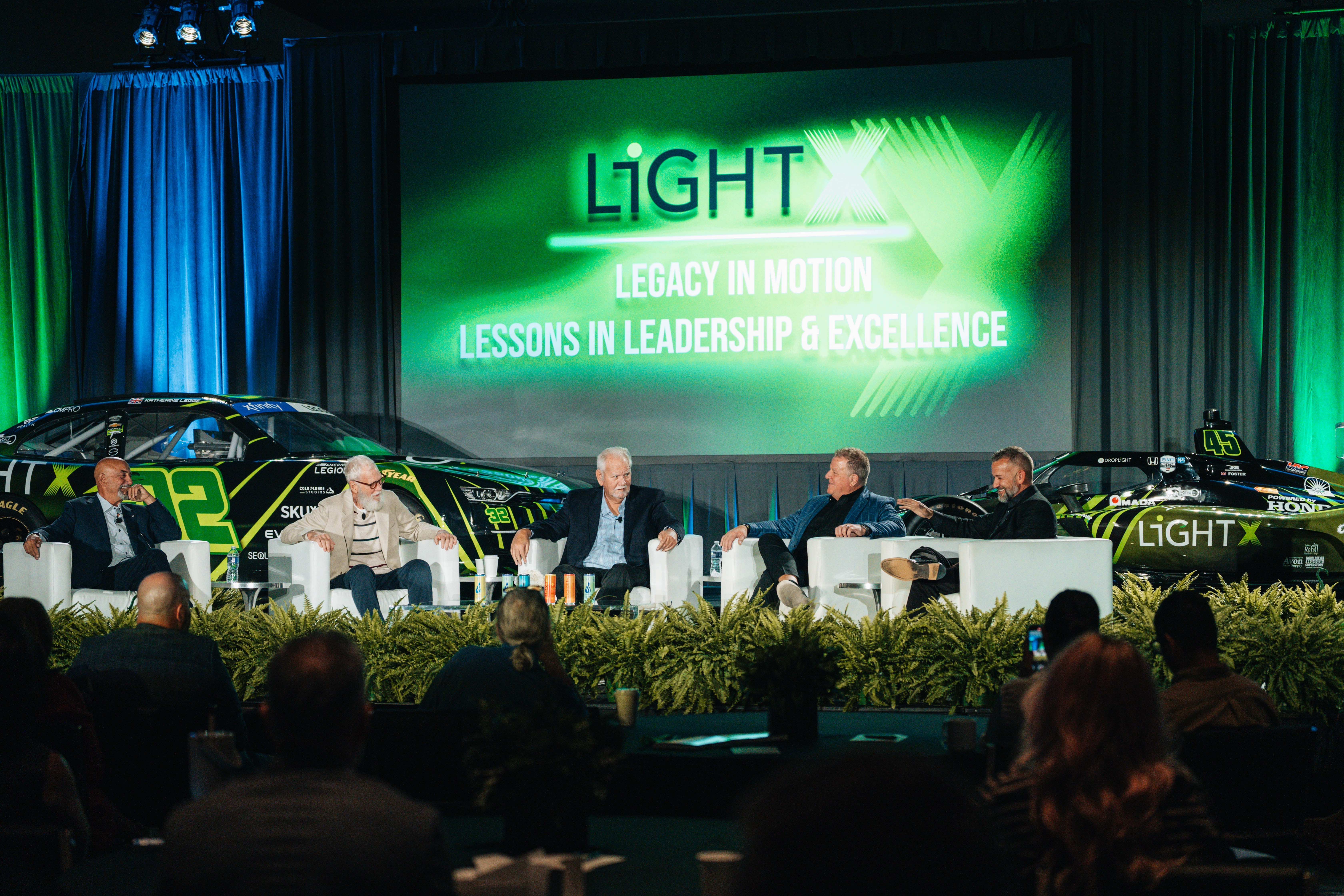
David Letterman had an idea for a bar of soap that bounced. In most rooms, this would have been the end of the matter: a laugh, perhaps a second laugh, then somebody advancing the presentation. At LightX, Joseph Anderson’s team at Droplight made the soap. Anderson presented it to Letterman onstage. The joke had acquired a production department.
There are grander ways to introduce a chief executive. This one has the advantage of being memorable. Anderson is the co-founder and CEO of Droplight, a business that puts operations, creative work and commercial partnerships in the same conversation. A bouncing bar of soap is a small, ridiculous example of the distance between having an idea and returning with something people can hold.
The episode also offers a way to read his career. Before the sports partnerships and the stage photographs, Anderson worked on how companies organize themselves. His professional history runs through industrial processes, training and the awkward spaces between departments. Droplight gives that history a more public setting. The underlying question remains practical: once something promising happens, who knows what to do next?
Before the paddock, the process
Anderson joined the Institute for Process Excellence, known as IpX, in 2016 as vice president of services. By the time he became its president in February 2019, he had helped build the True North Enterprise Calibration model. His experience already extended across automotive, aerospace, marine and defense businesses. These are settings where coordination has consequences far beyond an untidy meeting agenda.
The language surrounding that work is technical, but the problem is recognizable. Different parts of an organization can hold different versions of what is happening. Each team makes a reasonable decision from its own position. Trouble arrives when those decisions meet. Anderson’s work concerned the relationships among people, processes, systems and information, and the effort required to make them function together.
At Purdue’s fall 2018 product lifecycle management meeting, he addressed siloed organizations and new incentives. The session considered how established organizational structures and configurable software could complicate business change. Its premise resisted an easy habit: blaming the technology before examining the arrangements around it. A company can purchase a sophisticated tool while keeping all its old disagreements.
That same year, IpX and Purdue announced a partnership in professional education, covering configuration management, product lifecycle management and model-based definition. Anderson represented IpX as its vice president of services. The arrangement brought industrial experience and university teaching into a shared offering. It also placed education inside the operating problem: people need to understand the work they are being asked to change.
In 2019, an IpX partnership with Aras linked training and advisory work with a product lifecycle software platform. Anderson’s stated position was that workforce development had to accompany changes to legacy processes and systems. The idea is straightforward enough to sound obvious. Putting it into practice asks more of a business than signing a software contract.
By 2023, IpX had also announced an alliance with Methods of 100 Coaches and 100 Coaches Agency. The proposed combination connected leadership coaching with workforce development, process improvement and digital systems. Across these arrangements, Anderson kept returning to the people who would have to make a new approach work. An organization’s ambitions eventually become somebody’s Tuesday afternoon.
A company with more than one kind of room
Droplight, which Anderson co-founded with Phil Williams, places that operating background beside creative and commercial work. Its offer spans strategy, operations, brand development and routes to market. The public presentation moves easily from founders and business infrastructure to racing, media and live events. The connection becomes clearer when each is considered as a different part of getting a company ready to meet an opportunity.
A product can attract interest before its maker is ready for demand. A company can have a capable team and still struggle to reach customers. Putting those problems near one another is a reasonable business proposition. Whether it works depends on the details of each engagement, but it explains why Anderson’s past in process work belongs in a story filled with racing photographs.
In a public video about scaling, he talks about foundations, the right team and the difficulty of reproducing a product or service consistently. His horizon extends beyond the next burst of attention. He asks founders to choose between a passing fad and a company with a century ahead of it. The horizon is an aspiration. The preparation he describes is immediate.
“Do you want to be a fad or do you want to be a brand that lasts 100 years?”
Joseph Anderson, on building for scale
That gives the LightX soap episode some useful company. Making an unusual object once can produce a good moment. Building an organization that delivers repeatedly is a larger undertaking. Anderson’s public comments suggest he is interested in both the invitation to imagine something and the less entertaining question of how it will be done again.
An introduction needs somewhere to go
Racing made those connections visible. In 2025, Droplight backed Katherine Legge’s NASCAR Cup debut at Phoenix with Live Fast Motorsports. Anderson’s announcement emphasized her resilience and skill. The choice placed the company alongside a driver taking on a new competitive setting, with all the preparation and uncertainty that entails.
Droplight’s relationship with Rahal Letterman Lanigan Racing began at the 2025 Indianapolis 500 through Louis Foster’s No. 45 entry and Desnuda Tequila. An expanded commitment followed in June, then a multiyear extension in October. Foster finished that season as Rookie of the Year. His award belongs to the driver; the sponsorship gave Droplight a continuing platform around which to organize brand activity.
Anderson’s own account of a later Month of May gathering is revealing. He described Droplight and IpX bringing together more than 300 people, including entrepreneurs, investors, athletes, small business owners and veterans. His attention went to the conversations and introductions around the race. The sporting event supplied a reason to gather people who might otherwise occupy separate calendars.
People brought together during the Month of May, in Anderson’s account of Droplight and IpX’s Indianapolis 500 activity.
A SELF-REPORTED GATHERING, NOT A REVENUE FIGUREA gathering can start a relationship. It cannot complete one. That is the useful tension in Anderson’s approach: an event offers access, while an operating team must turn access into work. The distinction matters when a company’s public life contains so many photographs, panels and announcements. Hospitality has a closing time. A business relationship needs a next appointment.
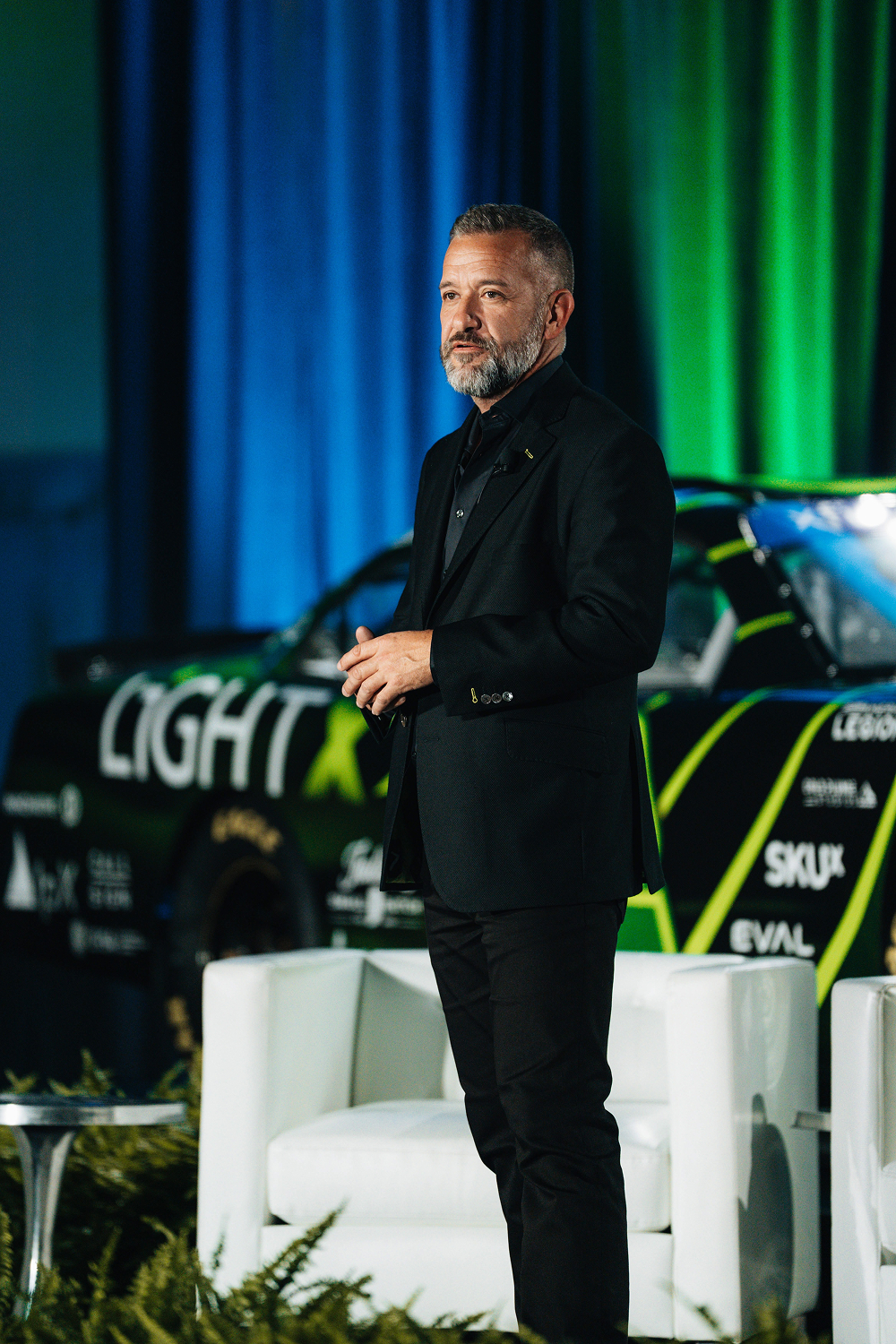
At LightX, Anderson moderated a discussion with Bobby Rahal, David Letterman, Mike Lanigan and Jay Frye about leadership and enduring organizations. Another panel connected sporting and business experience. These sessions made him a convener as well as an executive. His role was to bring different professional histories into a conversation about decisions, teams and what survives a leader’s immediate presence.
The Indiana connections multiply
There is a local foundation beneath the expanding network. In the announcement of Droplight’s August 2025 Indy Eleven partnership, Anderson and Williams described themselves as Hoosiers and connected their support to being from Indiana. The statement gives a specific geographical attachment to work that reaches across industries. Soccer joined the company’s sporting relationships without requiring a racetrack.
Later in 2025, Grand Park’s naming partnership brought Droplight to a sports campus in Westfield. Anderson described the undertaking in terms of scale and stewardship. A campus creates a different kind of responsibility from a single event: repeated visits, multiple uses and a place that already matters to its community. The language of operations has an obvious home there.
The January 2026 Butler Athletics agreement, arranged with Playfly Sports, added another setting. Its announced elements included court branding, digital signage, branded bars, video programming and radio mentions. The mechanics are revealing: a partnership becomes several ways for different brands to appear in a fan’s day. Anderson spoke about heritage, discipline and a long-term relationship.
By June 2026, the racing activity also included an Abacus-Droplight Silver Crown program with Kaylee Bryson. Team principal Brent Cox traced the collaboration to conversations with Anderson and Williams, identifying shared commitments to hard work, small business and grassroots racing. Here again, the public origin of a program was an introduction that developed into something more specific.
The next handoff
In August 2026, Droplight announced that Greg Stremlaw would become president and chief sports officer, reporting to Anderson from January 1, 2027. His remit includes the sports platform and commercial growth across partner brands. The announcement puts an organizational decision beside the expanding list of relationships: somebody will have explicit responsibility for connecting that activity to business development.
Read together, these episodes suggest continuity between Anderson’s earlier work and his present company. The vocabulary has become more colorful, and the rooms contain more athletes, but coordination still takes center stage. An introduction creates possibilities. Training, responsibilities and repeatable work give people a way to pursue them after everyone has gone home.
The bouncing soap remains a pleasingly modest place to finish. Letterman supplied a joke; Droplight supplied an object; Anderson brought it back to the stage. A small loop closed. For a career so concerned with getting parts to work together, there are worse souvenirs than a punch line that somebody remembered to manufacture.