A customer buying coffee on Key Highway could look through a glass wall and see an advertising agency at work. The arrangement had a pleasing reversal built into it: people whose job was to understand consumers were now working within sight of them. Matt Doud, co-founder of Baltimore’s Planit, had helped create a place where the audience could walk in, order something, and stay awhile.
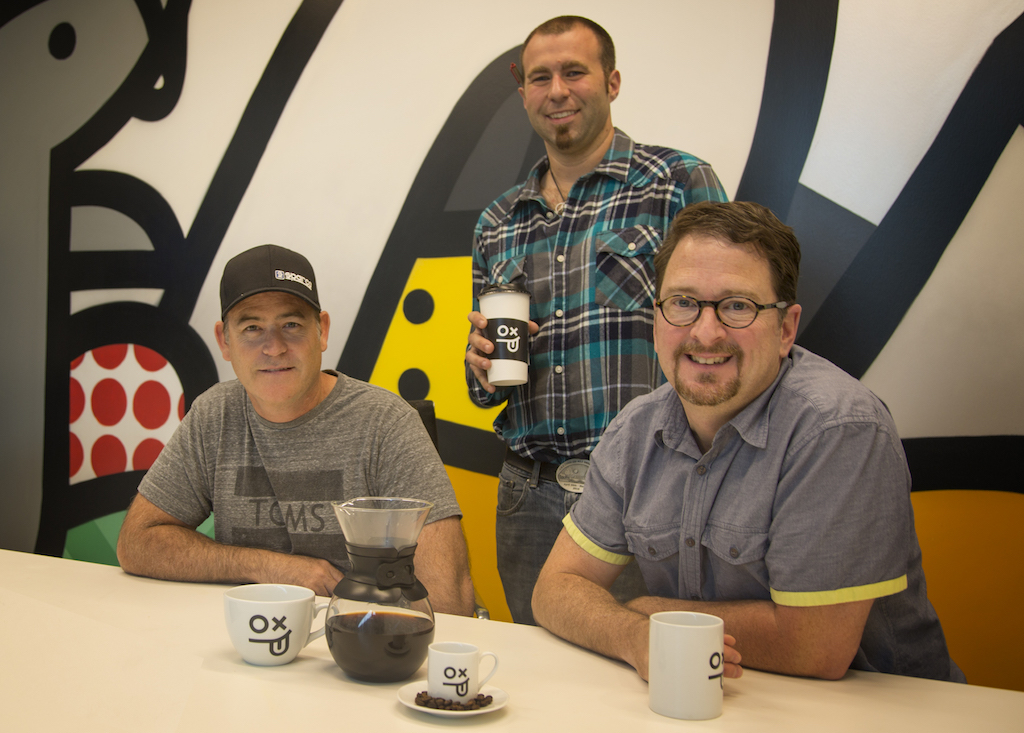
Order & Chaos opened beside the agency in October 2016. Its name sounds like a description of a creative meeting that has gone on too long. It came from something more specific: an architect’s comparison between the workings of an agency and the movements of a skate park. There was structure, there was improvisation, and occasionally there was reason to hold on.
The coffee shop offers a useful entrance to Doud’s story. He has spent decades building a business around other people’s ideas and ambitions. Here, he and his partner had a brand of their own, with customers close enough to ask for another cup.
A friendship with a business address
Doud and Ed Callahan met in third grade at St. Joseph’s School in Cockeysville. By the time they became co-founders, the getting-to-know-you portion of the partnership was comfortably behind them. They established Planit in 1994, beginning in a basement. The setting was modest; their intentions required more room.
They wanted an agency capable of solving business problems through ideas. Doud would become its president, Callahan its creative counterpart. A longstanding friendship had acquired deadlines, clients, and the rather less sentimental obligation to keep a company running.
Doud’s father had encouraged him to develop his ability to communicate. Whatever profession he chose, the reasoning went, being able to express an idea clearly would give him a useful foundation. He studied professional writing at Wheeling Jesuit University after attending Loyola Blakefield. Communication became the thread connecting his education to his eventual work.
His early advertising career included a writing job at a small Washington, D.C., agency. He moved into client management. That change matters: a person can be drawn to creative work and find his most useful role in helping it happen. Doud’s place became the meeting point between the client, the idea, and the organization needed to deliver it.
“I am the rudder and Ed is the sail.”
Matt Doud’s description of the partnership
His own nautical description makes the division of labor easy to picture. A sail supplies movement. A rudder gives it direction. Neither is especially impressive lying alone on a dock. For two friends building an agency in a harbor city, the metaphor has the advantage of being both useful and geographically appropriate.
The neighborhood walks in
In 2016, Planit moved into a renovated office on Key Highway, in a former Kings Syrup warehouse. Doud and Callahan were joining a changing neighborhood with residents, offices, and new development nearby. A business could occupy the building and carry on behind its doors. They chose to give people another reason to enter.
The initial problem was ordinary. The new office offered the practical things a company looks for when choosing space, but there was no coffee shop on their block. They decided to open one. Any founder contemplating a similar solution should pause over the scale of that verb. Open means design, equipment, staffing, supplies, and an entirely new set of customers.
Callahan later acknowledged that the undertaking had proved larger than expected. The shop had 11 employees and brought in coffee consultant David Anderson. Its coffee came from the local, family-operated Pfefferkorn roasting business. An amenity had become a restaurant operation, with its own standards to meet.
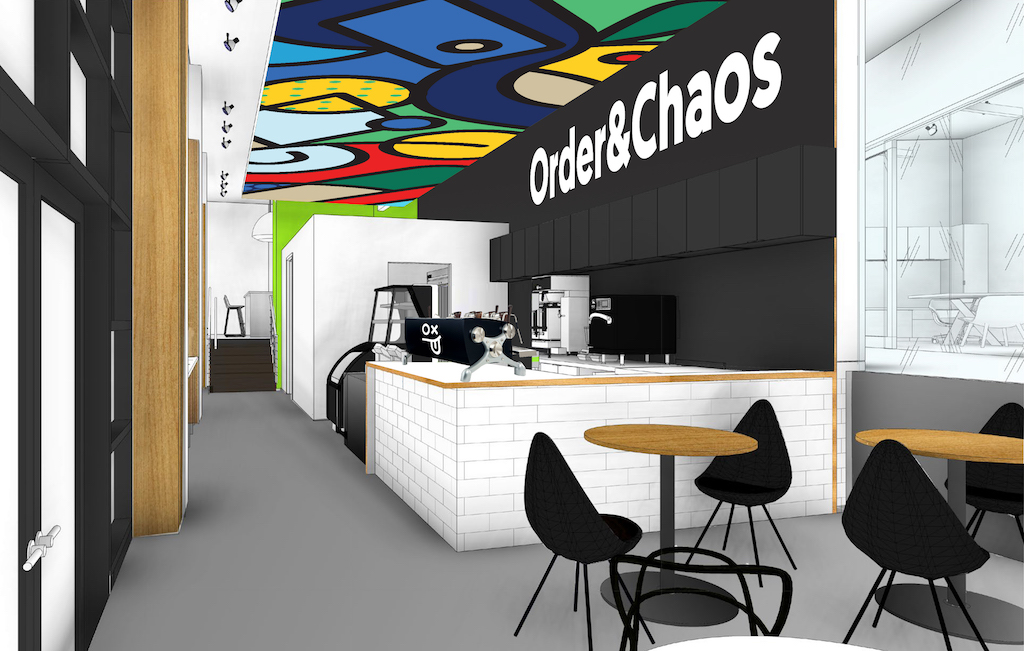
The glass wall gave the place its particular character. Visitors could see into the agency; staff could move between the two businesses. Doud also described plans to use the café’s customer exposure for agency learning, including work in progress and informal feedback. Advertising research had acquired the possibility of a pastry.
A conceptual map of the 2016 arrangement, not a building plan.
The price of a second cup
Order & Chaos let Doud talk about customer experience in very practical terms. In 2018, he described seating, large tables, charging stations, Wi-Fi, and a back room equipped for group brainstorming. The café accommodated people settling in to work as well as customers who wanted something quickly and had somewhere else to be.
There was a commercial question underneath the hospitality. A person occupying a table for hours can look like an expensive guest. Doud’s account placed value on repeat visits, loyalty, and the purchases made over the course of a longer stay. Customers who worked there tended to buy additional rounds and food.
A marketing agency can talk fluently about relationships. A café has to decide how comfortable the chairs should be. That makes it an unusually tangible companion business. The environment, service, and product all contribute to whether someone returns. The brand gets tested in an interaction that can be as small as ordering a drink.
The menu provided some levity. Early offerings included Liège waffles sweetened with pearl sugar and a Café Gommosa made with espresso over marshmallows. Doud wanted an approachable place where a customer could learn about coffee without feeling foolish for ordering it incorrectly. Nobody enjoys needing a qualifying examination before breakfast.
The rudder has a window, too
Doud’s ambition for Planit extended beyond its home city. In a 2015 conversation, he described wanting to build a Baltimore-born agency that could compete nationally. The agency’s clients at that point included McCormick, NPR, Universal Music Group, Acura, and Under Armour. Staying in Baltimore and reaching farther were parts of the same plan.
Growth raised a more delicate question: how much could the organization add without losing the character that made it work? Doud discussed acquisitions as a way to gain capabilities, while emphasizing the importance of cultural fit. A new competency might look attractive on paper and still be wrong for the people expected to work together.
That year, Doud and Callahan received EY Entrepreneur Of The Year recognition in the Maryland region. The award put a formal milestone beside their two decades of agency ownership. Creativity had become a business, with enough persistence behind it to earn recognition outside the creative department.
- 1994Doud and Callahan found Planit.
- 2015EY recognition in the Maryland region.
- 2016Order & Chaos opens in Baltimore.
- 2025AAF Baltimore Lifetime Achievement Award.
When The Daily Record honored Doud among its Most Admired CEOs in 2017, a colleague’s supporting account focused on access. Jack Spaulding, Planit’s executive director of strategy, described a leader who listened and made himself available to employees, including new arrivals. Even the office door, he observed, was glass.
The repeated appearance of windows in this story is almost too convenient. Still, the two uses point toward a shared idea: letting people see what is happening, and making it easier to approach the people doing it. A transparent door cannot establish a culture on its own. It can give a stated preference a physical form.
The battleship problem
Doud returned to maritime language in a 2019 article about “battleship” brands. He asked what happens when an established organization becomes difficult to steer as the marketplace changes. Past strength can leave a company attached to a shape that no longer suits the water around it.
His argument favored the responsiveness of a smaller enterprise. It is a fitting concern for an independent agency founder: every new client problem asks whether the organization can move, whether its habits remain useful, and whether its confidence comes from understanding the audience or simply having done something before.
In 2023, Planit was included in Inc.’s Power Partner Awards. Doud framed the recognition around client trust and the agency’s role as an extension of client teams. That emphasis connects the founder’s operational role to the work customers actually buy. An agency’s internal arrangements matter when they help people outside it accomplish something.
A thumbs-up, then back to work
In March 2025, AAF Baltimore named Doud its Lifetime Achievement Award recipient. Alongside his agency career, the organization recognized his involvement in the local creative community, including support for industry organizations and Planit’s annual Day of Service. A business built in Baltimore had become part of the city’s professional life.
His public humor makes the ceremonial version of the story less stiff. Asked which emoji captured his feelings about the honor, he chose a thumbs-up, his customary contribution to family chats. He described it as “the Irish exit of emojis.” He also admitted a limited appetite for Old Bay: steamed shrimp, yes; eggs and ice cream, no.
By March 2026, Doud was talking about how to collaborate more with Planit’s staff and help them develop. In the same conversation, he valued independent ownership for the freedom to make decisions and take responsibility for them. He also credited agency peers with providing advice and support. Independence, in practice, still included people to call.
The friendship supplies the long view. The café supplies the close-up. Between them, Doud’s story becomes easier to understand: a communications education, a partnership, an agency, and a public room where the people a business hopes to understand can sit down. The window makes a modest invitation. Come in. Have a coffee. See what is going on.