Roger Gray has a useful question for anyone trying to sell something: why hasn’t the customer already changed? It sounds almost impolite. Advertising is supposed to arrive bearing reasons, benefits and an attractive typeface. Gray wants to examine the person who has heard the reasons, knows the benefits, and still hasn’t budged. That person may be the most interesting figure in the room.
In his writing about wireless carriers, Gray describes the inconvenience people imagine when they contemplate switching. A disappointing bill can coexist quite happily with another month of loyalty. The customer can dislike the arrangement and renew it through sheer habit. For an advertising executive, that is a rather awkward finding. A persuasive argument may reach the right person and leave everything exactly where it was.
Gray, the founder and chairman and CEO of Baltimore’s GKV, has spent his career around that gap between attention and action. His agency dates to 1981. His public work ranges from brand strategy to civic service, with a detour into cocktail instruction. Across those settings, there is a recurring interest in participation: getting someone to reconsider, contribute, or do something with what they have heard.
The trouble with a perfectly good argument
Gray’s wireless essay proposes that carriers give people a reason to reconsider at a moment when their lives are already changing. Two people combining households might also combine phone plans. A child needing a phone creates another opening. The monthly bill provides a less romantic invitation. These are recognizable situations, with recognizable annoyances, rather than abstract declarations of network superiority.
The distinction matters because a product comparison assumes the customer is actively comparing products. Gray’s argument begins a step earlier. Someone has to decide that the comparison deserves their time. The household already has a provider, a bill and other things to worry about. An advertiser wishing to intervene needs to understand the existing arrangement before offering its replacement.
It is an appealingly unsentimental view of persuasion. People are busy. They can be inconsistent. A campaign has to meet them somewhere within that untidy reality. Gray calls the barrier “consumer inertia.” The phrase gives a name to a familiar small defeat: knowing there might be a better deal and leaving the search until tomorrow.
A bill, a wedding, a window
GKV’s Sprint work supplies the practical version. Research in the campaign’s target geography found that 70 percent of wireless customers had stayed with their carrier for at least four years. Some had stayed more than seven. The team identified moments when switching seemed less troublesome, including phone upgrades and changes in family circumstances.
The campaign matched offers to those situations. It also found a buying opportunity in June and July, when competitors historically reduced their spending. The agency describes using mystery shopping to assess awareness and refine the message. Its reported results include a record June-to-August acquisition period for the campaign’s Sprint business.
Those results belong to the agency’s account of its work. The underlying method is worth considering on its own: study the obstacle, choose the moment, and check the response. Timing becomes part of the creative idea. A wedding announcement and a wireless offer may seem an unlikely pair, until someone has to decide whose plan the newly combined household will keep.
- 01 / The obstacleSwitching feels like work.
- 02 / The openingA bill, an upgrade, a changing household.
- 03 / The invitationAn offer suited to that moment.
- 04 / The checkResearch, response, refinement.
Baltimore, with a longer memory
A different kind of connection appears in Gray’s civic life. A Maryland native, he earned both his undergraduate degree and MBA at Loyola College of Maryland. He later served on the university’s board of trustees. His community roles have included chairing the Pride of Baltimore’s trustees and serving as president of the American Flag Foundation.
The Pride of Baltimore offers an especially apt assignment for someone in communications. The clipper ship serves as a goodwill ambassador for Maryland. It gives a place a visible presence elsewhere, with sails doing some of the introductory work. Gray’s involvement puts his professional interest in representation alongside a tangible piece of the state’s identity.
In 2018, he described giving back to the community where one lives, works and plays as a principle of running his organization. His work for Living Classrooms continued: after serving on its board, he continued developing and updating promotional videos. The contribution extended beyond a seat at a meeting. He put a professional skill to use.
The classroom connection
One early story about Gray comes from advertising lawyer James B. Astrachan. Astrachan recalls teaching tax law at Loyola in 1981 when Gray, a former student, called needing legal help with the formation of an advertising agency, Smith Burke and Azzam. Astrachan described the call as his introduction to advertising law.
It is a small episode with two careers inside it. Gray needed a lawyer. His former teacher found a field of practice. The anecdote does not have to explain the whole history of GKV to be revealing. It shows how a relationship established in one setting can acquire a second use when someone takes the trouble to pick up the telephone.
Astrachan also recalled that Gray appeared only at the beginning and end of the class and still earned an A. It is the sort of detail a former teacher might remember for years. Taken as Astrachan’s recollection, it adds a mischievous footnote to the MBA and the board service. Academic loyalty can evidently survive an unconventional attendance record.
Golf supplies its own corrections
Gray enjoys golf, though his enthusiasm apparently exceeds his results. There is something fitting about an advertising strategist returning to a game that makes every promise answer to a measurable outcome. The ball lands where it lands. A well-worded explanation rarely improves the lie.
Golf also appears in GKV’s portfolio. For Bridgestone, the agency built a campaign around a stronger messenger: Tiger Woods. Its case study explains the choice through Woods’s effort to improve his own game and the appeal of that effort to other golfers. The work used digital video, social posts, banners and email to carry a focused proposition about choosing a ball suited to the player.
GKV reports that its second year of the work produced double-digit sales increases for the advertised balls, including a sold-out limited edition associated with Woods. This is team work under Gray’s leadership, rather than a claim of personal authorship. It also provides a neat professional counterpart to his hobby: the agency can make an argument about better golf; the golfer still has to take the swing.
What the promise asks of the office
Gray’s essay on customer loyalty moves the discussion inside the company. He argues that an organization’s reputation depends on the experience it delivers, and that employees need policies and training that let them carry out the brand’s promise. Advertising can announce an intention. Everyday service gives customers their evidence.
He sets out a four-part process: identify the culture’s key messages, develop internal champions, establish the expected behavior, and build a workplace environment that supports it. The sequence brings branding into decisions that may never appear in a campaign. An employee’s response to an ordinary request becomes part of the brand’s public life.
That expands the job considerably. A slogan can be approved in a meeting; a consistent experience has to be repeated across many meetings, shifts and interactions. Gray’s interest here is practical: the organization has to equip people to make the promise believable. Customers are unlikely to distinguish a failure of procedure from a failure of character. They remember what happened to them.
The people who stay, and the work that changes
Leadership at GKV has involved long relationships as well as new appointments. When the agency named Dave Broscious and Mark Rosica co-creative directors in 2019, Gray described having worked with both for more than a dozen years. Jeff Millman, who had joined in 1983, retained leadership responsibilities on several accounts while handing over daily creative oversight.
Another long tenure ended when CFO Cathy Kowalewski retired in 2023 after more than 38 years in that role. She had started as a billing supervisor in 1983 and worked through name changes, mergers and three office moves. Gray credited her contribution to four decades of growth. Corey Tappan succeeded her.
These are the less photogenic parts of agency longevity: responsibilities transferred, operating knowledge preserved, new people given room. Creative businesses still need invoices to make sense. The dates suggest how much institutional memory can sit behind a piece of work that looks entirely new. An advertisement may last seconds; the working relationships behind it can last decades.
“Always give back to the community that you live and work in.”
Roger Gray, 2018
A different sort of demonstration
Then there is the MarGrayRita. In a GKV post, Gray shares a margarita demonstration alongside recipes from his wife, Kathy. The title gives his surname an additional job. An executive who usually discusses customer behavior becomes the person showing viewers what to put in a glass.
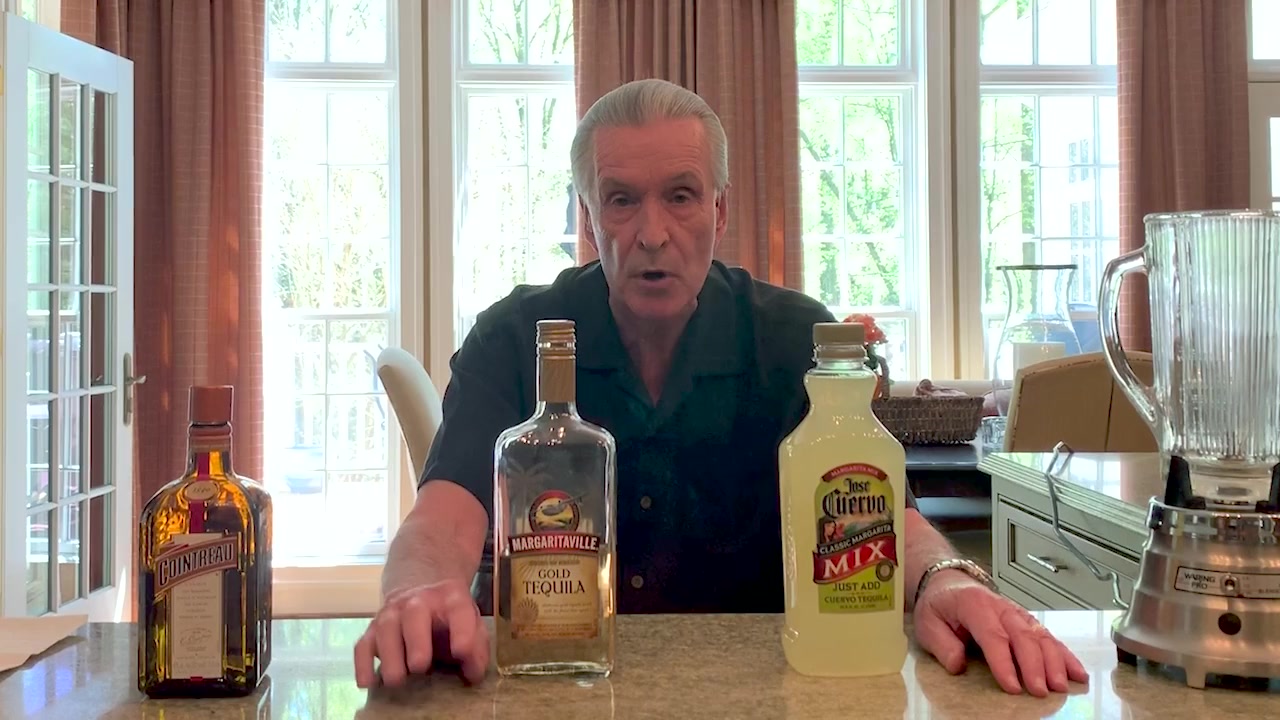
The piece is a pleasant change of scale. Brand strategy concerns thousands of possible customers; a recipe concerns the drink directly in front of you. Both depend on an intelligible invitation. The post brings the office audience into a domestic interest, without requiring an elaborate explanation of why an agency chief might enjoy making something for other people.
Home improvement also appears among Gray’s interests. Together, these details supply a little texture around the executive title: projects at home, a golf game, a shared recipe. They make room for pursuits whose rewards are immediate, tangible and sometimes cheerfully resistant to expertise. Even a long career in persuasion cannot negotiate with a badly struck golf ball.
A legacy with another appointment on the calendar
In June 2026, GKV promoted Mark Gray to vice president of business development. Mark had joined as a digital analyst in 2020 and added account executive responsibilities the following year. His new position includes working with Roger on growth objectives, performance measures and emerging opportunities.
Roger’s response turns toward continuity. He spoke of sharing GKV’s legacy with the next generation and adding to what the partners had built. There is a forward-looking quality to the appointment: the agency’s accumulated experience becomes material for new relationships, rather than simply an anniversary to commemorate.
Forty-five years after GKV’s founding, Gray’s recurring question remains a useful one. What will make someone reconsider? A household change can open a wireless conversation. A more credible messenger can change the way a golf ball is perceived. A service decision can give a brand promise substance. The work begins by paying attention to the person expected to act. Gray has built a career around taking that person’s reluctance seriously.