Ozzie Godinez had a problem with the grandmother. Also the mariachi music, the bullfight, and the telenovela. At the Chicago advertising agency where he worked, familiar cultural props kept finding their way into Hispanic campaigns. Eventually, he left without another job arranged. A comfortable career had become an uncomfortable way to spend the day.
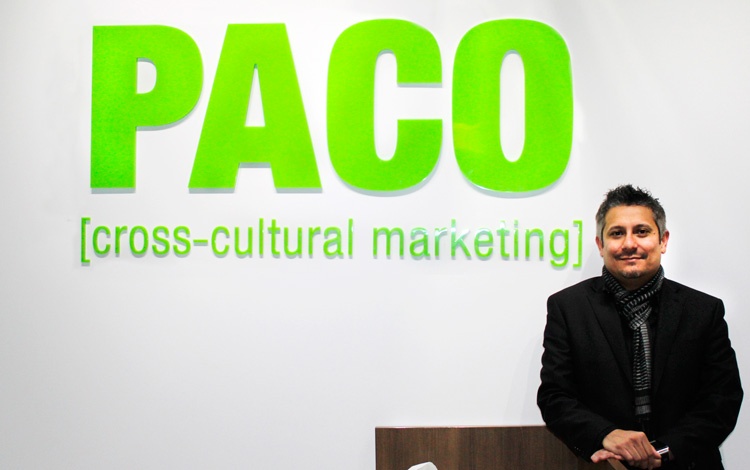
His friend Pablo Acosta, a creative from Peru, had frustrations of his own. Over drinks at the Green Door Tavern, they sketched the idea for an agency they would want to work in. Godinez would handle the business; Acosta would lead the creative. They started PACO in 2006. The early months involved scarce money, borrowed equipment, and Godinez cooking chilaquiles to keep meal costs down. The advertising business had acquired two new competitors and a very repetitive lunch menu.
Their eventual name, PACO, suggested the everyday Latino. Behind it sat a more demanding ambition: make room for people whose lives were more complicated than the shorthand used to sell to them.
A South Side education in belonging
Godinez was born in Mexico and raised on Chicago’s South Side. That movement between countries matters to the way he talks about America. He has described himself as an immigrant whose parents arrived hoping to build an American Dream, and as someone grateful for the opportunities he found here. His commercial interest in audiences carries a personal stake.
Outside work, his loyalties include the Chicago Bears and White Sox. There is something pleasingly ordinary about that detail. An executive can spend the week explaining how complicated identity is, then spend Sunday rooting for a team that has been complicating his life for years. His public biographies also describe an enthusiasm for grilling. Culture, in this picture, includes the familiar pleasures of a home city.
In a 2020 essay, he adopted Telemundo’s idea of being “200% Americans”: fully Hispanic and fully American. He explicitly credited the phrase. Belonging, in his account, could expand without requiring someone to surrender the life that came before.
Identity can hold both.
The audience refused to stand still
By 2015, PACO had become PACO Collective. Godinez preferred to describe the shift as evolution. The Latino roots remained. The agency’s understanding of its audience had widened. He described younger consumers moving between Spanglish with friends, Spanish with parents, and English at work or school. A person could inhabit several linguistic rooms in a single day.
For anyone writing advertising, this is inconvenient in a useful way. The customer will not obligingly remain inside the segment assigned to them. A neat label on a presentation slide may tell you where to begin asking questions. It offers less help with the answers.
The agency’s early growth gave that argument an operating base. A 2015 account recorded two founders and no clients at the start, 15 employees four years later, and 40 by the time of publication. Those are historical snapshots, rather than a present-day headcount. They show a business gradually finding enough work to bring more people into the conversation.
Two friends, different jobs
Godinez and Acosta’s partnership has its own practical vocabulary. Friendship helps, but responsibilities need definition. They have talked about the trust that lets them speak candidly to one another, including when the conversation is difficult. Affection does not eliminate the need to know who is doing what.
Godinez also gives distinctly unromantic advice about the first substantial account: resist spending the windfall. It is the sort of instruction that seldom appears on a founder’s inspirational poster, although an accountant might appreciate it. Building the company required patience with money as well as confidence in the work.
His creative habits include listening to house music while writing. Asked about advertising he admired, he picked Coca-Cola’s familiar invitation to buy the world a Coke. The choice fits his interest in an idea that can travel between people. A shared feeling has commercial power; finding it requires attention to the people sharing it.
“I work for everyone here.”
Ozzie Godinez, on what keeps him inspired
One word can give the game away
Listen to Godinez discuss language and the broad theory becomes wonderfully small. In 2019, he pointed to “troca,” a word he heard Latinos use for a truck, alongside the dictionary Spanish “camioneta.” The distinction concerned everyday speech. An advertiser could be grammatically correct and still sound like a visitor reading from a phrasebook.
He argued that language alone was not always the route into a Latino audience. Bilingual and English-dominant consumers required closer attention to behavior and context. The useful question became how people actually spoke, consumed media, and recognized themselves in a message.
That kind of listening makes authenticity less mysterious. You can imagine a campaign meeting spending an hour on the correct demographic and missing the small word that would make the audience feel understood. Godinez’s example is an invitation to pay attention before polishing. Sometimes the research problem fits in the back of a truck.
Respect has consequences
In his writing on authenticity, Godinez treats a brand’s relationship with consumers as something that must survive scrutiny. People can check claims quickly. A company therefore needs evidence behind the impression it hopes to create. Transparency gives the customer something to inspect after the advertisement has finished speaking.
He has also written about the risks of borrowing cultural symbols. His proposed remedies include acknowledging the origin and directing attention, or revenue where possible, toward the people who created them. Inspiration comes with obligations. A marketing team cannot make those obligations disappear by choosing a particularly elegant typeface.
His 2018 essay on Asian-American representation extends the argument. A flattering stereotype can still compress very different people into a single approved image. He discussed popular culture as a place where performers could express cultural identity while reaching audiences through talent, attitude, and shared interests. The recurring concern is who gets to define whom.
When the strategy has a kitchen
Food offered Godinez another place to put these ideas to work. PACO acquired the Springfield, Missouri, agency Noble Food in 2018, adding culinary innovation and content production expertise. The acquisition brought a culinary innovation center into its services and widened the business toward manufacturers and hospitality operators as well as consumers.
By 2019, Godinez was talking about recipe development as part of strategic planning. Questions about emerging menu items, flavors, and spices could help food clients understand demand. Research here had a destination beyond a slide deck: something someone might actually order.
The fit has a certain charm. An agency concerned with the crossing of cultural boundaries finds a field in which people cross them at lunch. Godinez cheerfully described the team as food enthusiasts. The point was also commercial. A flavor carries associations, habits, and memories; explaining it to a customer requires more than announcing that it is new.
- 2006Godinez and Acosta found PACO.
- 2015PACO becomes PACO Collective.
- 2018Noble Food adds culinary capabilities.
- 2023CLN recognizes Godinez as an entrepreneur.
The business beyond his business
Godinez’s interest in entrepreneurship includes the obstacles that push people toward it. In 2017, he wrote about women and people of color opening companies after encountering barriers inside established businesses. Ownership could create room for different voices and products, while leaving financing and discrimination as difficult questions. Starting a company does not make the surrounding economy fair.
His advice to suppliers is correspondingly practical. In ComEd’s report on supplier diversity, he discussed working from both sides of the relationship, as a prime contractor and a subcontractor. Smaller firms should establish their value through manageable projects and grow from there. Larger firms should be transparent and willing to try smaller suppliers. Quality and opportunity need to meet.
These ideas shift the conversation from who appears in an advertisement to who gets paid to make it. That distinction matters for an agency owner. Representation on screen is visible immediately. The purchasing decisions behind the screen can shape careers for years.
Lunch is a purchasing decision
In August 2023, Godinez described PACO’s support for Black-owned businesses in unusually concrete terms. The agency had brought in caterers including ChefBoy K.O and Nicole Jordan Catering, held a tasting with Love Cork Screw, and shared a list of local businesses to support. Team lunch became one small way of directing spending toward other entrepreneurs.
He linked that spending to a wider cycle: owners and employees buy from businesses around them, while successful entrepreneurs become visible examples within their communities. His starting point was gratitude for the people who had helped him keep an agency running. Support was something to pass along.
There is a useful modesty to this example. A company can debate inclusion in its conference room and make a purchasing decision before everyone gets hungry. The amount of attention required is manageable. So is the distance between the principle and the action.
Award night, then back to the conversation
In October 2023, Godinez received the Chicago Latino Network’s Latinx Entrepreneur Award. PACO’s announcement noted that Acosta had received the recognition 12 years earlier. The two founders had reached the same civic occasion by a shared route, with different responsibilities along the way.
Godinez continued writing publicly. His December 2025 holiday essay looked at cultural arguments through affordability and immigration, with a dry eye for the absurdities of seasonal rhetoric. The concerns had widened beyond an advertising brief, but the habit was familiar: examine what people are experiencing beneath the language used about them.
For Godinez, understanding an audience remains a moving assignment. People carry hometown loyalties, borrowed words, inherited traditions, and new appetites. A label can introduce them. A conversation takes longer. His career has been built around making time for that conversation, even when the campaign deadline would prefer a grandmother and some music.
Keep the conversation going
Interviews, essays & further reading
- The founding story
- The founders in conversation
- Language, food, and marketing
- Authenticity and consumer relationships
- Cultural borrowing and respect
- Asian-American representation
- The Noble Food acquisition
- Entrepreneurship and corporate barriers
- Supplier diversity: ComEd report
- The 200% American experience
- Supporting Black-owned businesses
- The 2023 CLN award
- The War on Christmas?
- PACO’s 2015 evolution
- Godinez’s AAF biography