An intern can make a surprisingly awkward succession plan. The timetable is long. The qualifications are incomplete. Nobody has yet established whether this person can handle an account, let alone an agency. In May 2009, Ben Behrman arrived at Schafer Condon Carter in Chicago with an advertising degree and an entry-level job. In January 2024, he became its CEO. Between those dates, he kept changing what he did while staying where he worked.
That middle stretch deserves attention. The intern-to-CEO headline is pleasingly economical, the career equivalent of a before-and-after photograph. It leaves out the account work, digital strategy and operating responsibilities that make the ending plausible. Behrman’s story is about accumulating those experiences inside a business, then accepting responsibility for the business itself. The corner office comes late in the plot.
May 2009: the first desk
Behrman graduated from the University of Illinois at Urbana-Champaign in 2009 with a Bachelor of Science in advertising. That May, he joined SCC as an intern. The timing placed his first agency job in the financial crisis, an austere introduction to a profession that sells imagination for a living. He stayed. His subsequent titles included account executive and director of digital strategy.
There was an early change of direction. Behrman initially expected to become a creative, then gravitated toward client leadership and the business of running an agency. He had also told SCC’s founders, while still an intern, that he wanted to run an agency one day. A declaration like that creates a useful obligation: eventually, the work must catch up with the ambition.
There is something appealing about revising the route while keeping the destination. Advertising offers several places to exercise judgment. Someone has to frame the problem, someone has to make the work, and someone has to help the people involved reach a decision. Behrman’s path took him toward the relationships and mechanics that allow those activities to happen together.
- 2009Illinois advertising graduate.
SCC intern, starting in May. - 2023Promoted to president.
- 2024Named CEO in January.
Along the way: accounts, digital strategy and operating leadership.
Learning the agency sideways
His client experience included leading campaigns for Redbox, Kerrygold and the National Pork Board. Those names locate him in the ordinary world of consumer choices: entertainment, food, the things people buy without pausing to admire the organizational chart behind an advertisement. Account leadership has to connect the client’s commercial question with the agency’s ability to answer it.
SCC also entrusted him with the rollout of its enterprise digital partnership with Adobe. He served on the strategy team and worked across multiple departments. This is an unusually useful combination for an eventual chief executive: experience with what clients need, how the agency plans to meet that need, and the systems through which some of the work gets delivered.
Technology partnerships are less cinematic than a finished commercial. They belong to the part of agency life that a viewer never sees. Yet they widen the meaning of the job. A leader who has worked on delivery as well as persuasion has had reason to ask practical questions: Who can make this happen? What needs to work together? How will the promise survive implementation?
The most revealing descriptions of Behrman concern his behavior around other people. Haley Smith, who worked with him while planning digital media for the National Pork Board, describes his ability to manage client expectations and internal agency relationships. That is a particular skill. Two groups can want the same successful campaign and still arrive with quite different definitions of a successful Tuesday.
Bob Killian’s recommendation emphasizes initiative. Tim Condon, reflecting on Behrman’s career, singles out his thoughtfulness and the breadth of his contributions. Condon also credits Illinois advertising educator Steve Hall with introducing Behrman to SCC. The connection gives the career a human starting point: a university relationship, an introduction, an opportunity that became several more opportunities.
“What separates Ben from the crowd is his exceptional initiative.”
Bob Killian, professional recommendation
The food experience continued into his CEO tenure. In December 2024, Ortega appointed SCC its agency of record, with creative work and a revised media plan intended to reach shoppers and a new generation of consumers. It was a recognizably commercial assignment, tying a familiar brand to the question of how people encounter it now.
For Behrman, that placed another food account beside an earlier career that included Kerrygold and the National Pork Board. A brand can have years of familiarity behind it and still need to introduce itself to someone. The agency has to respect what people already know while giving the next audience a reason to pay attention.
A successor with colleagues of his own
The formal transition came in stages. Behrman became president in 2023, then CEO in January 2024. Condon moved to executive chairman. The person who had entered through an internship was now responsible for leading the next chapter of the agency. Familiarity can help in that position, although it also changes shape: knowing the organization becomes a responsibility to make decisions for it.
His leadership team brought together different kinds of experience. Craig Miller became chief creative officer. Amy Cesta returned to SCC in 2023 and became chief client officer. Joe Raser, who had joined in 2018, was promoted to chief strategy officer in 2025. The succession therefore produced several consequential changes around Behrman’s own appointment.
That matters to the personal story. A CEO’s biography is partly expressed through the people trusted with authority. Creative work, client relationships and strategic planning each need someone who can make judgments in their own field. The practical challenge is getting those judgments to inform one another before the client sees the result.
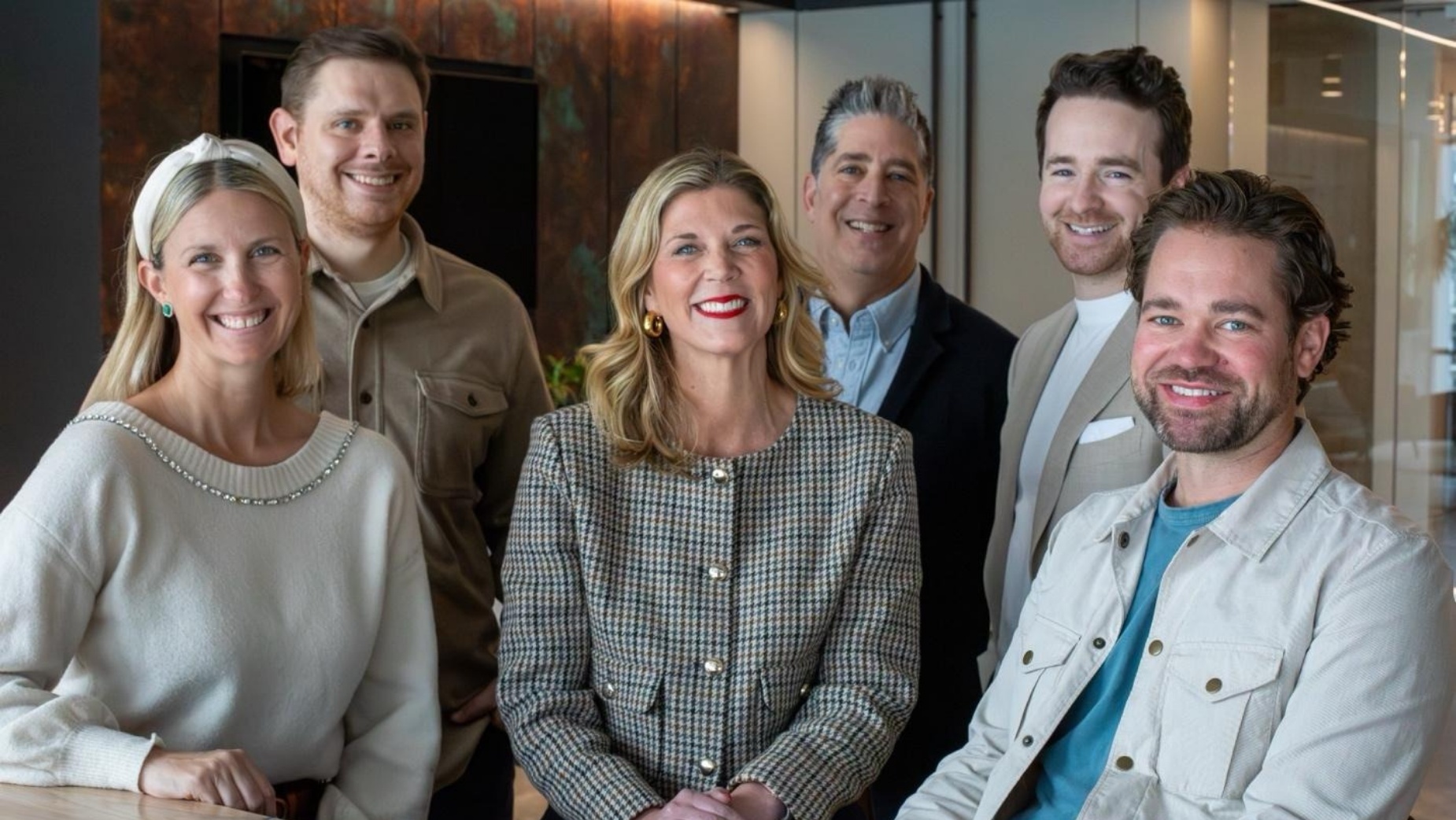
In April 2026, SCC promoted Jack Hennessy to chief operating and media officer, reporting to Behrman. Hennessy retained responsibility for media while taking on agency-wide operations. The appointment followed a year in which the media practice added more than a dozen clients and assignments, including Ferris Mowers, National Heritage Academies and Toad & Company.
The relationship between those duties is worth considering. Media brings its own planning, execution and measurement demands; operations concerns how the wider organization works. Giving them a shared leader puts a delivery discipline close to the agency’s everyday decisions. For Behrman, whose own career crossed departments, the appointment is another concrete piece of the organization he now leads.
A purchase order still has a person behind it
Behrman has a plain way of describing the overlap between business and consumer marketing. In a public comment supporting Cesta’s outlook for 2026, he observed that business buyers carry consumer expectations with them. The observation sounds obvious until one looks at how much advertising treats a job title as a complete account of a human being.
“B2B buyers are consumers too, and B2C continues to set the bar for customer expectations.”
Ben Behrman
A buyer can understand a specification and still appreciate a memorable idea. A procurement process does not remove the need to attract attention. This is the useful implication of Behrman’s comment: the formality surrounding a purchase need not determine the personality of every message about it. The challenge is to make something relevant enough to earn consideration.
SCC’s challenger-brand positioning gives that belief a commercial setting. The agency uses the promise “Create.Impact.” By the end of 2025, it reported close to a dozen new client assignments over the previous year. It also said more than 75 percent of its staff had been with the agency for at least six years. These are agency figures, rather than personal trophies for its CEO.
of SCC staff had six or more years at the agency, according to its December 2025 announcement.
Institutional memory, in one numberPlaced beside Behrman’s career, that retention figure suggests an interesting management question. How does an organization let experienced people keep discovering unfamiliar work? Long service provides memory; changing responsibilities gives that memory new uses. His own route is a case study in how much movement can take place without a change of employer.
He has also publicly promoted applications for SCC’s Incubator internship program. An internship announcement looks different when the chief executive once held the entry-level job himself. It makes the starting point visible again, with another set of applicants preparing to find out which part of agency life suits them.
Getting Chicago to say yes
In June 2026, Navy Pier named SCC its creative and media agency partner. The assignment was to help people discover more of the lakefront destination’s experiences and encourage engagement throughout the year. The agency’s recent additions also included its first chief growth officer, Liam Boyle, and marketing professor Jim Lecinski as a senior advisor on AI.
The Navy Pier brief brings Behrman’s work back to a recognizable human decision. A familiar attraction can become fixed in someone’s imagination: a place already visited, a destination associated with a certain season. Advertising has to offer a reason to reconsider it. The challenge is specific enough to resist an elaborate cloud of management language.
Behrman’s stated ambition was to get more people to choose a visit. That is a useful ending for a story that begins with an intern’s aspiration to run an agency. The title has been achieved. The work keeps arriving, in the form of clients, colleagues and decisions that require fresh attention.
In July 2026, his career became the subject of a visit and profile by Rob Morrice, who described a focus on building capabilities, investing in people and sustainable growth. Seventeen years after that first internship, Behrman was still working inside the same agency. By then, however, he was helping decide what opportunities other people would find there.
The satisfying detail is the breadth of the preparation: a client account, a digital partnership, a strategy team, an operating role. Each gave him another view of the organization he would eventually lead. The long way to the corner office had furnished him with something to do once he arrived.