Anthony Romano’s college education included marketing, studio art and Division III basketball. It is an appealing combination for someone who would spend his working life in advertising: commerce, the eye, and a game in which an excellent individual still needs someone else to pass the ball. At New York University, those pursuits shared a campus. Across his career, their professional equivalents would keep sharing an office.
He eventually led BBH New York, oversaw US client services at R/GA, and returned to Minneapolis to run an agency operation there. Then, in 2022, he accepted the CEO role at Laughlin Constable, a family-owned independent firm with offices in Chicago and Milwaukee. An East Coast native who described himself as a Midwesterner at heart had chosen another chapter in the region.
The interesting part of that choice is its particularity. By then, Romano knew large networks, digital agencies and the pressures of running a New York office. The attraction of Laughlin Constable lay in a more specific combination: independence, an established family business, and creative partners whose name was already on the door. Experience had given him several kinds of agency to compare. He chose this one.
A return with unfinished business
Minneapolis had already drawn him back once. In November 2019, Wunderman Thompson appointed Romano president of its Minneapolis operation, giving him responsibility for the local Wunderman Thompson and Mirum offices. The combined team numbered more than 200. He would relocate from New York to a city where he had spent eight years earlier in his career.
“For me, this is a special sort of homecoming.”Anthony Romano, on returning to Minneapolis in 2019
Homecoming is a revealing word in an industry accustomed to announcing appointments as forward motion. It allows experience and affection into the same sentence. Romano spoke about returning to a city he loved and joining an agency whose work brought data, technology and creativity together. The location and the professional ambition belonged to the same decision.
His earlier roles included senior positions at Carmichael Lynch and Publicis New York, as well as agency growth at AOL. A later conference biography also listed his work leading global digital innovation at Ralph Lauren. That range matters because a brand encounters advertising from several directions. The agency makes it, a platform distributes it, and the client has to live with the result. Romano had worked across those boundaries.
The job between the idea and the client
At R/GA, Romano’s responsibilities extended across client teams in six US offices. He also oversaw integrated groups working on Samsung, Verizon and Pepsi in New York. In June 2017, BBH announced him as its next New York CEO, with a start the following month. Gerard Caputo became chief creative officer; Sarah Watson added the chairperson role to her strategy responsibilities.
Those appointments put Romano alongside creative and strategic leaders, a configuration that would recur at Laughlin Constable. The work of a chief executive in such company includes keeping disciplines in conversation. A promising idea still needs a client relationship strong enough to sustain questions, changes and decisions. Anyone who has sat through a meeting about an idea knows how many ways a room can misplace it.
BBH’s leadership continued to take shape after his arrival. Brett Edgar joined to lead account management, reporting to Romano. Matthew Anderson later became chief growth officer, also reporting to him. These are useful details in a career otherwise easy to flatten into titles: the roles around a leader show how an agency organizes the work of winning business and looking after it.
- 2017BBH New York
CEO - 2019Minneapolis
homecoming - 2022Laughlin Constable
CEO appointment - 2026ADWEEK 50
recognition
A family name, a new partner
Before joining Laughlin Constable, Romano ran an independent marketing and growth consultancy in Minneapolis. His next move brought him into a business founded in 1976. Jon and Pat Laughlin had become co-chief creative officers in late 2021; their father, founder Steve Laughlin, was chairman. Romano’s appointment was announced in August 2022, with a September start.
The arrangement gave the new CEO creative partners with a personal stake in the firm’s history. In explaining his choice, Romano emphasized independence, Midwestern values and a people-first approach. He also pointed to the relationship among creativity, media and experience. Those were the qualities he wanted together at that stage of his career.
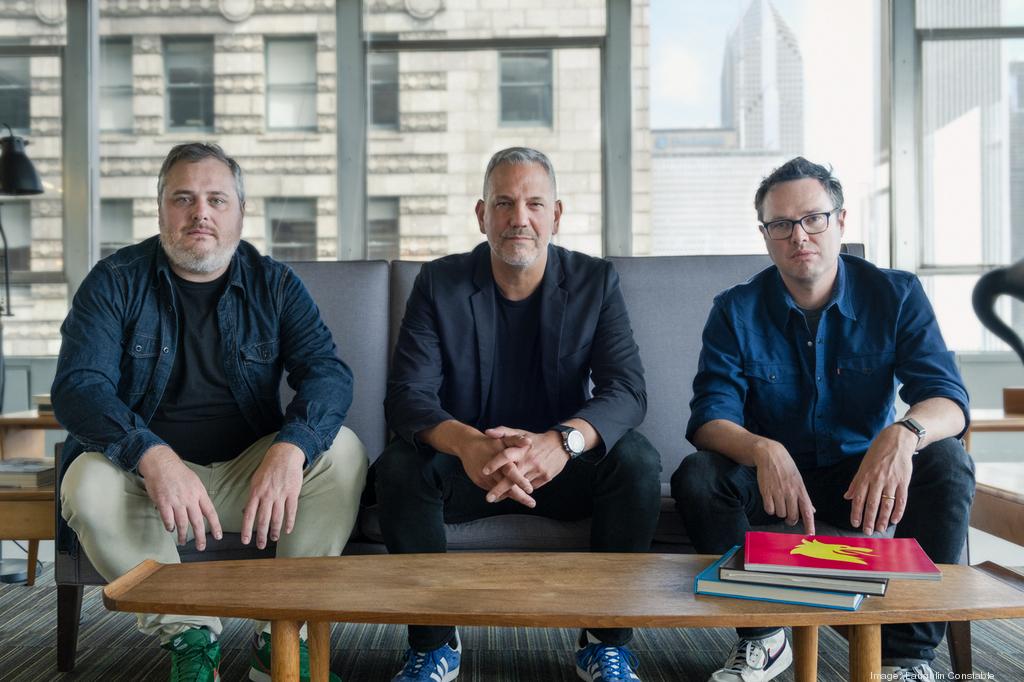
Joining a family business gives continuity a face. The founders’ history is present in colleagues and decisions, rather than confined to an anniversary slide. Romano’s task sits inside that relationship: help the firm develop while working with people for whom its name means more than an employer. The photograph of the three leaders makes the arrangement unusually easy to understand.
The hardware-store test
Laughlin Constable calls its approach building personal experience brands. The phrase becomes easier to grasp in the agency’s 2024 True Value campaign. Its starting point was a familiar predicament: a person doing a home project reaches a roadblock and needs an empathetic expert to help them through it.
The campaign celebrated the people who provide that help. Its short films were created and produced by the agency, with distribution across connected television, YouTube, social media and programmatic display. Local targeting connected customers to nearby True Value stores. An ordinary moment at the hardware counter became the basis for work traveling through several channels.
For Romano, that relationship between the human observation and the delivery was central to the campaign. It is also a useful test of the agency’s positioning. A brand can say it understands people; the work has to locate a situation people recognize. Here, the situation was wonderfully unglamorous. A project has gone wrong. Someone knows which aisle contains the next step.
The insight leaves room for both craft and measurement. Creative work makes the situation recognizable. Media gives it a chance to reach the relevant customer. The store has to fulfill the promise. A personal experience acquires credibility through the connection among those parts.
Growth with names attached
In July 2024, Laughlin Constable earned Ad Age Small Agency of the Year Gold in the 76-150 Employees category. The category is worth retaining: it explains the recognition precisely, while leaving the work with the agency team that earned it.
That September, Travel Wisconsin selected Laughlin Constable as its creative and media agency of record after a competitive review. The relationship had history. The agency had previously held the account from 1985 to 1999 and again from 2009 to 2019. Under Romano, a familiar client returned with a fresh remit spanning strategy, creative work, social content, media and activations.
In March 2025, the Bronx Zoo and New York Aquarium appointed the agency following a national search. These wins give growth a more tangible shape than a chart alone. One brought a longstanding Wisconsin relationship back to the firm. Another brought New York institutions to a Midwest agency. Both required turning an organizational story into something visitors could care about.
Increase in gross billings, alongside three consecutive years of revenue growth and 22 new client wins.
Gross billings and agency revenue are different measures. The report does not specify the billings comparison period.Romano’s inclusion in the 2026 ADWEEK 50 followed those developments. An individual honor supplies a recognizable name for collective progress. It is still useful to keep the distinction in view: a chief executive can shape the conditions for good work, while the work itself passes through many hands.
The debate after the machine answers
By 2026, Romano’s public conversations included Interplay, an AI operating system developed with Universal Agents founder Stu Amos. Their description centered on reusable pieces of agency knowledge that colleagues could combine. The ambition was to give shared expertise a practical form, making it available across projects.
Romano placed human discussion after that assembled intelligence. The system could offer a starting point; people would argue, refine and decide what deserved to become work. That sequence is particularly relevant to a career spent connecting creative, technical and client teams. A new tool enters an existing social process.
“That’s where the debate begins.”Anthony Romano, discussing the human work that follows AI output
At Mirren Live 2026, he described three signals behind new capabilities: market demand, a strongly held belief, and frustration. That last item has a reassuringly everyday quality. Some useful changes begin with a problem that people are tired of stepping around. Independence gives an agency more freedom to act on it; choosing which problem merits investment remains the leadership work.
Making room for the next people
Romano’s interest in who gets to participate predates the current AI discussion. He co-founded LabFellows with The BrandLab, a paid fellowship for young BIPOC college graduates that included creative and management experience across agencies and large companies. His volunteer history also includes advising BETA startup founders and serving in industry organizations.
There is a connection between that activity and an agency’s future. Knowledge has to reach people who can use and extend it. A fellowship makes entry possible; an adviser helps someone frame a problem; a leader determines whether junior colleagues receive investment and useful work. Each involves deciding who belongs in the conversation.
At a 2024 leadership offsite, Romano’s team welcomed Rishad Tobaccowala to discuss his forthcoming book about changes in work. The invitation fits a business that has to keep reconsidering its own habits. Even a team celebrating a good year needs a reason to look beyond it.
Romano’s career has moved through different cities, ownership structures and technologies. The recurring practical question concerns the people who make those things work together. At Laughlin Constable, it plays out among family creative leaders, new colleagues, returning clients and newer tools. A college basketball player might recognize the arrangement: individual judgment matters, and the next useful move depends on who else is on the floor.
Follow the conversation
- Laughlin Constable - the agency and its work
- Anthony Romano on LinkedIn - his professional profile and updates
- Marketer of the Day interview - client relationships and personal brand experiences
- Watch Romano and Stu Amos discuss Interplay - the independent-agency AI conversation
- Watch True Value’s “Be a Hero!” - the campaign’s hardware-store idea in action
- The 2026 ADWEEK 50 - Romano’s recognition and agency results
- The 2022 CEO appointment - the beginning of his Laughlin Constable chapter