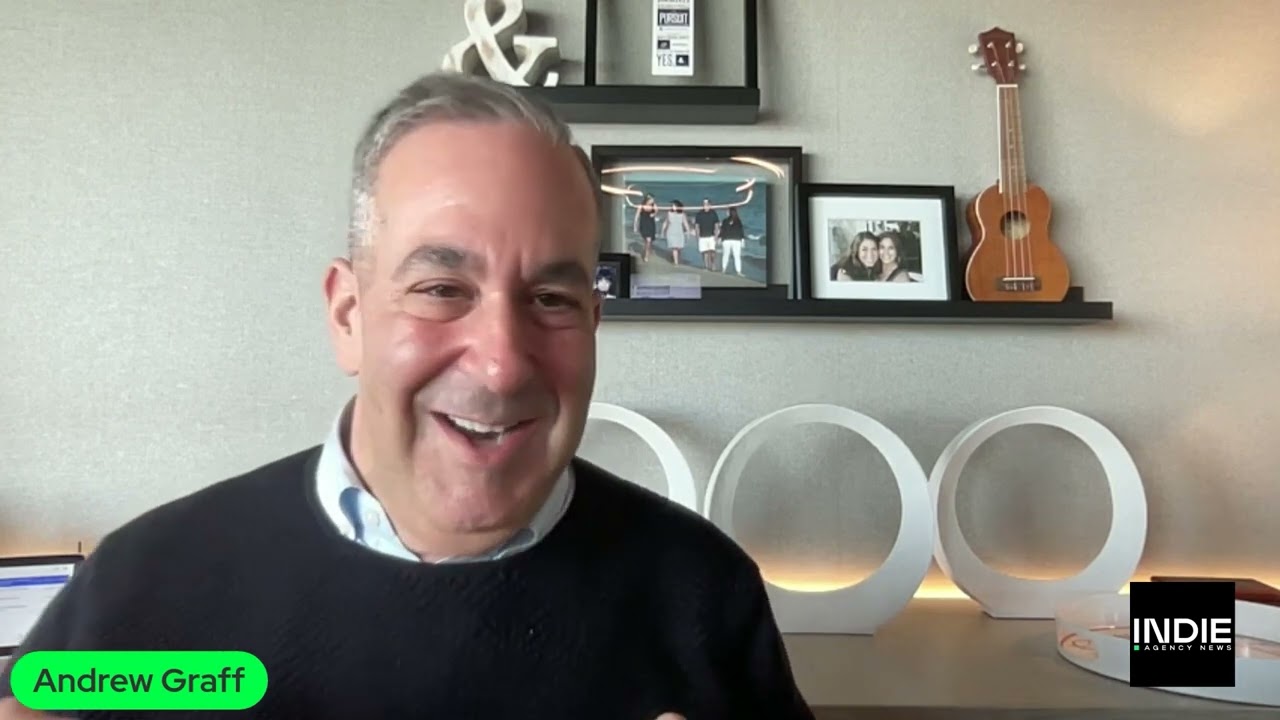
Andrew Graff would like advertising agencies to stop counting hours. This is an awkward ambition for a business that has spent years turning time into invoices. The chief executive of Allen & Gerritsen has a simpler interest: what the work accomplishes. A good idea can arrive quickly. A bad one can take all afternoon. The clock, with admirable impartiality, will charge for either.
In April 2026, Graff described an agency that had moved to fixed pricing, with incentives tied to outcomes, and had spent eight years defending that approach. For him, the relevant unit is the agreed work and its effect on the client's business. It is a managerial argument with a creative consequence. Solve the problem sooner, and efficiency becomes something to welcome.
He has enough tenure to be comfortable with familiar arrangements. He joined A&G in 1995. Yet the recurring subject of his public conversations is the arrangement he would change next. Billing is one. Where people work is another. Even his own title has received an unofficial revision: he calls himself a chief executive intern
. It is a useful joke for someone whose job otherwise suggests that he should already know.
A long stay, with several changes of direction
Graff's route into agency leadership ran through account work. He was an account supervisor at Berenson & Isham, then a vice president at Arnold Worldwide before joining Allen & Gerritsen. He earned a bachelor's degree at the University of Maine and an MBA at Suffolk University. The progression gives his career a business backbone: clients, management, and the practical question of what an agency is being hired to do.
A&G already had a history when he arrived. Paul Allen and Peter Gerritsen founded it in 1985, initially working with business clients and technology startups. Graff entered a company ten years into its life. By the time it celebrated its fortieth anniversary in 2025, he had spent thirty of those years there. Long service can make a leader the keeper of institutional memory. It can also make him responsible for deciding which memories should become rules.
During the dot-com rush, the agency shifted toward consumer brands, including work launching HomeGoods nationally. A business with technology roots chose a different path as the excitement around internet startups increased. Later, it expanded into Philadelphia. That history supplies some context for Graff's present arguments: changing direction is part of the company's experience, rather than a slogan attached to a recent management presentation.
His account of the pivot also resists an easy reading. Technology remained useful as a way of thinking, even as the client mix changed. An agency could borrow its questions and apply them to established consumer businesses. There is a distinction between learning from a fashionable sector and becoming dependent on its fashion. Graff's career has given him time to see the difference.
- 1986Account work at Berenson & Isham
- 1992Vice president at Arnold Worldwide
- 1995Joins Allen & Gerritsen
- 2026Calls for a broader move beyond hourly billing
The invoice is part of the idea
In his 2026 discussions of pricing, Graff reaches for a concert analogy. An audience buys the experience of U2 playing, rather than a tally of the band's labor. Advertising, in his view, should be able to recognize the value of its own experience and craft. The comparison has a pleasing absurdity: nobody leaves a concert demanding a reconciliation of the drummer's billable minutes.
Asked which line item he would remove from agency contracts, he answered with one word: Hours.
He argues for managing scope, including concrete limits such as revision rounds, and wants independent agencies to learn from one another as they change their models. This is a collective aspiration. One firm can alter its contracts; a profession has to alter its expectations.
Records effort and elapsed work.
Defines the work, then agrees what success means.
Pricing makes a surprisingly good window into a person's priorities. It forces a claim about value to become an agreement that somebody will sign. The words in a contract determine which questions are easy to ask later. How much time was recorded? What was delivered? What changed? Each question points attention somewhere different.
Graff's objection has that practical character. He is taking an argument about creativity into the place where creativity meets purchasing. The invoice may be the least glamorous piece of an advertising campaign, but it can shape the behavior of everyone making it. A profession devoted to changing other people's behavior has reason to examine the incentives it gives its own.
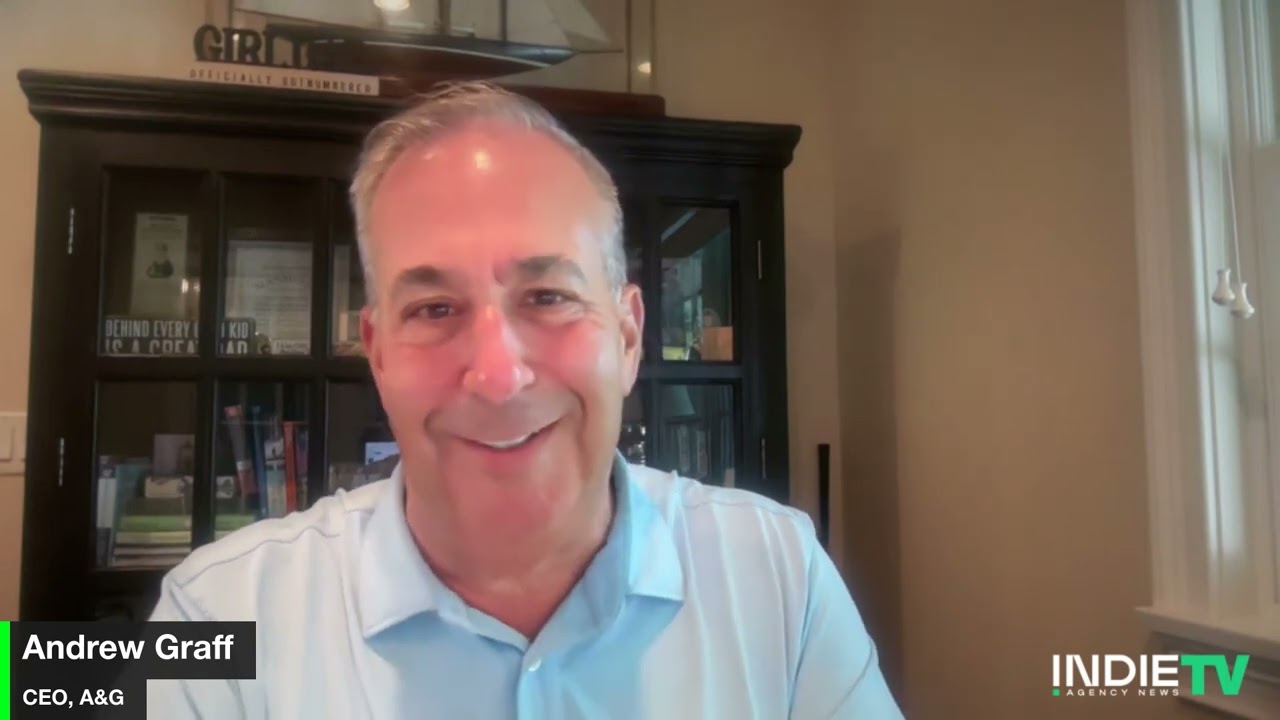 Watch the conversation ↗
A seat at the Bodega
Graff applied a similar willingness to reconsider familiar habits to the workplace. In a May 2023 interview, he described A&G's Third Spaces: shared settings designed for gathering and collaboration. Assigned seating gave way to seats people could book and change. Gathering spots received names including Bodega, Ferry, and Speakeasy. The naming scheme offered considerably more atmosphere than Conference Room B.
He was candid about the challenge. Employees had worked remotely while the agency continued to grow and remain profitable. They had a reasonable question about why they needed to commute. Graff's response involved making physical togetherness purposeful, while retaining flexibility outside the workplace. The argument had to survive an everyday comparison: what could this place provide that a person could not get at home?
That question puts an advertising executive in an interesting position. The people he needs to persuade are his own colleagues. They already know the product. Renaming a room will only take the pitch so far. The useful test is whether gathering there helps people think, work, and connect.
“And then what?”
The question behind A&G's ampersand philosophy
The ampersand in the agency's name offers another version of that test. Graff treats it as a prompt to continue an idea, to consider what it can connect to next. A punctuation mark is unusually economical management equipment. It can sit between two names, then spend the rest of its life asking for another possibility.
The intern has a board seat
Graff's informal intern title sits alongside formal industry responsibilities. The 4As' current board roster lists him as a co-vice chair. His professional biography also describes advising advertising technology company Pixability and participating in ANA speaking and judging. Suffolk lists him on its Marketing Advisory Council. Those connections bring him into conversations beyond his own agency.
Recognition has followed. EY named him a New England Entrepreneur Of The Year finalist in 2014. Industry profiles record his inclusion among the 4As' 100 People Who Make Advertising Great and in Boston business leadership lists. A&G has also twice ranked first on Ad Age's workplace list. These are discrete acknowledgments across his career, rather than a reason to stop examining how the business works.
He has sought an additional form of accountability through Katahdin Group's CEO Collective. Its profile dates his membership to 2021. Graff describes the group as a sharpener
: other chief executives offer perspectives from outside advertising and challenge his decisions. He values being able to leave the agency world's familiar conversation and return with a different view.
There is some discipline in choosing a room where one's experience is not automatically the deciding voice. The CEO job usually gives Graff authority. A peer group gives him counterparts. His description suggests that he wants both. The intern joke becomes more convincing when the person telling it has arranged opportunities to be questioned.
Looking past the age label
His audience thinking has a personal edge, too. In a March 2025 essay on the ageless generation, Graff writes about consumers over fifty through his own life and that of his contemporaries. Travel, continuing education, community roles, and brand preferences fill the picture. He describes journeys by himself and his wife, and objects to marketing that treats later life as withdrawal from it.
The voice is recognizably that of a consumer who also runs an agency. He knows what it feels like to be put in a category, and he thinks the category has missed the person. The point is a useful extension of his interest in behavioral science: an age band can identify a group without explaining what its members want.
He returned to the subject in August 2026, warning that brands' excitement about younger generations can obscure older customers. His argument also questions automated service that removes human contact without considering who needs it. Across these pieces, the recurring challenge is to pay closer attention to people whose lives are richer than the shorthand used to sell to them.
What comes after the anniversary
By September 2026, Graff was discussing another stage of agency life: the first three to five years, when founders must become business managers and invest in people and capabilities. It is advice from someone who joined his own agency after its earliest chapter and has lived through several later ones. Growth eventually asks for changes in the person doing the leading.
That may be the most consistent feature of his career. He treats the business's routines as things people made, and therefore things people can reconsider. A timesheet, a seating plan, an audience label, a chief executive's certainty: each can be examined without throwing away the experience behind it.
After three decades, Graff has a substantial past to draw on. His chosen unofficial title keeps the future open. An intern, after all, is expected to ask questions. Giving the chief executive the same permission seems a sensible way to keep the conversation going.