Second acts / first principles
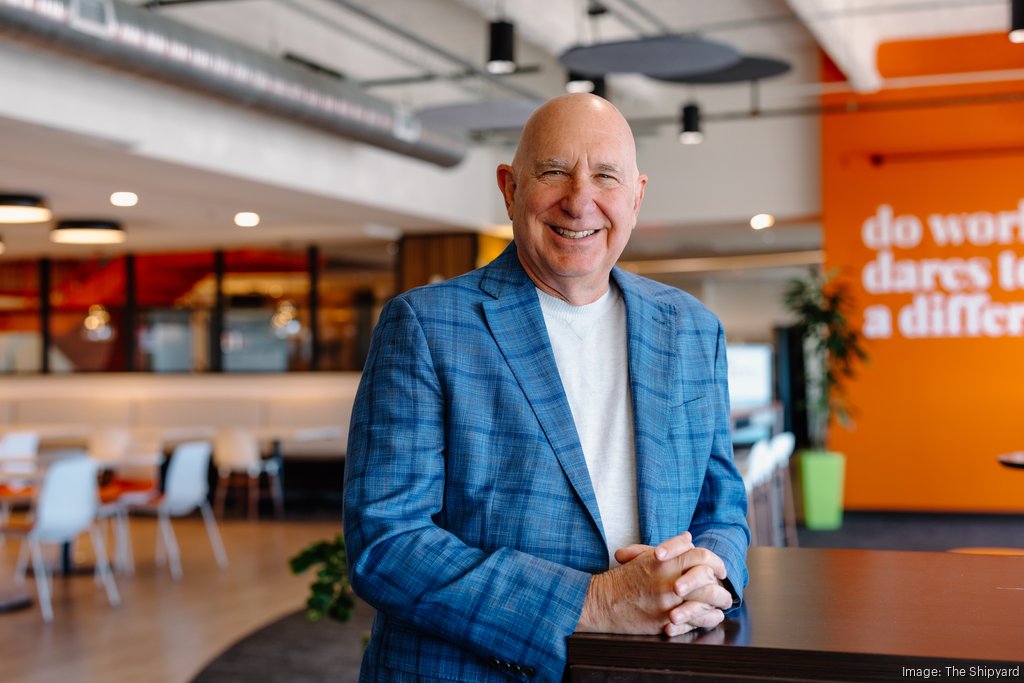
Rick Milenthal has been in advertising long enough to remember when the clever line was the evidence. Now every campaign arrives towing a small navy of dashboards. He has adapted enthusiastically, with one condition: the numbers must remain in service of the people they describe. His neatest formulation is that data is “listening at scale.” It sounds almost gentle for a business fond of military metaphors. Target. Capture. Conquest. Milenthal prefers to listen.
That preference does not make him nostalgic. At 43 years in the agency business, he talks about the present tense with the energy of somebody who has just been shown a new room. Artificial intelligence can produce copy, code and variation at remarkable speed. Media systems can locate smaller audiences with greater precision. The opportunity, as he sees it, is to use all that machinery without allowing the work to acquire the bedside manner of a parking meter.
His vehicle for the experiment is The Shipyard, the Columbus-based independent agency he founded after the company he previously built, Engauge, was sold to Publicis Groupe in 2013. The Shipyard combines brand strategy, creative, media, analytics, public relations, digital products and development. Its house phrase, “Engineering Brand Love,” has a deliberate tension inside it. Engineering suggests a plan, a system and a tolerance for proof. Love is famously poor at filling in a spreadsheet.
“Marketing changes every 25 minutes, so you have to constantly be curious and learning, but the basics of what moves human beings emotionally stays the same.”Rick Milenthal
The exit that became an entrance
Milenthal’s first long agency chapter began in 1982, the year he finished at Ohio State. The names on the door changed as the business grew and reorganized: HMS Partners, Ten United, Engauge. By 2004, trade reports had him moving from the chief executive role at HMS Partners to chairman of Ten United. He later co-founded and chaired Engauge, which developed into a large independent shop before Publicis bought it.
An acquisition often supplies the final paragraph in a founder profile. Milenthal used his as punctuation, then kept writing. The Shipyard took shape in Columbus as a different proposition: creative storytelling lashed to data, media and technology from the beginning. In 2016, three years into the new venture, a local business profile described the apparent contradiction plainly. He had spent 35 years leading one of Central Ohio’s largest agencies, sold it, and started anew.
The encore has not been small. The Shipyard expanded west, added specialist teams and, in Milenthal’s language, assembled a “force multiplier” from paid, owned and earned media. The aim is for each discipline to make the others more useful. A media insight can sharpen a creative idea. Public relations can stretch the life of paid work. Digital behavior can expose whether a handsome campaign inspired action or merely collected compliments from other advertisers.
An acquisition conducted in little rectangles
One deal shows how Milenthal works when the usual theatre of business disappears. Before 2020, he was a prodigious traveler, logging roughly 100 nights on the road in a typical year. He and Dave Mering, the founder of a respected California agency, were the sort of peers who might cross the country to talk shop over a drink. Then travel stopped. Their conversation moved to video.
A text after a virtual industry gathering became a call. Then another. By summer, the pair had spent dozens of hours discussing their companies and what might come next. Mering later joked that it took Milenthal a while to reveal his hand. Once an acquisition entered the conversation, leaders from both companies began meeting online. Teams became familiar before the transaction asked them to become colleagues.
Eight months after the first conversations, The Shipyard’s parent acquired Mering. The California founder stayed, becoming vice chairman when the businesses unified under The Shipyard name in 2021. The mechanics were unusual; the instinct was old-fashioned. Trust was accumulated before structure was imposed.
Mering joins after an eight-month remote courtship, strengthening travel, tourism and West Coast capabilities.
Fahlgren Mortine and its TURNER subsidiary add public relations, communications and more national offices.
TinyWins adds a 75-plus-person team spanning strategy, design, development and AI-powered innovation.
The pattern continued. In 2024, The Shipyard acquired Fahlgren Mortine, bringing a major public relations operation and its travel-focused TURNER subsidiary into the group. At announcement, the combined business was reported at 400 professionals, 10 offices and $350 million in billings. TinyWins followed in 2025, adding more than 75 people in design, strategy, digital development and AI. Its founders and chief executive joined the leadership ranks rather than disappearing behind a new org chart.
Milenthal calls this talent acceleration. The phrase is tidier than any integration can be, but it reveals the intended asset. He is buying groups of people who already know how to work together, then giving them more channels through which to apply that knowledge. Capital matters. Chemistry is the prize.
The spreadsheet and the goose bump
There are two easy ways to be wrong about modern advertising. One is to worship instinct and dismiss measurement as the concern of joyless accountants. The other is to optimize every message until it is efficient, frictionless and impossible to remember. Milenthal has planted The Shipyard between these errors.
One brand, three connected channels
Conceptual illustration of the integrated model, not a performance ranking. The point is coordination: each channel carries the same idea and returns evidence to the others.
His version of data is a record of human response. Somebody heard something relevant. Somebody paused. Somebody returned. At large scale those moments become patterns, and patterns can guide a creative decision. This is the humane promise of measurement: fewer speeches delivered to empty rooms.
Emotion remains the scarce ingredient. People may justify a purchase with features, price or delivery time, yet preference often begins lower in the body. A brand feels familiar, amusing, reassuring or pleasantly defiant. Milenthal’s point is not that every customer must swoon. “Love” is the memorable end of a continuum that begins with attention and moves through trust.
“Data is just listening at scale.”Rick Milenthal
This becomes more consequential as generative systems make adequate material cheap. The web will contain more copy, more images and more variations, each arriving faster than the last. Abundance shifts the premium toward judgment: which idea deserves to exist, which detail feels true, which risk gives a piece of work its pulse. Machines can widen the stage. They cannot decide why the audience should lean forward.
Columbus, with the world in reach
Milenthal’s career could have migrated to New York, Chicago or Los Angeles. It remained anchored in Columbus. He has said he cannot imagine being headquartered elsewhere, praising the city’s accessible leadership and the ease with which relationships can turn into action. There is home-town affection in that view, along with a business calculation. A connected city lets a builder move quickly.
The horizon has always been wider. He chaired Worldwide Partners, the international network of independent agencies, and later remained a senior adviser. He co-founded WE Digital in China and became a venture partner at Columbus-based NCT Ventures. The Shipyard now operates across American markets from California to New York while keeping its headquarters in Ohio. Columbus functions less like a boundary than a port.
There was an editorial streak before the executive one. At Ohio State, where he studied from 1978 to 1982, Milenthal edited Campus Mirror. The detail feels like an early draft of the later career: gather a team, understand an audience, decide what deserves attention and ship the issue. His education did not end with a diploma so much as acquire deadlines and clients. Years later, his public conversations still sound like an editor testing a premise. What are people feeling? Which observation matters? Does the work earn its space? Advertising has invented elaborate vocabulary for these questions. An old campus editor might recognize them immediately.
His habits carry the same practical optimism. He packs workout gear first when he travels because, he says, imagination needs movement. It is an appealingly literal routine for someone who treats disruption as an invitation to move. His advice is threaded with curiosity, adventure and a suspicion of fear. At an age when many executives turn experience into a barricade, Milenthal uses his as permission to ask another question.
The next question is whether an independent agency can combine the range of a holding company with the attention of a founder-led shop. Milenthal’s answer is still under construction. It lives in the awkward work after each acquisition, when systems must connect and talented people decide whether they trust one another. It lives in the attempt to prove creative value without flattening it. It lives somewhere between the dashboard and the goose bump.
Four decades have not made advertising calmer. Milenthal appears pleased by this. He says he still cannot believe he gets paid to do the work. Perhaps that is the useful quirk at the center of his second act: the veteran remains surprised by his own good fortune, and therefore curious enough to begin again.