The interesting thing about Deardorff is that much of its work begins where ordinary attention goes to die. A money-market fund. A retirement-plan study. A state highway-safety office. These are important subjects, but importance is not the same as magnetism. Nobody wakes up hoping an institutional brochure will find them before breakfast. Deardorff has spent four decades working inside that awkward gap.
Jill Deardorff founded the agency in 1984. Today it is a privately held Philadelphia shop with a public roster that runs from Invesco, BNY Mellon and J.P. Morgan to the State of Delaware, Lehigh University, Penn Nursing and TILT Institute. The team works across research, naming, positioning, identity, content, advertising, media, websites and apps. That list sounds broad. The work becomes coherent once you notice the kind of problem the clients bring: expertise that is valuable, complicated and easy to pass by.
The website nobody visited
Consider road safety. Before Deardorff rebuilt ArriveAliveDE.com for the Delaware Office of Highway Safety, the site drew roughly 100 visits a month. The agency did not merely apply brighter colors to a stack of rules. It reorganized the experience around the visitor's role, then added quizzes, games and interactive tools: a DUI quiz, a distracted-driving game, even a heat map of DUI crashes. In two years, the agency says monthly visits reached 68,000 and average time on page rose 44 percent.
The same client needed to reach young drivers who were least likely to wear seat belts. Deardorff recommended TikTok and built a contest around making beats from seat-belt clicks and other car sounds. More than 1,400 unique views collected under the ClickTok hashtag. It is a modest number by global entertainment standards and a meaningful experiment for a state safety agency. The creative leap was not “make safety cool.” It was more precise: turn the physical act you want into the sound the audience gets to play with.
Money talks. Research usually clears its throat.
Financial marketing presents the opposite version of the same problem. The audience may already care, but the material is dense, regulated and full of claims that cannot be improvised. Deardorff says it has more than three decades of experience in the sector, covering products from money-market funds and ETFs to 529 plans and private markets. Its audience map includes institutional investors, plan sponsors, advisors, consultants and wealth managers. This is not lifestyle copy with a compliance paragraph stapled to the bottom.
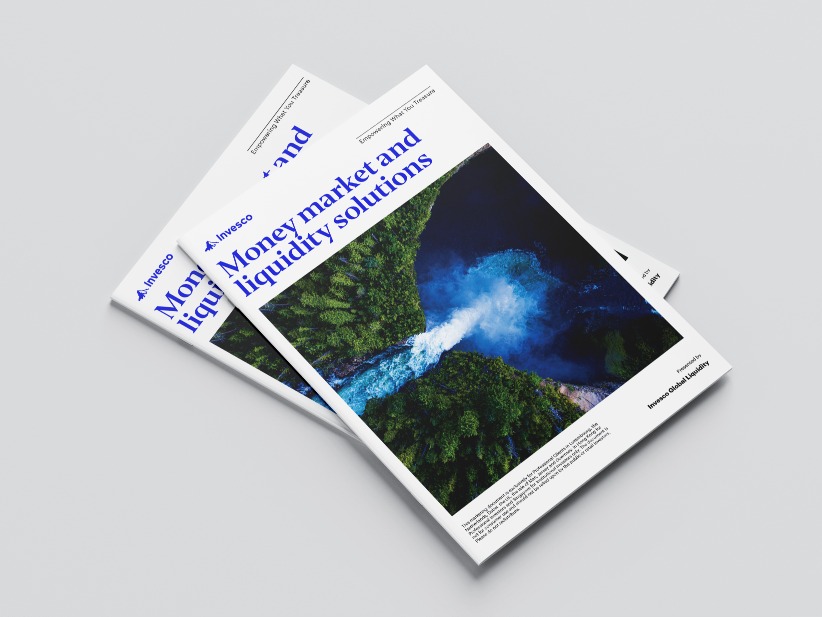
Invesco's global-liquidity business had decades of credibility but, according to the case study, lacked awareness beside larger competitors. Deardorff positioned it around “Empowering what you treasure,” then extended the idea through messaging, collateral, video and trade-show material. The agency says the business moved from 12th place into the top ten among global-liquidity providers while growing assets and market share. The claim is notable because it connects a brand phrase to a business trajectory without pretending the phrase worked alone.
For another Invesco assignment, the raw material was a major study of defined-contribution plan participants. A traditional instinct would have been to summarize the report, publish it and congratulate everyone involved. Deardorff instead reduced the insights into crisp social teasers and visual data points. The resulting campaign beat the industry's click-through benchmark. The study did not become less serious. Its doorway became smaller.
A broad menu, a narrow promise
The agency sells services, not software. Clients can buy brand strategy, market research, identity systems, content programs, campaigns, media planning, experience design, web development or mobile apps. Its AlphaRocket Creative offer packages immediate financial-marketing needs into fixed-price engagements, though the prices are not published. The larger business appears to run on projects and continuing client relationships. In plain English, organizations bring Deardorff a knot and pay the team to study it, name it, design around it and carry the answer into market.
That places the company between several alternatives. A large network can offer scale. A specialist consultancy can bring narrow category knowledge. An in-house team holds the institutional memory. A digital studio may build the product faster. Deardorff's pitch is integration with subject-matter fluency: the researcher, writer, designer, media planner and developer stay close enough that the insight does not dissolve in the handoffs.

The leadership bios make the combination unusually literal. Jill Deardorff is a journalism and science-writing graduate who leads strategy and creative. Creative director Wes Richards has worked across university, medical, nonprofit and financial brands. Senior writer Nancy Frick has written about portfolio construction and drunk driving, and is also a published playwright. Will Foley, head of digital, is a full-stack developer. This is a team built to move between evidence, narrative and execution without treating any one of them as decoration.
The four moves worth stealing
“Awareness” is fog. A follow, a visit, a buckle, a click or a sales conversation gives the brief a spine.
Ask what the audience avoids, misunderstands or cannot distinguish. The obstacle is often the useful part of the brief.
A report can become a social graphic. A rule can become a game. A positioning line can become an entire selling system.
Measure traffic, attention, response or market movement. Awards decorate a case study; behavior completes it.
This method has conditions. It depends on access to real audience insight, a client willing to alter the delivery and a result that can be observed. It is less useful when leadership wants a cosmetic refresh, when compliance is invited after the idea is finished, or when nobody agrees what should change. A clever format cannot rescue a false promise. Nor can a campaign claim sole credit for assets under management, market rank or crash reduction. The cleanest Deardorff cases are careful about the link: the agency reports the movement and shows the communication work that accompanied it.
Forty-two years of useful friction
Deardorff's own playful projects reveal another part of the culture. The portfolio contains an April Fools tattoo studio, a digital murder mystery and Halloween experiences. These sit beside retirement literature and safety campaigns like brightly dressed cousins at a formal dinner. Yet they serve a purpose. A small agency cannot wait for every client assignment to provide the perfect laboratory. Sometimes it has to invent the room where a new kind of storytelling can be tried.
The company's durable idea is not that everything should be entertaining. It is that the audience's attention is part of the assignment. Accuracy matters. So do compliance, craft and production. But if the final work gives no one a reason to enter, all that correctness remains sealed inside the box.
That is the quiet joke inside Deardorff's portfolio. Retirement plans and road rules look nothing alike. One involves compounding money over decades; the other involves surviving the drive home. Yet each asks a person to value a future consequence more than a present distraction. Deardorff's job is to shorten that distance - with a sentence, a picture, a site, a beat and, occasionally, the click of a seat belt.