There is a particular kind of modesty hidden inside the name B Squared. It sounds competent. Mathematical. A firm that will arrive on time and return the deck with the typos removed. It does not sound like a promise to move anyone's soul. That was the name Juliette Bogus chose when she founded her agency in 2013, even though she had another name in mind from the beginning: Inspire.
She waited nine years to use it. This is odd behavior in an industry that invoices clients for confidence, and that is why it is revealing. Bogus has said she felt the business needed time before it could claim the name. By 2022, colleagues, clients and the work itself kept reflecting the idea back to her. A period of heavy demand, especially in healthcare, life sciences, medtech and digital health, had changed the firm. B Squared became Inspire Agency.

The first client was the agency itself
The name change was not a rescue operation. It was closer to a company applying its own advice. Inspire tells clients to begin with discovery: Who are we? What do we want to become? What do other people think we are? The answer cannot be reverse-engineered from a fashionable logo. It has to be collected from interviews, workshops, competitive audits, social listening and the mildly uncomfortable evidence of what customers actually say.
The early name had not failed so much as become too small. What changed Bogus's mind was repetition. People around the company kept using the language of inspiration, and the agency's growth during 2020 made the larger claim feel earned. The useful lesson is not to rename a business after a good brainstorm. It is to notice when the market has already renamed it for you.
“We often hear from our clients, partners and team how our work and lives inspire those around us.”Juliette Bogus, on the 2022 rebrand
A communications department that folds into a suitcase
Inspire is a brand marketing and communications agency, but the ordinary label misses the interesting mechanism. Its core team includes strategists, writers, account leads, designers, public-relations specialists and motion talent. Around them sits a network of freelance specialists. The company calls this “right-sizing”: build the team a job requires, instead of pushing every job through the same fixed roster.
For a biotech startup, that can mean investor messaging, a website, an executive voice, conference materials and a reporter pitch handled as one connected problem. For an established manufacturer, it may mean an employer campaign that spans billboards, search ads, direct mail and video. For an organization whose marketing seat is empty, Inspire also offers staff augmentation. The business model is custom-scoped service work and ongoing support; prices are not published. What clients buy is access to a temporary, expandable department.
Interview, audit, listen and study the competitive neighborhood.
Turn the evidence into a phased strategy, message and roadmap.
Make the work, measure the response and adjust the next round.
The three verbs are a little cute. The sequence is sound. Many marketing engagements start at step three because the visible object - a website, video or press release - is easiest to approve. Inspire puts an investigative stage in front of production. Its own media-relations guidance is blunt on this point: episodic pitching creates fatigue; a press release without a genuine news hook trains reporters to ignore you. The portable lesson is to diagnose before decorating.
The lung monitor and the language problem
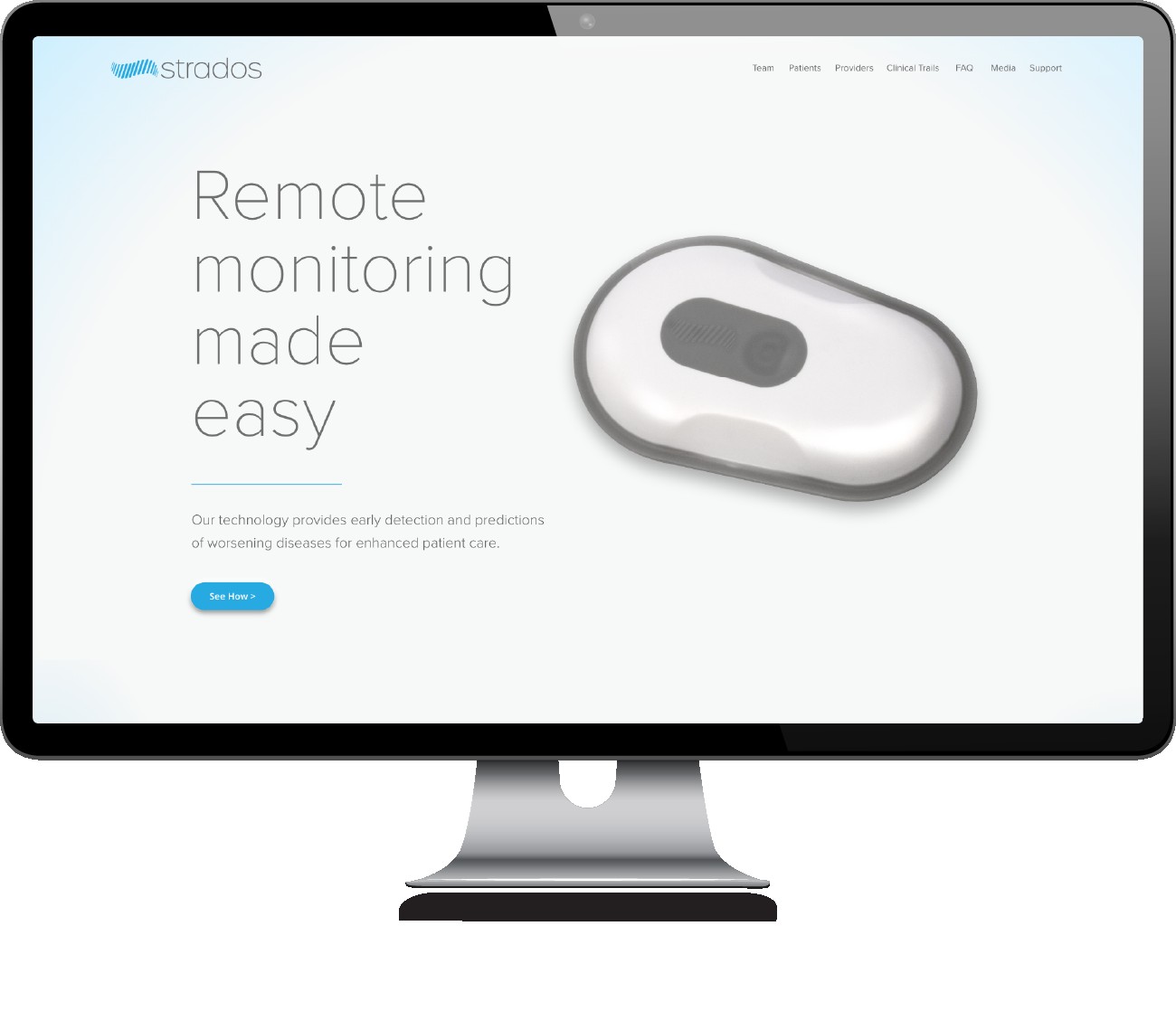
Consider Strados Labs. The company had won FDA clearance for RESP, a wearable system that captures breathing patterns and lung sounds. The science was the asset. It was also the communications hazard. A message precise enough for a clinician could lose an investor; a message broad enough for social media could flatten the reason the device mattered.
Inspire rebuilt the website and investor deck, handled communications around regulatory milestones and partnerships, created social and email content, and shot more than 15 videos with doctors, executives and other stakeholders. The point was not merely to make Strados louder. It was to keep the same recognizable thought intact while moving it among audiences.
Selected client results
Within six months, Strados had an audience of more than 1,600 and engagement had more than tripled. The pattern appears elsewhere. Inspire says Zalgen Labs doubled website traffic after a positioning, content and PR overhaul; the biotech also attracted an investor and landed a large contract with a global epidemic-preparedness organization. After MajorKey's rebrand, its social community grew 12 percent and average monthly reach doubled.
These are not interchangeable proof points. A follower is not an investor, and a website visit is not a contract. Their value is narrower and more useful: they show that the agency can carry one strategic idea through several formats without treating each deliverable as an island.
Where the small agency fits
Inspire sits between four familiar alternatives: the large integrated agency, the narrow healthcare shop, the freelance collective and the exhausted in-house team. It borrows something from each. It offers a broad set of services, brings sector fluency, flexes its roster and behaves like an extension of the client. The distinction is strongest when the subject is technical and the audience is mixed - a medtech product facing clinicians, recruits, investors, patients and reporters all at once.
That model asks something of the buyer. Inspire describes its ideal client as growth-minded, willing to value strategy, prepared to partner with the marketing team and in possession of a story or service worth telling. Strip away the cheerful wording and the condition is clear: the method depends on access. If leadership cannot share context, if subject experts will not be interviewed, or if the assignment is simply “make noise by Friday,” the research-first advantage shrinks.
The culture makes the same bet on proximity. Inspire is virtual, but new hires are brought to Charleston for training, client meetings and time with the team. Meals, kayaking and beach walks appear alongside onboarding. The company calls staff members “Inspirers,” a term that could become unbearable in the wrong hands. Here it functions as a small internal dare: live up to the noun.
Juliette Bogus starts the company as B Squared.
Demand accelerates in the firm's specialist industries.
The business becomes Inspire Agency and names its three-step method.
The healthcare roster expands with SHL Medical, Greenwood Genetic Center, SCbio, Ritedose and VirtuAlly.
Work for Ritedose, SCbio and VirtuAlly earns three industry awards.
The promise hidden in the pause
In 2025, Inspire's work won two Silver Davey Awards and a healthcare communications Golden Tusk: a pharmaceutical website for Ritedose, an integrated campaign positioning South Carolina as a life-sciences destination, and a rebrand for virtual-care company VirtuAlly. The range looks broad until you notice the common assignment. Each client had something consequential underway. Each needed outsiders to understand it without losing the insiders' precision.
That is Inspire Agency's actual place in the market. It is not the company with the biggest megaphone. It is the interpreter standing beside the person holding the megaphone, asking one more question before anyone switches it on. The nine-year wait for the name turns out to be more than an origin anecdote. It is the operating idea in miniature: do the inquiry, gather the proof, and claim only what the work can carry.